
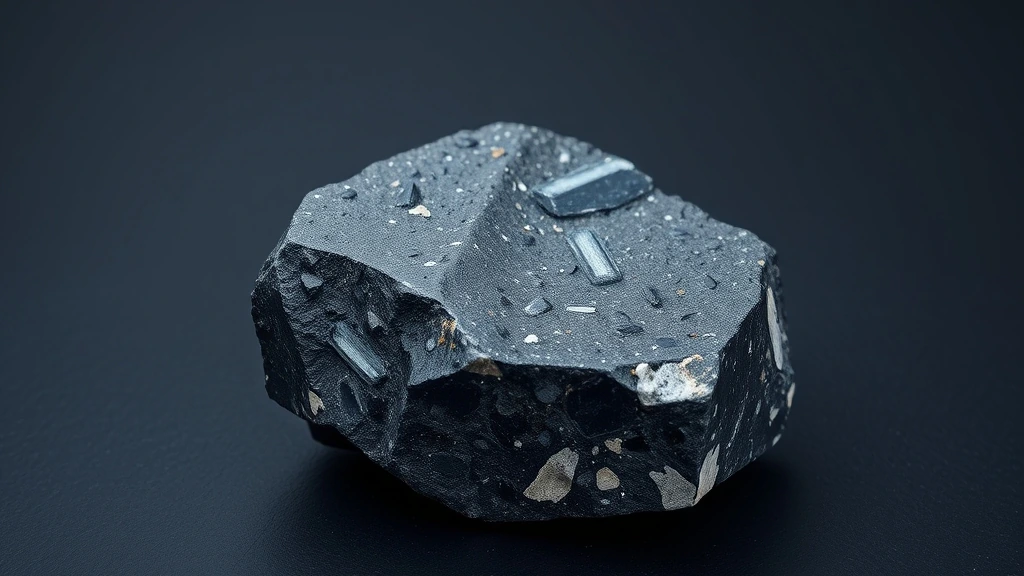
Aegirine belongs to the pyroxene group, a family of chain silicates that crystallize in the monoclinic system. As a natural mineral / crystal, it forms prismatic, often acicular crystals in alkaline igneous rocks, metamorphic schists, and some pegmatites. Its occurrence is linked to high‑temperature, sodium‑rich environments where iron is present as Fe³⁺. The mineral’s dense, opaque to translucent habit and striking dark coloration have attracted both scientific interest and gem‑cutting pursuits worldwide. Like the dark, reflective flakes of Black Mica that often accompany high‑temperature igneous formations, Aegirine’s deep blue‑green hues also signal the intense, sodium‑rich conditions of its geological origins.
What is Aegirine? Geological Overview & Definition
Aegirine is a monoclinic pyroxene distinguished by its iron‑rich composition, which imparts a characteristic deep green to black color. It commonly occurs in alkaline basalts, nepheline syenites, and carbonatites, where it crystallizes alongside minerals such as nepheline, leucite, and aegirine‑augite.
Across ancient lapidary traditions, the stone’s intense hue was prized for ornamental use, and its durability made it suitable for cameos and intaglios. Modern gemologists value aegirine for its rarity and the subtle play of light that can emerge from well‑cut specimens, despite its modest hardness compared with corundum or diamond.
Aegirine Chemical Composition & Crystallographic Properties
The ideal formula NaFe³⁺Si₂O₆ reflects a sodium cation paired with ferric iron occupying the M2 octahedral site of the pyroxene chain. Substitutions by Ti⁴⁺, Mn³⁺, or Mg²⁺ are documented, creating solid‑solution series that subtly shift refractive indices and color intensity. In comparative mineralogical collections, practitioners and geologists frequently study Alurgite alongside this crystal to appreciate their subtle energetic and structural differences.
Aegirine’s monoclinic crystal system (space group C2/c) yields elongated prismatic crystals with a single prominent cleavage direction parallel to the b‑axis. The lattice parameters contract with increasing Fe³⁺ content, influencing density values that range from 3.50 to 3.60 g cm⁻³.
The mineral’s dark coloration arises from Fe³⁺ charge‑transfer chromophores, which absorb across the visible spectrum, especially in the red‑yellow region, leaving a green‑blue residual hue. Acid exposure can leach sodium, gradually fading the color and destabilizing the structure, a caution for collectors handling raw material.
Thermally, aegirine remains stable up to ~950 °C before decomposing to form perovskite‑type phases and releasing silica. Rapid cooling can preserve metastable forms, while prolonged heating promotes the development of aegirine‑augite intergrowths, a phenomenon of interest in experimental petrology.
| Property | Specification |
|---|---|
| Mineral Group | Natural Mineral / Crystal |
| Chemical Formula | NaFe³⁺Si₂O₆ |
| Mohs Hardness | 6 |
| Crystal System | Monoclinic |
| Specific Gravity (Density) | 3.50–3.60 |
| Refractive Index | n α = 1.720 – 1.778 n β = 1.740 – 1.819 n γ = 1.757 – 1.839 |
| Color & Optical Properties | Natural Aegirine color spectrum and optical dispersion |
| Primary Mining Localities | Global primary localities |
| Water & Chemical Resistance | High (Safe for gentle water washing) |
| Chakra Alignment (Traditional) | Heart Chakra |
| Zodiac Affinity (Traditional) | Virgo, Capricorn |
| Symbolic Meaning (Traditional) | Grounding, stability, and connection to the earth |
Aegirine Varieties & Color Spectrum
Aegirine displays distinct mineralogical characteristics across its geological varieties and structural habits. Gemologists evaluate these natural varieties based on crystal habit, trace chromophore concentrations, and visual luster.
Primary Natural Aegirine
The benchmark natural variety exhibiting diagnostic color saturation and classic crystallographic symmetry.
Distinct Geological Morphs of Aegirine
Secondary regional and structural varieties formed under localized geological temperature and pressure conditions.
Green Aegirine
Formed in high‑temperature sodium‑rich nepheline syenites, this variety displays a deep, forest‑green hue caused by Fe³⁺ crystal field absorption. Inclusions of magnetite and rutile often create shimmering needle‑like reflections. It is most commonly mined in the Kola Peninsula of Russia and is considered moderately rare among collectors.
Black Aegirine (Aegirine‑Black)
Black aegirine crystallizes in mafic alkaline complexes, where rapid cooling traps minute iron‑oxide particles that give the stone its opaque, jet‑black appearance. Thin, translucent edges may reveal a subtle greenish undertone under polarized light. High‑grade specimens are chiefly sourced from the Adirondack region of New York, making them prized for their dramatic contrast.
Blue‑Green Aegirine (Aegirine‑Blue)
This hue emerges in pegmatitic veins enriched with trace titanium and chromium, which shift the absorption spectrum toward blue‑green. The crystals often exhibit well‑developed prismatic terminations and occasional lamellar twinning. Notable deposits occur in the Pikes Peak batholith of Colorado, where the variety is scarce and commands premium prices.
Yellow‑Brown Aegirine (Aegirine‑Citrine)
Yellow‑brown specimens develop in granite‑derived greenschist facies, where oxidation of Fe³⁺ produces a warm citrine tint. Fine fluid‑inclusion bubbles can be observed under magnification, indicating late‑stage hydrothermal alteration. This variety is primarily exported from the Sayan Mountains of Siberia and is less common than its green counterpart.
Aegirine‑Rhodonite (Aegirine‑Red)
A rare hybrid, this form occurs where aegirine crystals overgrow rhodonite nodules, imparting a striking reddish‑purple blush. The juxtaposition of monoclinic aegirine and trigonal rhodonite creates a distinctive banded pattern prized by high‑end jewelers. Significant occurrences are reported from the Kalahari Craton in South Africa, where the mineral assemblage is exceptionally limited.
Aegirine‑Zircon (Aegirine‑Zirconite)
In certain alkaline basaltic lava flows, aegirine incorporates microscopic zircon inclusions that produce a speckled, glittering effect. The zircon crystals enhance the stone’s refractive index, giving it a subtle fire when cut. This variety is chiefly found in the volcanic fields of the East African Rift, where it remains a collector’s curiosity due to its unique optical play.
Where is Aegirine Found? Geological Mining & Extraction
Aegirine typically inhabits alkaline igneous complexes, especially nepheline syenites, phonolites, and silica‑undersaturated pegmatites. Within these host rocks, the mineral crystallizes from sodium‑rich magmas at temperatures between 800 °C and 950 °C, often alongside minerals such as scapolite, kalsilite, and acmite.
Major extraction zones include the Kola Peninsula (Russia), the Adirondack Highlands (USA), the Pikes Peak batholith (Colorado, USA), and the Sayan Mountains (Siberia). Smaller but economically important deposits are documented in the East African Rift (Kenya, Tanzania) and the Kalahari Craton (South Africa), where artisanal mining supplies the gemstone market.
Historical Significance & Cultural Lore of Aegirine
Across ancient lapidary traditions, aegirine was prized for its deep green and black tones, which ancient Greeks associated with the sea‑god Aegir, a mythic figure symbolizing strength and endurance. Roman texts describe the stone’s use in signet rings to convey authority, while Egyptian tomb inventories list aegirine beads as protective amulets against malevolent forces.
In early Chinese mineral compendia, aegirine appears under the name “qing‑shi” and was believed to anchor the Heart Chakra, promoting grounding and stability. Vedic literature references a “green iron stone” used in ritual jewelry to enhance perseverance and connection to the earth, echoing the stone’s enduring esoteric reputation.
Modern Uses & Jewelry Applications of Aegirine
Aegirine is primarily valued as a rare ornamental stone rather than a high-volume gemstone, owing to its relative scarcity and moderate Mohs hardness. Lapidaries typically cut this mineral into cabochons to showcase its deep green color and vitreous luster without risking fracture during faceting. Its robust structure allows for intricate carving into beads, pendants, and small sculptural elements for collectors.
- Cabochon Cutting: Polished domes highlight the stone’s rich emerald-to-forest green hues and smooth texture.
- Carved Ornaments: Skilled artisans shape aegirine into beads, plaques, and decorative inlays for luxury accessories.
- Collector’s Items: Due to its rarity, it is often preserved as a polished specimen for mineralogical collections.
Metaphysical Properties & Traditional Meaning of Aegirine
According to historical traditions and metaphysical lore, aegirine is revered for its profound connection to the earth and emotional stability. Ancient Mediterranean and Vedic lapidary practices often associated deep green stones with growth, renewal, and the restoration of balance. Practitioners believe this mineral fosters a sense of grounding, helping individuals feel anchored and secure during periods of transition.
In esoteric contexts, aegirine is said to enhance emotional resilience and promote a calm, steady mindset. It is frequently used in meditation to encourage a deeper connection to natural rhythms and inner peace. The stone’s energy is described as stabilizing, aiding in the release of anxiety and fostering a harmonious relationship with the physical world.
Which Chakra and Zodiac Signs Align with Aegirine?
Aegirine is energetically aligned with the Heart Chakra, which governs love, compassion, and emotional well-being. This connection supports the stone’s reputation for promoting healing and emotional balance. By resonating with this energy center, aegirine is believed to open the heart to deeper feelings of connection and understanding.
Astrologically, this mineral is most compatible with the earth signs Virgo and Capricorn. These signs value structure, reliability, and practical achievement, qualities that mirror aegirine’s stabilizing nature. Wearing or meditating with aegirine is thought to enhance these traits, providing the wearer with renewed focus and steadfast determination.
How to Identify Real vs. Fake Aegirine
Because aegirine is rare, the market is flooded with imitations, including synthetic glass, dyed quartz, and other green minerals like epidote or chlorophyllite. These fakes often mimic the color but lack the specific physical properties of genuine aegirine. Understanding these differences is crucial for buyers to avoid purchasing misleading replicas that do not possess the mineral’s authentic characteristics.
Practical At-Home Authenticity Tests
- Temperature Test (Thermal Feel): Genuine aegirine feels distinctly cool to the touch and warms up slowly in the hand. Synthetic glass or plastic imitations tend to warm up much faster due to lower thermal conductivity.
- Specific Gravity & Weight Test: Aegirine has a high density of 3.50–3.60 g/cm³, making it feel significantly heavier than its size suggests. Glass imitations are lighter, while some heavy fakes may feel unnaturally dense compared to the stone’s visual volume.
- Scratch & Hardness Test (Mohs Comparison): With a Mohs hardness of 6, aegirine can scratch glass (hardness 5.5) but will not be scratched by a steel knife. Softer fakes like dyed quartz may show scratches, while harder imitations will not scratch glass.
- Microscopic & Loupe Inspection (Internal Inclusions): Using a 10x loupe, look for natural crystal inclusions or fluid bubbles typical of aegirine. Glass imitations often contain swirls or gas bubbles, while dyed stones may show color concentrated in fractures.
Aegirine Valuation Factors, Grading & Pricing
Color Saturation drives the top tier of Aegirine pricing. Deep, vivid greens or striking bluish‑green hues command premium rates, especially when the stone exhibits a natural, glassy luster without surface weathering. Collectors prize stones that retain their original chromatic intensity, as fading or uneven tones reduce market appeal.
Crystal Size & Weight (Grams) is the second decisive metric. Larger specimens measured in grams, whether raw nodules or expertly tumbled pieces, fetch higher prices, while heavy, dense blocks are valued for architectural or display purposes. Inclusions of host matrix can either enhance character or diminish value, depending on clarity and aesthetic integration.
Ethical Sourcing & Locality Premium increasingly influence holistic and collector markets. Aegirine sourced from responsibly managed mines in Norway or the United States commands a price premium over material from regions with lax labor or environmental standards. Provenance documentation and fair‑trade certifications reassure buyers that the stone aligns with sustainable and ethical practices.
How to Clean and Care for Aegirine
Gentle cleaning with warm soapy water and a soft cloth preserves Aegirine’s surface integrity while removing dust and oils. Use a mild, pH‑neutral soap, dip a soft lint‑free cloth in warm water, wring out excess moisture, and wipe the stone carefully. Avoid ultrasonic cleaners, as the vibrations can create micro‑fractures in the monoclinic lattice.
Cleansing and Recharging Aegirine (Energetic Care)
Across ancient lapidary traditions, Aegirine is refreshed by passing it through gentle, natural airflow or placing it on a clean selenite slab for several hours. The neutral energy of selenite is believed to clear lingering vibrations without exposing the mineral to heat or moisture.
Moonlight exposure offers a safe, holistic method to recharge Aegirine’s energetic field. Position the stone on a windowsill or outdoor tray during a clear night, allowing soft lunar illumination to bathe the crystal for a few hours. This practice respects the stone’s physical stability while aligning it with traditional metaphysical care.
Frequently Asked Questions About Aegirine
Aegirine displays distinct mineralogical characteristics across its geological varieties and structural habits. Gemologists evaluate these natural varieties based on crystal habit, trace chromophore concentrations, and visual luster.
Primary Natural Aegirine
The benchmark natural variety exhibiting diagnostic color saturation and classic crystallographic symmetry.
Distinct Geological Morphs of Aegirine
Secondary regional and structural varieties formed under localized geological temperature and pressure conditions.
What is the chemical composition of aegirine?
Aegirine is a sodium iron pyroxene with the formula NaFe³⁺Si₂O₆. This specific chemical structure defines its classification within the pyroxene group. The presence of iron gives the stone its characteristic deep green to black coloration. Understanding this composition helps identify its geological origins accurately.
How hard is aegirine on the Mohs scale?
Aegirine ranks 6 on the Mohs hardness scale. This moderate hardness makes it suitable for jewelry but requires careful handling. It is softer than quartz but harder than many other gemstones. Wearers should avoid contact with harder materials to prevent surface scratches.
Can I wear aegirine in the shower?
Yes, aegirine is safe for gentle water washing. The mineral possesses high water resistance, allowing it to withstand brief exposure to moisture. However, prolonged soaking is not recommended for general maintenance. Rinse it gently after showering to maintain its natural luster and integrity.
How should I clean my aegirine jewelry?
Use warm soapy water and a soft cloth for cleaning. This gentle method effectively removes oils and dirt without damaging the stone. Avoid abrasive materials that could scratch the surface. Regular, careful cleaning preserves the gemstone’s vibrant color and structural stability.
Is aegirine safe for ultrasonic cleaners?
No, you must avoid ultrasonic cleaners for aegirine. The high-frequency vibrations can cause structural fractures in the crystal lattice. Always use manual cleaning methods with a soft cloth instead. This precaution ensures the long-term durability and aesthetic appeal of your gemstone.
Which zodiac signs are aligned with aegirine?
Virgo and Capricorn are the primary aligned zodiac signs. These earth signs resonate with the stone’s grounding energy. Wearing aegirine may enhance stability and practicality for these individuals. The connection supports personal growth and emotional balance throughout the year.
Which chakra does aegirine correspond to?
Aegirine is primarily associated with the Heart Chakra. This alignment promotes emotional healing and compassionate connections. It encourages a deep sense of stability and inner peace. Meditating with the stone can help balance this central energy center.
What are the esoteric benefits of aegirine?
Aegirine promotes grounding, stability, and connection to the earth. These properties help anchor the wearer during turbulent times. It fosters a sense of security and emotional resilience. Practitioners often use it to strengthen their bond with the physical world.