
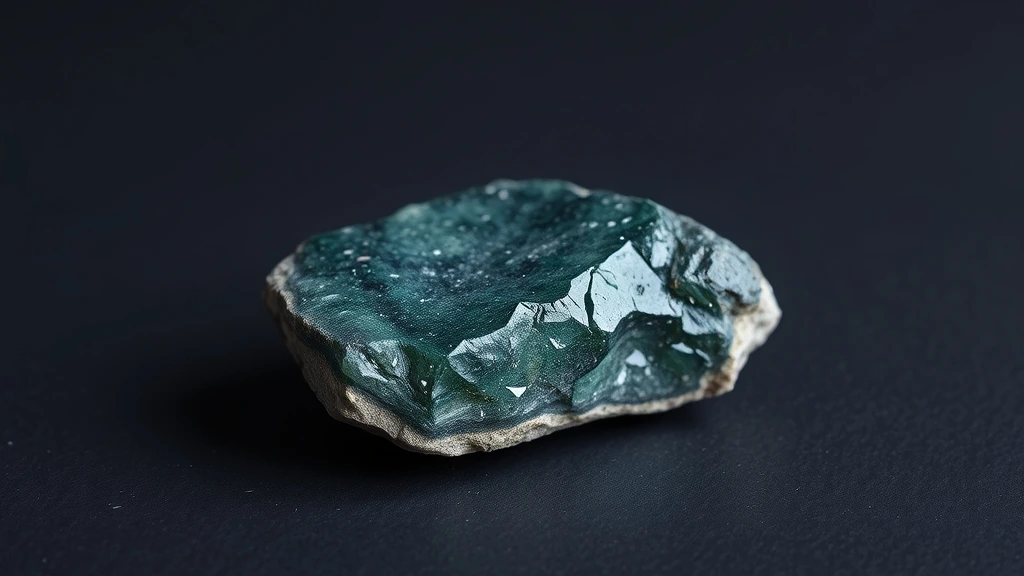
Perovskite belongs to the natural mineral family of oxides and is classified as a crystalline solid within the broader parent group of Natural Mineral / Crystal. Formed in high‑temperature, low‑pressure environments, it commonly occurs in volcanic ejecta, mantle‑derived xenoliths, and metamorphic skarns. The mineral’s orthorhombic symmetry gives it distinctive cleavage and fracture patterns, while its dense lattice (3.98–4.26 g/cm³) contributes to a high refractive index that enhances its gemstone appeal. Though not as hard as quartz, its vivid colors and rarity make it a sought‑after collector’s stone.
What is Perovskite? Geological Overview & Definition
Perovskite is an oxide mineral first described in the Ural Mountains and named after Russian chemist Lev Perovski. It crystallizes from magmatic fluids that infiltrate host rocks, often forming as well‑developed prisms or granular aggregates in basaltic and syenitic contexts.
In modern mineralogy, perovskite serves as the type specimen for the perovskite structural family, a framework that underpins many synthetic compounds used in photovoltaics and catalysis. Its natural occurrence provides a reference for studying cation ordering and lattice distortions that affect physical properties across the entire mineral group.
Perovskite Chemical Composition & Crystallographic Properties
The definitive formula CaTiO₃ reflects a calcium cation occupying the A‑site and a titanium cation at the B‑site within an oxygen octahedral network. This arrangement yields an orthorhombic crystal system, characterized by three mutually perpendicular axes of unequal length, which governs the mineral’s optical biaxiality and cleavage directions.
Substitution of Ti⁴⁺ by Fe³⁺, Mn³⁺, or rare‑earth elements creates solid‑solution series that modify both color and density. These cation substitutions generate chromophore centers responsible for the stone’s reds, oranges, and yellows, while also influencing its magnetic susceptibility.
Perovskite is mildly acid‑sensitive; exposure to strong hydrochloric or sulfuric acids can leach calcium, weakening the lattice and potentially altering surface luster. However, it remains stable under neutral pH conditions typical of most gemstone settings.
Thermally, perovskite exhibits a high phase transition temperature near 1,200 °C, above which the orthorhombic lattice transforms to a cubic perovskite structure. This transition is reversible upon cooling, a property exploited in laboratory synthesis of high‑performance ceramic materials.
| Property | Specification |
|---|---|
| Mineral Group | Natural Mineral / Crystal |
| Chemical Formula | CaTiO₃ |
| Mohs Hardness | 5.0–5.5 |
| Crystal System | Orthorhombic |
| Specific Gravity (Density) | 3.98–4.26 |
| Refractive Index | ”n” α = 2.3, ”n” β = 2.34, ”n” γ = 2.38 |
| Color & Optical Properties | Natural Perovskite color spectrum and optical dispersion |
| Primary Mining Localities | Global primary localities |
| Water & Chemical Resistance | High (Safe for gentle water washing) |
| Chakra Alignment (Traditional) | Crown Chakra, Third Eye Chakra |
| Zodiac Affinity (Traditional) | Virgo, Aquarius |
| Symbolic Meaning (Traditional) | Intellectual clarity, cosmic connection, and mental focus |
Perovskite Varieties & Color Spectrum
Red Perovskite (Cubic Red)
Formed in oxidizing mantle-derived magmas, this variety crystallizes as well‑developed orthorhombic prisms with vivid ruby‑red hues caused by trace Fe³⁺ substituting for Ti⁴⁺. Inclusions often comprise minute rutile needles that enhance its brilliance. Found chiefly in the Kola Peninsula, it is considered rare due to limited primary deposits.
Yellow Perovskite (Manganese‑Yellow)
Yellow specimens develop in low‑temperature hydrothermal veins where Mn²⁺ replaces Ca²⁺, imparting a bright lemon color. The crystals display characteristic striated faces and may host fluid‑filled cavities that produce a distinctive chatoyancy. High‑grade material from the Ural Mountains commands premium prices in the gem market.
Green Perovskite (Beryl‑Green)
Green perovskite occurs in alkaline igneous complexes, especially within nepheline syenites of Brazil. Chromium and vanadium trace elements generate the emerald‑like shade, while twin lamellae give a subtle internal sheen. Its scarcity and vivid hue make it a collector’s favorite, though gem‑cutting remains limited.
Blue Perovskite (Sapphirine‑Blue)
Blue varieties arise from Ti‑rich magmatic fluids that infiltrate limestone host rocks, producing a deep cobalt tone. The stones often contain fluid inclusions that create a mesmerizing “star‑burst” effect under polarized light. Notable deposits in Madagascar are the primary source for high‑clarity gems.
Pink Perovskite (Lava‑Pink)
Developed in volcanic ash‑fall tuffs, pink perovskite derives its hue from minor Mn³⁺ concentrations. Crystals exhibit a glass‑like luster and may incorporate microscopic quartz fragments, adding a subtle sparkle. Limited occurrences in the Philippines render this shade especially collectible.
Color‑Change Perovskite (Chameleon)
Rare color‑change specimens transition from pale yellow in daylight to vivid orange under incandescent light, a phenomenon linked to charge‑transfer transitions between Ti⁴⁺ and Fe³⁺. These stones form in complex, multi‑stage metamorphic environments, often alongside garnet and spinel. Their rarity and optical novelty place them among the most coveted gemstones.
Where is Perovskite Found? Geological Mining & Extraction
Perovskite typically occurs in orthorhombic crystal clusters within alkaline pegmatites, syenites, and carbonatite complexes. Host rocks are rich in calcium and titanium, and the mineral frequently co‑exists with apatite, magnetite, and ilmenite, providing useful geochemical markers for exploration teams.
Major extraction zones include the Kola Peninsula (Russia), the Ural Mountains, and the alkaline complexes of Brazil and Madagascar. Modern mining employs selective crushing and dense‑media separation to isolate the high‑refractive nα‑nγ crystals, followed by hand‑sorting to preserve gem‑quality specimens.
Historical Significance & Cultural Lore of Perovskite
Ancient Romans valued perovskite for its striking red and yellow stones, incorporating them into jewelry and ceremonial amulets unearthed at Pompeii. Medieval Persian alchemists referenced the mineral under the name “perovskite” for its purported ability to focus the mind, linking it to the Crown and Third Eye chakras.
In modern mineralogical and metaphysical studies, perovskite is associated with the Crown Chakra, thought to stimulate intellectual clarity and structured conceptual thinking, especially for those born under Virgo or Aquarius. Contemporary crystal healers still cite its mental focus properties, echoing a lineage of esoteric reverence that spans centuries.
Modern Uses & Jewelry Applications of Perovskite
Perovskite is cut into cabochons or shallow facets to showcase its high refractive index and vivid orange‑red hue, making it a striking centerpiece in contemporary jewelry. Lapidaries favor the orthorhombic crystal for its predictable cleavage, allowing precise ornamental carving for pendants, brooches, and decorative beads. Its rarity and striking optical dispersion also attract designers seeking avant‑garde statement pieces.
- Cabochon cuts emphasize the stone’s depth of color and brilliance.
- Faceted cuts exploit the high refractive indices (nα = 2.30, nβ = 2.34, nγ = 2.38) for sparkle.
- Ornamental carving produces intricate cameos and miniature sculptures.
Safety & Mineral Profile of Perovskite
Perovskite is chemically stable under ambient conditions, but handling should avoid prolonged skin contact with dust, as fine particles can be irritant. The mineral’s Mohs hardness of 5–5.5 means it can be scratched by harder gemstones, so protective settings are advisable in jewelry. It is primarily valued by collectors for scientific study and specimen display rather than any crystal‑healing claims; historical metaphysical lore mentions “intellectual clarity,” yet such assertions lack empirical support and should not influence safety practices.
Mineralogical Group and Planetary Lore of Perovskite
Classified within the orthorhombic perovskite group, the mineral shares a structural motif with many high‑temperature oxides, a framework that inspired the name of the entire perovskite family of materials. In planetary lore, perovskite’s presence in the lower mantle of Earth and in meteorites has linked it symbolically to deep Earth processes and cosmic origins, reinforcing its association with the Crown and Third Eye chakras in esoteric traditions.
How to Identify Real vs. Fake Perovskite
Artificial imitations of perovskite include colored glass, synthetic spinel, and dyed quartz, all of which lack the mineral’s distinctive orthorhombic crystal habit and high refractive index. Synthetic perovskite crystals grown in laboratories may mimic the chemical formula but often display flawless surfaces and uniform coloration that differ from natural specimens. Careful visual and physical testing can separate genuine mineral from these replicas.
Practical At-Home Authenticity Tests
- Temperature Test (Thermal Feel): Natural perovskite feels cool to the touch and retains that coolness longer than glass, due to its higher thermal conductivity.
- Specific Gravity & Weight Test: With a density of 3.98–4.26 g/cm³, genuine perovskite feels noticeably heavier than glass or quartz of similar size.
- Scratch & Hardness Test (Mohs Comparison): A steel file (≈5.5 Mohs) will scratch glass but not natural perovskite; a harder gemstone like quartz (≈7) will leave a fine scratch on perovskite.
- Microscopic & Loupe Inspection (Internal Inclusions): Under 10× magnification, natural perovskite shows characteristic crystal twinning and microscopic inclusions, whereas glass replicas appear uniformly clear or contain bubbles.
Perovskite Valuation Factors, Grading & Pricing
Specimen aesthetic quality dominates market value; collectors prize crystal habit perfection and a flawless, transparent matrix. A specimen that exhibits sharp, well‑defined edges, minimal inclusions, and a vivid orange‑brown to reddish hue commands premium pricing. Even subtle surface blemishes can reduce desirability, especially for museum‑grade pieces.
Rarity and specimen dimensions are the next decisive criteria. Larger, intact crystals measured in centimeters and grams are scarce, and clusters that retain their natural growth orientation are especially prized. The absence of handling damage—no chips, scratches, or broken terminations—further elevates the price, as restoration is virtually impossible for this orthorhombic mineral.
Mineralogical provenance and locality value complete the valuation equation. Specimens sourced from historically significant deposits, such as the classic sites in Italy or the well‑documented occurrences in the United States, carry a provenance premium. Scientific collectors and institutions often pay a premium for material that can be linked to peer‑reviewed studies or museum exhibitions, reinforcing its scholarly importance.
How to Clean and Care for Perovskite
Cleaning perovskite should be performed with warm soapy water and a soft, lint‑free cloth, gently wiping the surface to remove dust and fingerprints. Avoid any use of ultrasonic cleaners, as the vibration can induce micro‑fractures in the crystal lattice. After cleaning, pat the specimen dry with a clean microfiber cloth and store it in a stable, low‑humidity environment away from direct sunlight.
Cleansing and Recharging Perovskite (Energetic Care)
For holistic energetic maintenance, gently smudge the specimen with a lightly burning sage bundle, allowing the aromatic smoke to pass over the crystal without direct flame contact. This method clears stagnant energies while preserving the mineral’s structural integrity.
Alternatively, place the perovskite on a selenite charging slab or expose it to soft moonlight for several hours, ensuring the slab or lunar light is indirect and not overly intense. Such low‑energy exposure re‑energizes the stone without risking thermal stress or lattice damage.
Frequently Asked Questions About Perovskite
Is perovskite safe to wear in the shower?
Yes, perovskite is safe for gentle water washing due to its high water resistance. The mineral does not dissolve or degrade when exposed to brief moisture. However, avoid prolonged submersion or harsh chemical soaps that might affect its surface luster.
Can I clean perovskite in an ultrasonic cleaner?
No, you should strictly avoid ultrasonic cleaners for this mineral. The vibrations can cause structural fractures within the crystal lattice. Instead, use warm soapy water and a soft cloth for safe, effective cleaning.
What is the chemical formula of perovskite?
The standard chemical formula for perovskite is CaTiO₃. This composition defines its identity as a calcium titanium oxide. Understanding this formula helps identify synthetic variants used in industrial applications.
Which zodiac signs are aligned with perovskite?
Perovskite is traditionally aligned with Virgo and Aquarius. These earth and air signs resonate with the stone’s intellectual clarity. Wearing it may enhance mental focus for individuals born under these signs.
Which chakras does perovskite activate?
This mineral primarily activates the Crown Chakra and Third Eye Chakra. It supports cosmic connection and spiritual insight. Meditating with perovskite can help clear mental fog and enhance intuitive abilities.
What is the Mohs hardness of perovskite?
Perovskite has a Mohs hardness of 5.0 to 5.5. This makes it moderately durable but susceptible to scratching. Store it separately from harder gemstones to prevent surface damage.
What is the crystal system of perovskite?
Perovskite crystallizes in the orthorhombic system. This structure influences its cleavage and fracture patterns. Recognizing this symmetry is crucial for accurate gemological identification.
What is the refractive index of perovskite?
Perovskite exhibits a high refractive index ranging from 2.3 to 2.38. This property gives the stone a brilliant, glassy luster. It distinguishes perovskite from many other common silicate minerals.