
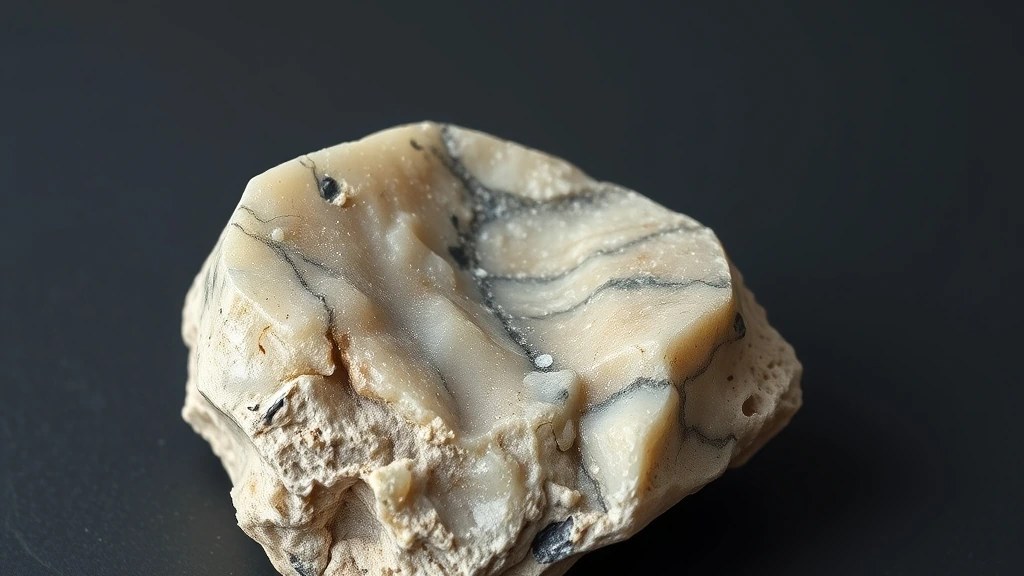
Nestled within the hexagonal crystal family, nepheline belongs to the broader natural mineral / crystal group, forming in silica‑undersaturated igneous rocks such as nepheline syenites and phonolites. Its framework consists of linked SiO₄ tetrahedra with Al³⁺ and large alkali cations occupying channels, giving rise to a distinctive, low‑density lattice. This mineral’s formation reflects high‑temperature magmatic processes where potassium and sodium dominate over silica, producing a unique gem‑quality aggregate that is both lightweight and optically subtle.
What is Nepheline Gemstone? Geological Overview & Definition
Nepheline is a feldspathoid mineral, the feldspar‑like counterpart that crystallizes when silica is insufficient to complete a full feldspar structure. It occurs as well‑formed prisms or massive aggregates, often displaying a pearly to vitreous luster that enhances its appeal in ornamental cuts.
In gemological contexts, the stone is valued for its subtle color palette—from translucent whites to faint greens—derived from trace iron or titanium impurities. While not as hard as quartz, its moderate hardness and low specific gravity (≈2.59 g/cm³) make it a lightweight alternative for pendants and earrings, especially when treated to improve durability.
Nepheline Gemstone Chemical Composition & Crystallographic Properties
The definitive formula Na₃KAl₃Si₆O₁₈ reflects a balanced substitution of Na⁺ and K⁺ within the hexagonal lattice, where each unit cell contains three formula units. This hexagonal crystal family arrangement yields a characteristic 6/m symmetry, producing elongated prismatic crystals that often terminate in pyramidal faces.
Cation substitution is a key driver of nepheline’s variability: Na⁺ may be partially replaced by K⁺ or even Ca²⁺ in natural specimens, subtly shifting the refractive indices (nω = 1.529–1.546, nε = 1.526–1.542) and influencing optical birefringence. Such flexibility also accounts for the mineral’s susceptibility to acid attack, as the Al–O–Si framework breaks down in the presence of strong acids, releasing soluble alkalis.
Color in nepheline arises from chromophore centers where trace Fe³⁺ or Ti⁴⁺ occupy octahedral sites, generating faint green or brown hues through crystal field transitions. These color centers are often weak, making the stone appear nearly colorless unless enhanced by heat or irradiation.
Thermally, nepheline is stable up to ~1100 °C, beyond which it begins to decompose into nepheline‑rich glass and releases alkali vapors. Controlled heating can improve clarity by annealing internal strains, but excessive temperatures risk irreversible phase changes to leucite or feldspar, permanently altering its gemological character.
| Property | Specification |
|---|---|
| Mineral Group | Natural Mineral / Crystal |
| Chemical Formula | Na₃KAl₃Si₆O₁₈ |
| Mohs Hardness | 6 |
| Crystal System | hexagonal crystal family |
| Specific Gravity (Density) | 2.55–2.65 (average: 2.59) |
| Refractive Index | ”n” ω = 1.529–1.546 ”n” ε = 1.526–1.542 |
| Color & Optical Properties | Natural Nepheline Gemstone color spectrum and optical dispersion |
| Primary Mining Localities | Global primary localities |
| Water & Chemical Resistance | High (Safe for gentle water washing) |
| Chakra Alignment (Traditional) | Crown Chakra, Third Eye Chakra |
| Zodiac Affinity (Traditional) | Aquarius, Leo |
| Symbolic Meaning (Traditional) | Clarity of thought, spiritual awakening, and mental balance |
Nepheline Gemstone Varieties & Color Spectrum
Nepheline occurs in diverse geological settings, leading to distinct visual and chemical variations. These differences arise from trace element substitutions and cooling rates within alkaline igneous rocks. Understanding these morphs is essential for accurate gemological identification and valuation.
Colorless to Pale Yellow Nepheline
This variety typically forms in high-temperature alkaline basalt or syenite intrusions. It exhibits a clean, glassy luster with minimal internal fracturing or inclusions. The pale hue results from the absence of significant iron or manganese impurities.
Collectors prize this form for its clarity and high refractive index. It is often cut into cabochons to showcase its subtle iridescence. This variety is moderately common in European deposits.
Green Nepheline (Chlorophyll-bearing)
Distinct green tones emerge when chlorine substitutes for oxygen in the crystal lattice. This variety often displays a soft, pastel green that deepens under magnification. It frequently contains microscopic fluid inclusions that enhance its visual appeal.
Found primarily in pegmatite pockets, this morph is rarer than its colorless counterpart. The green coloration is stable and does not fade with light exposure. Gem cutters favor it for its unique chromatic signature.
Pink Nepheline (Manganese-rich)
A rare pink hue develops when manganese ions replace aluminum in the structure. This variety is exceptionally scarce and commands a premium in the gem market. The color is usually a delicate rose-pink rather than a vibrant magenta.
It typically occurs in syenite host rocks with specific oxidation conditions. The rarity of this morph makes it a sought-after specimen for advanced collectors. Its formation requires precise geochemical balance during crystallization.
Iridescent Nepheline (Labradorite-like)
While distinct from labradorite, some nepheline exhibits iridescence due to internal exsolution lamellae. This optical phenomenon creates flashes of blue, green, or gold on the surface. The effect is caused by light interference within the crystal structure.
This variety is often mistaken for labradorite by novice buyers. However, nepheline lacks the characteristic schiller banding of true labradorite. It is valued for its dynamic, shifting color play under varied lighting.
Where is Nepheline Gemstone Found? Geological Mining & Extraction
Nepheline primarily crystallizes in alkaline igneous rocks such as syenite, nepheline syenite, and essexite. These host rocks form in tectonic settings where mantle plumes interact with the crust. The mineral often occurs in large, well-formed crystals within these intrusive bodies.
Major deposits are located in Russia, particularly in the Kola Peninsula and Ural Mountains. Significant mining operations also exist in Canada, Norway, and the United States. Extraction involves open-pit mining followed by careful sorting of gem-quality material.
Historical Significance & Cultural Lore of Nepheline Gemstone
Ancient civilizations utilized nepheline for decorative purposes, though it was often misidentified as other feldspars. Archaeological findings in Scandinavia reveal its use in jewelry and ceremonial objects. The mineral’s durability made it suitable for intricate carvings and beads.
In modern esoteric traditions, nepheline is associated with mental clarity and spiritual awakening. It is believed to enhance intuition and connect the wearer to higher consciousness. This lore reflects the mineral’s association with the Crown Chakra in metaphysical practices.
Modern Uses & Jewelry Applications of Nepheline Gemstone
Lapidary artisans favor nepheline for its moderate hardness (Mohs 6), which allows precise shaping without excessive tool wear. The stone is commonly cut into smooth cabochons that showcase its subtle translucency, while skilled faceters can produce brilliant hexagonal‑cut gems that highlight its hexagonal crystal habit. In addition to wearable pieces, nepheline is prized for ornamental carving, appearing in decorative boxes, inlay work, and high‑end architectural accents.
- Cabochon pendants and earrings emphasizing a soft, milky glow
- Faceted rings and brooches that exploit the stone’s birefringence
- Inlay panels for luxury watches and furniture
- Carved miniatures and collector’s busts for display
Safety & Mineral Profile of Nepheline Gemstone
Handling nepheline poses no toxic risk; the mineral is chemically stable, resisting weathering and acid attack under normal conditions. When polishing, use standard eye protection and a dust mask, as fine silica particles can be inhaled during grinding. Nepheline is primarily a collector mineral, valued for scientific study and specimen display rather than any proven crystal‑healing effect; historical esoteric lore links it to “clarity of thought” and “spiritual awakening,” but such claims lack empirical support.
Mineralogical Group and Planetary Lore of Nepheline Gemstone
Nepheline belongs to the feldspathoid group, a family of silica‑deficient aluminosilicates that crystallize in the hexagonal system. Its formula Na₃KAl₃Si₆O₁₈ places it alongside leucite and sodalite, and its relatively low density (2.55–2.65 g/cm³) distinguishes it from true feldspars.
In traditional planetary symbolism, nepheline is associated with Saturn and the Crown & Third‑Eye Chakras, reflecting ancient beliefs that the stone could aid mental balance and higher perception. Modern gemologists treat these associations as cultural heritage, not scientific fact, and focus instead on the stone’s crystallography and physical properties.
How to Identify Real vs. Fake Nepheline Gemstone
Artificial imitations of nepheline include synthetic glass, dyed quartz, and resin composites that mimic its milky appearance. These substitutes often lack the characteristic hexagonal fracture and have different refractive indices. Because nepheline’s hardness is only 6, many fakes will feel softer or display surface bubbling when heated.
Practical At‑Home Authenticity Tests
- Temperature Test (Thermal Feel): Real nepheline feels cool to the touch and retains that coolness longer than glass or resin, which quickly warm to hand temperature.
- Specific Gravity & Weight Test: Weigh the stone and compare its density (≈2.59 g/cm³). A noticeably heavier piece likely indicates a denser material such as glass (≈2.5 g/cm³) or a lighter resin.
- Scratch & Hardness Test (Mohs Comparison): Use a steel file (hardness ≈5.5) or a quartz point (hardness ≈7). Nepheline will resist a steel file but be scratched by quartz, confirming its Mohs 6 rating.
- Microscopic & Loupe Inspection (Internal Inclusions): Under 10×–30× magnification, genuine nepheline shows fine, irregular inclusions and a hexagonal cleavage pattern, whereas glass or plastic appears uniformly clear or shows flow lines and bubbles.
Nepheline Gemstone Valuation Factors, Grading & Pricing
Color Saturation is the foremost driver of market price. Gemstones displaying vivid, deep hues—especially rare pinks or intense yellows—command premiums, while pale or washed‑out stones are discounted. Uniform tone across the stone and a high‑shine luster further enhance desirability, signaling minimal internal scattering.
Carat Weight influences value exponentially; larger stones are rarer and thus fetch higher per‑carat rates. However, weight alone is insufficient—well‑executed facet symmetry maximizes brilliance and can offset a modest size. The presence of a matrix or visible inclusions typically reduces price, though a clean, inclusion‑free specimen is prized by collectors.
Geographical Provenance Premium adds a nuanced layer to pricing. Nepheline sourced from historic locales such — such as the Kola Peninsula or the Adirondacks — often carries a boutique label that appeals to connoisseurs. Wholesale trends show a steady 5‑8 % annual increase, while retail prices can spike 20‑30 % for certified, provenance‑verified stones.
How to Clean and Care for Nepheline Gemstone
Use warm soapy water and a soft cloth to gently remove surface dirt; this method respects the stone’s Mohs hardness of 6 while preserving its hexagonal crystal integrity. Rinse briefly with lukewarm water and pat dry with a lint‑free towel. Avoid ultrasonic cleaners entirely, as the vibrations can induce micro‑fractures in the lattice.
Cleansing and Recharging Nepheline Gemstone (Energetic Care)
For energetic renewal, place the stone in the gentle smoke of white sage or cedar; the smudging process clears residual karmic imprint without exposing the mineral to liquids. Allow the smoke to envelop the gem for 5‑10 minutes, then set it aside to air‑dry.
Alternatively, charge nepheline under moonlight on a clean selenite plate for several hours. The lunar photons and selenite’s neutral energy amplify clarity of thought and mental balance, aligning the stone with its esoteric properties while keeping it dry and intact.
Frequently Asked Questions About Nepheline Gemstone
Is nepheline safe to wear in the shower or during swimming?
Yes, it tolerates gentle water exposure. Nepheline’s hexagonal crystal structure and moderate hardness (Mohs 6) allow safe cleaning with mild soap and water, but prolonged soaking or harsh detergents can dull its surface polish, so rinse promptly and pat dry.
Can I clean nepheline with an ultrasonic cleaner?
No, avoid ultrasonic cleaning. The rapid vibrations can create micro‑fractures in the Na₃KAl₃Si₆O₁₈ lattice, especially along cleavage planes, leading to loss of brilliance. Instead, use warm soapy water, a soft cloth, and gentle hand‑washing.
What zodiac signs are associated with nepheline?
Aquarius and Leo are the aligned signs. In astrological gem lore, these signs are said to benefit from nepheline’s clarity of thought properties, enhancing intellectual pursuits and creative expression for those born under these constellations.
Which chakras does nepheline activate?
It works with the Crown and Third Eye Chakras. Energy work suggests the stone supports spiritual awakening and mental balance by stimulating the pineal gland and higher‑mind centers, aiding meditation and intuitive insight.
How hard is nepheline compared to other gemstones?
It rates a 6 on the Mohs scale. This places it between opal (5.5–6.5) and topaz (8), making it suitable for daily wear but vulnerable to scratches from harder materials; store it separately from diamonds or sapphires.
What is the typical refractive index of nepheline?
Its indices range from nω = 1.529–1.546 to nε = 1.526–1.542. These relatively low values give the stone a subtle brilliance and a faint birefringence, distinguishing it from higher‑index gems like quartz (n≈1.54–1.55).
Does nepheline have any notable density or specific gravity?
Its density averages 2.59 g/cm³ (range 2.55–2.65). This lightness contributes to a comfortable feel on the finger and makes it an excellent choice for larger cabochons without excessive weight.
Is nepheline suitable for use in jewelry settings that experience frequent impact?
It is moderately durable but not impact‑proof. While its hexagonal crystal family provides decent toughness, sudden blows can cause chipping, especially at facet edges; protective settings like bezel or channel settings are recommended for active wear.