
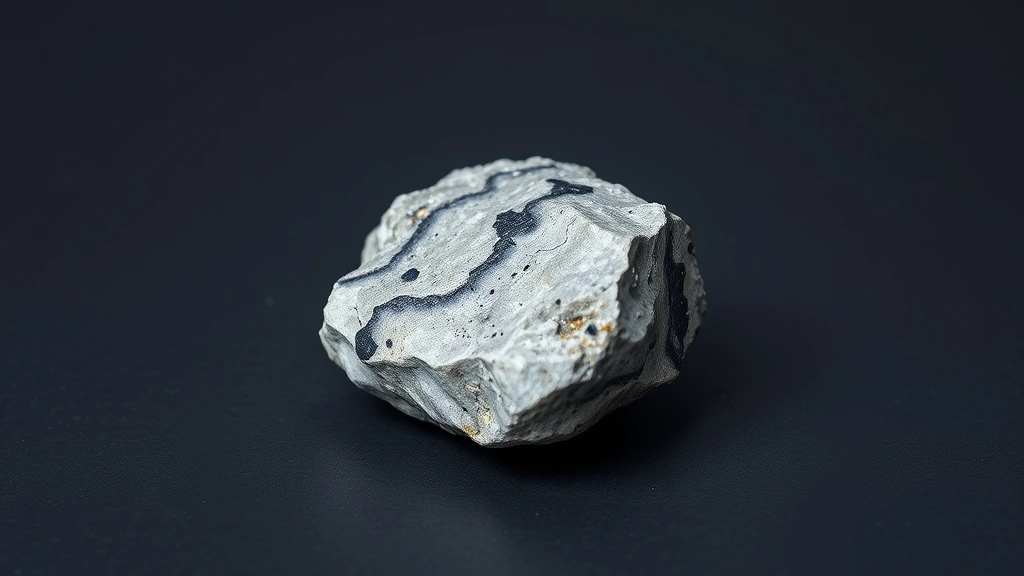
Petalite belongs to the feldspar group within the broader classification of natural silicate minerals. It forms as a primary mineral in granitic pegmatites, often coexisting with quartz and other lithium-bearing species. Its geological significance lies in its role as a key source of lithium in industrial extraction processes.
What is Petalite? Geological Overview & Definition
Petalite is defined as a monoclinic feldspar that crystallizes in distinct prismatic or tabular habits. It frequently occurs in pegmatitic environments, where slow cooling allows for the growth of large, well-formed crystals. These formations are often found in alkaline granites, providing critical context for its geological origin. Petalite’s clear, glassy luster and its frequent association with alkaline pegmatites make it a natural companion to the similarly transparent and heat‑tolerant **Colorless Topaz**.
The mineral serves as a vital lithium ore in modern battery technology and glass manufacturing. Its identification relies on specific physical properties, including its low specific gravity and characteristic cleavage. Understanding its geological setting helps distinguish it from visually similar feldspars like albite or microcline.
Petalite Chemical Composition & Crystallographic Properties
Petalite crystallizes in the monoclinic crystal system, exhibiting a lattice structure defined by specific axial angles and lengths. The chemical formula LiAlSi₄O₁₀ reflects its unique stoichiometry, distinguishing it from other feldspars. This structure allows for cation substitution, where lithium may be partially replaced by sodium or potassium in certain geological conditions.
The mineral displays a refractive index ranging from 1.504 to 1.516, contributing to its glassy luster. Its acid sensitivity is moderate, as it can slowly dissolve in strong hydrofluoric acid. Color variations, often pale or whitish, result from chromophore centers and trace impurities rather than intrinsic structural coloration.
Thermal behavior indicates that petalite remains stable under normal geological temperatures but may undergo dehydroxylation at higher heat. Its density of 2.4 g/cm³ is notably lower than many other silicates. This property, combined with its crystallographic symmetry, aids in precise mineralogical identification during laboratory analysis.
| Property | Specification |
|---|---|
| Mineral Group | Natural Mineral / Crystal |
| Chemical Formula | LiAlSi₄ O₁₀ |
| Mohs Hardness | 6–6.5 |
| Crystal System | Monoclinic |
| Specific Gravity (Density) | 2.4 |
| Refractive Index | n α = 1.504, n β = 1.510, n γ = 1.516 |
| Color & Optical Properties | Natural Petalite color spectrum and optical dispersion |
| Primary Mining Localities | Global primary localities |
| Water & Chemical Resistance | High (Safe for gentle water washing) |
| Chakra Alignment (Traditional) | Crown Chakra, Heart Chakra |
| Zodiac Affinity (Traditional) | Virgo, Libra |
| Symbolic Meaning (Traditional) | Spiritual enlightenment, emotional balance, and inner peace |
Petalite Varieties & Color Spectrum
Petalite exhibits a limited but distinct range of natural hues, primarily driven by trace elemental substitutions within its crystal lattice. The most common and commercially significant form is the pure, colorless to white variety, which displays exceptional transparency and luster. This clarity makes it highly sought after for industrial applications and high-end jewelry settings.
Pure White Petalite
This dominant variety forms in large, well-crystallized pegmatite pockets where lithium concentrations are high but iron impurities are minimal. The crystals often appear as massive, blocky aggregates with a vitreous luster that mimics quartz. Its chemical purity ensures a high refractive index, giving the stone a bright, glassy appearance.
Pale Green Petalite
Trace amounts of chromium or vanadium can impart a subtle, pastel green tint to the mineral structure. This color morph is rarer than the white variety and typically occurs in specific zones of lithium-rich pegmatites. The trace element substitution creates a delicate hue that is highly valued by collectors seeking unique coloration.
Pink Petalite
Occasionally, petalite exhibits a faint pinkish or lilac shade, attributed to complex interactions with manganese or other rare earth elements. This variety is extremely rare in the global market and often found in association with other lithium-bearing minerals like lepidolite. The pink coloration adds significant aesthetic appeal, distinguishing it from standard white specimens.
Milky White Petalite
This variety contains microscopic fluid inclusions or fine-grained mineral impurities that scatter light, creating an opaque, milky appearance. It is commonly found in the outer zones of pegmatite bodies where crystal growth was less orderly. The internal inclusions give the stone a soft, diffused glow, making it popular for carvings and ornamental objects.
Where is Petalite Found? Geological Mining & Extraction
Petalite is exclusively found in lithium-rich pegmatites, which are coarse-grained igneous rocks formed from the final stages of magma crystallization. These deposits are typically located in ancient geological terrains, such as the Precambrian shields of North America and Scandinavia. The mineral often coexists with other lithium minerals like spodumene and lepidolite within these specialized rock formations.
Primary extraction regions include the Black Hills of South Dakota, USA, and the Khibiny Mountains in Russia. In the United States, the Black Hills pegmatites have historically produced some of the finest gem-quality crystals. Mining operations focus on identifying large, clean crystals suitable for jewelry, while massive deposits are processed for industrial lithium extraction.
Historical Significance & Cultural Lore of Petalite
While petalite has been known to mineralogists since the early 19th century, its use in ancient civilizations remains largely undocumented due to its relative rarity. Unlike more durable gemstones, its moderate hardness and brittleness limited its application in widespread archaeological artifacts. However, small fragments have been identified in pre-Columbian South American sites, suggesting early recognition of its unique properties.
In modern esoteric traditions, petalite is associated with spiritual enlightenment and emotional balance, linking it to the Crown and Heart Chakras. This contemporary lore emphasizes its ability to promote inner peace and clarity, reflecting its translucent and pure appearance. The stone’s name derives from the Greek word *petalon*, meaning leaf, referencing its early discovery in leaf-like crystal forms.
Modern Uses & Jewelry Applications of Petatine
Petaline’s modest Mohs hardness of 6–6.5 makes it amenable to both cabochon polishing and shallow facet cutting, allowing jewelers to showcase its silky luster without excessive wear. Its low density (≈2.4 g/cm³) yields lightweight pieces prized in avant‑garde designs. Artisans also carve ornamental beads and small figurines, capitalizing on the stone’s translucency.
- Cabochon pendants for pendant and brooch settings
- Shallow‑faceted rings and earrings emphasizing subtle sparkle
- Carved beads, miniature sculptures, and decorative inlays
Safety & Mineral Profile of Petaline
Handling petaline poses no toxicological hazards; the mineral is chemically stable, resisting alteration in ordinary atmospheric conditions. When cleaning, use mild soap and a soft brush; avoid harsh acids or ultrasonic baths that could fracture the crystal lattice. Although historically cited in esoteric lore for “spiritual enlightenment,” reputable gemological practice treats petaline strictly as a collector’s specimen for scientific study and display, not as a therapeutic object.
Mineralogical Group and Planetary Lore of Petaline
Petaline belongs to the lithium‑aluminum silicate subgroup within the broader silicate family, crystallizing in the monoclinic system with characteristic prismatic habits. Its composition (LiAlSi₄O₁₀) links it to other lithium minerals such as spodumene, sharing similar low specific gravity and refractive indices.
In traditional planetary symbolism, petaline has been associated with Mercury due to its lithium content, reflecting themes of communication and mental agility. Astrologically, the stone aligns with Virgo and Libra, and energetically with the Crown and Heart Chakras, though such associations remain cultural narratives rather than scientifically validated properties.
How to Identify Real vs. Fake Petaline
Imitations of petaline often employ clear glass, quartz, or dyed synthetic crystals that mimic its translucency but lack its distinctive optical signatures. Synthetic glass may display uniform internal clarity, while dyed replicas can exhibit uneven coloration under light. Recognizing these differences requires careful visual and tactile assessment.
Practical At-Home Authenticity Tests
- Temperature Test (Thermal Feel): Genuine petaline feels cool to the touch and retains that coolness longer than glass, which quickly equilibrates to ambient temperature.
- Specific Gravity & Weight Test: With a density of ~2.4 g/cm³, petaline is noticeably lighter than quartz (≈2.65 g/cm³); a simple water displacement test can reveal this variance.
- Scratch & Hardness Test (Mohs Comparison): Using a steel file (hardness ~6.5), petaline will resist scratching, whereas glass (≈5.5) will show visible marks.
- Microscopic & Loupe Inspection (Internal Inclusions): Under 10× magnification, natural petaline often displays fine, feather‑like inclusions or growth lines, while glass appears uniformly flawless.
Petalite Valuation Factors, Grading & Pricing
Specimen aesthetic quality drives the bulk of market value. Collectors prize crystal habit perfection, where the monoclinic prisms display smooth, unblemished faces and a clear, glassy luster. An undamaged matrix free of fractures or inclusions enhances visual appeal and commands premium pricing in auction houses.
Rarity and specimen dimensions are the next decisive metrics. Large, intact clusters measured in centimeters and grams are scarce, especially when the crystals retain their natural growth orientation without handling scars. Size, weight, and the absence of any mechanical damage directly influence the price per gram in the scientific collector market.
Mineralogical provenance and locality value add a layer of historical significance. Specimens sourced from classic deposits such as the Ilmen Mountains in Russia or the Zinnwald region of Germany carry provenance prestige, attracting museums and private collectors alike. Documented origin reports and authenticated labels can double or triple a specimen’s market price.
How to Clean and Care for Petalite
Gentle cleaning preserves petalite’s delicate monoclinic structure. Use warm soapy water and a soft cloth, lightly wiping the surface to remove dust without applying pressure that could cause micro‑fractures. Rinse with lukewarm water, pat dry with a lint‑free microfiber cloth, and store in a stable, low‑humidity environment. Ultrasonic cleaners should be avoided, as the vibrations may induce structural fractures in the crystal lattice.
Cleansing and Recharging Petalite (Energetic Care)
For holistic maintenance, gently smudge the stone with sage or cedar smoke, allowing the aromatic vapors to drift over the surface for a few minutes. This dry method clears energetic stagnation without introducing moisture, aligning the petalite with its spiritual enlightenment attributes.
Alternatively, place the specimen on a clean selenite charging slab under soft moonlight for an hour or two. The subtle lunar illumination and the neutral energy of selenite safely recharge the crystal, supporting emotional balance without exposing petalite to heat or direct sunlight.
Frequently Asked Questions About Petalite
Is petalite safe to wear in the shower or while swimming?
Petalite is water‑resistant and can tolerate gentle water exposure. Its monoclinic structure and relatively low density (2.4 g/cm³) allow safe cleaning with mild water, but prolonged soaking or harsh detergents may weaken surface luster, so a quick rinse and soft drying are recommended.
How should I clean petalite jewelry at home?
Use warm, soapy water and a soft cloth, avoiding ultrasonic cleaners. The warm solution loosens grime without stressing the crystal lattice, while a soft cloth gently removes residues. Ultrasonic vibrations can create micro‑fractures in the LiAlSi₄O₁₀ framework, compromising durability.
Can petalite be repaired if it becomes scratched?
Minor scratches can be polished by a professional lapidary using a fine alumina slurry. Because petalite’s Mohs hardness is 6–6.5, it responds well to controlled polishing, restoring its refractive indices (nα = 1.504, nβ = 1.510, nγ = 1.516) and clarity without damaging the crystal.
What is the typical hardness of petalite and how does it affect everyday wear?
Petalite rates 6–6.5 on the Mohs scale, making it suitable for daily use with care. This hardness resists everyday scratches from common metals, yet it is softer than quartz, so contact with harder gemstones or abrasive surfaces should be minimized to preserve its luster.
Which zodiac signs are associated with petalite?
Petalite aligns with Virgo and Libra. These signs are believed to benefit from the stone’s stabilizing energy, enhancing analytical thinking for Virgo and promoting harmony for Libra, while the mineral’s monoclinic symmetry mirrors the balanced nature of these astrological profiles.
Which chakras does petalite activate?
Petalite resonates with the Crown and Heart Chakras. The stone’s subtle lithium content is thought to facilitate spiritual enlightenment at the Crown, while its gentle pinkish hues support emotional equilibrium in the Heart, fostering inner peace and compassion.
Does petalite have any notable optical properties for gem cutters?
Petalite exhibits low birefringence with refractive indices ranging from 1.504 to 1.516. This modest dispersion yields a soft, elegant glow rather than high fire, making it prized for cabochon cuts and delicate faceting where subtle optical clarity is desired over brilliance.
Is petalite suitable for use in high‑temperature jewelry settings?
Petalite can tolerate moderate heat but should not be exposed to extreme temperatures. Its lithium‑aluminum silicate composition may undergo thermal shock above 400 °C, risking fracture; therefore, standard soldering practices with controlled heat are essential to avoid damaging the stone.