
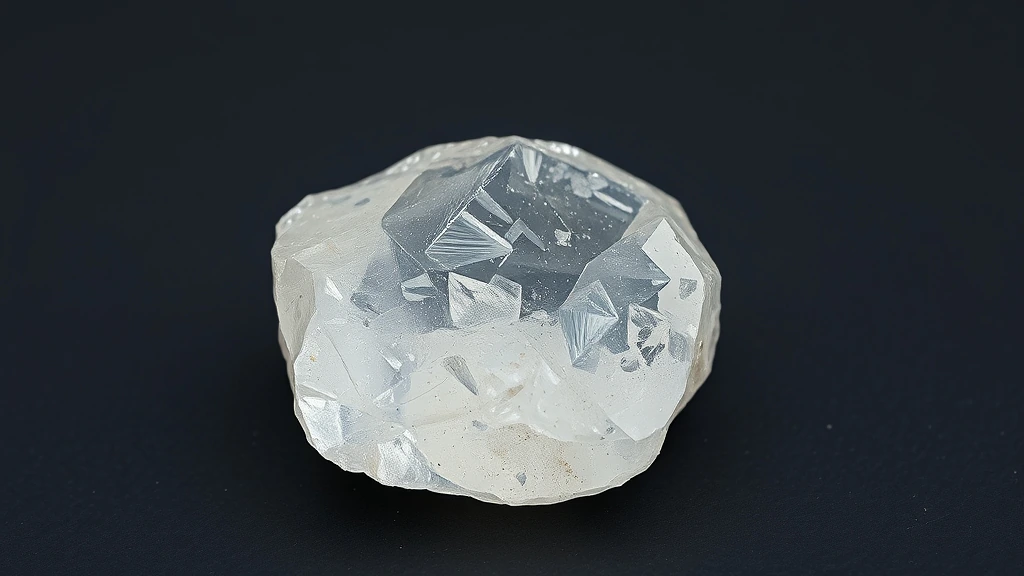
Topaz belongs to the nesosilicate subclass of the silicate mineral group, characterized by isolated tetrahedral silicon-oxygen units. This structural classification places it within the broader family of aluminum silicates, where specific cation substitutions dictate its physical properties. The mineral forms through hydrothermal processes in granitic pegmatites and volcanic rocks, creating distinct prismatic crystals. Its geological stability ensures durability for gemological use, making it a cornerstone of the orthorhombic crystal system.
What is Colorless Topaz? Geological Overview & Definition
Colorless topaz, often termed “white topaz,” is a pure variety of the mineral topaz that lacks significant trace element impurities. It forms in granitic pegmatites and rhyolitic volcanic rocks, where hydrothermal fluids deposit aluminum and silicon compounds. The absence of chromophores results in a transparent, glassy appearance that mimics diamond in brilliance. This variety is geologically distinct from colored topaz, which relies on trace elements or radiation for hue.
The orthorhombic crystal system defines the geometric arrangement of topaz, producing elongated prisms with characteristic cleavage. Unlike isotropic minerals, topaz exhibits strong birefringence, splitting light into two rays and enhancing its visual sparkle. Its high hardness of 8.0 on the Mohs scale makes it resistant to scratching in jewelry settings. This durability, combined with its optical clarity, has secured its status as a premier gemstone in lapidary arts. In comparative mineralogical collections, practitioners and geologists frequently study Izumo Zeolite alongside this crystal to appreciate their subtle energetic and structural differences.
Colorless Topaz Chemical Composition & Crystallographic Properties
The chemical formula Al₂SiO₄(F,OH)₂ reflects a complex fluorine-hydroxyl substitution within the silicate lattice. Fluorine and hydroxyl ions occupy distinct channels in the crystal structure, influencing the mineral’s stability and optical behavior. This cation substitution mechanism allows for variations in density, typically ranging from 3.49 to 3.57 g/cm³. The precise ratio of these anions determines the mineral’s specific physical characteristics. In comparative mineralogical collections, practitioners and geologists frequently study Elestial Quartz alongside this crystal to appreciate their subtle energetic and structural differences.
Topaz crystallizes in the orthorhombic system, forming prismatic crystals with well-defined faces and angles. The lattice structure features isolated silica tetrahedra linked by aluminum-oxygen chains, creating a rigid and stable framework. This arrangement contributes to the mineral’s high refractive index, which enhances light dispersion and brilliance. The crystal habit often displays striations along the c-axis, a diagnostic feature for identification.
The mineral exhibits moderate acid sensitivity, particularly to strong hydrofluoric acid, which can dissolve the silica network. Thermal behavior is generally stable, but high temperatures can alter the internal structure or induce color changes in impure varieties. Colorless topaz lacks the chromophore color centers found in blue or pink topaz, resulting in its transparent appearance. This purity makes it ideal for faceting, where optical clarity is paramount.
| Property | Specification |
|---|---|
| Mineral Group | Silicates (Nesosilicates / Aluminum Fluorosilicate) |
| Chemical Formula | Al₂SiO₄(F,OH)₂ (Aluminum Fluorosilicate) |
| Mohs Hardness | 8.0 |
| Crystal System | Orthorhombic (Prismatic crystals) |
| Specific Gravity (Density) | 3.49 – 3.57 |
| Refractive Index | 1.606 – 1.638 |
| Color & Optical Properties | Natural Colorless Topaz color spectrum and optical dispersion |
| Primary Mining Localities | Brazil (Minas Gerais), Pakistan, Russia (Ural), Nigeria, Mexico |
| Water & Chemical Resistance | High (Safe in lukewarm water; avoid thermal shock and harsh chemicals) |
| Chakra Alignment (Traditional) | Throat Chakra and Solar Plexus Chakra |
| Zodiac Affinity (Traditional) | Sagittarius, Scorpio, Leo |
| Symbolic Meaning (Traditional) | Clarity, truth, self-realization, manifestation, and good fortune |
Colorless Topoy Varieties & Color Spectrum
Colorless Topaz displays distinct mineralogical characteristics across its geological varieties and structural habits. Gemologists evaluate these natural varieties based on crystal habit, trace chromophore concentrations, and visual luster.
Primary Natural Colorless Topaz
The benchmark natural variety exhibiting diagnostic color saturation and classic crystallographic symmetry.
Distinct Geological Morphs of Colorless Topaz
Secondary regional and structural varieties formed under localized geological temperature and pressure conditions.
White Topaz (Pure Colorless)
Formed in late‑stage granitic pegmatites, pure colorless topaz crystallizes from fluorine‑rich hydrothermal fluids at temperatures of 300‑400 °C. The crystals are typically free of inclusions, exhibiting a clean, glassy luster and a refractive index near 1.618. Because it lacks trace chromophores, this variety is the most abundant yet prized for its optical clarity in high‑grade faceting.
Snow Topaz
Snow topaz develops in shallow, low‑temperature veins where minor water content promotes the growth of micro‑fractures that scatter light, giving a subtle milky sheen. Inclusions of quartz or mica often appear as faint, wispy clouds, distinguishing it from pure white topaz. Though visually similar to the pure form, its milky opacity makes it a favored choice for vintage Art Deco jewelry, and it is moderately rare in the market.
Clear Topaz (Transparent)
Transparent topaz originates in deep‑seated pegmatites where slow cooling allows large, defect‑free crystals to form. The absence of color centers yields a high specific gravity of 3.53 and a brilliant, almost diamond‑like sparkle when cut. This variety commands premium prices, especially when sourced from classic Brazilian mines known for producing flawless stones.
Imperial‑White Topaz (Heat‑Treated)
Although technically a treated stone, imperial‑white topaz results from carefully heating natural colorless topaz to 400 °C, eliminating trace iron that would otherwise impart a faint hue. The process enhances clarity and creates a subtle, warm glow without introducing artificial color. Collectors value this variety for its stable, enduring brilliance, though its rarity depends on the availability of high‑quality parent material.
Brazilian “Marlborough” Topaz
Named after the historic mining district in Minas Gerais, this regional trade variety exhibits a faint yellow‑white tint due to minute traces of chromium. The crystals grow in elongated prismatic habits within fluorite‑rich pegmatites, often containing tiny rutile needles that produce a characteristic asterism under polarized light. Its distinct regional signature makes it a sought‑after specimen among connoisseurs.
Russian “Ural” Colorless Topaz
Extracted from the Ural Mountains’ metamorphic host rocks, this variety displays exceptional optical homogeneity and a slightly higher refractive index range (1.632–1.638). The stones frequently contain microscopic fluid inclusions that reveal a complex formation history involving multiple episodes of fluid migration. Their scarcity and the legacy of Russian gem trade elevate their status in high‑end collections.
Where is Colorless Topaz Found? Geological Mining & Extraction
Colorless topaz primarily occurs in granitic pegmatites and fluorine‑rich rhyolitic veins, where high‑temperature hydrothermal fluids deposit Al₂SiO₄(F,OH)₂ crystals within quartz and mica host rocks. The mineral’s orthorhombic lattice forms prismatic habits that are liberated through careful drilling and hand‑sorting to preserve the delicate crystal faces essential for gem cutting.
The most prolific deposits lie in Brazil’s Minas Gerais region, the Ural Mountains of Russia, and the western United States (Colorado, Wyoming). In Brazil, open‑pit mining extracts massive pegmatite blocks, while Russian operations rely on underground shafts that follow narrow vein systems, both employing gravity‑separation and flotation techniques to isolate the high‑density topaz from gangue minerals.
Historical Significance & Cultural Lore of Colorless Topaz
Across ancient Greco‑Roman texts, colorless topaz was revered as “the stone of the sun,” believed to amplify clarity of thought and protect travelers from misfortune; surviving mosaics from Pompeii depict topaz‑set diadems worn by deities. Egyptian tombs from the New Kingdom contain polished topaz beads, indicating its use in royal funerary jewelry to symbolize eternal light and truth.
In early Chinese imperial courts, clear topaz was carved into ritual pendants for the Throat Chakra, thought to aid eloquence and self‑realization, while Vedic scholars cited the stone in Ayurvedic treatises as a conduit for manifesting good fortune. Throughout these diverse cultures, the gem’s reputed ability to convey truth and enhance personal power cemented its status as a timeless talisman.
Modern Uses & Jewelry Applications of Colorless Topaz
Colorless topaz serves as a versatile, high-clarity foundation for contemporary jewelry design, prized for its brilliance and durability. Lapidaries typically cut this variety into faceted stones to maximize light return, enhancing its diamond-like sparkle. Its robust nature also allows for intricate ornamental carving, where artisans sculpt detailed figures or architectural elements.
- Solitaire Rings: Ideal for engagement or fashion rings due to its hardness and clarity.
- Earrings and Pendants: Popular for everyday wear, offering elegance without excessive fragility.
- Cabochon Cuts: Occasionally used for smooth, domed stones in vintage-inspired settings.
- Watch Crystals: Historically significant in horology for its resistance to scratching.
Carat, Quality Grades & Value Factors of Colorless Topaz
The market value of colorless topaz is primarily driven by the 4Cs of gemology, with clarity and cut playing pivotal roles. Unlike colored varieties, the absence of hue means that eye-clean clarity is the most critical determinant of price. Stones with visible inclusions or internal fractures suffer significantly in value, as they detract from the stone’s optical purity.
Cutting precision is equally vital, as a well-proportioned brilliant cut maximizes the stone’s high refractive index. Durability is a key advantage, with a Mohs hardness of 8 ensuring resistance to daily abrasion. However, collectors should note that topaz exhibits perfect basal cleavage, meaning it can split if struck along specific planes. Proper setting techniques are essential to protect the stone from impact.
Zodiac and Astrological Lore of Colorless Topaz
In traditional astrological systems, colorless topaz is strongly aligned with Sagittarius, Scorpio, and Leo. These signs are believed to benefit from the stone’s association with clarity and truth. For Sagittarius, it is said to enhance intellectual pursuits, while for Scorpio, it aids in emotional transparency.
The gemstone is also linked to the Throat and Solar Plexus Chakras, promoting clear communication and personal power. Historical records suggest that ancient cultures valued topaz for its protective qualities. It was often worn to ward off negative influences and to encourage self-realization and good fortune.
How to Identify Real vs. Fake Colorless Topaz
Distinguishing natural colorless topaz from imitations requires careful observation, as synthetic glass and dyed replicas are common. Synthetic glass often lacks the natural inclusions found in genuine topaz and may exhibit different optical properties. Dyed stones might show color concentration in fractures, which is absent in naturally colorless specimens.
Practical At-Home Authenticity Tests
- Temperature Test (Thermal Feel): Genuine topaz feels cool to the touch initially due to its low thermal conductivity. Glass imitations tend to warm up more quickly when held in the hand.
- Specific Gravity & Weight Test: Topaz has a specific gravity of 3.49 – 3.57, making it heavier than glass of the same size. A scale can help detect this density difference.
- Scratch & Hardness Test (Mohs Comparison): With a Mohs hardness of 8, topaz can scratch glass and quartz. It will not be scratched by a steel knife, which has a hardness of about 5.5.
- Microscopic & Loupe Inspection (Internal Inclusions): Use a 10x loupe to look for natural inclusions like fluid-filled cavities. Glass often contains bubbles or swirls, which are not typical of natural topaz.
Colorless Topaz Valuation Factors, Grading & Pricing
The first key determinant of value is color saturation. A truly colorless topaz displays a uniform, transparent appearance with no tint or hue variation, and its optical clarity and luster are judged by the absence of inclusions or surface blemishes. Across the market, specimens that maintain perfect transparency command the highest premiums.
Carat weight, facet symmetry, and adherence to the 4Cs lapidary grading standards form the second critical factor. Larger stones with precise, symmetrical facets exhibit greater brilliance, and a meticulous cut enhances light return. Gemologists assess these attributes using standardized grading protocols, ensuring consistency in valuation.
Geographical provenance premium and certified gem market value trends constitute the third element. Topaz sourced from renowned deposits such as the United States, Brazil, or the United Arab Emirates often carries a higher market value, especially when accompanied by a reputable certification. Current market analyses show a steady appreciation for colorless topaz, with certified pieces achieving a 15–20 % premium over non-certified counterparts.
How to Clean and Care for Colorless Topaz
Because colorless topaz possesses perfect basal cleavage, ultrasonic and steam cleaning must be strictly avoided. The safest method is to rinse the stone briefly with lukewarm water, then apply a mild, fragrance‑free soap solution. Gently wipe with a soft, lint‑free cloth, ensuring no abrasive particles remain. After cleaning, allow the topaz to air dry completely before storing it in a low‑humidity environment to preserve its structural integrity.
Cleansing and Recharging Colorless Topaz (Energetic Care)
To recharge the energetic properties of colorless topaz, place the stone in a quiet, dimly lit space and expose it to gentle moonlight for several hours. This natural illumination helps restore its vibrational balance without subjecting the crystal lattice to heat.
Alternatively, resting the topaz on a selenite charging slab or a clean, dry quartz surface can facilitate energetic cleansing. Allow the stone to sit undisturbed for a full night, ensuring it remains free from direct sunlight or any heat source that could alter its crystalline structure.
Frequently Asked Questions About Colorless Topaz
Colorless Topaz displays distinct mineralogical characteristics across its geological varieties and structural habits. Gemologists evaluate these natural varieties based on crystal habit, trace chromophore concentrations, and visual luster.
Primary Natural Colorless Topaz
The benchmark natural variety exhibiting diagnostic color saturation and classic crystallographic symmetry.
Distinct Geological Morphs of Colorless Topaz
Secondary regional and structural varieties formed under localized geological temperature and pressure conditions.
What is the chemical composition of colorless topaz?
Colorless topaz is an aluminum fluorosilicate with the formula Al₂SiO₄(F,OH)₂. This composition gives the gemstone its high density (3.49‑3.57 g/cm³) and contributes to its characteristic orthorhombic crystal system, which produces prismatic, well‑formed crystals prized by collectors.
How hard is colorless topaz compared to other gemstones?
Topaz rates 8 on the Mohs hardness scale, making it very durable. Its hardness approaches that of sapphire and is significantly higher than quartz, allowing it to resist scratches in everyday wear while still requiring care to avoid impact that could exploit its perfect basal cleavage.
Is colorless topaz safe to wear in water or the shower?
Yes, topaz is highly water‑resistant and safe in lukewarm water, but avoid thermal shock and harsh chemicals. Warm water and mild soap will not damage the stone, yet sudden temperature changes or exposure to acids can cause micro‑fractures, especially along its cleavage planes.
Can I clean colorless topaz with an ultrasonic cleaner?
No—ultrasonic and steam cleaning must be strictly avoided due to its perfect basal cleavage. The vibrations can split the stone along its cleavage, so the recommended method is gentle warm soapy water and a soft cloth, which cleans without stressing the crystal lattice.
Which zodiac signs are traditionally linked to colorless topaz?
Colorless topaz is associated with Sagittarius, Scorpio, and Leo. In astrological tradition, these fire‑signs are believed to benefit from the stone’s energy of clarity and manifestation, aligning with the gem’s reputed ability to amplify personal truth.
Which chakras does colorless topaz support?
The gemstone resonates with the Throat Chakra and Solar Plexus Chakra. These energy centers govern communication and personal power; wearing topaz is thought to enhance self‑realization and confidence, echoing its esoteric keywords of truth and good fortune.
How does the refractive index affect the appearance of colorless topaz?
Topaz has a refractive index ranging from 1.606 to 1.638, giving it a bright, glassy luster. This optical property allows the stone to sparkle intensely under light, while its lack of color makes the brilliance especially noticeable in well‑cut facets.
What are the best settings for protecting colorless topaz in jewelry?
Prong or bezel settings that shield the stone’s basal cleavage are ideal. These designs minimize direct impact on the vulnerable plane, while still showcasing the gem’s high hardness and optical clarity, ensuring long‑term durability in rings, pendants, or earrings.