
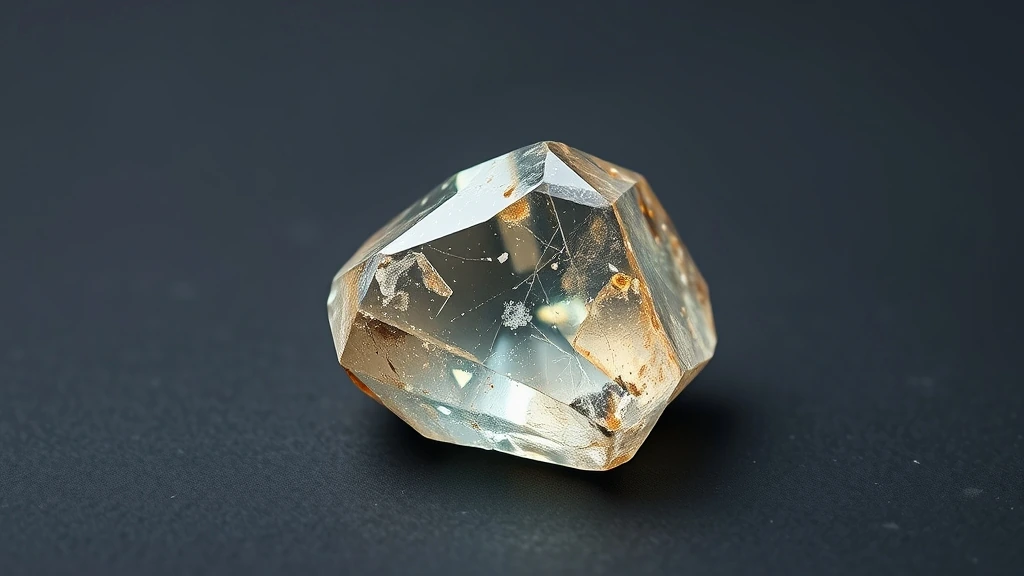
Topaz belongs to the nesosilicate subclass within the broader silicate mineral family. This classification reflects its isolated tetrahedral silicon-oxygen units, which form the structural backbone of the crystal lattice. As an aluminum fluorosilicate, it integrates fluoride and hydroxide ions into its framework. This specific chemical arrangement grants the stone its characteristic durability and optical brilliance. In comparative mineralogical collections, practitioners and geologists frequently study Serendibite alongside this crystal to appreciate their subtle energetic and structural differences.
What is Topaz? Geological Overview & Definition
Topaz forms primarily in granitic pegmatites and volcanic rocks, where high temperatures facilitate its crystallization. It often occurs in prismatic crystals, sometimes reaching impressive lengths in hydrothermal veins. The mineral is chemically stable, resisting weathering better than many other gemstones. This resilience allows it to survive transport and erosion, accumulating in alluvial deposits. In comparative mineralogical collections, practitioners and geologists frequently study Prase Quartz alongside this crystal to appreciate their subtle energetic and structural differences.
Geologically, topaz is associated with acidic igneous environments rich in fluorine. Its presence indicates specific geochemical conditions during rock formation. The stone’s orthorhombic symmetry is a defining feature, distinguishing it from other silicates. Understanding these origins helps gemologists identify natural versus synthetic specimens.
Topaz Chemical Composition & Crystallographic Properties
Topaz crystallizes in the orthorhombic system, typically forming prismatic crystals with distinct cleavage planes. The unit cell structure allows for precise alignment of aluminum and silicon atoms. This arrangement contributes to the stone’s high refractive index of 1.606 to 1.638. Such optical properties enable brilliant light return and dispersion.
The lattice accommodates cation substitution, where fluoride and hydroxide ions occupy specific sites. This flexibility influences the stone’s color and stability. Topaz is generally resistant to acids, though prolonged exposure to strong alkalis can degrade it. Its thermal behavior is stable, making it suitable for high-temperature industrial applications.
Color variations arise from chromophore color centers created by natural irradiation. Trace elements like iron or chromium may also contribute to hue. Heating can alter these centers, sometimes producing the popular “Imperial” orange. Understanding these mechanisms is crucial for accurate gemological identification.
The mineral’s density ranges from 3.49 to 3.57 g/cm³, reflecting its compact atomic packing. This specific gravity aids in distinguishing topaz from lookalikes. The consistent crystallographic data ensures reliable identification in laboratory settings. Precise measurement of these properties confirms the stone’s authenticity.
| Property | Specification |
|---|---|
| Mineral Group | Silicates (Nesosilicates / Aluminum Fluorosilicate) |
| Chemical Formula | Al₂SiO₄(F,OH)₂ (Aluminum Fluorosilicate) |
| Mohs Hardness | 8.0 |
| Crystal System | Orthorhombic (Prismatic crystals) |
| Specific Gravity (Density) | 3.49 – 3.57 |
| Refractive Index | 1.606 – 1.638 |
| Color & Optical Properties | Natural Topaz color spectrum and optical dispersion |
| Primary Mining Localities | Brazil (Minas Gerais), Pakistan, Russia (Ural), Nigeria, Mexico |
| Water & Chemical Resistance | High (Safe in lukewarm water; avoid thermal shock and harsh chemicals) |
| Chakra Alignment (Traditional) | Throat Chakra and Solar Plexus Chakra |
| Zodiac Affinity (Traditional) | Sagittarius, Scorpio, Leo |
| Symbolic Meaning (Traditional) | Clarity, truth, self-realization, manifestation, and good fortune |
Topaz Varieties & Color Spectrum
Imperial Topaz
Imperial topaz forms in granitic pegmatites where fluorine‑rich fluids interact with aluminum‑silicate precursors. The crystal habit is typically prismatic with a high relief that catches light, producing a golden‑yellow to amber hue. Inclusions of rutile needles create a subtle asterism, and the variety is most prized from Brazil’s Minas Gerais region, where large, clean stones are relatively rare.
Blue Topaz
Natural blue topaz is exceedingly scarce; most market specimens are heat‑treated or irradiated to develop their vivid azure color. When it does occur, it originates in alluvial deposits derived from weathered pegmatites in Pakistan and the United States. The stones display a uniform, translucent blue with minimal inclusions, and their rarity drives premium prices for untreated material.
Pink Topaz
Pink topaz derives its delicate rose hue from trace chromium or manganese incorporated during crystal growth in high‑temperature pegmatitic environments. Notable sources include the Sakha Republic of Russia and the Kalahari region of Namibia, where the stones often exhibit pleochroic color zoning. Fine‑grained, fracture‑free crystals are uncommon, making high‑quality pink topaz a collector’s treasure.
Mystic Topaz
Mystic topaz is a treated variety in which a thin metallic coating is vapor‑deposited onto a colorless substrate, yielding a rainbow‑like interference effect. The underlying crystal is typically sourced from Brazil or Nigeria, where large, clear stones are abundant. While the coating is stable, the treatment distinguishes mystic topaz from natural colored varieties and influences its market classification.
Green Topaz
Green topaz acquires its hue from natural exposure to iron and titanium during late‑stage hydrothermal alteration. Deposits in the United States (Colorado) and Madagascar yield stones with a pale to vivid green that may display faint inclusions of mica or quartz. The rarity of vivid, uniformly colored specimens makes green topaz a niche gemstone for specialized collectors.
Colorless (White) Topaz
Colorless topaz, often called “white topaz,” is the most common natural form and serves as the baseline for most treatments. It crystallizes in orthorhombic prisms within silica‑rich pegmatites, displaying a high refractive index that gives a brilliant sparkle. Large, inclusion‑free stones are sourced from Brazil, Nigeria, and Russia, providing the raw material for a wide array of gemstone enhancements.
Where is Topaz Found? Geological Mining & Extraction
Topaz is predominantly hosted in fluorine‑rich granitic pegmatites and rhyolitic volcanic tuffs where late‑stage hydrothermal fluids precipitate Al₂SiO₄(F,OH)₂ crystals. The mineral commonly occurs alongside quartz, mica, and beryl, and its formation is favored by low‑temperature, high‑pressure conditions that promote well‑developed prismatic habits.
Major mining districts include Brazil’s Minas Gerais, Pakistan’s Khyber Pakhtunkhwa, and the United States’ Colorado and Wyoming pegmatite belts. In these regions, open‑pit and underground methods extract topaz-bearing ore, which is then crushed, sieved, and hand‑sorted to isolate gem‑quality crystals for further cutting and polishing.
Historical Significance & Cultural Lore of Topaz
Ancient Egyptians prized topaz for its perceived protective qualities, embedding it in funerary jewelry and amulets that accompanied pharaohs into the afterlife. The Romans named the stone after the island of Topazios, believing it could ward off evil and bring good fortune, a belief reflected in numerous recovered mosaics and signet rings.
In medieval Europe, topaz was associated with the Throat Chakra, thought to enhance eloquence and truthfulness, while Islamic alchemists linked it to the planet Jupiter, attributing it with wealth‑drawing powers. Across cultures, the gemstone’s clarity and brilliance have inspired myths of self‑realization and manifestation, cementing its status as a timeless talisman.
Modern Uses & Jewelry Applications of Topaz
Topaz is prized for its clarity and high refractive index, making it a favorite in both classic and contemporary designs. Skilled lapidaries cut the stone into brilliant facets or smooth cabochons, highlighting its natural sparkle. Ornamental carvings—often in the form of miniature figurines or decorative inlays—showcase the stone’s durability and resistance to scratching.
- Faceted rings, pendants, and earrings emphasizing fire and brilliance
- Cabochon settings for a sleek, understated look in brooches and cufflinks
- Carved cameos, intaglios, and decorative objects for collectors
Carat, Quality Grades & Value Factors of Topaz
The market values topaz primarily through the 4Cs: Color, Clarity, Cut, and Carat weight. Deep golden yellows, vivid blues, and rare pinks command premium prices, while a high degree of internal clarity enhances brilliance. Expert cutting maximizes light return, and larger carat weights increase rarity, especially when the stone retains flawless transparency.
Durability is a key selling point; with a Mohs hardness of 8.0, topaz resists everyday wear, though it can fracture under sharp impacts. Grading laboratories apply strict criteria—examining inclusions, surface polish, and symmetry—to assign grades ranging from “commercial” to “exceptional.” These standards, combined with provenance and treatment disclosures, directly influence resale value.
Zodiac and Astrological Lore of Topaz
In traditional astrology, topaz aligns with Sagittarius, Scorpio, and Leo, channels of ambition, insight, and personal power. Practitioners believe the stone amplifies confidence, supports self‑realization, and attracts good fortune, especially when worn near the Throat Chakra or Solar Plexus Chakra.
Culturally, topaz has adorned royal regalia and sacred objects for centuries, symbolizing clarity of thought and truth. Its presence in ancient Persian and Greek jewelry underscores a long‑standing heritage of using the gem for both aesthetic appeal and metaphysical protection.
How to Identify Real vs. Fake Topaz
Imitations of topaz include glass, cubic zirconia, and dyed quartz, which mimic its color but lack the stone’s physical properties. Synthetic topaz, produced in laboratories, shares the same chemical composition but may exhibit different internal growth patterns. Dyed replicas often display uneven coloration that fades under prolonged light exposure.
Practical At-Home Authenticity Tests
- Temperature Test (Thermal Feel): Real topaz feels cool to the touch and retains that coolness longer than glass or plastic, which quickly equilibrates to skin temperature.
- Specific Gravity & Weight Test: Topaz’s density (3.49‑3.57) makes it noticeably heavier than glass of similar size; a simple water‑displacement test can reveal this difference.
- Scratch & Hardness Test (Mohs Comparison): Using a steel file (hardness ~6.5), a genuine topaz will not be scratched, whereas glass or quartz will show surface marks.
- Microscopic & Loupe Inspection (Internal Inclusions): Under 10× magnification, natural topaz often shows tiny, characteristic inclusions or growth lines, while glass appears uniformly flawless.
Topaz Valuation Factors, Grading & Pricing
Market valuation heavily depends on Color Saturation, where intense, vivid hues command the highest premiums. Uniformity across the stone ensures visual consistency, preventing localized pale zones that diminish overall appeal. High optical clarity and brilliant luster further enhance desirability by maximizing light return and perceived depth.
Carat Weight significantly influences pricing, as larger specimens of high quality are exponentially rarer. Precise facet symmetry is critical for optimal brilliance, adhering to strict 4Cs lapidary grading standards. Any visible inclusions or facet irregularities will negatively impact the final professional appraisal.
Geographical Provenance Premium often elevates value for stones from renowned locales like Brazil or Sri Lanka. Certified gem market value trends reflect current demand for specific color varieties and treatments. Buyers should prioritize reputable certification to verify origin and ensure accurate market positioning.
How to Clean and Care for Topaz
Topaz possesses perfect basal cleavage, making it susceptible to sudden fracture under mechanical stress. Consequently, ultrasonic and steam cleaning must be strictly avoided to prevent catastrophic damage. Always handle the stone with care to avoid impact on its cleavage planes.
For routine maintenance, use warm soapy water and a soft cloth to gently remove surface oils. This method safely preserves the stone’s integrity without risking structural failure from aggressive cleaning techniques. Rinse thoroughly and dry immediately to maintain maximum luster and clarity.
Cleansing and Recharging Topaz (Energetic Care)
Holistic cleansing methods focus on energetic purification without exposing the crystal to harmful thermal stress. Herbal smudging with sage or palo santo is a traditional practice believed to clear stagnant energy. This dry approach ensures the mineral lattice remains physically intact while addressing metaphysical concerns.
Gentle moonlight exposure is another safe method for recharging topaz during the night cycle. Resting the stone on a selenite charging slab is also recommended for passive energy restoration. These techniques avoid direct intense sunlight or heat, which could potentially destabilize the crystal structure.
Frequently Asked Questions About Topaz
Is topaz safe to wear in the shower?
Topaz is generally safe in lukewarm water, but you should avoid prolonged exposure to hot steam. The mineral can withstand brief contact with water, yet sudden temperature changes may cause stress. Always remove the stone before using harsh chemical cleansers or scrubbers.
Can I clean topaz in an ultrasonic cleaner?
No, you must strictly avoid ultrasonic and steam cleaners for topaz. The gemstone possesses perfect basal cleavage, making it susceptible to fracturing under high-frequency vibrations. Instead, gently wash it with warm soapy water and a soft cloth.
What is the chemical composition of topaz?
Topaz is an aluminum fluorosilicate with the formula Al₂SiO₄(F,OH)₂. This specific composition contributes to its exceptional hardness and luster. The presence of fluorine or hydroxyl groups determines the stone’s stability and color variations.
Which zodiac signs are aligned with topaz?
Topaz is traditionally associated with Sagittarius, Scorpio, and Leo. These signs are believed to resonate with the stone’s energetic properties. Wearing topaz may enhance personal attributes linked to these astrological profiles.
Which chakras does topaz correspond to?
Topaz primarily activates the Throat Chakra and Solar Plexus Chakra. These energy centers govern communication, self-expression, and personal power. Practitioners use topaz to balance these specific areas for spiritual clarity.
How hard is topaz on the Mohs scale?
Topaz ranks 8.0 on the Mohs hardness scale. This high durability makes it suitable for everyday jewelry like rings and bracelets. It resists scratching from most common materials found in daily life.
What is the crystal system of topaz?
Topaz crystallizes in the orthorhombic system, often forming prismatic crystals. This structural arrangement influences its optical properties and cleavage patterns. Understanding this helps in proper cutting and setting of the gemstone.
What is the refractive index of topaz?
Topaz has a refractive index ranging from 1.606 to 1.638. This high value contributes to its brilliant luster and fire. It ensures the stone reflects light effectively, enhancing its visual appeal in jewelry.