
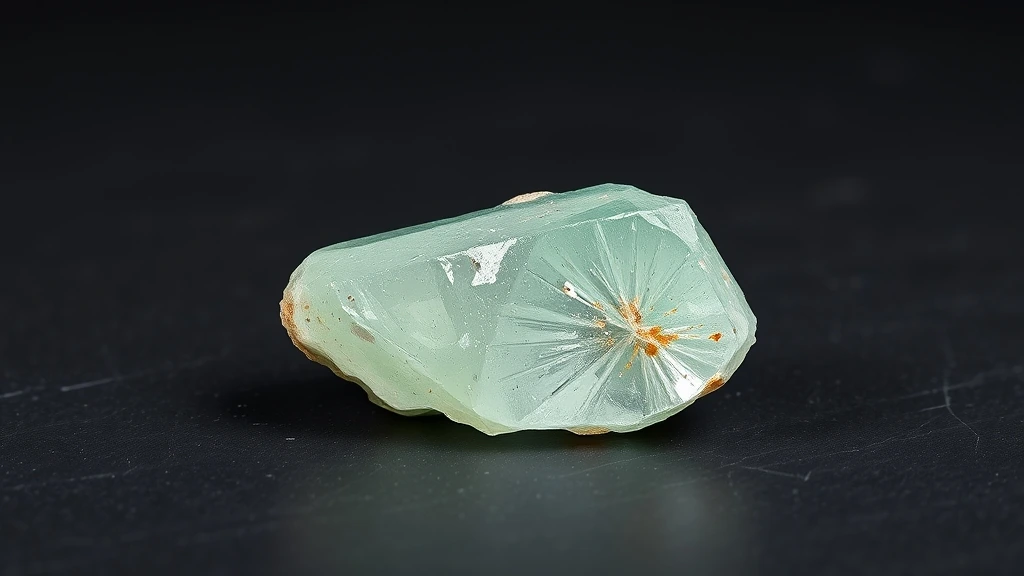
Beryl belongs to the Natural Mineral / Crystal parent group, forming within granitic pegmatites and metamorphic rocks. It is a cyclosilicate where silicon-oxygen rings create a hexagonal framework. This geological origin dictates its physical properties and crystal habit. The mineral’s stability allows it to survive significant geological transport. Consequently, it is found in alluvial deposits worldwide. Its classification remains consistent across global geological surveys.
What is Beryl Gemstone? Geological Overview & Definition
Beryl is a cyclosilicate mineral composed of beryllium, aluminum, silicon, and oxygen. It forms in pegmatite dikes, where slow cooling allows large crystals to develop. The mineral’s hexagonal prism habit is a defining visual characteristic. This structure results from its underlying atomic lattice arrangement.
The term “beryl” encompasses several gem varieties, including emerald and aquamarine. These variations arise from different trace element impurities during crystallization. Understanding this geological context is essential for accurate identification. It distinguishes natural beryl from synthetic simulants.
Beryl Gemstone Chemical Composition & Crystallographic Properties
Beryl crystallizes in the Hexagonal crystal family, exhibiting a distinct prism shape. Its lattice consists of six-membered silicon-oxygen rings stacked along the c-axis. This arrangement creates open channels for cation substitution. The structure is stable under high-pressure geological conditions.
The chemical formula Be₃Al₂(Si₆O₁₈) defines its stoichiometry. Beryllium and aluminum occupy specific sites within the silicate framework. Minor substitutions of iron, chromium, or manganese alter its appearance. These chromophore centers are responsible for the stone’s vibrant colors.
Beryl shows low acid sensitivity, remaining stable in most environmental conditions. It does not dissolve in common laboratory acids at room temperature. This chemical inertness contributes to its longevity in jewelry. The mineral resists weathering better than many other silicates.
Thermal behavior reveals beryl’s isotropic expansion along the c-axis. Heating can cause fracturing if thermal gradients are uneven. The refractive index ranges from 1.564 to 1.602, indicating moderate brilliance. This optical property aids in gemological identification.
| Property | Specification |
|---|---|
| Mineral Group | Natural Mineral / Crystal |
| Chemical Formula | Be₃Al₂Si₆O₁₈ |
| Mohs Hardness | 7.5 – 8.0 |
| Crystal System | Hexagonal |
| Specific Gravity (Density) | 2.67 – 2.78 |
| Refractive Index | 1.565 – 1.594 |
| Color & Optical Properties | Natural Beryl Gemstone color spectrum and optical dispersion |
| Primary Mining Localities | Global primary localities |
| Water & Chemical Resistance | High (Safe for gentle water washing) |
| Chakra Alignment (Traditional) | Heart Chakra, Throat Chakra |
| Zodiac Affinity (Traditional) | Taurus, Libra |
| Symbolic Meaning (Traditional) | Harmony, emotional balance, and clarity of communication |
Beryl Varieties & Comprehensive Sub-Types
Emerald
Emerald derives its prized deep green hue from trace amounts of Chromium (Cr³⁺) and vanadium, distinguishing it from other green beryls. Its geological formation often results in the characteristic jardin inclusions, which are three-phase fluid and mineral traps within the crystal structure. These internal features, combined with a Mohs hardness of 7.5–8.0, require careful cutting to preserve durability.
The presence of these inclusions is actually a key authenticity marker for gemologists, helping distinguish natural stones from synthetic alternatives. High-quality emeralds from Colombia and Zambia command premium prices due to their vivid saturation and relative clarity. The stone’s value is heavily influenced by the balance between color intensity and the visibility of its internal jardin patterns.
Aquamarine
Aquamarine exhibits a serene sea-blue to cyan coloration caused by Fe²⁺ iron impurities within the beryl lattice. This variety is highly valued for its exceptional clarity, often appearing eye-clean even in large carat weights. Its hexagonal crystal system allows for brilliant facet designs that maximize light return and sparkle.
In the gem trade, aquamarine is prized for its cool, tranquil aesthetic and high refractive index range of 1.564–1.602. Large, flawless specimens from Brazil and Madagascar are particularly sought after by collectors and high-end jewelers. The stone’s durability and clarity make it a popular choice for everyday jewelry, such as engagement rings and pendants.
Morganite
Morganite displays a delicate peach-pink to salmon color, resulting from Manganese (Mn²⁺) substitutions in the crystal structure. This variety is often found in pegmatite deposits and is known for its soft, romantic hue that appeals to modern jewelry design. Its Mohs hardness of 7.5–8.0 ensures it is durable enough for regular wear in rings and earrings.
Gemologists assess morganite based on the intensity of its pink color and the absence of visible inclusions. While less rare than emerald, high-quality morganite from Brazil and Mozambique is increasingly popular in the market. The stone’s gentle color palette makes it a versatile alternative to pink sapphire for those seeking a softer aesthetic.
Heliodor (Golden Beryl)
Heliodor, or golden beryl, features a warm golden-yellow to greenish-yellow color due to Fe³⁺ iron impurities. This variety is less common than aquamarine or morganite but is highly regarded for its sunny, vibrant appearance. Its hexagonal crystal family structure contributes to its excellent brilliance and fire when properly cut.
In the gemological market, heliodor is often chosen for its unique color and reasonable availability compared to rarer beryls. Stones from Brazil and India are the primary sources, with larger specimens commanding higher prices. The clarity of the stone is crucial, as inclusions can diminish the perceived warmth and intensity of its golden hue.
Goshenite
Goshenite is the pure, colorless variety of beryl, lacking the chromophore impurities that color other members of the family. It is prized for its high optical clarity and its ability to mimic diamond in terms of brilliance and sparkle. Its refractive index is slightly lower than diamond, but its high dispersion creates attractive fire.
This variety is often used as a canvas for engraving or as a substitute for diamond in certain jewelry settings. Goshenite is found in pegmatites worldwide, with significant deposits in Brazil and Madagascar. Its clarity and purity make it a popular choice for collectors and those seeking a diamond-like appearance without the high cost.
Red Beryl (Bixbite)
Red beryl, also known as bixbite, is an extremely rare variety colored by Mn³⁺ manganese impurities. It is found almost exclusively in the Wah Wah Mountains of Utah, making it one of the rarest gemstones on Earth. Its rarity is estimated to be 1,000 times rarer than gold, contributing to its extraordinary market value.
Gemologists and collectors highly prize red beryl for its intense red color and exceptional scarcity. The stone’s Mohs hardness of 7.5–8.0 ensures durability, but its rarity limits the availability of high-quality specimens. Due to its limited supply, red beryl is often reserved for high-end collectors and museum collections.
In lapidary practice, gemologists differentiate these beryl varieties primarily by their color origin and specific trace element impurities. The hexagonal crystal system remains consistent across all types, but the presence of chromium, iron, or manganese dictates the final hue. Understanding these chemical differences is essential for accurate identification and valuation in the gem trade.
Where is Beryl Gemstone Found? Geological Mining & Extraction
Beryl typically forms in pegmatite deposits, which are coarse-grained igneous rocks rich in volatile elements like fluorine and boron. These deposits are often associated with granitic intrusions and can be found in various geological settings worldwide. The hexagonal crystal structure of beryl allows it to grow in large, well-formed crystals within these pegmatites.
Primary mining regions include Brazil, Madagascar, and the United States, each offering distinct varieties of beryl. Brazil is renowned for its emeralds and aquamarines, while Madagascar produces high-quality morganite and red beryl. The extraction process involves careful mining to preserve the integrity of the crystals, which are then cut and polished into gemstones.
Historical Significance & Cultural Lore of Beryl Gemstone
Beryl has been valued since ancient times, with references in classical texts and archaeological artifacts. The name “beryl” is derived from the Greek word “beryllos,” which was used to describe a variety of green and blue stones. Ancient civilizations often confused beryl with other gemstones, leading to its diverse historical associations.
In medieval Europe, beryl was believed to have protective properties and was often used in amulets and talismans. The stone’s clarity and color were thought to bring good fortune and clarity of thought. Today, beryl remains a symbol of purity and protection, continuing to captivate collectors and jewelers alike.
Modern Uses & Jewelry Applications of Beryl Gemstone
Lapidaries value beryl for its exceptional durability and clarity, making it ideal for high-end jewelry design. The stone’s hexagonal crystal system allows for precise faceting that maximizes brilliance and fire. Skilled cutters often favor emerald cuts or oval shapes to preserve carat weight while enhancing visual appeal.
- Faceted Cuts: Emerald, oval, and round cuts highlight transparency and refractive index.
- Cabochon Polishing: Used for opaque varieties like goshenite or chrysoberyl to showcase color saturation.
- Ornamental Carving: Large, clean crystals are carved into intaglios or decorative architectural elements.
- Industrial Applications: High-purity beryl serves as a source of beryllium for aerospace and nuclear components.
Carat, Quality Grades & Value Factors of Beryl
According to historical traditions and metaphysical lore, beryl is revered as a stone of clarity and emotional balance. Practitioners believe it promotes mental focus and helps dissolve negative energy from the wearer. This gemstone is often associated with emotional resonance, fostering a sense of calm and inner peace.
- Clarity of Mind: Believed to enhance concentration and logical thinking.
- Emotional Healing: Used to release grief and encourage positive emotional expression.
- Spiritual Protection: Traditionally worn as a talisman against envy and ill intent.
Which Chakra and Zodiac Signs Align with Beryl Gemstone?
In metaphysical practice, beryl is primarily aligned with the Root Chakra and the Heart Chakra. The Root Chakra connection grounds the wearer, providing stability and a sense of security. This alignment helps anchor spiritual energy into the physical body, promoting overall well-being.
For zodiac compatibility, beryl is specifically linked to Taurus, Gemini, and Leo. Taurus appreciates the stone’s grounding nature, while Gemini values its mental clarity. Leo resonates with beryl’s vibrant energy, which supports confidence and creative expression.
How to Identify Real vs. Fake Beryl Gemstone
Distinguishing natural beryl from imitations requires careful observation of physical properties. Common fakes include synthetic glass, dyed quartz, and cubic zirconia, which mimic beryl’s appearance. Understanding these differences is crucial for buyers to avoid purchasing low-quality replicas.
- Synthetic Glass: Often contains tiny bubbles and lacks natural inclusions.
- Dyed Quartz: May show color concentrated in fractures rather than throughout the stone.
- Cubic Zirconia: Significantly higher refractive index and dispersion than natural beryl.
Practical At-Home Authenticity Tests
- Temperature Test (Thermal Feel): Natural beryl feels cool to the touch initially due to its thermal conductivity. Glass imitations warm up quickly when held, while real stone retains coolness longer.
- Specific Gravity & Weight Test: Beryl has a density of 2.63–2.92 g/cm³. It feels lighter than similarly sized glass or quartz, which have higher specific gravities.
- Scratch & Hardness Test (Mohs Comparison): With a Mohs hardness of 7.5–8.0, beryl can scratch glass and steel. It will not be scratched by a steel knife, unlike softer imitations.
- Microscopic & Loupe Inspection (Internal Inclusions): Use a 10x loupe to look for natural inclusions like rutile needles or mineral flecks. Glass often shows swirls or bubbles, while dyed stones show color zoning.
Beryl Gemstone Valuation Factors, Grading & Pricing
Color Saturation is the primary driver of value in beryl varieties like emerald and aquamarine. Experts assess tone uniformity across the stone to ensure no zoning or dull patches exist. High optical clarity and a vibrant luster significantly elevate the gem’s aesthetic appeal and market desirability.
Carat Weight commands a premium, especially for stones exceeding five carats with excellent cut quality. Facet symmetry must be precise to maximize light return and minimize visible flaws. The presence of matrix or heavy inclusions can drastically reduce value unless they form a distinctive, desirable pattern.
Geographical Provenance Premium often dictates the final price for rare localities like Colombia or Brazil. Wholesale prices fluctuate based on global supply chains, while retail margins reflect brand prestige and certification. Understanding these market trends helps buyers negotiate fair prices for high-quality beryl specimens.
How to Clean and Care for Beryl Gemstone
To maintain the stone’s brilliance, immerse it in a solution of warm soapy water for a few minutes. Gently scrub the surface with a soft cloth to remove accumulated oils and dust. This method effectively restores luster without risking damage to the delicate crystal structure.
It is critical to avoid ultrasonic cleaners as they can induce structural fractures in beryl. The stone’s hexagonal crystal system may contain natural cleavage planes that are sensitive to high-frequency vibrations. Always allow the gem to air dry completely before storing it in a protective pouch.
Cleansing and Recharging Beryl Gemstone (Energetic Care)
For energetic maintenance, use smoke smudging with sage or palo santo to clear negative energy. Pass the stone gently through the smoke while setting a clear intention for its purpose. This dry method respects the mineral’s physical integrity while addressing metaphysical concerns.
Place the beryl on a selenite plate or under moonlight for overnight recharging. These methods avoid direct water exposure, ensuring the stone remains chemically stable and visually pristine. Regular, gentle care preserves both the gem’s spiritual and physical properties over time.
Frequently Asked Questions About Beryl Gemstone
Is beryl safe to wear in the shower?
Yes, beryl is highly water-resistant and safe for gentle washing. Its stable structure allows it to withstand occasional exposure to water without damage. However, avoid prolonged soaking or harsh soaps that might degrade metal settings. This makes it a reliable choice for daily wear in various environments.
Can I clean beryl in an ultrasonic cleaner?
No, you should avoid ultrasonic cleaners to prevent structural fractures. Instead, use warm soapy water and a soft cloth for safe maintenance. The hexagonal crystal structure can be sensitive to high-frequency vibrations. Gentle manual cleaning preserves the stone’s integrity and brilliance over time.
What is the chemical formula of beryl?
Beryl is chemically and crystallographically classified as Be₃Al₂Si₆O₁₈. This authentic cyclosilicate structure differentiates it from all quartz minerals.
How hard is beryl on the Mohs scale?
Beryl typically ranges from 7.5 to 8.0 on the Mohs scale. This high hardness makes it durable enough for rings and bracelets. It resists scratching from common materials like steel and quartz. This durability ensures the gemstone maintains its polish and clarity during regular use.
What is the refractive index of beryl?
Beryl exhibits a refractive index between 1.564 and 1.602. This optical property contributes to its characteristic luster and brilliance. The refractive index determines how light bends within the stone. Higher values generally indicate greater fire and sparkle in faceted gemstones.
Which zodiac signs are aligned with beryl?
Beryl is traditionally aligned with Taurus, Gemini, and Leo. These earth and air signs resonate with the stone’s stabilizing energy. Wearing beryl is believed to enhance personal traits associated with these constellations. This alignment supports spiritual practices and personal growth for these individuals.
Which chakras does beryl activate?
Beryl primarily activates the Heart Chakra, Throat Chakra. These energy centers govern stability, security, and emotional balance. The stone’s grounding nature helps connect physical well-being with emotional clarity. This dual activation supports holistic health and inner peace for the wearer.
What is the specific gravity of beryl?
Beryl has a density ranging from 2.63 to 2.92 g/cm³. This specific gravity helps distinguish it from other similar-looking minerals. The density varies slightly depending on the beryl variety and trace elements. Accurate measurement is crucial for proper identification in gemological laboratories.