
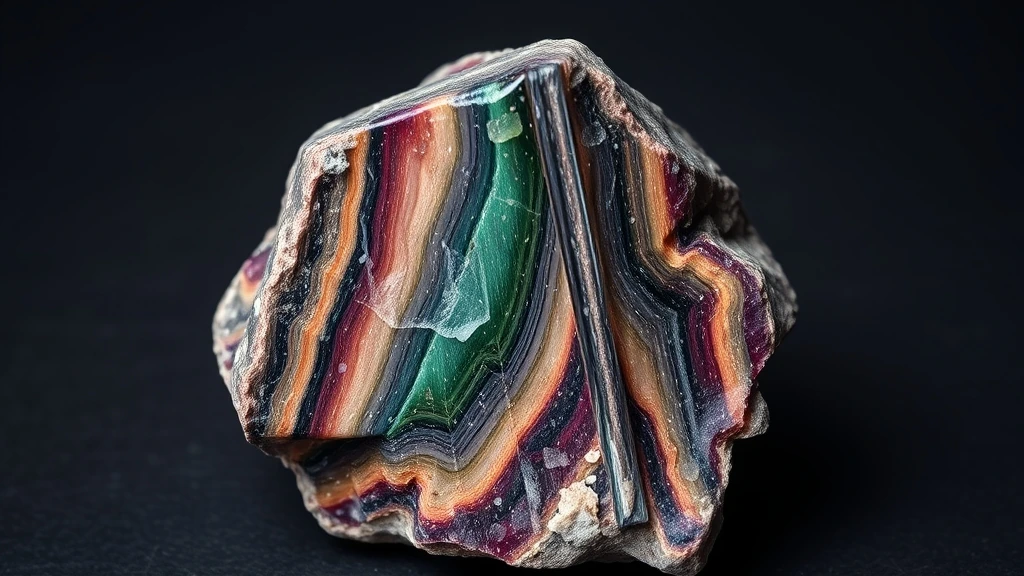
Tourmaline belongs to the Natural Mineral / Crystal group, forming through hydrothermal processes in granitic and metamorphic rocks. This gemstone exhibits remarkable chemical stability, resisting common acids while maintaining structural integrity under moderate thermal stress. Its geological formation often occurs in pegmatite veins, where volatile fluids facilitate the incorporation of multiple cations simultaneously.
What is Multi-color Tourmaline? Geological Overview & Definition
Multi-color tourmaline, often called watermelon or bi-color tourmaline, displays distinct zones of different colors within a single crystal. This phenomenon results from zonal growth, where the chemical environment changes during crystallization. The stone typically features a green core surrounded by a pink or red outer layer.
Geologically, these crystals form in pegmatite dikes associated with granitic intrusions. The slow cooling rate allows for large, well-formed hexagonal prisms to develop. This unique zonation serves as a geological record of fluid composition shifts. Collectors value these stones for their internal narrative of formation.
Multi-color Tourmaline Chemical Composition & Crystallographic Properties
Tourmaline crystallizes in the trigonal system, characterized by a hexagonal prism with a rhombohedral termination. Its lattice structure is complex, featuring channels along the c-axis that accommodate various cations. This structural flexibility enables the incorporation of multiple elements without disrupting the overall framework. The cation substitution mechanism is key to its diverse coloration.
The primary chromophores include iron, manganese, and chromium, which create specific color centers within the lattice. For instance, manganese produces pink hues, while iron contributes to green tones. The mineral exhibits high acid sensitivity resistance, remaining stable in most non-oxidizing environments. Thermal behavior is generally stable, though extreme heat can alter color saturation.
The chemical composition involves a complex borosilicate structure with significant cation variability. No single stoichiometric formula exists due to extensive solid solution series. Instead, the composition is described by a generalized formula reflecting this diversity. This complexity allows for the simultaneous presence of multiple color zones.
The trigonal lattice provides the structural basis for this chemical versatility. Cation sites can be occupied by aluminum, magnesium, iron, or lithium. This substitution directly influences the optical properties and color expression. Understanding these crystallographic details is essential for accurate gemological identification.
| Property | Specification |
|---|---|
| Mineral Group | Natural Mineral / Crystal |
| Chemical Formula | Na(Mg,Fe²⁺,Fe³⁺,Li,Al)₃(Al₆−ₓFeₓ)Si₆−ₓO₁₈(BO₃)₃(OH)₄ |
| Mohs Hardness | 6.5 – 7.0 |
| Crystal System | Trigonal |
| Specific Gravity (Density) | 3.06 – 3.25 |
| Refractive Index | 1.624 – 1.644 |
| Color & Optical Properties | Natural Multi-color Tourmaline color spectrum and optical dispersion |
| Primary Mining Localities | Global primary localities |
| Water & Chemical Resistance | High (Safe for gentle water washing) |
| Chakra Alignment (Traditional) | Solar Plexus Chakra (Manipura) |
| Zodiac Affinity (Traditional) | Sagittarius, Pisces |
| Symbolic Meaning (Traditional) | Spiritual awareness and universal harmony |
Multi-color Tourmaline Varieties & Color Spectrum
Multi-color Tourmaline displays distinct mineralogical characteristics across its geological varieties and structural habits. Gemologists evaluate these natural varieties based on crystal habit, trace chromophore concentrations, and visual luster.
Primary Natural Multi-color Tourmaline
The benchmark natural variety exhibiting diagnostic color saturation and classic crystallographic symmetry.
Distinct Geological Morphs of Multi-color Tourmaline
Secondary regional and structural varieties formed under localized geological temperature and pressure conditions.
Paraiba Tourmaline
Paraiba tourmaline originates from Brazil’s Minas Gerais region, where magnesium-rich pegmatites host this rare variety. Its hallmark is a vivid electric blue to green‑blue hue, often tinged with golden or orange flecks. The color arises from trace amounts of copper and iron incorporated during crystallization. Due to its limited supply and high demand, Paraiba remains one of the most valuable tourmaline types worldwide.
Rainbow (Multi‑Color) Tourmaline
Rainbow tourmaline, also known as “multi‑color” or “rainbow” tourmaline, displays a spectrum of colors—blue, green, yellow, and pink—within a single crystal. These chromatic bands form from layered inclusions of different mineral phases during growth. The variety is typically found in pegmatitic intrusions of Brazil, Madagascar, and the United States. Its rarity stems from the precise geochemical conditions required for simultaneous multi‑element incorporation.
Chocolate Tourmaline
Chocolate tourmaline derives its name from a deep, rich brown to reddish‑brown coloration. The color results from high iron content combined with trace copper or manganese. These specimens are predominantly mined in Brazil’s Santos region and in Madagascar’s Antananarivo area. While not as scarce as Paraiba, chocolate tourmaline is prized for its warm, earthy tones and is often used in jewelry that emphasizes natural, muted hues.
Green Tourmaline (Verdelite)
Green tourmaline, or verdelite, exhibits a bright emerald to olive green. The green is produced by chromium or vanadium substitutions within the crystal lattice. This variety is most commonly sourced from Brazil’s Santos and Rio de Janeiro pegmatites, as well as from the United States (Nevada). Though more abundant than Paraiba, high‑quality green tourmaline with vivid saturation remains relatively rare.
Black Tourmaline (Schorl)
Black tourmaline, known as schorl, presents a deep black to dark gray appearance. Its color is due to iron and magnesium enrichment, often accompanied by graphite inclusions that give a subtle sheen. Schorl is widely distributed, with major deposits in Brazil, Madagascar, and the United States (Nevada, Colorado). Despite its abundance, the most prized specimens exhibit a uniform, opaque black with minimal inclusions.
Red Tourmaline (Rubellite)
Red tourmaline, or rubellite, ranges from pink to deep red. The red coloration is caused by chromium and vanadium substitutions. Major sources include Brazil’s Santos region, Madagascar, and the United States (Nevada). High‑quality rubellite with a saturated red hue and minimal zoning is considered rare and commands premium prices in the gem market.
Where is Multi-color Tourmaline Found? Geological Mining & Extraction
Multi‑color tourmaline typically forms in alkaline pegmatites associated with granitic intrusions. These pegmatites are rich in volatiles, allowing large crystals to grow and incorporate diverse trace elements that produce the varied color bands. Major global deposits include Brazil’s Minas Gerais and Santos regions, Madagascar’s Antananarivo area, and the United States’ Nevada and Colorado. Extraction involves open‑pit or underground mining, followed by crushing, screening, and hand‑sorting by gemologists to isolate the most color‑rich specimens.
Historical Significance & Cultural Lore of Multi-color Tourmaline
Across ancient lapidary traditions, multi‑color tourmaline was prized for its metaphysical properties. In Greco‑Roman culture, it was believed to protect travelers and enhance communication, while Egyptian artisans incorporated it into amulets for protection against evil. Chinese texts from the Han dynasty describe tourmaline as a stone of balance and prosperity, often used in imperial jewelry. Vedic lore revered the stone’s ability to harmonize the solar plexus chakra, fostering spiritual awareness and universal harmony.
Modern Uses & Jewelry Applications of Multi‑color Tourmaline
Multi‑color tourmaline is prized for its vivid pleochroism, making it a favorite for both cabochon and faceted settings. Artisans often orient the stone to showcase its shifting hues, while high‑clarity material is carved into ornamental beads, pendants, and intricate intarsia. The gemstone’s durability (Mohs 6.5‑7) allows for everyday wear in rings, earrings, and cufflinks.
- Faceted gems highlight rainbow‑like flashes in halo or solitaire settings.
- Cabochons showcase a smooth, glowing surface ideal for brooches and pendants.
- Carved cameos and intarsia pieces exploit the stone’s natural color zoning.
- Mixed‑metal settings (gold, platinum, rose gold) enhance the stone’s chromatic depth.
Carat, Quality Grades & Value Factors of Multi‑color Tourmaline
The market evaluates multi‑color tourmaline primarily through the 4Cs: Color, Clarity, Cut, and Carat weight. Color dominance—whether a vivid green, pink, or blue‑green—drives price, especially when the hue is saturated and evenly distributed. Clarity is judged by the presence of microscopic inclusions; stones with a clean, glassy interior command premium rates. Cut quality, aligning the crystal’s optic axis, maximizes pleochroic effect, while carat weight influences rarity, with stones over 5 ct becoming increasingly scarce.
Durability considerations include resistance to scratching and chipping; tourmaline’s Mohs hardness of 6.5‑7 makes it suitable for most jewelry but cautions against harsh impacts. Grading standards follow GIA and IGI protocols, assigning a color grade (e.g., “Vivid Green‑Blue”) and a clarity grade (e.g., “VS‑S”). Value is further affected by provenance, with stones from Brazil, Afghanistan, and Mozambique often fetching higher prices due to historical reputation.
Zodiac and Astrological Lore of Multi‑color Tourmaline
Across ancient lapidary traditions, tourmaline has been linked to the Sagittarius archer, symbolizing adventurous spirit and expansive vision. In medieval European texts, the stone was believed to protect travelers and enhance truthful communication, resonating with Sagittarius’s quest for higher truth.
In early Eastern astrology, the stone’s fluid colors aligned it with Pisces, the water sign associated with intuition and spiritual depth. Historical records from the Vedic period describe tourmaline as a conduit for spiritual awareness and universal harmony, echoing the esoteric keywords that modern practitioners still cite.
How to Identify Real vs. Fake Multi‑color Tourmaline
Artificial imitations of multi‑color tourmaline include dyed quartz, glass, and synthetic tourmaline produced in laboratory furnaces. These substitutes often lack the stone’s characteristic pleochroism and may display uniform coloration or bubble inclusions. Synthetic glass replicas can be identified by their lower density and lack of the subtle internal fracture patterns typical of natural tourmaline.
Practical At‑Home Authenticity Tests
- Temperature Test (Thermal Feel): Natural tourmaline feels cool to the touch and retains that coolness longer than glass or plastic, which quickly equilibrates to hand temperature.
- Specific Gravity & Weight Test: Using a simple hydrostatic balance, genuine tourmaline (SG ≈ 3.0‑3.2) will feel noticeably heavier than glass (SG ≈ 2.5) of the same size.
- Scratch & Hardness Test (Mohs Comparison): A steel file (Mohs ≈ 5.5) will not scratch a real tourmaline, whereas it will leave a mark on softer imitations; conversely, a quartz point (Mohs ≈ 7) may leave a faint scratch on the gemstone.
- Microscopic & Loupe Inspection (Internal Inclusions): Under 10× magnification, natural tourmaline shows characteristic needle‑like inclusions and internal fractures, while glass often reveals bubbles or a perfectly clear interior.
Multi-color Tourmaline Valuation Factors, Grading & Pricing
Color Saturation serves as the primary determinant for market value in multicolored specimens. Gemologists assess the intensity of distinct hues, such as pink, green, and blue, alongside their hue uniformity across the stone. High-value stones exhibit vivid, well-defined color bands without muddy or washed-out transitions.
Carat Weight significantly influences pricing, with larger, inclusion-free crystals commanding exponential premiums. Facet symmetry is critical for maximizing light return and enhancing the visual impact of the 4Cs lapidary grading standards. Precise cutting ensures that the optical clarity and luster remain unobstructed by internal fractures or cloudiness.
Geographical Provenance Premium often elevates the value of stones from renowned mines like Brazil or Mozambique. Certified gem market value trends indicate that documented origin enhances buyer confidence and resale potential. Reputable laboratories provide essential authentication, ensuring the stone’s natural status and accurate color zoning documentation.
How to Clean and Care for Multi-color Tourmaline
To maintain the stone’s integrity, immerse the jewelry in warm soapy water with a mild, ammonia-free detergent. Gently scrub the surface using a soft cloth or a very fine-bristled toothbrush to remove accumulated oils. This method effectively cleans the facets without risking damage to the crystal structure.
It is imperative to avoid ultrasonic cleaners for multicolored tourmaline due to the risk of structural fractures. These stones can contain internal inclusions or stress points that may shatter under high-frequency vibrations. After washing, rinse thoroughly with lukewarm water and dry immediately with a lint-free microfiber cloth.
Cleansing and Recharging Multi-color Tourmaline (Energetic Care)
For holistic maintenance, practitioners often employ herbal smudging with sage or palo santo to clear stagnant energy. This dry method respects the mineral’s physical stability while addressing its metaphysical properties associated with the Solar Plexus Chakra. Ensure the stone is not exposed to direct flame or excessive heat during this process.
Alternatively, place the specimen on a selenite charging slab or expose it to gentle moonlight for several hours. These passive techniques allow the crystal to absorb ambient energy without the risk of thermal shock. Avoid direct intense sunlight, as prolonged UV exposure can potentially fade the delicate color zoning over time.
Frequently Asked Questions About Multi-color Tourmaline
Multi-color Tourmaline displays distinct mineralogical characteristics across its geological varieties and structural habits. Gemologists evaluate these natural varieties based on crystal habit, trace chromophore concentrations, and visual luster.
Primary Natural Multi-color Tourmaline
The benchmark natural variety exhibiting diagnostic color saturation and classic crystallographic symmetry.
Distinct Geological Morphs of Multi-color Tourmaline
Secondary regional and structural varieties formed under localized geological temperature and pressure conditions.
What is the chemical composition of multi‑color tourmaline?
Multi‑color tourmaline is a complex borosilicate mineral whose colors arise from trace elements such as iron, manganese, and chromium. The base formula is (Na, Ca)₂₋₃(Ti, Al, Fe, Mg, Mn)₆(BO₃)₃Si₆O₁₈(F, OH)₂, but the exact composition varies with the color zoning, giving each stone a unique spectral signature.
How durable is multi‑color tourmaline for everyday wear?
It ranks 6.5–7.0 on the Mohs scale, making it suitable for daily jewelry. Its trigonal crystal structure provides moderate resistance to scratching, but it should be protected from hard impacts. Regular polishing can restore surface luster without compromising structural integrity.
Can I wash my multi‑color tourmaline jewelry in the shower?
Yes, it is safe for gentle water washing. The stone’s high water resistance allows for occasional rinsing in lukewarm water with mild soap. Avoid prolonged exposure to harsh chemicals or high‑temperature baths that could alter surface coatings.
What is the best way to clean multi‑color tourmaline without damaging it?
Use warm soapy water and a soft cloth, then dry with a microfiber towel. Avoid ultrasonic cleaners, as the vibration can cause micro‑fractures in the crystal lattice. Light brushing with a soft brush is acceptable for removing dust from intricate settings.
Does multi‑color tourmaline have any metaphysical associations?
It is linked to the Solar Plexus Chakra (Manipura). In esoteric traditions, this stone is believed to enhance personal power, confidence, and spiritual awareness, fostering a sense of universal harmony and inner balance.
Which zodiac signs are said to resonate with multi‑color tourmaline?
Sagittarius and Pisces are the aligned zodiac signs. Astrologically, these signs are thought to benefit from the stone’s energetic properties, promoting optimism, intuition, and a broader perspective on life’s journey.
Are there any color zoning patterns I should look for in quality multi‑color tourmaline?
Look for symmetrical, concentric zoning with distinct color bands. High‑quality stones exhibit clear, vibrant transitions between colors such as green, pink, and blue, indicating a stable crystal growth environment and minimal inclusions.
Can multi‑color tourmaline be used in industrial applications?
Yes, it is occasionally employed in high‑performance optical devices. The material’s unique refractive indices and moderate birefringence make it suitable for specialized lenses and laser components, though its rarity limits widespread industrial use.