
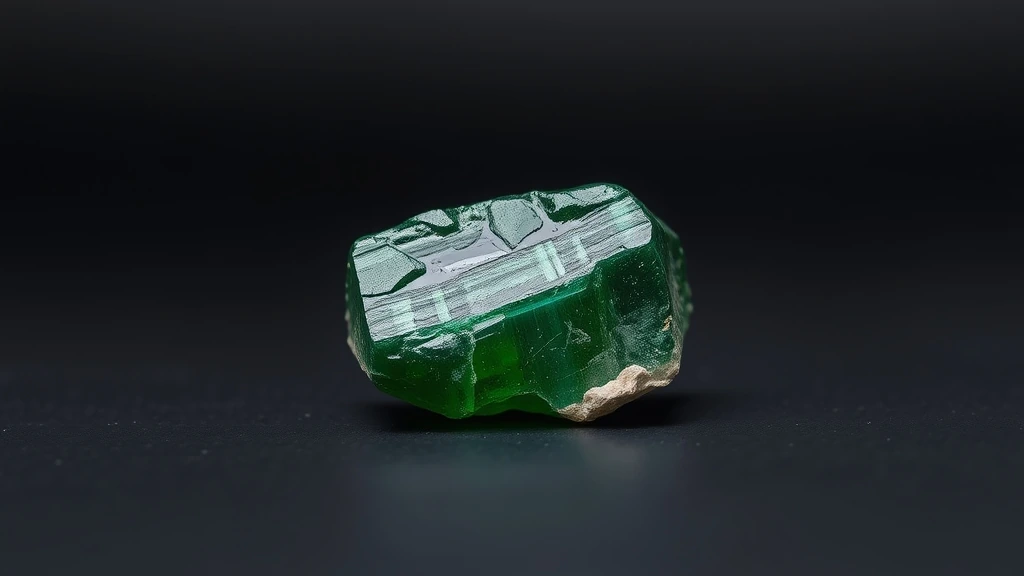
Green tourmaline belongs to the tourmaline supergroup, a complex silicate family that crystallizes in the Trigonal system. As a natural mineral, it forms elongated prismatic crystals with striated faces, often occurring in pegmatitic veins and metamorphic schists. Its classification as a Natural Mineral / Crystal underscores a well‑defined stoichiometry rather than an aggregate or organic matrix, allowing precise gemological identification worldwide.
What is Green Tourmaline? Geological Overview & Definition
Green tourmaline is a member of the tourmaline series, a boron‑silicate group distinguished by its complex cyclo‑octahedral structure. Across ancient lapidary traditions, the stone has been prized for its striking green hues, which arise from trace chromium and iron substituting within the crystal lattice. The same tourmaline family that produces the vibrant green of Green Tourmaline also yields the strikingly warm hues of Red Tourmaline Rubellite, showcasing the mineral’s remarkable color diversity.
The mineral typically forms in granitic pegmatites, metamorphic schists, and hydrothermal veins where boron‑rich fluids interact with aluminum‑rich host rocks. Its occurrence is global, with notable deposits in Brazil, Afghanistan, and Mozambique, reflecting the widespread geological environments that favor tourmaline crystallization. These same boron-rich geological environments also give rise to the vibrant Multi Color Tourmaline, which often forms in the same pegmatite zones as its green counterpart.
Green Tourmaline Chemical Composition & Crystallographic Properties
The ideal formula NaMg₃Al₆(BO₃)₃Si₆O₁₈(OH)₄ captures the trigonal symmetry and the presence of sodium, magnesium, aluminum, borate groups, and silicate tetrahedra. Within this framework, cation substitution—particularly Fe²⁺ for Mg²⁺ and Cr³⁺ for Al³⁺—modulates the stone’s color intensity and hue.
Its crystal lattice consists of six‑membered rings of SiO₄ tetrahedra linked to BO₃ triangles, creating channels that host the Na⁺ and OH⁻ groups. This open framework renders the mineral acid‑sensitive, causing surface etching when exposed to strong acids, a key diagnostic test in gem labs.
The dominant chromophore in green tourmaline is Cr³⁺, though Fe²⁺ can contribute to darker olive tones. Thermal treatment at 400–500 °C can enhance green saturation by altering the oxidation state of these transition metals, a process carefully controlled to preserve structural integrity.
Despite its relative hardness, green tourmaline exhibits a modest thermal expansion along the c‑axis, reflecting the anisotropic nature of its trigonal lattice. This property influences how the gemstone responds to setting stresses, guiding lapidary practices for optimal durability.
| Property | Specification |
|---|---|
| Mineral Group | Natural Mineral / Crystal |
| Chemical Formula | NaMg₃Al₆(BO₃)₃Si₆O₁₈(OH)₄ |
| Mohs Hardness | 7.0 – 7.5 |
| Crystal System | Trigonal |
| Specific Gravity (Density) | 3.05 – 3.25 |
| Refractive Index | 1.620 – 1.640 |
| Color & Optical Properties | Natural Green Tourmaline color spectrum and optical dispersion |
| Primary Mining Localities | Global primary localities |
| Water & Chemical Resistance | High (Safe for gentle water washing) |
| Chakra Alignment (Traditional) | Heart Chakra |
| Zodiac Affinity (Traditional) | Taurus, Virgo |
| Symbolic Meaning (Traditional) | Emotional balance, nurturing, and growth |
Green Tourmanine Varieties & Color Spectrum
Green Tourmaline displays distinct mineralogical characteristics across its geological varieties and structural habits. Gemologists evaluate these natural varieties based on crystal habit, trace chromophore concentrations, and visual luster.
Primary Natural Green Tourmaline
The benchmark natural variety exhibiting diagnostic color saturation and classic crystallographic symmetry.
Distinct Geological Morphs of Green Tourmaline
Secondary regional and structural varieties formed under localized geological temperature and pressure conditions.
Paraíba Green
Formed in pegmatitic veins rich in lithium‑bearing mica, Paraíba green tourmaline incorporates trace amounts of vanadium that shift its hue toward vivid emerald. Inclusions of minute quartz and feldspar crystals create a subtle sparkle, while the stone’s high pleochroism reveals a darker green when viewed from different angles. This variety is exceptionally rare, sourced mainly from Brazil’s Minas Gerais region, and commands premium prices on the global market.
Verdelite (Verdelite)
Verdelite develops in metamorphic schists where magnesium and aluminum dominate the crystal lattice, producing a deep forest‑green tone with occasional brownish undertones. Common inclusions include rutile needles that produce a characteristic silky sheen, and the mineral often exhibits a trichroic effect under polarized light. While more abundant than Paraíba, high‑quality Verdelite from Afghanistan and Pakistan remains highly sought after by collectors.
Chrome Tourmaline
Chrome tourmaline acquires its intense, almost jade‑like green through substitution of chromium for aluminum within the structure, a process typical of ultramafic host rocks. The stones frequently display fine, hair‑like inclusions of chromite, giving a subtle metallic luster that distinguishes them from other greens. Large, transparent crystals are scarce, with notable deposits in Mozambique’s Zambezia province and the Ural Mountains of Russia.
Tsilaisite
Tsilaisite forms in granitic pegmatites where manganese enriches the crystal chemistry, yielding a muted olive‑green color with a soft, buttery translucency. Microscopic fluid inclusions often trap tiny bubbles of CO₂, creating a faint internal glow when backlit. Though found in several locales, the most prized specimens originate from the Tanzanian Nyanzian belt, where the mineral’s clarity rivals that of higher‑valued tourmalines.
Amazonite‑Green Tourmaline
This variety is a regional trade name for tourmaline that exhibits a pastel, sea‑foam green reminiscent of the gemstone amazonite. It forms in late‑stage hydrothermal fluids that percolate through silicic volcanic tuffs, incorporating trace iron that tempers the color intensity. The stones are relatively common in the United States’ California and Colorado pegmatite fields, making them popular for ornamental jewelry.
Indochinese Green
Extracted primarily from the high‑grade pegmatites of northern Vietnam and Laos, Indochinese green tourmaline displays a bright, saturated hue due to a balanced mix of vanadium and chromium. The crystals often contain epidote inclusions that create a speckled appearance, enhancing visual depth. Though production volumes have increased in recent decades, large, flaw‑free stones remain limited, preserving their desirability among gem traders.
Where is Green Tourmaline Found? Geological Mining & Extraction
Green tourmaline crystallizes chiefly within granite‑derived pegmatites and metamorphic schists where fluorine‑rich fluids facilitate the growth of elongated, prismatic crystals. These host rocks provide the necessary boron, magnesium, and trace transition metals that dictate the stone’s hue, while the high temperature‑pressure regime of late‑stage magmatic processes promotes well‑developed crystal faces.
Major extraction zones include Brazil’s Minas Gerais and Bahia states, Afghanistan’s Nuristan province, Mozambique’s Zambezia region, and the Tanzanian Nyanzian belt. In each locale, miners employ a combination of artisanal hand‑picking and mechanized bulk‑tonnage methods, carefully separating tourmaline from associated quartz, feldspar, and mica to preserve the delicate cleavage and minimize surface damage.
Historical Significance & Cultural Lore of Green Tourmaline
Across ancient lapidary traditions, green tourmaline was prized by the Greeks and Romans for its reputed ability to balance emotions and protect travelers, a belief reflected in engraved amulets unearthed at Herculaneum. In Vedic texts, the stone appears as “Vaidurya,” associated with the heart chakra and used in ceremonial jewelry to promote nurturing and growth during rites of passage.
Chinese imperial courts of the Ming dynasty valued green tourmaline for its vivid color, incorporating it into dragon‑motif hairpins and ceremonial seals, while Egyptian trade records from the Ptolemaic period list “emerald‑like” tourmaline among luxury imports destined for royal tombs. Throughout these cultures, the gemstone symbolized renewal, fertility, and the harmonious flow of life‑force, a legacy that continues to inspire contemporary metaphysical practice.
Modern Uses & Jewelry Applications of Green Tourmaline
Lapidaries primarily cut green tourmaline into faceted gemstones to maximize its vibrant hue and brilliance. The stone’s high refractive index allows light to penetrate deeply, creating a distinctive internal glow that distinguishes it from other green gems.
- Faceted Cuts: Emerald and oval cuts are popular for showcasing the stone’s saturation and transparency.
- Cabochons: Smooth, polished domes are used for opalescent or included specimens to highlight unique internal patterns.
- Ornamental Carving: Large, high-quality crystals are carved into figurines, beads, and decorative inlays for luxury settings.
Carat, Quality Grades & Value Factors of Green Tourmaline
The primary determinant of value is color, where intense, medium-dark green tones with high saturation command premium prices. Pale or brownish-green varieties are significantly less valuable, while the rare “Verdelite” hue represents the top tier of the commercial market. Clarity also plays a crucial role, as eye-clean stones are rare due to the mineral’s tendency to form inclusions.
Carat weight heavily influences pricing because large, high-quality crystals are exceptionally scarce in geological deposits. Stones exceeding five carats with excellent clarity are considered collector’s items. Cut quality must balance maximizing carat retention with enhancing the stone’s natural brilliance, while its Mohs hardness of 7.0–7.5 ensures durability for daily wear in rings and pendants.
Zodiac and Astrological Lore of Green Tourmaline
In traditional astrological systems, green tourmaline is canonically aligned with Taurus and Virgo. These earth signs value stability and growth, which the stone’s nurturing energy is believed to amplify. It is often recommended for individuals seeking to ground their emotional responses and foster personal development.
The gemstone is also strongly associated with the Heart Chakra, symbolizing emotional balance and nurturing love. Across ancient lapidary traditions, green stones have been revered for their connection to nature and vitality. This heritage continues to influence modern metaphysical practices, where the stone is used to promote harmony and emotional well-being.
How to Identify Real vs. Fake Green Tourmaline
Distinguishing genuine green tourmaline from imitations requires careful observation of physical properties. Common fakes include synthetic glass, dyed quartz, and lab-created beryl, which often lack the natural inclusions and specific gravity of the real mineral. Dyed replicas may show color concentration in surface fractures, a telltale sign of artificial enhancement.
Practical At-Home Authenticity Tests
- Temperature Test (Thermal Feel): Genuine tourmaline feels cool to the touch and retains that coolness longer than glass or plastic imitations. This thermal inertia is a reliable initial indicator of natural stone authenticity.
- Specific Gravity & Weight Test: With a density of 3.05–3.25, real tourmaline feels heavier than glass or quartz of the same size. Comparing it to a known genuine stone can reveal significant weight discrepancies.
- Scratch & Hardness Test (Mohs Comparison): Tourmaline rates 7.0–7.5 on the Mohs hardness scale, meaning it can scratch quartz but will not scratch topaz. Attempting to scratch glass (hardness 5.5) should leave a mark on the fake but not the real stone.
- Microscopic & Loupe Inspection (Internal Inclusions): Use a 10x loupe to look for natural inclusions like rutile needles or fluid inclusions. Synthetic glass often contains circular bubbles, while dyed stones may show color bleeding into surface cracks.
Green Tourmaline Valuation Factors, Grading & Pricing
The most critical determinant of a green tourmaline’s market value is color saturation. Jewelers assess hue uniformity, looking for a deep, vivid green that remains consistent across the stone’s surface. Optical clarity and luster also play pivotal roles; a polished specimen with minimal inclusions commands a premium, while surface scratches or cloudiness can reduce its appeal.
Carat weight, facet symmetry, and adherence to the 4Cs lapidary grading standards collectively shape pricing. Larger stones naturally fetch higher prices, but only when they exhibit precise facet alignment and a balanced cut that enhances brilliance. The 4Cs—color, clarity, cut, and carat—are evaluated together, with each attribute influencing the final market assessment.
Geographical provenance premium and certified gem market value trends further refine valuation. Specimens sourced from renowned localities such as Brazil, Sri Lanka, or the Himalayas often carry a premium due to their historical significance and perceived rarity. Certified gemological reports provide transparency, allowing buyers to verify authenticity and trace the stone’s origin, thereby stabilizing its market value in the global trade.
How to Clean and Care for Green Tourmaline
To maintain a green tourmaline’s luster, gently wash the stone in warm soapy water using a soft cloth. After rinsing, pat it dry with a clean, lint‑free towel. The mineral’s composition allows safe ultrasonic cleaning; place the specimen in an ultrasonic bath for a brief cycle, ensuring no prolonged exposure to avoid potential surface abrasion.
Cleansing and Recharging Green Tourmaline (Energetic Care)
For energetic renewal, expose the stone to gentle moonlight for several hours, allowing the subtle lunar energy to cleanse its vibrational field. Alternatively, place the tourmaline on a selenite charging slab during twilight; the selenite’s conductive properties will help restore the stone’s natural balance without exposing it to heat or direct sunlight.
The green tourmaline’s crystal lattice remains intact when handled with these dry, low‑energy methods, preserving both its physical integrity and metaphysical properties.
Frequently Asked Questions About Green Tourmaline
Green Tourmaline displays distinct mineralogical characteristics across its geological varieties and structural habits. Gemologists evaluate these natural varieties based on crystal habit, trace chromophore concentrations, and visual luster.
Primary Natural Green Tourmaline
The benchmark natural variety exhibiting diagnostic color saturation and classic crystallographic symmetry.
Distinct Geological Morphs of Green Tourmaline
Secondary regional and structural varieties formed under localized geological temperature and pressure conditions.
What is the chemical composition of green tourmaline?
Green tourmaline is composed of the formula NaMg₃Al₆(BO₃)₃Si₆O₁₈(OH)₄. This complex borosilicate structure gives it a distinctive green hue and contributes to its trigonal crystal system and moderate hardness of 7.0–7.5 on the Mohs scale.
How durable is green tourmaline for everyday wear?
Green tourmaline is relatively durable, with a hardness of 7.0–7.5, making it suitable for daily jewelry. Its density of 3.05–3.25 g/cm³ and resistance to scratching allow it to withstand normal wear, though it should still be protected from hard impacts.
Is green tourmaline safe to clean in the shower?
Yes, green tourmaline can be safely washed in a gentle shower. Its high water resistance means it will not degrade or lose color when exposed to mild water; however, prolonged soaking should be avoided to preserve surface polish.
Can I use an ultrasonic cleaner on green tourmaline?
Yes, an ultrasonic cleaner is safe for green tourmaline when used with warm soapy water and a soft cloth. This method effectively removes surface dirt without damaging the crystal’s structure or color.
Which zodiac signs are associated with green tourmaline?
Green tourmaline is traditionally linked to the zodiac signs Taurus and Virgo. These signs are believed to resonate with the stone’s nurturing and growth energies, enhancing emotional balance.
Which chakra does green tourmaline correspond to?
Green tourmaline aligns with the Heart Chakra. This connection supports emotional healing, compassion, and the cultivation of love, making it a popular choice for meditation practices.
Does green tourmaline have any special care instructions for cleaning?
Use warm soapy water and a soft cloth for routine cleaning, and avoid harsh chemicals. This gentle approach preserves the stone’s natural luster while preventing surface abrasion or chemical damage.
Is green tourmaline suitable for children’s jewelry?
Yes, green tourmaline is generally safe for children’s jewelry due to its moderate hardness and stable composition. Nonetheless, parents should supervise use and ensure the setting is secure to prevent accidental loss or injury.