
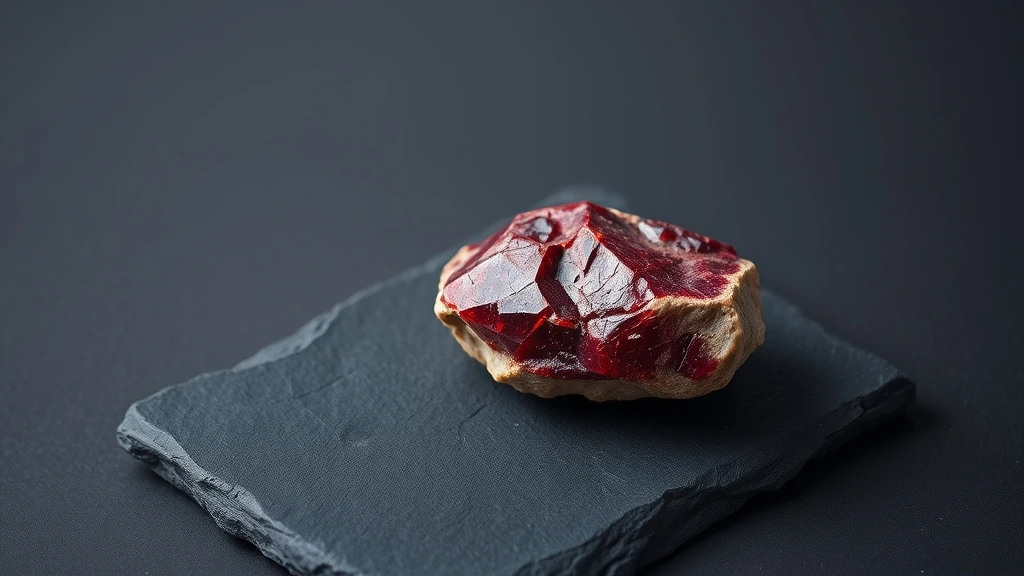
Rubellite is a member of the tourmaline super‑group, a complex silicate series that crystallizes in the trigonal system. As a natural mineral, it forms elongated prismatic crystals with a characteristic triangular cross‑section, often occurring in pegmatitic veins and metamorphic schists. The stone’s structure is built from interconnected silicate rings and borate groups, allowing extensive cation substitution that produces its striking red coloration. Its durability and brilliance make it a prized gemstone in both historic lapidary work and contemporary jewelry.
What is Red Tourmaline Rubellite? Geological Overview & Definition
Rubellite is the red to pink variety of tourmaline, defined by the presence of Mn²⁺ and Fe³⁺ ions that replace aluminum in the crystal’s octahedral sites. These substitutions create the chromophoric centers responsible for the stone’s intense hue, distinguishing it from its green, blue, or black counterparts. While rubellite’s warmth stems from manganese and iron, the tourmaline family’s spectrum extends to the earthy, yellow-brown tones of Golden Tourmaline, which often shares similar geological origins but exhibits distinct chemical substitutions.
Across ancient lapidary traditions, rubellite was prized for its vivid color and was often set in ceremonial objects. Modern gemologists classify it within the trigonal crystal system, noting its perfect cleavage parallel to the c‑axis and its characteristic pleochroism that shifts from pink to deep red under polarized light. This distinct pleochroic behavior is particularly evident when comparing rubellite to its bicolored counterpart, Watermelon Tourmaline, which exhibits a similar crystal structure but displays a striking transition from green to red within a single stone.
Red Tourmaline Rubellite Chemical Composition & Crystallographic Properties
The tourmaline structure is a complex cyclo‑silicate framework (Si₆O₁₈) that repeats along the c‑axis, forming hexagonal channels that host a variety of cations. In rubellite, the general formula is expressed as (Na,Ca)(Al,Mn,Fe)₃(Al,Fe)₆(BO₃)₃Si₆O₁₈(OH,F)₄, reflecting extensive solid‑solution behavior without a single fixed stoichiometry.
Rubellite’s trigonal symmetry (space group R3m) yields elongated prisms terminated by rhombohedral faces. The lattice parameters allow substitution of Mn²⁺ for Al³⁺, generating the red chromophore, while Fe³⁺ contributes to deeper ruby tones. This cationic flexibility also influences the stone’s refractive indices, typically ranging from 1.635 to 1.650.
Acid sensitivity is modest; dilute hydrochloric acid may etch surface micro‑fractures but does not dissolve the crystal lattice. Thermal treatment at 400–600 °C can enhance red intensity by reducing Fe³⁺ to Fe²⁺, a process historically employed to improve color uniformity in cut stones.
The mineral’s hardness of 6.5–7.0 on the Mohs scale reflects the strong covalent Si–O bonds within the silicate rings, granting rubellite resistance to scratching while remaining workable for faceting. Its pleochroic nature, combined with a high specific gravity (≈3.0–3.2), makes it readily identifiable in gemological laboratories.
| Property | Specification |
|---|---|
| Mineral Group | Natural Mineral / Crystal |
| Mohs Hardness | 6.5 – 7.0 |
| Crystal System | Trigonal |
| Color & Optical Properties | Natural Red Tourmaline Rubellite color spectrum and optical dispersion |
| Primary Mining Localities | Global primary localities |
| Water & Chemical Resistance | High (Safe for gentle water washing) |
| Chakra Alignment (Traditional) | Crown Chakra (Sahasrara) |
| Zodiac Affinity (Traditional) | Gemini, Virgo |
| Symbolic Meaning (Traditional) | Spiritual awareness and universal harmony |
Red Tourmaline Rubellite Varieties & Color Spectrum
Rubellite exhibits a fascinating spectrum of red hues, ranging from deep crimson to soft pinkish-orange tones. The primary chromophore responsible for this coloration is manganese substitution within the crystal lattice structure. This specific ionic replacement creates the characteristic warm tones that distinguish rubellite from other tourmaline species.
Classic Brazilian Rubellite
Originating from the rich pegmatite fields of Minas Gerais, this variety displays a vibrant, saturated red color. The crystal habit often features well-formed hexagonal prisms with distinct striations along the length. These specimens are highly prized for their clarity and intense chromatic purity in the gem market.
African Pink Rubellite
Found primarily in Mozambique and Madagascar, this variety tends toward a lighter, salmon-pink hue. The inclusion patterns often include minute mineral needles that can create a subtle silk effect. This softer color palette appeals to collectors seeking a more delicate aesthetic profile.
Siberian Deep Red
Sourced from the Ural Mountains, this rare variety presents a profound, dark red coloration. The crystal system remains trigonal, but the depth of color is exceptional due to high manganese content. These stones are significantly rarer than their Brazilian counterparts and command premium prices.
Mixed-Color Rubellite
Some specimens exhibit a gradient from red to green or pink, known as bi-color tourmaline. The lattice structure allows for varying trace element concentrations along the crystal growth axis. This unique color zoning makes each stone a distinct geological fingerprint of its formation environment.
Where is Red Tourmaline Rubellite Found? Geological Mining & Extraction
Rubellite forms exclusively within pegmatite dikes, which are coarse-grained igneous rocks resulting from the final stages of magma crystallization. These geological formations provide the necessary space and chemical conditions for large, high-quality crystals to develop. The host rock matrix typically consists of feldspar, quartz, and mica, surrounding the tourmaline crystals.
Primary mining regions include Brazil, Mozambique, and the United States, particularly in Maine and California. Extraction methods involve careful hand-picking from open-pit mines to preserve the integrity of the crystals. The geological provenance significantly influences the stone’s color intensity and market value.
Historical Significance & Cultural Lore of Red Tourmaline Rubellite
Ancient civilizations often confused red tourmaline with garnet or ruby due to its similar hue and hardness. In Greco-Roman lore, the stone was believed to possess protective qualities and was associated with the goddess Aphrodite. Archaeological evidence suggests that these gems were carved into amulets for spiritual protection and romantic appeal.
In Vedic traditions, red tourmaline was linked to the heart chakra and emotional balance. Historical texts describe its use in meditation practices to enhance spiritual awareness and universal harmony. The stone’s enduring legacy reflects its consistent association with vitality and emotional resilience across diverse cultures.
Modern Uses & Jewelry Applications of Red Tourmaline Rubellite
Lapidaries primarily cut rubellite into faceted gemstones to maximize its vibrant pink-to-red hue and brilliance. The stone’s moderate hardness allows for intricate detailing without excessive risk of chipping during the polishing process.
- Cabochon Cutting: Smooth, dome-shaped stones are used for vintage-style rings and pendants, emphasizing the gem’s soft luminescence.
- Faceted Jewelry: Brilliant and mixed cuts are standard for engagement rings, earrings, and necklaces, enhancing the stone’s internal fire.
- Ornamental Carving: Larger, lower-grade material is carved into beads, cameos, and decorative art pieces for collectors.
Carat, Quality Grades & Value Factors of Red Tourmaline Rubellite
The primary determinant of rubellite’s market value is color saturation, where deep, vivid pinkish-red tones command the highest premiums. Stones exhibiting a pure red hue without brownish or purplish overtones are exceptionally rare and highly sought after by gemologists.
Clarity and cut significantly influence the final appraisal, as eye-clean stones with precise facet alignment reflect light more effectively. The 4Cs framework applies strictly here, with carat weight playing a secondary role to color intensity in determining overall desirability.
Durability is another critical factor, given the mineral’s Mohs hardness of 6.5 to 7.0. While suitable for daily wear in rings, rubellite requires careful handling to avoid abrasion from harder materials like quartz or topaz.
Zodiac and Astrological Lore of Red Tourmaline Rubellite
In contemporary astrological practice, rubellite is canonically aligned with Gemini and Virgo, enhancing mental clarity and spiritual connection. These signs are believed to benefit from the stone’s ability to balance intellectual energy with emotional stability.
Historical lapidary traditions associate red tourmaline with protection and vitality, often worn to promote universal harmony. This gemstone has been valued across various cultures for its perceived ability to elevate consciousness and foster spiritual awareness.
How to Identify Real vs. Fake Red Tourmaline Rubellite
Distinguishing genuine rubellite from imitations requires attention to subtle optical and physical properties, as synthetic glass and dyed quartz can mimic its appearance. Common fakes include colorless tourmaline that has been dye-treated or cubic zirconia with a red coating.
Practical At-Home Authenticity Tests
- Temperature Test (Thermal Feel): Rubellite feels distinctly cool to the touch initially due to its low thermal conductivity, whereas plastic or glass imitations warm up quickly against skin.
- Specific Gravity & Weight Test: Genuine rubellite has a specific gravity of approximately 3.06, making it feel noticeably heavier than similarly sized glass or plastic substitutes.
- Scratch & Hardness Test (Mohs Comparison): With a hardness of 6.5–7.0, rubellite will not be scratched by a steel knife (hardness 5.5) but may scratch glass (hardness 5.5).
- Microscopic & Loupe Inspection (Internal Inclusions): Under a 10x loupe, natural rubellite often displays silk inclusions or fluid bubbles, while synthetic glass typically shows curved striae or air bubbles.
Red Tourmaline Rubellite Valuation Factors, Grading & Pricing
Color saturation drives the highest premiums; a vivid, saturated red that borders on pink‑ruby without brown undertones signals superior quality. Hue uniformity across the stone and the absence of zoning are scrutinized under magnification, while a high‑shine optical clarity and lively luster enhance market appeal. Gemologists compare these visual cues against calibrated color charts to assign a definitive grade.
Carat weight remains a pivotal metric, yet larger rubellites only command top prices when paired with flawless facet symmetry and precise proportions. The 4Cs lapidary grading standards—cut, color, clarity, and carat—are applied rigorously, with cut quality influencing light performance and perceived depth. Well‑cut stones exhibit a “fire” that accentuates the red hue, boosting their resale value.
Geographical provenance adds a distinct premium; rubellites from Brazil, Afghanistan, or Mozambique often fetch higher bids due to historic mining reputations. Certified gems bearing reputable origin documentation command trust in the market and can appreciate faster than unverified stones. Current trends show a steady rise in demand for ethically sourced rubellite, reflected in auction results and retail pricing indices.
How to Clean and Care for Red Tourmaline Rubellite
Gently wash the stone in warm soapy water, using a soft, lint‑free cloth to remove surface grime without abrasive pressure. Rinse briefly with clean lukewarm water and pat dry with a microfiber towel, ensuring no residue remains. Avoid ultrasonic cleaners, as the rapid vibrations can induce micro‑fractures in the crystal lattice. Store rubellite away from harsh chemicals and extreme temperature fluctuations to preserve its brilliance.
Cleansing and Recharging Red Tourmaline Rubellite (Energetic Care)
Across ancient lapidary traditions, dry herbal smudging with sage or cedar is employed to clear lingering energetic imprints, allowing the stone’s spiritual awareness to renew. Hold the rubellite near, but not within, the smoke plume for a few breaths, then place it on a clean surface to settle.
Gentle moonlight exposure during a clear night can revitalize the gem’s vibrational field without thermal stress, aligning it with the Crown Chakra. Position the stone on a natural wood tray or a selenite slab, allowing the lunar photons to bathe it for several hours before returning it to jewelry or display.
Frequently Asked Questions About Red Tourmaline Rubellite
Red Tourmaline Rubellite displays distinct mineralogical characteristics across its geological varieties and structural habits. Gemologists evaluate these natural varieties based on crystal habit, trace chromophore concentrations, and visual luster.
Primary Natural Red Tourmaline Rubellite
The benchmark natural variety exhibiting diagnostic color saturation and classic crystallographic symmetry.
Distinct Geological Morphs of Red Tourmaline Rubellite
Secondary regional and structural varieties formed under localized geological temperature and pressure conditions.
Is rubellite safe to wear in the shower?
Yes, rubellite is safe for gentle water exposure during daily activities. The stone possesses high water resistance, making it suitable for brief contact with shower water. However, prolonged soaking or exposure to harsh chemicals should be avoided to maintain the gem’s luster. Always dry the stone thoroughly after washing to prevent any potential moisture-related damage over time.
How should I clean my rubellite jewelry?
Use warm soapy water and a soft cloth for safe cleaning. Gently scrub the stone to remove oils and dirt without causing harm. It is crucial to avoid ultrasonic cleaners, as the vibrations can induce structural fractures within the crystal lattice. This gentle manual approach ensures the gemstone retains its integrity and brilliance for years to come.
What is the Mohs hardness of rubellite?
Rubellite ranks between 6.5 and 7.0 on the Mohs scale. This moderate hardness makes it durable enough for everyday jewelry but susceptible to scratches from harder minerals like quartz or diamond. To preserve the stone’s polished surface, store it separately from other gems. This precaution prevents abrasion that could dull the crystal facets and reduce its visual appeal.
Which zodiac signs are associated with rubellite?
Gemini and Virgo are the primary zodiac signs aligned with rubellite. In historical metaphysical lore, these air and earth signs benefit from the stone’s balancing properties. Wearers often seek this gem to enhance mental clarity and emotional stability. The association reflects the stone’s reputation for promoting universal harmony and focused spiritual awareness across various cultural traditions.
Which chakra does rubellite correspond to?
Rubellite is exclusively aligned with the Crown Chakra (Sahasrara). This energy center is located at the top of the head and governs higher consciousness. The stone’s vibrant red hue is believed to stimulate spiritual awareness and connection. Practitioners use it to facilitate ruhsal farkındalık, or spiritual awareness, fostering a deeper sense of universal harmony and enlightenment.
What is the chemical composition of rubellite?
Rubellite is a magnesium-rich variety of the tourmaline mineral group. Its distinct red coloration stems from trace amounts of manganese within the complex borosilicate structure. The trigonal crystal system defines its geometric growth patterns and optical properties. Understanding this chemistry helps gemologists identify natural stones and distinguish them from synthetic imitations or other red gemstones.
Can rubellite be used in ultrasonic cleaners?
No, you must avoid using ultrasonic cleaners for rubellite. The high-frequency vibrations can cause internal stress and lead to structural fractures in the stone. Instead, rely on a soft cloth and mild soap for routine maintenance. This conservative cleaning method protects the gem’s delicate internal structure while effectively removing surface contaminants and restoring its natural shine.
Does rubellite have any historical significance?
Rubellite has been valued in lapidary traditions for centuries. Ancient cultures recognized its vibrant color and potential metaphysical properties. It was often used in ceremonial jewelry and spiritual practices. The stone’s enduring appeal lies in its ability to symbolize spiritual awareness and universal harmony, bridging geological beauty with profound cultural and historical significance.