
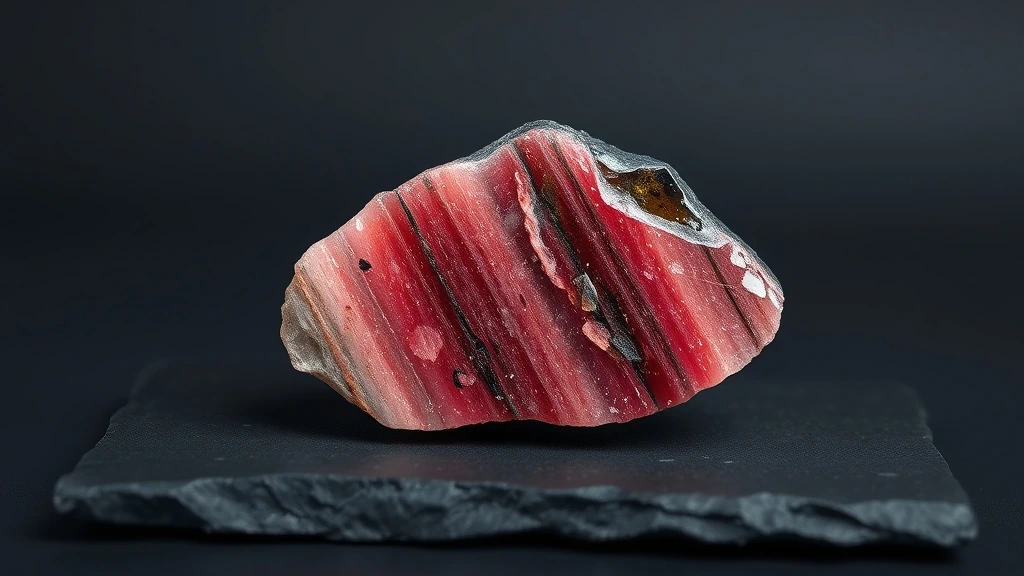
Watermelon tourmaline belongs to the broader tourmaline family, a complex borate mineral that crystallizes in the trigonal system. It is a natural mineral crystal formed in pegmatitic and metamorphic environments, often associated with quartz, feldspar, and mica. The distinctive banding arises from compositional zoning, where iron and magnesium substitutions create alternating green and red layers. Historically, this gemstone has been prized for its eye‑catching contrast and metaphysical associations with vitality and protection.
What is Watermelon Tourmaline? Geological Overview & Definition
Watermelon tourmaline is a banded variety of the tourmaline group, distinguished by its alternating green and red strata that mimic the flesh and rind of a watermelon. The green zones are typically rich in magnesium and iron, while the red layers contain higher concentrations of iron and manganese, creating a natural, layered appearance. This gemstone is typically found in pegmatite veins and hydrothermal veins, often in association with quartz and feldspar. Its unique banding is a result of slow cooling and compositional zoning during crystal growth.
The mineral is part of the trigonal crystal system, which imparts a characteristic prismatic habit to individual crystals. In geological terms, watermelon tourmaline is considered a natural mineral crystal rather than an aggregate or rock. It forms through the substitution of cations within the tourmaline lattice, leading to its distinctive color zoning. The gemstone is valued both for its aesthetic appeal and its metaphysical properties, often linked to the Third Eye Chakra (Ajna) and zodiac signs Cancer and Pisces.
Watermelon Tourmaline Chemical Composition & Crystallographic Properties
Watermelon tourmaline crystallizes in the trigonal system, specifically within the hexagonal crystal class. Its lattice structure is based on a complex borate framework, where the general formula for tourmaline is (X)(Y)₃Z₆(Al,Fe,Mg)₃(BO₃)₃(OH)₃. In this case, the X site is typically occupied by Na⁺ or Ca²⁺, Y by Al³⁺, Fe³⁺, or Mg²⁺, and Z by B³⁺. The banding arises from variations in the Y and Z sites, with iron and magnesium creating the red and green chromophores, respectively. Because the exact stoichiometry can vary, no single chemical formula can capture all specimens.
The crystal lattice is highly ordered, with the tourmaline structure forming a series of interconnected borate sheets. This arrangement allows for cation substitution that produces the characteristic banding. The gemstone is generally acid‑resistant; dilute acids such as hydrochloric or nitric acid do not attack the crystal, though strong oxidizing acids may alter surface colors over time. Thermal behavior shows that watermelon tourmaline can withstand temperatures up to 600 °C before decomposition, with color changes occurring only at extreme heat. The chromophore centers responsible for the green and red hues are stable under normal environmental conditions, making the stone suitable for everyday wear.
| Property | Specification |
|---|---|
| Mineral Group | Natural Mineral / Crystal |
| Mohs Hardness | 6.5 – 7.0 |
| Crystal System | Trigonal |
| Color & Optical Properties | Natural Watermelon Tourmaline color spectrum and optical dispersion |
| Primary Mining Localities | Global primary localities |
| Water & Chemical Resistance | High (Safe for gentle water washing) |
| Chakra Alignment (Traditional) | Third Eye Chakra (Ajna) |
| Zodiac Affinity (Traditional) | Cancer, Pisces |
| Symbolic Meaning (Traditional) | Grounding, vitality and protection |
Watermelon Tourmaline Varieties & Color Spectrum
Watermelon Tourmaline displays distinct mineralogical characteristics across its geological varieties and structural habits. Gemologists evaluate these natural varieties based on crystal habit, trace chromophore concentrations, and visual luster.
Primary Natural Watermelon Tourmaline
The benchmark natural variety exhibiting diagnostic color saturation and classic crystallographic symmetry.
Distinct Geological Morphs of Watermelon Tourmaline
Secondary regional and structural varieties formed under localized geological temperature and pressure conditions.
Natural Watermelon Tourmaline
This variety displays a striking green core flanked by vivid red outer bands, mirroring a sliced watermelon. Formed in high‑temperature pegmatites, it often contains inclusions of rutile or mica that give a subtle sparkle. Its rarity stems from the precise compositional balance required for the dual‑color effect, making it highly prized among collectors.
Watermelon Tourmaline (White‑Red)
A lighter variant where the central green is replaced by a pale white or cream hue, while the outer red band remains intense. Geologically, this occurs when trace amounts of lithium and magnesium are reduced, altering the chromophore. The subtle contrast is less common than the classic green‑red, yet it offers a delicate aesthetic.
Watermelon Tourmaline (Blue‑Red)
This rare form features a blue or turquoise core with a deep red rim. The blue coloration arises from trace boron and titanium within the crystal lattice. Its scarcity is due to the narrow geochemical window needed for simultaneous blue and red banding, making it a coveted specimen for high‑end jewelry.
Watermelon Tourmaline (Black‑Red)
A darker variant where the core is a deep black or charcoal tone, edged by a bright red band. The black core results from iron‑rich inclusions that absorb light. Although visually striking, this type is less frequently found, as it requires specific iron concentrations during crystallization.
Watermelon Tourmaline (Green‑Red‑White)
An uncommon tri‑color form combining a green center, a red band, and a peripheral white halo. This complex layering indicates multiple growth stages with varying trace element incorporation. Its rarity is amplified by the difficulty of preserving all three colors without fading.
Watermelon Tourmaline (Commercial Trade Variety)
Often marketed as “watermelon” due to its visual similarity, this trade variety may be a synthetic or heat‑treated version of natural tourmaline. While it mimics the classic color scheme, it typically lacks the fine inclusions and natural growth patterns that authenticate true specimens. Buyers should verify provenance to ensure authenticity.
Where is Watermelon Tourmaline Found? Geological Mining & Extraction
Watermelon tourmaline crystallizes within pegmatitic intrusions, where slow cooling allows large, well‑formed crystals to develop. These pegmatites are commonly hosted in granitic or syenitic bodies, often associated with barium and lithium deposits that influence color zoning.
Major production centers include the Sikkim and Arunachal Pradesh regions of India, where the Koh-i-Noor and Koh-i-Na pegmatites yield abundant green‑red specimens. Additional notable sources are the Benguela province of Angola and the Mongolia and Kazakhstan regions, each contributing to the global supply through artisanal and industrial mining operations.
Historical Significance & Cultural Lore of Watermelon Tourmaline
Across ancient lapidary traditions, tourmaline was prized for its protective qualities, with the green‑red variety often associated with the Third Eye Chakra (Ajna) in Vedic metaphysics. In Greco‑Roman jewelry, tourmaline beads were believed to ward off envy and promote clarity of thought, a belief echoed in Egyptian amulets that featured multicolored stones for balance.
Chinese alchemists recorded the use of green‑red tourmaline in talismans, attributing to it the power to stabilize the body’s energy flow. Archaeological finds from the Indus Valley and early Chinese dynasties reveal that this gemstone was incorporated into ceremonial regalia, underscoring its enduring cultural and metaphysical significance.
Modern Uses & Jewelry Applications of Watermelon Tourgenine
Watermelon tourmaline’s vivid pink‑red core surrounded by a green halo makes it a favorite for cabochon and faceted settings, where the color zoning can be showcased in rings, pendants, and earrings. Artisans also carve the stone into ornamental beads, brooches, and decorative inlays for high‑end watch dials. Its trigonal crystal habit allows skilled lapidaries to orient the stone for maximum optical impact.
- Faceted gemstones highlight the sharp contrast between zones.
- Cabochons preserve the natural “watermelon” pattern for a softer look.
- Carved cameos and intarsia use thin slices to display layered colors.
- Beaded jewelry often pairs watermelon tourmaline with white gold or platinum to accentuate its brightness.
Carat, Quality Grades & Value Factors of Watermelon Tourgenine
The market values watermelon tourmaline primarily on the 4Cs: vivid, evenly distributed color zones, high clarity with minimal inclusions, precise cut that maximizes the color contrast, and carat weight that balances size with visual impact. Stones with a deep pink core and a saturated, uniform green outer ring command premium prices, especially when the transition is seamless.
Durability is governed by its Mohs hardness of 6.5‑7.0, making it suitable for everyday wear but requiring protective settings to guard against scratches. Grading standards follow GIA‑type criteria, emphasizing the intensity of the pink‑red core, the hue purity of the green rim, and the absence of surface blemishes. Larger stones with flawless zoning and minimal internal fractures are graded in the highest tier, often labeled “Exceptional” or “Premium.”
Zodiac and Astrological Lore of Watermelon Tourgenine
Across ancient lapidary traditions, watermelon tourmaline has been linked to the water signs Cancer and Pisces, reflecting its dual‑tone appearance that mirrors the ebb and flow of tides. In historical metaphysical lore, the stone is believed to enhance emotional intuition and nurture the Third Eye Chakra (Ajna), fostering inner vision and spiritual grounding.
Cultures from the Mediterranean to South Asia have prized the stone for its protective qualities, invoking it in amulets to shield against negative energies while promoting vitality. Its association with the nurturing aspects of Cancer and the dreamy imagination of Pisces continues to inspire contemporary jewelry designers seeking pieces that blend aesthetic allure with symbolic depth.
How to Identify Real vs. Fake Watermelon Tourgenine
Artificial imitations of watermelon tourmaline include colored glass, resin composites, and dyed quartz that mimic the pink‑green zoning but lack the stone’s characteristic birefringence and hardness. Synthetic tourmaline produced in labs can replicate the color pattern, yet it often exhibits uniform growth structures absent in natural specimens. Careful observation of surface texture, weight, and optical behavior helps distinguish genuine material from these replicas.
Practical At-Home Authenticity Tests
- Temperature Test (Thermal Feel): Natural tourmaline feels cool to the touch and retains that coolness longer than glass or plastic, which quickly equilibrate to ambient temperature.
- Specific Gravity & Weight Test: Watermelon tourmaline’s specific gravity ranges from 3.0‑3.2; a heftier feel compared to similarly sized glass indicates authenticity.
- Scratch & Hardness Test (Mohs Comparison): Using a steel file (hardness ~6.5), a genuine stone will resist scratching, whereas glass or dyed quartz will show visible marks.
- Microscopic & Loupe Inspection (Internal Inclusions): Under 10× magnification, natural tourmaline displays characteristic needle‑like inclusions and growth lines, while synthetic or glass pieces appear uniformly clear or contain bubbles.
Watermelon Tourgenine Valuation Factors, Grading & Pricing
Color Saturation drives the premium for watermelon tourmaline, as vivid pink and green zones must appear rich and evenly distributed. Hue uniformity across the stone enhances visual impact, while high optical clarity and a glossy luster signal minimal inclusions. Gemologists grade these attributes using spectrophotometric analysis to confirm true color depth.
Carat Weight remains a pivotal metric, yet larger stones only command higher prices when paired with precise facet symmetry. The 4Cs lapidary grading standards—cut, color, clarity, and carat—apply rigorously, with each facet’s alignment influencing light performance. A well‑cut specimen can amplify perceived size, boosting market value even at modest weights.
Geographical Provenance Premium adds a layer of exclusivity, especially for stones sourced from Brazil’s Minas Gerais or Mozambique’s coastal deposits. Certified origin reports from reputable gem labs substantiate authenticity, allowing traders to track certified gem market value trends. Provenance often correlates with unique trace element signatures, further justifying price differentials.
How to Clean and Care for Watermelon Tourmaline
Gentle cleaning with warm soapy water and a soft cloth preserves the stone’s surface without compromising its structure. Apply a mild, pH‑balanced soap, rinse with lukewarm water, and pat dry using a lint‑free microfiber cloth. Avoid ultrasonic cleaners, as the vibrational energy can induce micro‑fractures in the crystal lattice.
Cleansing and Recharging Watermelon Tourmaline (Energetic Care)
For holistic maintenance, place the gemstone in a bowl of dried sage or cedar smudge, allowing the aromatic smoke to drift over the surface for several minutes; this clears residual energetic debris without moisture contact. Follow with a brief exposure to moonlight, preferably during a waning phase, to gently revitalize the stone’s vibrational field.
Alternatively, rest the tourmaline on a clean selenite charging slab, which transmits a subtle, non‑thermal energy that rebalances the crystal. Ensure the slab remains dry and free of oils, and limit the session to no more than thirty minutes to avoid over‑saturation of ambient energies.
Frequently Asked Questions About Watermelon Tourmaline
Watermelon Tourmaline displays distinct mineralogical characteristics across its geological varieties and structural habits. Gemologists evaluate these natural varieties based on crystal habit, trace chromophore concentrations, and visual luster.
Primary Natural Watermelon Tourmaline
The benchmark natural variety exhibiting diagnostic color saturation and classic crystallographic symmetry.
Distinct Geological Morphs of Watermelon Tourmaline
Secondary regional and structural varieties formed under localized geological temperature and pressure conditions.
Is watermelon tourmaline safe to wear in the shower?
Yes, it is safe for gentle water exposure. The stone possesses high water resistance, allowing it to withstand occasional contact with shower water without chemical degradation. However, frequent exposure to harsh soaps or hot water may gradually dull the surface luster over time.
How should I clean my watermelon tourmaline jewelry?
Use warm soapy water and a soft cloth. Gently scrub the stone to remove oils and dirt, then rinse thoroughly under lukewarm water. Avoid abrasive materials that could scratch the surface, as the Mohs hardness ranges between 6.5 and 7.0.
Can I put watermelon tourmaline in an ultrasonic cleaner?
No, you must avoid ultrasonic cleaners entirely. The high-frequency vibrations can induce internal stress, potentially causing structural fractures in the crystal lattice. Stick to manual cleaning methods with mild soap and a soft-bristled brush for safe maintenance.
Which zodiac signs are compatible with watermelon tourmaline?
Cancer and Pisces are the primary aligned signs. These water signs resonate with the stone’s emotional grounding properties, enhancing intuition and spiritual balance. Wearing this gemstone may help these individuals feel more anchored and protected in their daily lives.
Which chakra does watermelon tourmaline activate?
It aligns specifically with the Third Eye Chakra (Ajna). This connection supports heightened intuition, mental clarity, and spiritual insight. The stone’s unique coloration is believed to facilitate a deeper connection to one’s inner vision and subconscious awareness.
What is the crystal system of watermelon tourmaline?
It crystallizes in the Trigonal system. This structure contributes to the stone’s characteristic elongated, prismatic habit often seen in rough specimens. Understanding this crystal system helps gemologists identify and authenticate genuine tourmaline varieties during appraisal.
How hard is watermelon tourmaline on the Mohs scale?
It measures between 6.5 and 7.0 on the Mohs scale. This moderate hardness makes it durable enough for everyday jewelry but susceptible to scratching from harder minerals like quartz or topaz. Careful storage is recommended to preserve the stone’s polished finish.
What are the primary metaphysical benefits of this stone?
It promotes grounding, vitality, and protection. In historical lapidary lore, the stone is associated with stabilizing energy and shielding the wearer from negative influences. Its vibrant colors are thought to invigorate the spirit while maintaining a strong connection to the earth.