
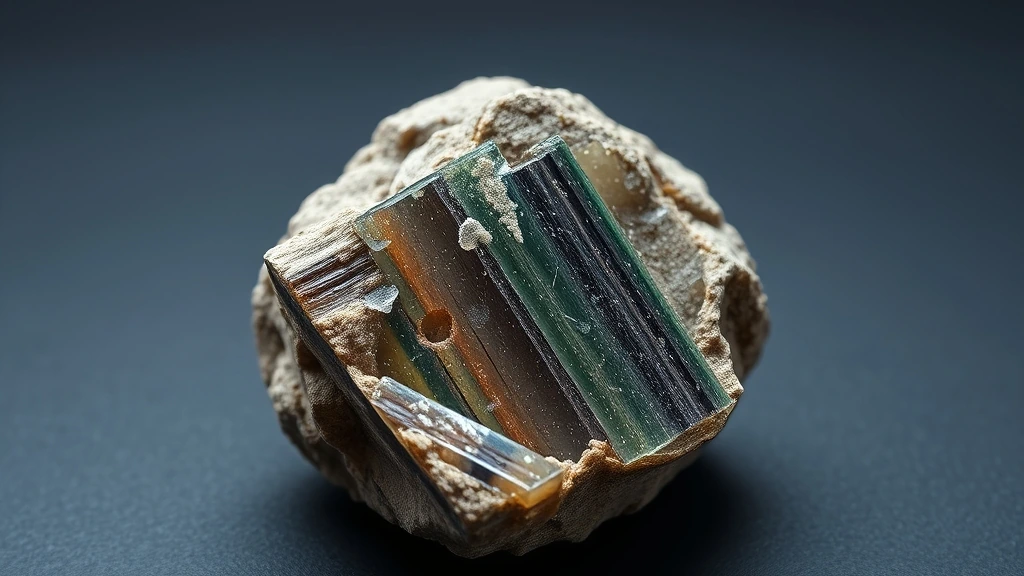
Tourmaline belongs to the natural mineral family of silicate crystals and is classified within the hexagonal crystal family. Its structure is an aggregate of borosilicate units that accommodate a wide range of cations, giving rise to its celebrated color diversity. Formed in granitic pegmatites, metamorphic schists, and alluvial deposits, the mineral is prized both scientifically and commercially. Its resilience, combined with distinctive optical properties, secures its status as a cornerstone gemstone in global markets.
What is Tourmaline? Geological Overview & Definition
Tourmaline is a borosilicate mineral series that crystallizes in the hexagonal crystal family, forming elongated, prismatic crystals often terminated by sharp points. The species is an aggregate of several end‑members, each defined by dominant cations such as lithium, sodium, calcium, iron, or magnesium.
Its occurrence spans pegmatitic veins, metamorphic rocks, and sedimentary placer deposits, where weathering releases the durable crystals into stream beds. The mineral’s habit includes both well‑developed single crystals and massive granular aggregates, reflecting the varied pressure‑temperature regimes of its geological environments.
Tourmaline Chemical Composition & Crystallographic Properties
The tourmaline group lacks a single fixed formula; instead, it is expressed as a complex solid‑solution series (X Y₃ Z₆ (T₆ O₁₈)(BO₃)₃ V₃ W). Here, X, Y, Z, T, V, and W represent interchangeable cations such as Na, K, Ca, Li, Mg, Fe²⁺, Fe³⁺, Mn²⁺, Al, and Ti, which dictate the mineral’s physical and chromatic traits.
Crystallographically, tourmaline adopts a hexagonal lattice with space group R3m, featuring six‑fold symmetry along the c‑axis. The structure consists of interconnected silicate rings (Si₆O₁₈) linked by borate groups (BO₃) and octahedral sites that host the variable cations, creating a robust framework resistant to cleavage.
Color in tourmaline arises from chromophore ions such as Fe²⁺/Fe³⁺, Mn³⁺, and Ti⁴⁺ occupying specific lattice sites, producing the familiar pink, green, blue, and black hues. Trace amounts of manganese generate the vivid pink of rubellite, while iron‑rich compositions yield deep black (schorl) or brownish tones.
Tourmaline exhibits acid sensitivity; exposure to strong acids can leach alkali cations from the X‑site, subtly altering surface coloration and occasionally causing micro‑fracturing. Thermally, the mineral is stable up to ~800 °C, beyond which dehydroxylation and breakdown of the borate network occur, leading to loss of structural integrity.
| Property | Specification |
|---|---|
| Mineral Group | Natural Mineral / Crystal |
| Chemical Formula | Na(Mg,Fe,Mn,Al,Li)₃(Al₆(BO₃)₃Si₆O₁₈)(OH,F,Cl)₃ |
| Mohs Hardness | 7.0–7.5 |
| Crystal System | hexagonal crystal family |
| Specific Gravity (Density) | 3.06+0.20–0.06 |
| Refractive Index | 1.60 – 1.64 |
| Color & Optical Properties | Natural Tourmaline color spectrum and optical dispersion |
| Primary Mining Localities | Global primary localities |
| Water & Chemical Resistance | High (Safe for gentle water washing) |
| Chakra Alignment (Traditional) | Root Chakra, Sacral Chakra, Heart Chakra |
| Zodiac Affinity (Traditional) | Aries, Taurus, Leo, Libra, Scorpio, Sagittarius, Capricorn |
| Symbolic Meaning (Traditional) | Emotional balance, protection from negative energy, and grounding |
Tourmaline Varieties & Comprehensive Sub-Types
Black Tourmaline (Schorl)
Schorl represents the most common and abundant member of the tourmaline group, characterized by its opaque black appearance due to high iron content. This variety typically forms in pegmatite deposits where iron-rich fluids interact with silica, creating robust, prismatic crystals. Its dense structure makes it highly valued in metaphysical practices for grounding and shielding against negative electromagnetic fields.
In the gem trade, schorl is rarely cut into faceted gems because of its lack of transparency and brilliance. Instead, it is predominantly used for carvings, beads, and protective talismans. The stone’s hexagonal crystal habit is often visible on rough specimens, showcasing the characteristic three-sided prism.
Watermelon Tourmaline
This striking variety features a distinctive concentric color zoning, with a vibrant pink core surrounded by a green outer ring. The pink hue originates from lithium and manganese, while the green band results from the presence of chromium or iron. Such elbaite specimens are highly sought after for their unique aesthetic appeal in the collector’s market.
Geologically, watermelon tourmaline forms in specific pegmatite environments where changing chemical conditions during crystal growth create these distinct color bands. High-quality stones are typically cut into cabochons to best display the internal color transition. The rarity of perfectly symmetrical zoned crystals significantly elevates their value among serious gem enthusiasts.
Paraiba Tourmaline
Discovered in Brazil in the 1980s, Paraiba tourmaline is renowned for its intense neon electric cyan-blue color. This distinctive hue is caused by trace amounts of copper and manganese within the crystal lattice, a combination that is exceptionally rare in nature. The stone’s vivid fluorescence under ultraviolet light further distinguishes it from other blue tourmalines.
Authentic Paraiba stones are extremely valuable, with top-grade specimens commanding prices comparable to high-end sapphires. Gemologists must carefully verify the presence of copper to distinguish genuine Paraiba from synthetic imitations or other blue tourmaline varieties. Its discovery revolutionized the market by introducing a new standard for electric blue gemstones.
Rubellite
Rubellite is a vibrant red to magenta variety of elbaite tourmaline, prized for its rich and saturated coloration. The red hue is primarily attributed to manganese, which remains stable under various lighting conditions, ensuring consistent visual appeal. This variety is often found in pegmatites alongside other colored tourmalines, making it a popular choice for jewelry designers.
In lapidary practice, rubellite is frequently cut into faceted gems to maximize its brilliance and color depth. High-quality stones exhibit a hexagonal crystal structure and may contain minor inclusions that do not significantly detract from their overall beauty. Its durability, with a Mohs hardness of 7.0–7.5, makes it suitable for everyday wear in rings and pendants.
Indicolite
Indicolite is a rare blue to teal variety of elbaite tourmaline, distinguished by its deep indigo tones. The coloration results from iron impurities within the crystal structure, which absorb specific wavelengths of light to produce this unique hue. Unlike Paraiba, indicolite does not exhibit strong fluorescence, making it visually distinct under standard lighting.
This variety is less common than other tourmalines, often found in pegmatites in Brazil and other regions. Gemologists value indicolite for its clarity and the intensity of its blue color, which can range from pale to deep indigo. Its relative rarity contributes to its appeal among collectors seeking unique and less common gemstone varieties.
Gemologists differentiate these varieties primarily by analyzing their chemical composition and color origins using spectroscopy. The presence of specific trace elements, such as copper in Paraiba or manganese in rubellite, serves as a definitive identifier. Additionally, the crystal system and internal inclusions provide further clues to the stone’s origin and authenticity.
Where is Tourmaline Found? Geological Mining & Extraction
Tourmaline primarily forms in pegmatite deposits, which are coarse-grained igneous rocks that crystallize from the final stages of magma cooling. These deposits often contain large, well-formed crystals suitable for gem cutting, particularly in regions with significant geological activity. The chemical environment within these pegmatites allows for the incorporation of various trace elements, resulting in the diverse color varieties observed.
Major mining regions include Brazil, which is the world’s leading producer of high-quality gem tourmaline, particularly Paraiba and rubellite. Other significant sources include Nigeria, Mozambique, and the United States, where historic mines in Maine and California have yielded notable specimens. Extraction methods typically involve open-pit mining, followed by careful sorting to identify the most valuable colored crystals.
Historical Significance & Cultural Lore of Tourmaline
Tourmaline was first described in the 18th century, but its use in jewelry dates back much further in various cultures. Ancient civilizations, including those in India and Southeast Asia, valued the stone for its vibrant colors and believed it possessed protective properties. Archaeological evidence suggests that tourmaline beads and carvings were traded along ancient routes, indicating its early recognition as a precious material.
In modern times, tourmaline has become a symbol of emotional balance and protection, aligning with its association with the Root, Sacral, and Heart Chakras. Its diverse color palette allows it to be matched with various zodiac signs, enhancing its appeal in contemporary metaphysical practices. The stone’s enduring popularity reflects its unique combination of aesthetic beauty and cultural significance.
Modern Uses & Jewelry Applications of Tourmaline
Tourmaline’s exceptional color variety and piezoelectric properties make it a cornerstone of modern gemology and industrial applications. Lapidaries favor its high hardness for durable faceting, while its vibrant hues suit both high-end jewelry and ornamental carving. The stone’s versatility allows for intricate designs ranging from classic solitaires to elaborate cabochon settings.
- Faceted Cutting: Utilized for emerald, oval, and cushion cuts to maximize brilliance in rubellite and indicolite varieties.
- Cabochon Polishing: Ideal for opaque or translucent stones, highlighting the chatoyancy of watermelon tourmaline.
- Ornamental Carving: Employed in decorative objects and inlays due to its resistance to scratching and chemical stability.
- Industrial Components: Piezoelectric tourmaline is used in sensors, high-temperature thermocouples, and specialized electronic devices.
Carat, Quality Grades & Value Factors of Tourmaline
The market value of tourmaline is primarily driven by the 4Cs of gemology, with color being the most critical determinant. Rare hues like paraíba (neon blue-green) and indicolite (deep blue) command premium prices due to their scarcity. Saturation and tone significantly influence desirability, with vivid, medium-dark stones typically outperforming pale or overly dark specimens.
Clarity and cut further refine the stone’s commercial appeal, as tourmaline often contains inclusions that can detract from its visual impact. A well-executed cut maximizes brilliance and minimizes visible flaws, while larger carat weights exponentially increase value due to the rarity of high-quality crystals. Durability is also a key factor, as the stone’s Mohs hardness of 7.0–7.5 ensures it withstands daily wear in rings and bracelets.
Zodiac and Astrological Lore of Tourmaline
In astrological traditions, tourmaline is associated with Aries, Taurus, Leo, Libra, Scorpio, Sagittarius, and Capricorn. These signs are believed to benefit from the stone’s grounding energy and protective qualities. The mineral’s diverse colors allow for personalized alignment with specific zodiacal traits and elemental needs.
Culturally, tourmaline is linked to the Root, Sacral, and Heart Chakras, promoting emotional balance and spiritual protection. Practitioners use it to shield against negative energy and enhance personal power. This heritage underscores its role as a versatile talisman for stability and emotional well-being.
How to Identify Real vs. Fake Tourmaline
Distinguishing genuine tourmaline from imitations requires careful examination of its physical and optical properties. Common fakes include dyed glass, synthetic quartz, and other colored minerals that mimic tourmaline’s appearance. Understanding the stone’s natural inclusions and thermal behavior is essential for accurate identification.
Practical At-Home Authenticity Tests
- Temperature Test (Thermal Feel): Genuine tourmaline feels cool to the touch and retains this coolness longer than glass or plastic imitations. This thermal inertia is a reliable initial indicator of authenticity.
- Specific Gravity & Weight Test: Tourmaline has a specific gravity of 3.06–3.26, making it noticeably heavier than glass of similar size. Comparing weight against a known glass sample can reveal discrepancies.
- Scratch & Hardness Test (Mohs Comparison): With a Mohs hardness of 7.0–7.5, tourmaline can scratch quartz (hardness 7) but will not scratch topaz (hardness 8). This test helps rule out softer imitations like glass or calcite.
- Microscopic & Loupe Inspection (Internal Inclusions): Use a 10x loupe to look for natural inclusions such as silk or fluid-filled cavities. Glass imitations often contain bubbles, while dyed stones may show color concentration along cracks.
Tourmaline Valuation Factors, Grading & Pricing
Color saturation drives the highest premiums, especially when the hue is vivid and evenly distributed across the stone. Deep, uniform coloration combined with high optical clarity and a lively luster signals minimal inclusions and superior cut quality. Gem‑cutters prioritize stones that display a bright, saturated tone without zoning, as collectors reward visual intensity above all.
Carat weight remains a pivotal metric, yet it is evaluated alongside facet symmetry and the broader 4Cs lapidary standards. Larger tourmalines that retain flawless symmetry and precise proportions command exponential price increases, while poorly aligned facets diminish perceived brilliance. Grading labs apply strict criteria, ensuring that weight, cut, color, and clarity are balanced for market acceptance.
Geographical provenance adds a distinct premium, with certain localities such as Brazil, Afghanistan, and Mozambique recognized for rare color varieties. Certified origin statements bolster confidence and often raise resale values, especially when paired with transparent gem‑ological reports. Market trends show steady growth for ethically sourced, provenance‑verified tourmaline in both high‑end jewelry and investment portfolios.
How to Clean and Care for Tourmaline
Gentle cleaning with warm soapy water and a soft cloth safely removes surface grime without harming the crystal lattice. Apply a mild, pH‑neutral soap, rinse with lukewarm water, and pat dry with a lint‑free microfiber cloth. Avoid ultrasonic cleaners, as the vibrations can create micro‑fractures that compromise structural integrity.
Cleansing and Recharging Tourmaline (Energetic Care)
For holistic maintenance, place the stone in a quiet space and allow it to absorb ambient moonlight for several hours, which is believed to gently renew its vibrational field. Alternatively, pass the gem through a thin veil of herbal smudge—such as sage or lavender—while keeping the smoke at a safe distance to avoid surface residue.
Another safe method is to rest the tourmaline on a clean selenite charging slab, allowing the neutral selenite to harmonize and uplift the stone’s energy without applying heat. Ensure the slab is free of dust and handle the gem with clean hands to maintain both its physical and energetic purity.
Frequently Asked Questions About Tourmaline
Is tourmaline safe to wear in the shower or while swimming?
Yes, tourmaline is water‑resistant and can tolerate gentle water exposure. Its crystal structure is robust enough to endure brief contact with water, but prolonged soaking or harsh detergents may dull the surface polish. For everyday wear, rinse with lukewarm water and pat dry with a soft cloth.
How should I clean my tourmaline jewelry at home?
Clean tourmaline with warm, mildly soapy water and a soft cloth. Avoid abrasive pads that could scratch the hardness 7–7.5 surface. After washing, rinse thoroughly to remove soap residue and gently dry with a lint‑free microfiber towel to preserve its luster.
Can I use an ultrasonic cleaner on tourmaline pieces?
No, ultrasonic cleaning is not recommended for tourmaline. The high‑frequency vibrations can create micro‑fractures in the crystal lattice, especially in stones with inclusions. Stick to manual cleaning methods to maintain structural integrity and avoid unexpected damage.
Which zodiac signs are most closely associated with tourmaline?
Tourmaline aligns with Aries, Taurus, Leo, Libra, Scorpio, Sagittarius, and Capricorn. These signs are believed to benefit from the stone’s emotional‑balancing properties, which can enhance confidence, creativity, and grounded decision‑making in line with traditional astrological correspondences.
What chakras does tourmaline support in energy work?
The gemstone is linked to the Root, Sacral, and Heart chakras. By resonating with these energy centers, tourmaline is said to promote grounding, emotional stability, and a compassionate flow of love, making it a popular choice for meditation and healing practices.
Does tourmaline have any notable color variations?
Yes, tourmaline occurs in a wide spectrum from deep black to vivid pink, green, blue, and even colorless. The complex boron‑silicate chemistry allows trace elements like manganese, iron, and lithium to produce distinct hues, each with its own metaphysical nuance.
Is tourmaline suitable for everyday wear in rings or bracelets?
Tourmaline’s hardness of 7–7.5 makes it durable enough for daily jewelry. While it resists scratches better than softer gems, care should be taken to avoid hard impacts that could cause chipping, especially in stones with pronounced cleavage planes.
Can tourmaline be used in crystal grids for protection?
Absolutely; tourmaline is prized for its protective energy in crystal grids. Placing it at the grid’s perimeter is thought to deflect negative vibrations, while its grounding qualities help anchor the overall intention, making it a versatile component in metaphysical layouts.