
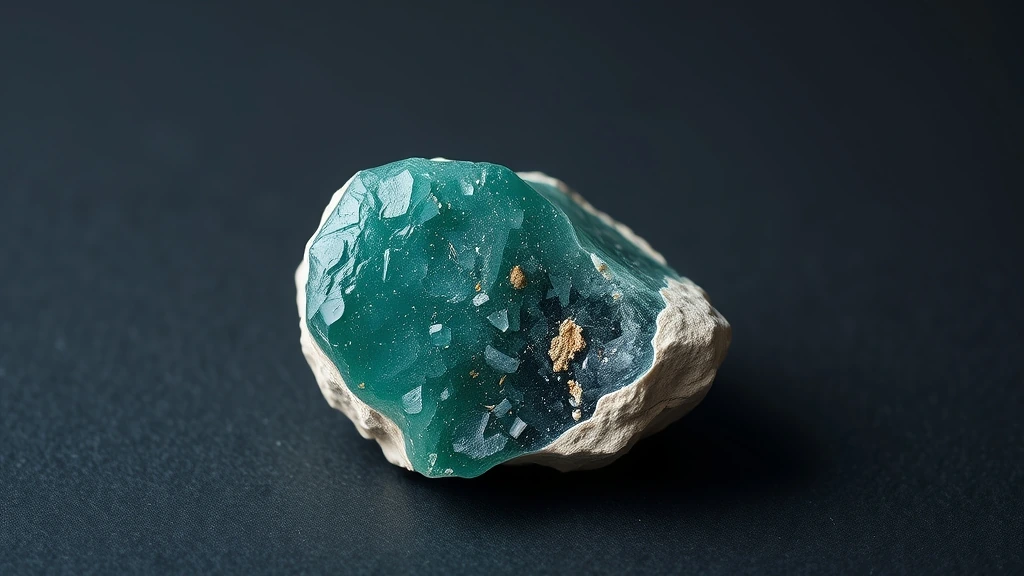
Elbaite belongs to the tourmaline super‑group, a natural mineral/crystal that forms in pegmatitic and metamorphic environments worldwide. Its structure is built from silicate rings linked to borate groups, producing elongated prismatic crystals that often display strong pleochroism. The mineral’s chemistry is highly variable, allowing trace elements to generate the spectacular hues prized by gem collectors.
What is Elbaite Gemstone? Geological Overview & Definition
Elbaite is the lithium‑rich end‑member of the tourmaline series, distinguished from its sodium‑rich sibling, sodium tourmaline (schorl), by the presence of Li and Al in the X‑site of its crystal lattice. It crystallizes in the Trigonal system, producing characteristic columnar or tabular habits that can reach several centimeters in length.
The gemstone’s vivid colors arise from trace transition metals—chiefly Fe²⁺, Mn³⁺, and Cr³⁺—which act as chromophore centers within the crystal field. These elements substitute for Li and Al, creating the emerald‑green, ruby‑red, and neon‑blue varieties that define elbaite’s market appeal. Its strong pleochroism means each facet can display multiple hues depending on viewing angle.
Elbaite Gemstone Chemical Composition & Crystallographic Properties
Elbaite’s Trigonal symmetry belongs to space group R3m, with a three‑fold rotational axis parallel to the crystal’s elongation direction. The lattice consists of Si₆O₁₈ rings linked by AlO₆ octahedra and BO₃ triangles, forming a robust framework that resists cleavage.
Cation substitution is extensive: Li⁺ and Na⁺ share the X‑site, while Al³⁺ can be partially replaced by Fe²⁺, Mn³⁺, or Cr³⁺, directly influencing color. This flexibility also affects the refractive indices (nω = 1.635–1.650, nε = 1.615–1.632) and birefringence, giving elbaite its high brilliance and fire.
Elbaite is acid‑sensitive; exposure to strong acids can leach alkali cations and damage the surface, a concern for cleaning and setting. However, it remains stable under normal atmospheric conditions, with a density ranging from 2.9 to 3.2 g/cm³.
Thermally, elbaite exhibits reversible color changes when heated—green varieties may shift toward yellow, while pinks can deepen—due to alterations in the electronic states of the chromophore ions. This thermochromic behavior is exploited in heat‑treatment processes to enhance or modify gemstone color.
| Property | Specification |
|---|---|
| Mineral Group | Natural Mineral / Crystal |
| Chemical Formula | Na(Li 1.5 Al 1.5 )Al₆ Si₆ O₁₈ (BO₃ )₃ (OH)₄ |
| Mohs Hardness | 7.0 – 7.5 |
| Crystal System | Trigonal |
| Specific Gravity (Density) | 2.9–3.2 |
| Refractive Index | ”n” ω = 1.635–1.650, ”n” ε = 1.615–1.632 |
| Color & Optical Properties | Natural Elbaite Gemstone color spectrum and optical dispersion |
| Primary Mining Localities | Global primary localities |
| Water & Chemical Resistance | High (Safe for gentle water washing) |
| Chakra Alignment (Traditional) | Crown Chakra, Third Eye Chakra |
| Zodiac Affinity (Traditional) | Virgo, Scorpio |
| Symbolic Meaning (Traditional) | Spiritual clarity, intuition, and transformation |
Elbaite Gemstone Varieties & Color Spectrum
Paraíba (Copper‑bearing Tourmaline)
Formed in lithium‑rich pegmatites where copper substitutes into the crystal lattice, Paraíba displays an electric neon‑blue to green‑turquoise hue. Microscopic inclusions of copper‑oxide create its characteristic fluorescence under UV light. Extremely rare, high‑quality stones command premium prices and are sourced mainly from Brazil and, more recently, Mozambique.
Verdelite (Green Elbaite)
Verdelite develops in granitic pegmatites enriched in chromium and vanadium, yielding vivid emerald‑green to bluish‑green colors. The mineral often exhibits fine rutile needles that produce a silky asterism in polished facets. While abundant in Brazil’s Minas Gerais, gem‑quality material is scarce, making large, vivid pieces highly collectible.
Indicolite (Blue Elbaite)
Indicolite originates in lithium‑bearing pegmatites where trace iron and manganese generate deep indigo to sapphire‑blue tones. Its pleochroic nature shows a shift from blue‑green to violet when viewed from different angles. High‑clarity specimens are primarily mined in Afghanistan’s Nuristan region, where the stones are prized for their intense saturation.
Rubellite (Red/Pink Elbaite)
Rubellite forms in pegmatites with elevated manganese concentrations, imparting a vivid pink to ruby‑red coloration. The gemstone often contains invisible microscopic inclusions that enhance its brilliance without detracting from transparency. Brazil, Madagascar, and Mozambique supply most rubellite, but truly deep‑red stones remain scarce and highly sought after.
Watermelon Tourmaline (Bicolor Elbaite)
This striking bicolor variety exhibits a pink‑red core surrounded by a green outer layer, reflecting zonation during crystal growth in lithium‑rich pegmatites. The sharp color boundary is a hallmark of chemical zoning and is visible even in rough fragments. While Brazil produces the bulk of watermelon tourmaline, fine specimens from Nigeria command a premium for their vivid contrast.
Tsilaisite (Yellow Elbaite)
Tsilaisite’s sunny yellow hue results from trace iron and manganese within a lithium‑rich host, crystallizing in pegmatites that experience late‑stage hydrothermal alteration. The stone often displays chatoyant reflections due to internal strain patterns. High‑grade yellow elbaite is uncommon, with notable deposits reported from Madagascar and the United States (California).
Where is Elbaite Gemstone Found? Geological Mining & Extraction
Elbaite crystallizes in granite‑derived pegmatites, coarse‑grained intrusive bodies that concentrate lithium, beryllium, and alkalis. These pegmatites host elongated, prismatic crystals that grow in the late stages of magmatic cooling, often accompanied by quartz, feldspar, and mica. The mineral’s density of 2.9–3.2 g/cm³ aids gravity‑based separation during ore processing.
The world’s principal elbaite sources include Brazil’s Minas Gerais and Bahia states, Afghanistan’s Nuristan province, Mozambique’s Montepuez district, and Madagascar’s Antsirabe region. In Brazil, artisanal miners extract the gemstone from open‑pit pegmatite benches, while in Afghanistan and Mozambique, small‑scale shaft mining and hand‑sorting remain the dominant methods.
Historical Significance & Cultural Lore of Elbaite Gemstone
Elbaite’s vivid colors attracted ancient civilizations; the Moche of Peru incorporated pink and green tourmaline beads into ceremonial necklaces, while pre‑colonial Mayan artisans used blue indigo tourmaline in elite burial offerings. Early European explorers in the 16th century documented “blue stones” from Brazil, mistaking them for sapphires, which sparked a lasting fascination with the mineral.
In folklore, the Paraíba variant was believed to possess protective powers, warding off evil spirits and bringing good fortune to its wearer. Indigenous Brazilian tribes regarded the gemstone as a “river of light,” using it in shamanic rituals to channel spiritual energy. These legends endure, influencing modern collectors who value elbaite not only for its beauty but also for its mythic heritage.
Modern Uses & Jewelry Applications of Elbaite Gemstone
Elbaite’s vivid colors and strong trigonal crystal habit make it a favorite for both high‑end lapidary work and artistic carving. Skilled cutters often produce polished cabochons that showcase the stone’s natural pleochroism, while precision faceting highlights its bright refractive indices. In addition to rings and pendants, artisans carve ornamental figurines and inlays for decorative objects, capitalising on its durability and striking hue.
- Cabochon pendants that display a smooth, glowing surface
- Faceted earrings and rings emphasizing fire and brilliance
- Ornamental carvings such as miniature sculptures or watch crowns
Carat, Quality Grades & Value Factors of Elbaite
According to historical traditions and metaphysical lore, Elbaite is believed to amplify personal courage and foster a deep connection to the earth. Its vibrant energy is said to stimulate mental clarity while nurturing the heart’s capacity for unconditional love, creating a balance between action and compassion. Practitioners also attribute to it the power to harmonise emotional turbulence, encouraging steadiness in times of change.
Which Chakra and Zodiac Signs Align with Elbaite Gemstone?
Elbaite resonates strongly with the Root Chakra, grounding the wearer and reinforcing a sense of security and stability. Simultaneously, it activates the Heart Chakra, promoting emotional openness, empathy, and the flow of love throughout the energetic field.
In astrological tradition, Elbaite is aligned with Taurus, Gemini, and Leo. Taurus benefits from its stabilising influence, Gemini draws on its mental clarity, and Leo experiences an enhanced expression of creative fire and confidence. These three signs share a common affinity for the stone’s dynamic yet grounding qualities.
How to Identify Real vs. Fake Elbaite Gemstone
Artificial imitations of Elbaite include colored glass, polymer resins, and dyed natural minerals that mimic its vivid palette. Synthetic versions may be produced in laboratory settings, often lacking the characteristic internal fracture patterns of genuine elbaite. Dyed replicas can be identified by uneven coloration and a glassy feel that differs from the stone’s natural heft.
Practical At-Home Authenticity Tests
- Temperature Test (Thermal Feel): Real elbaite feels cool to the touch and warms slowly, whereas glass or plastic warms quickly in the hand.
- Specific Gravity & Weight Test: Genuine elbaite has a density of 2.9–3.2 g/cm³; a simple water displacement test will reveal a heavier weight than most imitations.
- Scratch & Hardness Test (Mohs Comparison): With a hardness of about 6.5–7, elbaite will resist scratching by a steel nail but can be lightly scratched by a quartz point; glass will show more noticeable scratches.
- Microscopic & Loupe Inspection (Internal Inclusions): Under 10× magnification, natural elbaite displays fine, irregular fractures and occasional mineral inclusions, while synthetic glass appears uniformly clear with no internal features.
Elbaite Gemstone Valuation Factors, Grading & Pricing
Color Saturation is the single most decisive attribute in elbaite appraisal. Deep, vivid hues—especially the prized “paraíba” neon blues and greens—command premium prices, while pastel tones are graded lower. Uniform tone across the stone and a high‑grade optical clarity that yields a brilliant, glassy luster further elevate value.
Carat Weight interacts with cut quality to shape market price. Larger elbaite pieces are rare, but a well‑proportioned carat count only adds value when paired with excellent facet symmetry that maximizes light return. Visible matrix or inclusions, even when natural, can diminish price unless they are artistically integrated into the design.
Geographical Provenance Premium reflects the gemstone’s origin, with deposits from Brazil, Mozambique, and Afghanistan often fetching higher bids. Provenance certificates authenticate source and can add 10‑30 % to wholesale rates. Retail trends show a steady rise in demand for ethically mined elbaite, pushing overall market values upward each year.
How to Clean and Care for Elbaite Gemstone
Gentle cleaning is essential to preserve elbaite’s delicate crystal structure. Use warm, soapy water and a soft, lint‑free cloth to wipe the surface, removing oils and dust without abrasion. Avoid ultrasonic cleaners entirely, as the vibrations can induce micro‑fractures in the stone’s trigonal lattice. After cleaning, pat dry with a microfiber towel and store the gem away from hard impacts.
Cleansing and Recharging Elbaite Gemstone (Energetic Care)
Because elbaite is chemically stable and insoluble in water, dry energetic cleansing methods are safe. Smoke smudging with sage or cedar gently clears stagnant energy without contacting the surface, allowing the stone to reset its vibrational field.
Exposure to moonlight or placement on a selenite plate for several hours each night further recharges the gem, enhancing its natural fluorescence and promoting a balanced aura. These non‑invasive techniques respect the mineral’s physical integrity while supporting its metaphysical qualities.
Frequently Asked Questions About Elbaite Gemstone
What is the chemical composition of elbaite?
Elbaite is a lithium‑rich tourmaline with the formula Na(Li1.5Al1.5)Al6Si6O18(BO3)3(OH)4. This complex structure incorporates lithium, aluminum, and boron, giving elbaite its vivid colors and high refractive index (nω = 1.635–1.650, nε = 1.615–1.632). Its trigonal crystal system contributes to its distinctive prismatic habit.
How hard is elbaite on the Mohs scale?
Elbaite rates between 7 and 7.5 on the Mohs hardness scale. This makes it suitable for most jewelry pieces, though care should be taken to avoid scratches from harder materials like diamonds. Its durability, combined with a density of 2.9–3.2 g/cm³, offers a solid feel in the hand.
Can I wear elbaite jewelry while swimming or in the rain?
Yes, elbaite has high water resistance and is safe for gentle water washing. A quick rinse with warm, soapy water and a soft cloth will keep it clean. However, prolonged exposure to harsh chemicals or high‑pressure jets should be avoided to preserve its surface luster.
Should I clean elbaite with an ultrasonic cleaner?
No, ultrasonic cleaning is not recommended for elbaite. Use warm soapy water and a soft cloth to gently remove dirt. Ultrasonic vibrations can cause micro‑fractures in the crystal lattice, potentially leading to chipping or loss of brilliance over time.
Which zodiac signs are most compatible with elbaite?
Elbaite is traditionally associated with Taurus, Gemini, and Leo. Those born under these signs are believed to benefit from the stone’s stabilizing energy, which can enhance confidence and creativity. Wearing elbaite may amplify the natural traits of these astrological profiles.
How does elbaite interact with the body’s energy centers?
Elbaite is linked to the Crown Chakra, Third Eye Chakra. It is thought to ground emotional turbulence while simultaneously opening the heart to compassion. This dual alignment makes it a popular choice for meditation and holistic healing practices.
Is elbaite prone to cleavage or breakage?
Elbaite exhibits good structural integrity but can cleave along its trigonal axes under severe impact. While its hardness offers resistance to everyday wear, dropping the stone onto a hard surface may cause chips. Secure settings and protective storage are advisable.
How can I tell if an elbaite gemstone is genuine?
Authentic elbaite displays characteristic pleochroism and a high refractive index. Under magnification, you’ll notice well‑formed trigonal prisms and a lack of synthetic inclusions. Certified lab reports and testing for the specific chemical formula provide the most reliable verification.