
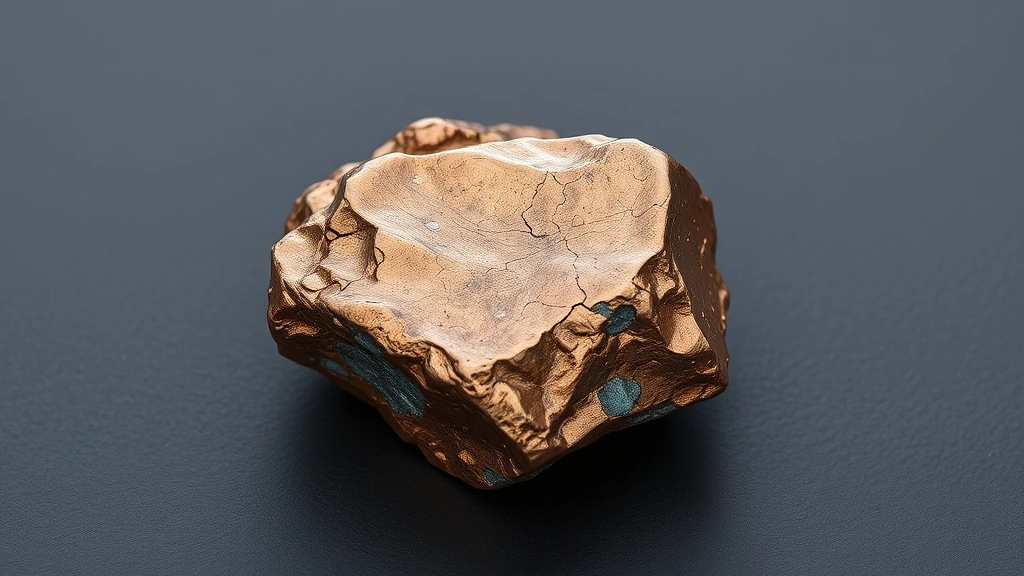
Copper stands as a unique native element within the broader classification of natural minerals and crystals. Unlike silicate-based gemstones, it occurs in its pure metallic form, derived from hydrothermal veins and oxide zones. Its geological significance lies in its role as a foundational industrial metal and a rare aesthetic medium. This elemental purity grants it a distinct identity separate from complex compound minerals found in the earth’s crust. In comparative mineralogical collections, practitioners and geologists frequently study Blue Calcite alongside this crystal to appreciate their subtle energetic and structural differences.
What is Copper? Geological Overview & Definition
Copper is classified as a native metal, meaning it exists in nature as a single element rather than a compound. It typically forms in hydrothermal veins where hot, mineral-rich fluids deposit metallic particles over millions of years. This geological process creates the dense, metallic aggregates prized by collectors and lapidaries. Like the copper veins that crystallize from hydrothermal fluids, the soothing blue hues of Blue Aragonite often form in sedimentary deposits where mineral-rich waters precipitate calcium carbonate into delicate, calming formations.
The stone’s rarity in gem-quality form stems from its susceptibility to oxidation and physical wear. High-purity specimens often display dendritic growth patterns or massive, botryoidal textures. These formations result from slow crystal growth in confined geological spaces. Understanding this origin helps explain its unique aesthetic and structural characteristics.
Copper Chemical Composition & Crystallographic Properties
Copper crystallizes in the cubic system, specifically adopting a face-centered cubic (FCC) lattice structure. This arrangement allows for high atomic packing density, contributing to its exceptional malleability and ductility. The symmetry of the cubic unit cell is fundamental to its physical properties.
The element exhibits a refractive index of approximately 0.11, which is exceptionally low for gemological materials. This low value results in a high reflectance rather than traditional brilliance or fire. The metallic luster dominates its visual appearance, distinguishing it from dielectric gemstones.
As a pure element, copper does not undergo cation substitution in the way complex silicates do. Its color is intrinsic to the metal’s electronic structure, not dependent on trace impurities. This chromophore stability ensures a consistent reddish-gold hue across all natural specimens.
Thermal behavior reveals copper’s high thermal conductivity, allowing it to dissipate heat rapidly. This property makes it sensitive to rapid temperature changes, which can induce stress fractures. Careful handling is required to preserve the integrity of polished specimens.
| Property | Specification |
|---|---|
| Mineral Group | Natural Mineral / Crystal |
| Chemical Formula | Cu |
| Mohs Hardness | 2.5 – 3.0 |
| Crystal System | Cubic |
| Specific Gravity (Density) | 8.9 – 8.95 |
| Refractive Index | 0.11 |
| Color & Optical Properties | Natural Copper color spectrum and optical dispersion |
| Primary Mining Localities | Global primary localities |
| Water & Chemical Resistance | Sensitive (Avoid prolonged water soaking) |
| Chakra Alignment (Traditional) | Heart Chakra |
| Zodiac Affinity (Traditional) | Taurus, Leo |
| Symbolic Meaning (Traditional) | Vitality, passion, and grounding |
Copper Varieties & Color Spectrum
Copper displays distinct mineralogical characteristics across its geological varieties and structural habits. Gemologists evaluate these natural varieties based on crystal habit, trace chromophore concentrations, and visual luster.
Primary Natural Copper
The benchmark natural variety exhibiting diagnostic color saturation and classic crystallographic symmetry.
Distinct Geological Morphs of Copper
Secondary regional and structural varieties formed under localized geological temperature and pressure conditions.
Native Copper
Native copper occurs as metallic, bright‑red to orange‑brown masses in basaltic lava flows and oxidized zones of sulfide deposits. It forms cubic crystals that display a distinctive metallic luster and a low Mohs hardness of 2.5–3.0, making it easily shaped by ancient smiths. Large, unfractured specimens are rare, and the most prized examples come from the Keweenaw Peninsula of Michigan, USA.
Chalcopyrite‑Copper (Copper‑Gold Chalcopyrite)
Chalcopyrite‑copper crystals develop in hydrothermal veins where copper, iron, and sulfur precipitate together, yielding a brassy yellow‑golden hue with iridescent tarnish. The mineral often contains inclusions of quartz or sphalerite, which create a speckled visual signature prized by collectors. Though abundant in the world’s copper districts, gem‑grade, well‑formed crystals are limited to high‑grade ore shoots in Chile and the Democratic Republic of Congo.
Malachite‑Copper Composite
Malachite forms as botryoidal or stalactitic masses in the oxidized zones of copper deposits, displaying vivid green banding caused by copper carbonate hydroxide layers. Frequently, malachite crystals encrust native copper cores, producing a striking two‑tone effect prized in ornamental lapidary work. High‑quality specimens are sourced mainly from the Zambian Copperbelt and the Ural Mountains, where extensive weathering has produced thick, polished plates.
Azurite‑Copper (Azurite‑Cu)
Azurite, a deep blue copper carbonate, crystallizes in the same supergene environments as malachite but with a richer cobalt‑blue coloration. It often occurs as prismatic crystals attached to copper ore, and its intense hue is enhanced by light‑diffusing inclusions of calcite. Rare, vivid azurite‑copper specimens are harvested from the Tsumeb Mine in Namibia and the historic mines of the Balkans, where low‑temperature oxidation preserves the vivid color.
Bornite (Peacock Ore)
Bornite is a copper‑iron sulfide that oxidizes to a spectacular iridescent peacock‑green and purple surface, a result of thin‑film interference on its crystal faces. It forms in medium‑temperature hydrothermal veins and is commonly intergrown with chalcopyrite and pyrite. Gem‑quality bornite, displaying a uniform metallic sheen, is scarce and primarily sourced from the Kalahari Copper Belt of Namibia.
Copper‑Bearing Turquoise (Apatite‑Copper)
In arid regions, copper can substitute into the crystal lattice of turquoise, shifting its typical blue to a green‑copper hue. These specimens arise in sedimentary sandstones where copper‑rich groundwater percolates through phosphates. The most vivid copper‑infused turquoise originates from the historic mines of the American Southwest, especially Arizona’s Bisbee district, where the mineral’s translucency and color depth are highly valued.
Where is Copper Found? Geological Mining & Extraction
Copper is concentrated in porphyry copper deposits, massive bodies of quartz‑bearing granitic intrusions that host disseminated sulfide minerals such as chalcopyrite and bornite. These deposits form in convergent plate margins where magmatic fluids infiltrate surrounding rocks, creating extensive ore zones that can be mined by open‑pit or underground methods.
The world’s leading copper provinces include the Andes (Chile, Peru), the Central African Copperbelt (DRC, Zambia), and the Great Lakes region of North America (Michigan, USA). Extraction typically involves crushing the ore, flotation to concentrate sulfides, and smelting to produce pure metallic copper, which is then refined by electrolytic processes to achieve the high purity required for industrial and ornamental uses.
Historical Significance & Cultural Lore of Copper
Across ancient lapidary traditions, copper’s malleability and bright hue made it a staple of early metallurgy in Egyptian, Mesopotamian, and Indus Valley societies, where it was fashioned into tools, jewelry, and ritual vessels. In Greco‑Roman texts, copper was associated with the god Hephaestus and used for coinage, while Vedic scriptures praised its purifying qualities in sacred fire ceremonies.
In Chinese antiquity, copper alloys such as bronze were central to the Shang dynasty’s ritual bronzes, symbolizing vitality and authority; similar reverence appears in Mesoamerican cultures, where copper mirrors reflected the sun’s power in ceremonial contexts. Throughout these traditions, copper’s conductive nature was metaphorically linked to the Heart Chakra, embodying grounding, passion, and the flow of life energy.
Modern Uses & Jewelry Applications of Copper
Copper is prized for its warm, metallic luster and is frequently used in contemporary jewelry and decorative arts. Artisans cut the metal into cabochons or apply subtle faceting to create polished, reflective surfaces that catch light. In addition, copper is often incorporated into mixed‑metal pieces, paired with gemstones or enamel for contrast.
- Lapidary cutting: precision polishing, polishing to a mirror finish
- Cabochon/faceted jewelry: rings, pendants, earrings, cufflinks
- Ornamental carving: architectural accents, sculptural panels, decorative panels
Metaphysical Properties & Traditional Meaning of Copper
According to historical traditions and metaphysical lore, copper is associated with vitality and grounding. Across ancient Mediterranean and Vedic lapidary lore, the metal is believed to enhance emotional balance and foster passion in relationships. It is thought to amplify the energy of the Heart Chakra, encouraging compassion and emotional healing. In many cultures, copper is also considered a conduit for protective energies, warding off negative influences.
Which Chakra and Zodiac Signs Align with Copper?
Copper is traditionally linked to the Heart Chakra, the center of love, empathy, and emotional equilibrium. This alignment reflects the metal’s warm, nurturing qualities that resonate with the heart’s energy.
The zodiac signs that correspond with copper are Taurus and Leo. Taurus, the earth sign, values stability and sensuality, while Leo, the fire sign, embodies confidence and passion—both qualities mirrored in copper’s radiant glow and enduring nature.
How to Identify Real vs. Fake Copper
Artificial imitations of copper often involve synthetic glass, dyed metals, or plated alloys that mimic the appearance of pure copper. These replicas may lack the characteristic thermal conductivity and density of genuine copper, leading to subtle differences in feel and weight.
Practical At-Home Authenticity Tests
- Temperature Test (Thermal Feel): Genuine copper feels noticeably cool to the touch due to its high thermal conductivity, whereas synthetic glass or plated metals retain warmth.
- Specific Gravity & Weight Test: Copper’s density of 8.9–8.95 g/cm³ means it feels heavier than similarly sized alloys; a simple balance can reveal discrepancies.
- Scratch & Hardness Test (Mohs Comparison): Copper has a Mohs hardness of 2.5–3.0; it can be scratched by a steel nail but resists scratching by a quartz crystal, distinguishing it from harder metals.
- Microscopic & Loupe Inspection (Internal Inclusions): Under magnification, real copper often shows fine, metallic grain patterns and occasional slag inclusions, unlike the uniform appearance of dyed or plated substitutes.
Copper Valuation Factors, Grading & Pricing
The market value of copper is first driven by Color Saturation, where a deep, vivid reddish‑brown hue signals high purity and minimal oxidation. This visual vibrancy is prized by collectors and is often the first cue for assessing quality. The natural energetic luster of copper, which reflects its metallic sheen, also enhances its appeal in both decorative and metaphysical contexts.
Next, Crystal Size & Weight (Grams) play a decisive role. Larger, heavier specimens command higher prices, especially when they retain their raw, unpolished surface. Tumbled polish can increase desirability, but the presence of natural matrix inclusions—such as tiny mineral veins or fossilized organic matter—adds character and can justify a premium. In this industry, grading focuses on gram weight and overall dimensions rather than carat or tumbled polish and natural crystal geometry.
Finally, Ethical Sourcing & Locality Premium influences collector and holistic markets. Provenance from responsible mines, particularly those with transparent supply chains, adds value. Specimens from renowned localities—such as the historic copper deposits of the Anatolian plateau or the ancient mines of the Andes—often carry a locality premium that reflects both geological uniqueness and cultural heritage.
How to Clean and Care for Copper
When caring for copper, the safest approach is to wipe briefly with a damp cloth and dry immediately. This gentle method removes surface oxidation without introducing moisture that could penetrate the crystal lattice. Avoid ultrasonic cleaners, as the vibration can induce microfractures in the soft metallic structure, compromising both appearance and integrity.
Cleansing and Recharging Copper (Energetic Care)
For energetic renewal, place the copper on a selenite charging slab under gentle moonlight; the subtle lunar energy restores its vibrancy without exposing it to heat. Alternatively, a short herbal smudging session—using sage or cedar—can cleanse residual energies while keeping the metal dry. Both practices respect the mineral’s sensitivity to moisture and temperature, ensuring the copper remains structurally sound and energetically balanced.
Frequently Asked Questions About Copper
Copper displays distinct mineralogical characteristics across its geological varieties and structural habits. Gemologists evaluate these natural varieties based on crystal habit, trace chromophore concentrations, and visual luster.
Primary Natural Copper
The benchmark natural variety exhibiting diagnostic color saturation and classic crystallographic symmetry.
Distinct Geological Morphs of Copper
Secondary regional and structural varieties formed under localized geological temperature and pressure conditions.
Is copper safe to wear in the shower?
Copper is sensitive to prolonged water exposure and should be removed before showering. Extended contact with water accelerates surface oxidation, leading to a dull, tarnished appearance. To preserve the metal’s natural luster, avoid soaking it in baths or showers.
How should I clean my copper jewelry?
Wipe the piece briefly with a damp cloth and dry it immediately. Avoid using ultrasonic cleaners, as the vibrations can cause structural fractures in the soft metal. A gentle, quick wipe is the safest method to remove oils without damaging the surface.
Which zodiac signs are compatible with copper?
Copper is traditionally aligned with Taurus and Leo. These earth and fire signs resonate with the metal’s grounding properties. Wearing copper is believed to enhance vitality and passion for individuals born under these astrological influences.
Which chakra does copper correspond to?
Copper is specifically linked to the Heart Chakra. This connection supports emotional balance and love energy. The metal’s warm tones are thought to stimulate the heart center, fostering compassion and interpersonal connection.
Can copper turn my skin green?
Yes, copper can leave a greenish residue on the skin. This reaction occurs when the metal reacts with natural skin acids and moisture. It is a harmless chemical process that typically fades after the jewelry is removed and the skin is washed.
How hard is copper on the Mohs scale?
Copper rates between 2.5 and 3.0 on the Mohs hardness scale. This makes it a relatively soft metal susceptible to scratches and dents. Careful handling is required to maintain the integrity of the piece during daily wear.
What is the crystal system of copper?
Copper crystallizes in the Cubic system. This structure gives the mineral its distinct geometric form when found in natural specimens. The cubic arrangement is fundamental to its physical properties and metallic luster.
Does copper have a high refractive index?
No, copper has a very low refractive index of 0.11. Unlike gemstones, metals do not refract light in the traditional optical sense. This low value contributes to its opaque, metallic appearance rather than transparency.