
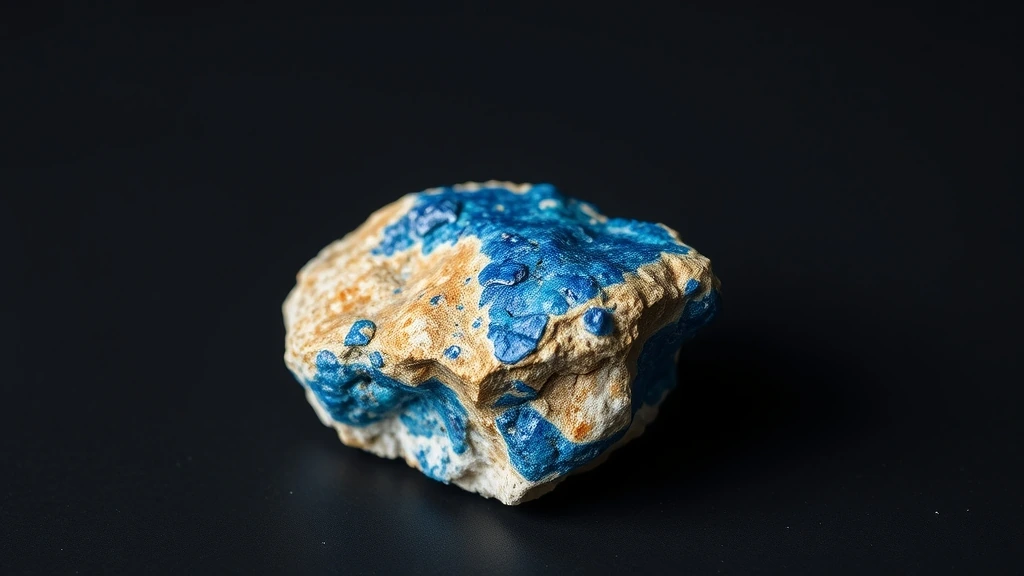
Azurite belongs to the natural mineral family of carbonate hydroxides and crystallizes exclusively in the monoclinic system. Formed in the oxidized zones of copper ore deposits, it often occurs alongside malachite, sharing a common genesis in supergene environments where copper-rich solutions precipitate secondary minerals.
What is Azurite Gemstone? Geological Overview & Definition
Azurite is a secondary copper mineral that precipitates from acidic, oxygen‑rich groundwater percolating through copper sulfide deposits. Its striking blue coloration arises from Cu²⁺ ions absorbing specific wavelengths of light, a hallmark of many copper carbonate minerals.
In gemological contexts, azurite is prized for its intense color but is limited by its low hardness and susceptibility to chemical attack, requiring careful handling and protective settings.
Azurite Gemstone Chemical Composition & Crystallographic Properties
The mineral’s monoclinic crystal system yields prismatic to tabular crystals with a single two‑fold axis and a distinct β angle deviating from 90°. Its lattice consists of layers of CuO₆ octahedra linked by carbonate groups, creating a sheet‑like structure that influences cleavage.
Cation substitution is minimal; copper dominates the octahedral sites, while occasional zinc or iron can enter the structure, subtly shifting hue or density. The formula Cu₃(CO₃)₂(OH)₂ reflects two carbonate groups and one hydroxide per three copper atoms, a balance that governs stability.
Azurite is acid‑sensitive: exposure to dilute acids dissolves the carbonate matrix, producing effervescence and a greenish solution as copper ions are released. This reaction is a diagnostic test distinguishing it from more acid‑resistant minerals like quartz.
The vivid blue is produced by d‑d electron transitions within Cu²⁺, acting as chromophore centers that absorb red‑orange light. Upon heating above ~200 °C, azurite dehydrates, converting to malachite and losing its characteristic blue, a reversible process that underscores its thermal instability.
| Property | Specification |
|---|---|
| Mineral Group | Natural Mineral / Crystal |
| Chemical Formula | Cu₃ (CO₃ )₂ (OH)₂ |
| Mohs Hardness | 3.5 to 4 |
| Crystal System | Monoclinic |
| Specific Gravity (Density) | 3.773 (measured), 3.78 (calculated) |
| Refractive Index | n α = 1.730 n β = 1.758 n γ = 1.838 |
| Color & Optical Properties | Natural Azurite Gemstone color spectrum and optical dispersion |
| Primary Mining Localities | Global primary localities |
| Water & Chemical Resistance | High (Safe for gentle water washing) |
| Chakra Alignment (Traditional) | Throat Chakra, Third Eye Chakra |
| Zodiac Affinity (Traditional) | Aquarius, Pisces |
| Symbolic Meaning (Traditional) | Truth, clarity of expression, and spiritual insight |
Azurite Gemstone Varieties & Color Spectrum
Azurite exhibits distinct visual characteristics depending on its geological origin and impurity content. The most prized specimens display a deep, velvety blue hue with high saturation.
Classic Deep Blue Azurite
This variety features an intense, uniform cobalt blue coloration typical of high-purity deposits. It often forms well-defined prismatic crystals or dense botryoidal masses.
Inclusions of malachite are rare in top-grade material, ensuring a clean, vibrant appearance. Found primarily in the Azurite mines of Morocco, this type is highly sought after by collectors.
Azurite-Malachite Banded Specimens
These specimens showcase striking alternating bands of blue azurite and green malachite. The color zoning reflects changes in copper carbonate precipitation during formation.
The intergrowth creates a visually complex pattern that is highly valued in lapidary arts. Such banded stones are frequently cut into cabochons to highlight the natural layering.
Botryoidal Azurite
This variety forms rounded, grape-like clusters known as botryoidal aggregates. The surface often displays a velvety or granular texture rather than sharp crystal faces.
These formations result from slow crystal growth in open cavities. They are commonly found associated with calcite and quartz in oxidized copper zones.
Translucent Azurite Crystals
Rarely, azurite occurs in thin, translucent crystal forms that allow light transmission. These specimens reveal the internal monoclinic structure and cleavage planes.
Such crystals are extremely fragile due to the mineral’s low Mohs hardness of 3.5 to 4. They are primarily preserved as scientific specimens rather than cut gemstones.
Impure Greenish-Blue Azurite
This variety contains significant iron or magnesium impurities, shifting the hue toward greenish-blue. The color is less saturated and often appears duller than pure azurite.
It is commonly found in lower-grade deposits where oxidation processes were incomplete. While less valuable, it provides important insights into copper mineralization pathways.
Where is Azurite Gemstone Found? Geological Mining & Extraction
Azurite forms in the oxidized zones of copper deposits, typically within host rock such as limestone or dolomite. It rarely occurs in primary sulfide ores but develops through secondary alteration processes.
The mineral is frequently found alongside malachite, chrysocolla, and calcite in supergene enrichment zones. These environments provide the necessary carbonates and hydroxides for azurite precipitation.
Major mining regions include Morocco, the United States, and the Democratic Republic of Congo. In the US, historical mines in Arizona and New Mexico produced significant quantities of gem-quality material.
Extraction methods involve open-pit mining followed by careful hand-sorting to separate azurite from gangue. Due to its brittleness, mechanical processing must be minimized to prevent fracturing delicate crystals.
Historical Significance & Cultural Lore of Azurite Gemstone
Ancient civilizations valued azurite as a source of vibrant blue pigment for art and decoration. The Egyptians used it in tomb paintings and jewelry, symbolizing the sky and the afterlife.
In medieval Europe, azurite served as a cheaper alternative to ultramarine in illuminated manuscripts. Its use declined after the discovery of synthetic pigments in the nineteenth century.
Archaeological findings reveal azurite beads and ornaments in sites across Mesopotamia and the Indus Valley. These artifacts demonstrate early trade networks for semi-precious minerals.
The mineral’s name derives from the Arabic word “lazward,” meaning blue. This etymology reflects its widespread recognition and cultural importance across the Middle East and Asia.
Modern Uses & Jewelry Applications of Azurite Gemstone
Azurite is prized for its vivid azure hue, making it a favorite in artistic lapidary work. Artisans often cut the stone into cabochons to showcase its deep color, while skilled faceters produce modestly brilliant facets that highlight its monoclinic crystal habit. Ornamental carving also thrives, with small figurines and inlays adding a touch of antiquity to contemporary pieces.
- Cabochon pendants and beads for bohemian necklaces
- Faceted rings or earrings that emphasize the stone’s natural luster
- Inlaid mosaics in watch dials, decorative boxes, and interior décor
Metaphysical Properties & Traditional Meaning of Azurite Gemstone
According to historical traditions and metaphysical lore, azurite is regarded as a gateway to higher consciousness, encouraging mental clarity and intuitive insight. Its intense blue is said to stimulate the Root Chakra, grounding the wearer while simultaneously opening the Heart Chakra for deeper emotional empathy. The stone is believed to dissolve mental fog, promote truthful communication, and inspire creative expression, resonating strongly with those seeking inner truth.
Which Chakra and Zodiac Signs Align with Azurite Gemstone?
Azurite’s grounding energy aligns with the Root Chakra, fostering stability, security, and a solid foundation in the physical world. Simultaneously, its soothing vibration nurtures the Heart Chakra, encouraging compassion, love, and emotional balance, making it a dual‑chakra stone for holistic well‑being.
In astrology, azurite is traditionally linked to Taurus, Gemini, and Leo. Taurus benefits from the stone’s stabilizing influence, reinforcing perseverance and material confidence. Gemini finds enhanced mental agility and clear communication, while Leo experiences amplified creative fire and charismatic leadership, all under azurite’s vivid blue influence.
How to Identify Real vs. Fake Azurite Gemstone
Artificial imitations of azurite include dyed calcite, synthetic glass, and resin composites that mimic its deep blue hue but lack the mineral’s true composition and physical properties. These substitutes often feel lighter, display uniform coloration, or exhibit a glassy sheen inconsistent with natural azurite’s slightly porous, earthy texture.
Practical At-Home Authenticity Tests
- Temperature Test (Thermal Feel): Natural azurite feels cool to the touch and retains that coolness longer than glass or plastic replicas, which quickly warm to skin temperature.
- Specific Gravity & Weight Test: With a measured density of ~3.78 g/cm³, authentic azurite feels noticeably heavier than dyed quartz or glass of similar size. A simple water displacement test can confirm this density range.
- Scratch & Hardness Test (Mohs Comparison): Azurite’s Mohs hardness of 3.5–4 means a steel nail (≈5.5) will not scratch it, whereas softer minerals like calcite (hardness 3) will be marked; a quick scratch with a copper coin can help differentiate.
- Microscopic & Loupe Inspection (Internal Inclusions): Under 10× magnification, genuine azurite shows fine, irregular crystal twinning and occasional micro‑fractures, while synthetic glass appears uniformly smooth and free of natural inclusions.
Azurite Gemstone Valuation Factors, Grading & Pricing
Color Saturation is the primary driver of value, with deep, uniform royal blue tones commanding the highest premiums. Gemologists assess tone consistency across the stone, as any yellowish or greenish tints significantly reduce market appeal. High optical clarity and a distinct vitreous luster further enhance the gemstone’s visual impact and desirability.
Carat Weight influences pricing, though large, flawless specimens are rare due to the mineral’s inherent brittleness. Facet symmetry must be precise to maximize light return, as irregular cuts can expose internal weaknesses. The presence of matrix or inclusions, such as malachite veining, often lowers value unless the pattern is aesthetically pleasing.
Geographical Provenance Premium applies to stones from historic mines like Cornwall or the Azurite region of Morocco. Wholesale prices fluctuate based on supply, but retail values remain stable for high-grade material. Collectors pay extra for certified stones with documented origins, ensuring authenticity and historical significance.
How to Clean and Care for Azurite Gemstone
Use warm soapy water and a soft cloth to gently remove surface dust and oils. This method effectively cleans the stone without introducing harsh chemicals that could damage its surface. Always dry the gemstone immediately with a lint-free cloth to prevent water spots.
Avoid ultrasonic cleaners entirely, as the vibrations can cause structural fractures in this relatively soft mineral. The Mohs hardness of 3.5 to 4 makes azurite susceptible to scratching and chipping during aggressive cleaning. Store pieces separately in soft pouches to protect them from harder gemstones.
Cleansing and Recharging Azurite Gemstone (Energetic Care)
For energetic maintenance, use smoke smudging with sage or palo santo to clear negative energy. This dry method respects the mineral’s solubility, avoiding any risk of chemical alteration or surface erosion. Allow the smoke to circulate around the stone for a few minutes before storing it.
Place the gemstone on a selenite plate under moonlight for gentle recharging. This approach leverages natural lunar energy without exposing the azurite to moisture or direct sunlight. Ensure the stone is completely dry before beginning this metaphysical care routine.
Frequently Asked Questions About Azurite Gemstone
What is the chemical composition of azurite?
Azurite is a copper carbonate hydroxide mineral with the formula Cu3(CO3)2(OH)2. This copper‑rich composition gives the stone its vivid deep‑blue hue and contributes to a measured density of about 3.77 g/cm³, making it noticeably heavier than many common gemstones.
How hard is azurite on the Mohs scale?
Azurite rates between 3.5 and 4 on the Mohs hardness scale. Because it is relatively soft, the stone can be scratched by harder minerals and should be set in protective settings. Avoid wearing azurite in activities where it may encounter sharp impacts or abrasive surfaces.
Can I wear azurite jewelry in the shower or while swimming?
Yes, azurite tolerates gentle water washing and brief exposure to moisture. Its high water resistance means a quick rinse or shower won’t damage the stone, but prolonged soaking should be avoided to prevent surface dulling. Always dry the piece with a soft cloth afterward.
Should I clean azurite with an ultrasonic cleaner?
No, ultrasonic cleaning is not recommended for azurite. Use warm, soapy water and a soft cloth to gently remove dirt; the vibrations of an ultrasonic bath can cause micro‑fractures in this relatively fragile mineral, compromising its structural integrity.
Which zodiac signs are most compatible with azurite?
Azurite is traditionally associated with Taurus, Gemini, and Leo. Enthusiasts believe the stone amplifies the grounded determination of Taurus, the curiosity of Gemini, and the creative fire of Leo, making it a favored talisman for these signs.
Which chakras does azurite influence?
Azurite is linked to the Root Chakra and the Heart Chakra. By resonating with the earth‑centered energy of the Root and the emotional openness of the Heart, the gemstone is thought to promote stability while encouraging compassionate communication.
How should azurite be stored to prevent damage?
Store azurite separately in a padded, fabric‑lined compartment. Because the mineral is brittle and soft, keeping it away from harder gemstones reduces the risk of scratches or chips. A climate‑controlled environment also helps maintain its vivid color.
Is azurite suitable for everyday wear?
Azurite can be worn daily if handled with care. Its moderate hardness and susceptibility to impact mean it should be set in protective mounts and avoided during heavy labor. Regular gentle cleaning and mindful storage will keep the stone looking brilliant for years.