
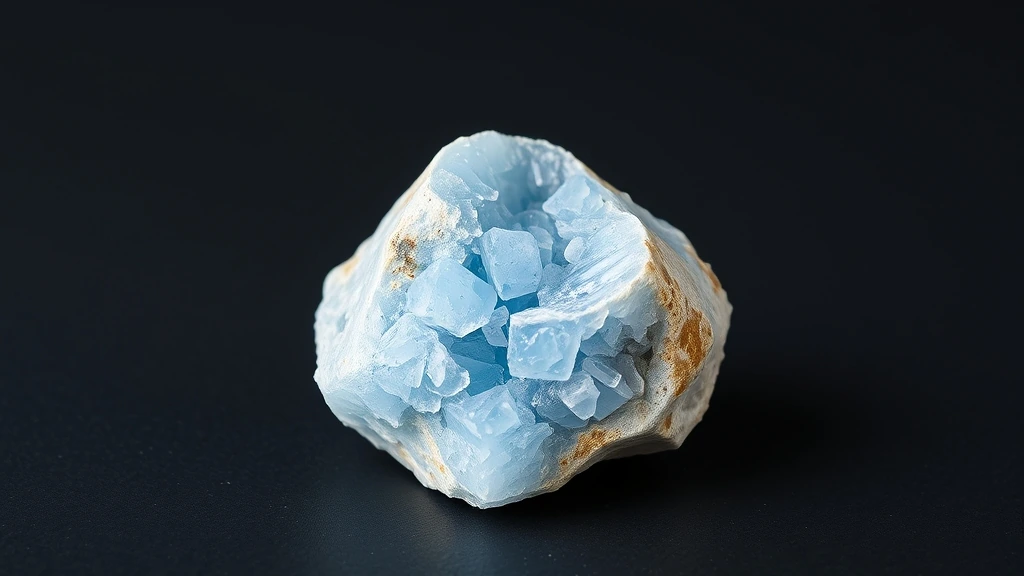
Blue calcite belongs to the carbonate family of minerals and is classified as a natural mineral crystal. It crystallizes in the trigonal system, forming hexagonal prisms that can appear translucent or opaque. The stone is prized for its subtle blue tones, which arise from trace impurities and structural defects rather than intrinsic chromophores.
What is Blue Calcite? Geological Overview & Definition
Blue calcite is a variant of the common mineral calcite, distinguished by its pale to deep blue coloration. The blue hue results from trace substitutions of iron, manganese, or organic inclusions that create color centers within the crystal lattice. Although it shares the same chemical formula, CaCO₃, the presence of these impurities imparts a unique aesthetic. Blue Aragonite, with its similarly soothing blue tones yet distinct crystalline structure, offers a complementary energy that can deepen the calming effects of Blue Calcite.
Geologically, blue calcite forms in sedimentary environments where carbonate precipitation occurs, often in limestone or dolomite formations. It can also appear in metamorphic settings where calcite recrystallizes under heat and pressure, sometimes acquiring a blue tint from fluid inclusions or radiation exposure.
Blue Calcite Chemical Composition & Crystallographic Properties
Blue calcite maintains the trigonal crystal system, characterized by a single three‑fold rotational axis. Its lattice parameters are a = 4.99 Å, c = 17.06 Å, with the carbonate groups oriented parallel to the c‑axis. The trigonal symmetry ensures that the crystal can form hexagonal prisms or scalenohedra. While blue calcite exhibits a trigonal system, its mineralogical cousin Purple Aragonite shares the same carbonate composition but crystallizes in a distinct orthorhombic structure.
The mineral’s chemical formula remains CaCO₃, but the blue coloration is due to cation substitution: Fe²⁺ or Mn²⁺ ions replace Ca²⁺ in the lattice, creating localized charge imbalances. These substitutions generate electron‑hole pairs that act as color centers, absorbing specific wavelengths and producing blue tones.
Blue calcite is moderately acid‑reactive; dilute hydrochloric acid will effervesce, releasing CO₂ gas. This reaction is a hallmark of carbonate minerals and confirms the presence of CaCO₃. The stone’s thermal behavior is typical of calcite: it remains stable up to about 825 °C before decomposing into calcium oxide and carbon dioxide.
In summary, blue calcite is a chemically pure CaCO₃ mineral that exhibits blue coloration through trace element substitution within its trigonal lattice. Its geological formation, acid sensitivity, and thermal stability align with the broader carbonate mineral group, making it a fascinating subject for both gemologists and mineralogists.
| Property | Specification |
|---|---|
| Mineral Group | Natural Mineral / Crystal |
| Chemical Formula | CaCO₃ |
| Mohs Hardness | 3.0 |
| Crystal System | Trigonal |
| Specific Gravity (Density) | 2.71 |
| Refractive Index | 1.486 – 1.658 |
| Color & Optical Properties | Natural Blue Calcite color spectrum and optical dispersion |
| Primary Mining Localities | Global primary localities |
| Water & Chemical Resistance | EXTREMELY SENSITIVE: Water Soluble / Moisture Sensitive! (Avoid liquids) |
| Chakra Alignment (Traditional) | Throat Chakra, Heart Chakra |
| Zodiac Affinity (Traditional) | Pisces, Libra |
| Symbolic Meaning (Traditional) | Emotional balance, clear communication, and spiritual calm |
Blue Calcite Varieties & Color Spectrum
Blue Calcite displays distinct mineralogical characteristics across its geological varieties and structural habits. Gemologists evaluate these natural varieties based on crystal habit, trace chromophore concentrations, and visual luster.
Primary Natural Blue Calcite
The benchmark natural variety exhibiting diagnostic color saturation and classic crystallographic symmetry.
Distinct Geological Morphs of Blue Calcite
Secondary regional and structural varieties formed under localized geological temperature and pressure conditions.
Celestial Blue Calcite
This rare morph exhibits a distinct sky-blue hue derived from trace impurities within the CaCO₃ lattice structure. Its formation typically occurs in low-temperature hydrothermal veins where specific mineral interactions stabilize the blue tint. Collectors prize this variety for its high transparency and vibrant chromatic saturation.
Azure Deep Blue Calcite
Characterized by a rich, saturated azure tone, this variety often features subtle internal banding patterns. The color intensity stems from microscopic inclusions that scatter light across the visible spectrum. Its trigonal crystal system allows for unique optical effects when cut into cabochons.
Pale Sky Blue Calcite
Commonly found in large geode formations, this variety displays a soft, pastel blue appearance. It is frequently associated with quartz and fluorite in sedimentary rock environments. The Mohs hardness of 3.0 makes it susceptible to scratching during extraction.
Turquoise Blue Calcite
This distinctive morph presents a greenish-blue hue that closely resembles natural turquoise. The coloration results from complex trace element substitutions within the calcite structure. It is highly sought after for its unique visual signature in lapidary arts.
Lavender-Blue Calcite
A transitional variety, this stone blends violet and blue tones within a single crystal. Such color zoning often indicates fluctuating chemical conditions during crystal growth. Its rarity makes it a prized specimen for advanced crystallographic study.
Where is Blue Calcite Found? Geological Mining & Extraction
Blue calcite primarily occurs in sedimentary rock formations, particularly within limestone and dolomite deposits. These geological settings provide the necessary calcium carbonate saturation for crystal development. The density of 2.71 g/cm³ aids in distinguishing it from similar minerals during prospecting.
Major extraction sites include regions in Mexico, China, and the United States. Mining operations focus on open-pit methods to access large geode clusters. Careful extraction is required to preserve the integrity of delicate crystal faces and internal structures.
Historical Significance & Cultural Lore of Blue Calcite
Ancient Egyptians utilized calcite in ceremonial objects, believing it facilitated communication with the divine. Archaeological records reveal its presence in tomb artifacts dating back to the Old Kingdom. The stone was often paired with lapis lazuli to symbolize the union of earth and sky.
In Greco-Roman traditions, calcite was associated with clarity of mind and emotional balance. Vedic texts reference similar stones for their calming properties during meditation. This enduring legacy highlights its role in spiritual practices across diverse civilizations.
Modern Uses & Jewelry Applications of Blue Calcite
Due to its relatively low Mohs hardness of 3.0, blue calcite is rarely cut into complex faceted gems for daily wear. Instead, lapidaries favor cabochon cuts that maximize the stone’s soft, milky translucency and gentle color. This preservation of the stone’s natural luster ensures durability while highlighting its serene aesthetic appeal.
- Cabochon Jewelry: Ideal for pendants, earrings, and rings set in protective bezels to prevent chipping.
- Ornamental Carvings: Used in decorative boxes, vases, and small figurines where structural stress is minimal.
- Beads and Tumbled Stones: Popular in meditation kits and casual jewelry due to their smooth, rounded forms.
Metaphysical Properties & Traditional Meaning of Blue Calcite
According to historical traditions and metaphysical lore, blue calcite is revered for its capacity to foster emotional balance and inner tranquility. Ancient Mediterranean and Vedic practitioners often associated this mineral with the calming waters of the subconscious mind. It is believed to help individuals process complex feelings without becoming overwhelmed by them.
In universal lapidary lore, the stone is viewed as a conduit for clear communication and spiritual calm. Practitioners suggest that holding the stone during meditation can dissolve mental fog and promote honest self-expression. This gentle energy is thought to align the wearer’s intent with their spoken words, reducing conflict.
Which Chakra and Zodiac Signs Align with Blue Calcite?
Blue calcite is canonically aligned with the Throat Chakra, which governs expression, truth, and verbal communication. Its soft blue hue resonates with the energy center located at the base of the neck, encouraging articulate and compassionate dialogue. This alignment supports the user in expressing their authentic voice without fear or aggression.
The stone also connects deeply with the Heart Chakra, bridging emotional vulnerability with honest expression. This dual alignment helps users articulate their feelings clearly while maintaining emotional stability. By harmonizing these two centers, blue calcite promotes a state of balanced emotional and verbal integrity.
Astrologically, blue calcite is most strongly associated with the water sign Pisces and the air sign Libra. For Pisces, it enhances intuitive clarity and emotional depth, helping to ground their sensitive nature. For Libra, it supports diplomatic communication and the pursuit of harmonious relationships through balanced expression.
How to Identify Real vs. Fake Blue Calcite
Artificial imitations of blue calcite are common, often involving dyed replicas of clear calcite or synthetic glass designed to mimic the stone’s hue. These fakes may lack the natural internal structure and subtle color variations found in genuine specimens. Understanding these differences is crucial for collectors and buyers seeking authentic mineral specimens.
Practical At-Home Authenticity Tests
- Temperature Test (Thermal Feel): Genuine calcite feels distinctly cool to the touch initially due to its thermal conductivity. Synthetic glass or plastic imitations typically warm up much faster when held in the hand.
- Specific Gravity & Weight Test: Real blue calcite has a specific gravity of 2.71, making it feel moderately heavy for its size. Glass imitations are often slightly heavier, while plastic replicas feel noticeably lighter.
- Scratch & Hardness Test (Mohs Comparison): With a Mohs hardness of 3.0, calcite can be scratched by a copper coin or a steel knife. If the stone resists scratching from a steel nail, it is likely a harder imitation like quartz or glass.
- Microscopic & Loupe Inspection (Internal Inclusions): Under a 10x loupe, genuine calcite often displays twinning patterns or natural fluid inclusions. Glass imitations may contain tiny, spherical air bubbles, which are a definitive sign of artificial origin.
Blue Calcite Valuation Factors, Grading & Pricing
The foremost driver of price is color saturation; deep azure hues with minimal gray overtones command premium rates. Collectors prize a vivid, uniform blue that appears to glow from within, reflecting the stone’s natural energetic luster. Subtle zoning or washed-out tones reduce market appeal, even when the crystal is flawless in other respects.
Next, crystal size & weight (grams) heavily influence valuation. Larger specimens measured in grams, especially those retaining their natural matrix, fetch higher prices than small tumbled pieces. A well‑polished surface enhances visual appeal, yet raw, unaltered stones with visible inclusions are prized for their authenticity and may outrank polished equivalents of equal mass.
Finally, ethical sourcing & locality premium shapes collector demand. Blue calcite extracted from responsibly managed mines, with transparent labor practices, attracts higher bids in holistic markets. Proven provenance from historic regions known for quality calcite can add a cultural surcharge, while stones sourced without traceability are often discounted or excluded from premium listings.
How to Clean and Care for Blue Calcite
Water and moisture dissolve or damage this mineral. Never wash with water or liquid soap; clean strictly with a dry soft microfiber cloth. Gently dust the surface to remove fingerprints, and store the piece in a low‑humidity environment, preferably in a sealed display case away from direct condensation. Ultrasonic cleaning is strictly forbidden, as vibration combined with any residual moisture can fracture the crystal lattice.
Cleansing and Recharging Blue Calcite (Energetic Care)
For energetic renewal, hold the stone in the gentle light of a waxing moon for several hours, allowing lunar photons to refresh its vibrational field without exposing it to heat. Alternatively, pass the crystal through a thin veil of white sage or palo santo smoke, ensuring the herbaceous plume remains dry and does not settle moisture on the surface.
Another safe method is to rest the blue calcite on a clean selenite slab for a night, permitting the neutralizing properties of selenite to absorb any accumulated negative energies. Avoid any direct heat sources, intense sunlight, or ovens, as thermal stress can compromise the crystal structure and diminish both its physical and metaphysical qualities.
Frequently Asked Questions About Blue Calcite
Blue Calcite displays distinct mineralogical characteristics across its geological varieties and structural habits. Gemologists evaluate these natural varieties based on crystal habit, trace chromophore concentrations, and visual luster.
Primary Natural Blue Calcite
The benchmark natural variety exhibiting diagnostic color saturation and classic crystallographic symmetry.
Distinct Geological Morphs of Blue Calcite
Secondary regional and structural varieties formed under localized geological temperature and pressure conditions.
Is blue calcite safe to wear in the shower?
No, blue calcite is strictly prohibited in showers or baths. The mineral is extremely moisture-sensitive and chemically reactive to liquid water. Prolonged exposure causes surface etching and structural degradation. Always remove jewelry before any contact with water, steam, or humidity.
How should I clean a blue calcite?
Use only a dry, soft microfiber cloth for gentle dusting. Never submerge the stone in water or apply liquid soaps, as these dissolve the calcium carbonate structure. Avoid ultrasonic cleaners entirely, as vibrations and moisture cause irreversible damage. Keep the stone dry at all times.
Can I use an ultrasonic cleaner on blue calcite?
Ultrasonic cleaning is strictly forbidden for this mineral. The combination of water and high-frequency vibrations rapidly degrades the stone’s surface integrity. Calcite is soluble in acidic water and sensitive to moisture. Use a dry soft brush or cloth exclusively for maintenance.
Which zodiac signs are compatible with blue calcite?
Pisces and Libra are the primary aligned zodiac signs. These water and air signs resonate with the stone’s gentle, balancing energy. Pisces appreciates its spiritual calm, while Libra values its communicative clarity. Wearing it supports emotional equilibrium for these specific astrological profiles.
What chakras does blue calcite activate?
It primarily activates the Throat Chakra and Heart Chakra. The stone bridges communication and emotional expression, fostering clear communication and emotional balance. It facilitates the flow of energy between these two centers, promoting spiritual calm and harmonious self-expression.
Is blue calcite a durable for daily wear?
No, it is too soft for rigorous daily jewelry use. With a Mohs hardness of 3.0, it scratches easily against harder minerals like quartz or topaz. It is best reserved for occasional wear or display. Handle with care to prevent chipping and surface abrasion.
Why is blue calcite so rare compared to white?
Most calcite is colorless or white; blue hues are secondary. The blue coloration often results from trace impurities or optical effects, not the pure CaCO₃ structure. High-quality, saturated blue specimens are scarce. This rarity elevates its value in the collector’s market significantly.
Does blue calcite dissolve in water over time?
Yes, it is chemically soluble in water, especially if acidic. The calcium carbonate lattice breaks down upon sustained liquid exposure. Even brief contact with rain or sweat can dull the surface. Store it in a dry, sealed container away from humidity to preserve its integrity.