
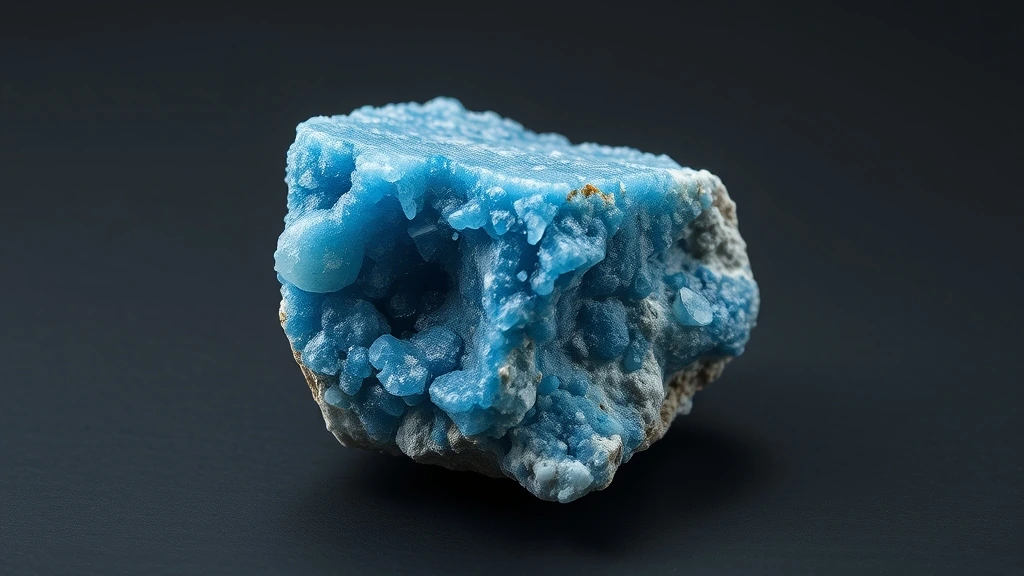
Blue aragonite belongs to the natural mineral family of carbonates and is classified as a crystalline carbonate within the broader aragonite polymorph of calcium carbonate. Formed in low‑temperature hydrothermal veins, marine caves, and evaporitic settings, its orthorhombic lattice distinguishes it from the more common calcite form. The stone’s vivid coloration arises from trace impurities and structural defects, while its delicate crystal habit lends itself to cabochon cutting for ornamental purposes.
What is Blue Aragonite? Geological Overview & Definition
Blue aragonite is an orthorhombic polymorph of CaCO₃ that precipitates from supersaturated solutions in marine and cave environments. Unlike its rhombohedral counterpart calcite, aragonite crystals grow in elongated, needle‑like forms that can aggregate into massive, banded specimens prized by collectors. If you’re drawn to the marine‑inspired hues of blue aragonite, you may also appreciate the earthy green tones of Conichalcite, which forms in similar low‑temperature, calcium‑rich environments.
Across ancient lapidary traditions, blue aragonite has been valued for its serene hue, often associated with the throat and heart chakras. Its rarity in the gemstone market stems from the mineral’s propensity to alter to calcite under surface conditions, demanding careful handling and storage to preserve its distinctive color. In comparative mineralogical collections, practitioners and geologists frequently study Cobra Jasper alongside this crystal to appreciate their subtle energetic and structural differences.
Blue Aragonite Chemical Composition & Crystallographic Properties
The mineral’s chemical formula CaCO₃ reflects a simple carbonate composition, yet its orthorhombic symmetry (space group Pnma) creates a tightly packed lattice of calcium ions coordinated by carbonate groups. This arrangement yields a distinct refractive index range of 1.483–1.681, contributing to its luminous sparkle when faceted.
Cation substitution is limited; however, trace amounts of iron, manganese, or copper can replace calcium, generating color centers that absorb specific wavelengths and produce the characteristic blue. These chromophore centers are highly sensitive to acidic environments, causing surface etching and loss of hue if exposed to acids or prolonged humidity.
Thermally, blue aragonite remains stable up to about 350 °C, beyond which it gradually reverts to calcite, releasing CO₂ in the process. Controlled heating can sometimes enhance its color intensity by activating additional defect sites, but excessive heat risks irreversible transformation.
The mineral’s Mohs hardness of 3.5–4.0 reflects its relatively soft nature, necessitating protective settings in jewelry. Its density of 2.93–2.95 g/cm³ aligns with typical carbonate minerals, and its orthorhombic crystal habit imparts a subtle cleavage that must be considered during cutting and polishing.
| Property | Specification |
|---|---|
| Mineral Group | Natural Mineral / Crystal |
| Chemical Formula | CaCO₃ |
| Mohs Hardness | 3.5 – 4.0 |
| Crystal System | Orthorhombic |
| Specific Gravity (Density) | 2.93 – 2.95 |
| Refractive Index | 1.483 – 1.681 |
| Color & Optical Properties | Natural Blue Aragonite color spectrum and optical dispersion |
| Primary Mining Localities | Global primary localities |
| Water & Chemical Resistance | Sensitive (Avoid prolonged water soaking) |
| Chakra Alignment (Traditional) | Throat Chakra, Heart Chakra |
| Zodiac Affinity (Traditional) | Pisces, Cancer |
| Symbolic Meaning (Traditional) | Emotional release, communication, and spiritual connection |
Blue Aragonite Varieties & Color Spectrum
The chromatic diversity of aragonite stems primarily from trace elemental substitutions within the calcium carbonate lattice. Natural blue hues arise from specific impurities that alter light absorption properties. These geological variations create distinct market categories for collectors and lapidaries.
Deep Ocean Blue Aragonite
This variety exhibits a rich, saturated azure tone often found in deep marine sedimentary deposits. The color intensity correlates with high concentrations of strontium and manganese impurities. Such specimens typically display a vitreous luster when polished.
Pale Sky Blue Aragonite
Characterized by a delicate, translucent pastel hue, this morph is highly sought after for cabochon cutting. Its light transmission properties are enhanced by minimal internal fracturing. Optical clarity remains the primary valuation metric for this type.
Banded Blue Aragonite
Distinctive parallel color bands result from periodic changes in mineral deposition during crystal growth. These growth zones reflect varying environmental conditions in the host rock. The rhythmic pattern offers significant aesthetic appeal for collectors.
Milky Blue Aragonite
This opaque variety features a soft, diffused blue appearance due to microscopic fluid inclusions. The scattering of light within the crystal structure creates a unique ethereal glow. It is often carved into ornamental objects rather than faceted.
Green-Blue Bicolored Aragonite
A rare transitional morph displaying a gradient from teal to deep blue. This color shift indicates a gradual change in trace element concentration during formation. Such specimens are exceptionally valuable for their dual-tone visual impact.
Where is Blue Aragonite Found? Geological Mining & Extraction
Blue aragonite typically precipitates in marine carbonate environments where calcium-rich waters interact with organic matter. These deposits are often associated with limestone host rocks in tropical and subtropical regions. The slow growth rate ensures the development of well-formed crystals.
Primary extraction occurs in regions with significant Cretaceous and Jurassic marine formations. Notable sources include specific quarries in Mexico and parts of Southeast Asia. Careful manual extraction is required to preserve the fragile orthorhombic crystal structure.
Historical Significance & Cultural Lore of Blue Aragonite
Ancient civilizations valued aragonite for its vibrant colors and relative ease of carving. Greco-Roman artisans incorporated the stone into ornamental panels and small jewelry pieces. Its presence in archaeological sites indicates widespread trade networks across the Mediterranean.
In Vedic traditions, similar carbonate minerals were associated with spiritual purification and emotional balance. Historical texts reference the use of blue stones for meditative practices and healing rituals. This enduring cultural significance highlights the stone’s timeless appeal.
Modern Uses & Jewelry Applications of Blue Aragonite
Lapidaries primarily cut blue aragonite into smooth cabochons due to its relatively low Mohs hardness of 3.5 to 4.0. This orthorhombic crystal structure often exhibits distinct cleavage planes, making faceting risky for daily wear. Consequently, artisans favor protective settings like bezels or prongs that shield the stone from impact. The stone’s soft luster and unique color zoning make it ideal for statement pieces rather than high-traffic jewelry.
- Cabochon Cutting: Polished domes highlight the stone’s internal banding and pastel blue hues without exposing fragile edges.
- Ornamental Carving: Skilled lapidaries carve intricate figures, beads, and decorative inlays for boxes and trays.
- Protective Settings: Designers use bezel settings to minimize chipping risks associated with the mineral’s brittle nature.
- Collector Specimens: High-clarity crystals are often displayed in museum cases or private collections for their aesthetic value.
Metaphysical Properties & Traditional Meaning of Blue Aragonite
According to historical traditions and metaphysical lore, blue aragonite is revered for its capacity to facilitate emotional release and deep spiritual connection. Ancient Mediterranean and Vedic lapidary practices often associated calcium carbonate minerals with purification and mental clarity. Practitioners believe the stone helps dissolve emotional blockages, allowing for a more fluid expression of inner feelings. This resonance aligns with the mineral’s gentle, soothing aesthetic and its historical use in meditative contexts.
The stone is frequently cited in esoteric literature as a tool for enhancing communication and fostering empathy. It is thought to bridge the gap between the physical and spiritual realms, encouraging honest self-expression. Users often report a sense of calm and centeredness when holding or wearing the gem. These attributes position blue aragonite as a supportive stone for individuals navigating periods of emotional transition or creative exploration.
Which Chakra and Zodiac Signs Align with Blue Aragonite?
In chakra alignment systems, blue aragonite is primarily linked to the Throat Chakra and the Heart Chakra. The Throat Chakra governs communication and self-expression, while the Heart Chakra regulates love, compassion, and emotional balance. The stone’s blue hue visually resonates with the throat, promoting clear and truthful speech. Simultaneously, its calming energy supports the heart, encouraging emotional openness and healing.
Astrologically, this gemstone is canonically aligned with the water signs Pisces and Cancer. Both signs are characterized by deep emotional sensitivity and intuitive perception. For Pisces, the stone enhances spiritual awareness and creative flow. For Cancer, it provides emotional stability and strengthens nurturing bonds. This specific alignment underscores the mineral’s role in supporting introspection and emotional resilience.
How to Identify Real vs. Fake Blue Aragonite
Artificial imitations of blue aragonite include dyed calcite, synthetic glass, and plastic replicas. These fakes often lack the natural banding and subtle color variations found in genuine specimens. Synthetic glass may appear too uniform and possess a higher luster than natural aragonite. Dyed stones might show color concentration in fractures, a telltale sign of artificial enhancement.
Practical At-Home Authenticity Tests
- Temperature Test (Thermal Feel): Genuine aragonite feels cool to the touch initially but warms quickly due to its low thermal conductivity. Glass imitations often retain their temperature longer or feel distinctly different.
- Specific Gravity & Weight Test: With a density of 2.93 – 2.95 g/cm³, real aragonite feels heavier than plastic or lightweight glass substitutes. Compare the weight against a known reference stone of similar size.
- Scratch & Hardness Test (Mohs Comparison): Aragonite has a Mohs hardness of 3.5 to 4.0, meaning it can be scratched by a steel knife or copper coin. Glass, which is harder, will not scratch easily under the same conditions.
- Microscopic & Loupe Inspection (Internal Inclusions): Use a 10x loupe to examine the stone for natural inclusions, fluid bubbles, or growth patterns. Synthetic glass often contains spherical bubbles, while dyed stones may show color pooling in surface cracks.
Blue Aragonite Valuation Factors, Grading & Pricing
The market value of blue aragonite hinges first on color saturation. A specimen that exhibits a deep, saturated azure with minimal veining commands a premium, as the hue directly reflects the mineral’s natural energetic luster and visual vibrancy. Slightly muted or variegated tones, while still attractive, typically fetch lower prices due to reduced visual impact.
Second, crystal size and weight play a decisive role. Larger, well-formed crystals that weigh several grams are prized for their commanding presence, especially when the raw form retains a natural matrix. Tumbled polish quality can enhance appeal, but the absence of tumbled polish and natural crystal geometry means that grading focuses on overall polish smoothness and the integrity of the crystal’s surface. Inclusions that preserve the mineral’s natural character may add value, whereas extensive weathering or surface damage usually reduces the price.
Finally, ethical sourcing and locality premium influence collector demand. Specimens mined from well-documented, responsibly managed sites receive a premium in both holistic and fine‑stone markets. Provenance from renowned localities, coupled with transparent supply chains, reassures buyers seeking ethically sourced materials and can significantly elevate a stone’s market value.
How to Clean and Care for Blue Aragonite
Because blue aragonite is a calcium carbonate mineral, it is susceptible to dissolution and structural stress when exposed to prolonged moisture. The safest cleaning method is to wipe briefly with a damp cloth and dry immediately. After wiping, use a dry, soft microfiber cloth to remove any residual dampness. Avoid ultrasonic cleaners or any prolonged contact with water, as these can induce microfractures and compromise the crystal’s integrity.
Cleansing and Recharging Blue Aragonite (Energetic Care)
For energetic renewal, place the stone in a quiet, shaded area and allow it to absorb ambient lunar energy for several hours. This gentle exposure to moonlight can help restore its natural vibrancy without subjecting the crystal to heat or direct sunlight. Alternatively, resting the stone on a selenite slab for a few days can facilitate a subtle transfer of positive energy, as selenite’s conductive properties support the recharging process. These dry, low‑energy methods preserve both the physical structure and the metaphysical qualities of blue aragonite.
Frequently Asked Questions About Blue Aragonite
Blue Aragonite displays distinct mineralogical characteristics across its geological varieties and structural habits. Gemologists evaluate these natural varieties based on crystal habit, trace chromophore concentrations, and visual luster.
Primary Natural Blue Aragonite
The benchmark natural variety exhibiting diagnostic color saturation and classic crystallographic symmetry.
Distinct Geological Morphs of Blue Aragonite
Secondary regional and structural varieties formed under localized geological temperature and pressure conditions.
Is blue aragonite safe to wear in the shower?
No, it should not be exposed to prolonged water or steam. Blue aragonite is a water‑sensitive calcite polymorph, and extended soaking can cause surface clouding or micro‑fractures. A quick rinse may be tolerated, but daily shower wear is discouraged to preserve its clarity and structural integrity.
How should I clean a blue aragonite?
Wipe it briefly with a lightly dampened cloth and dry immediately. Because the mineral is sensitive to moisture, any lingering water can infiltrate micro‑cracks, leading to clouding. Use a soft, lint‑free microfiber cloth; avoid soaps, detergents, or abrasive pads that could scratch the surface.
Can I use an ultrasonic cleaner on blue aragonite?
Ultrasonic cleaning is not recommended for blue aragonite. The high‑frequency vibrations can induce structural fractures in this relatively soft (Mohs 3.5‑4) mineral. A gentle manual wipe with a damp cloth is the safest method to remove dust without compromising the crystal lattice.
What zodiac signs are associated with blue aragonite?
Blue aragonite aligns with Pisces and Cancer. In astrological gem lore, these water signs are believed to benefit from the stone’s calming emotional release properties, enhancing intuition and nurturing the wearer’s inner sensitivity.
Which chakras does blue aragonite support?
It is linked to the Throat Chakra and Heart Chakra. The stone’s vibrational frequency is said to facilitate clear communication while opening the heart to compassion, making it a popular choice for meditation focused on self‑expression and emotional balance.
Does blue aragonite fade or change color over time?
Its blue hue is stable under normal indoor lighting but can fade with prolonged UV exposure. Direct sunlight may gradually diminish the hydrous inclusions that give the stone its characteristic color, so storing it in a dim, cool place helps maintain its vibrancy.
Is blue aragonite suitable for everyday jewelry?
It can be used in everyday pieces if handled with care. Its Mohs hardness of 3.5‑4 makes it softer than many gemstones, so settings should protect edges from knocks, and the wearer should avoid heavy impact or abrasive activities that could chip the stone.
What is the primary chemical composition of blue aragonite?
Blue aragonite is a polymorph of calcium carbonate, CaCO₃. While sharing the same formula as calcite, its orthorhombic crystal system gives it distinct physical properties, including a density of 2.93‑2.95 g/cm³ and a refractive index ranging from 1.483 to 1.681.