
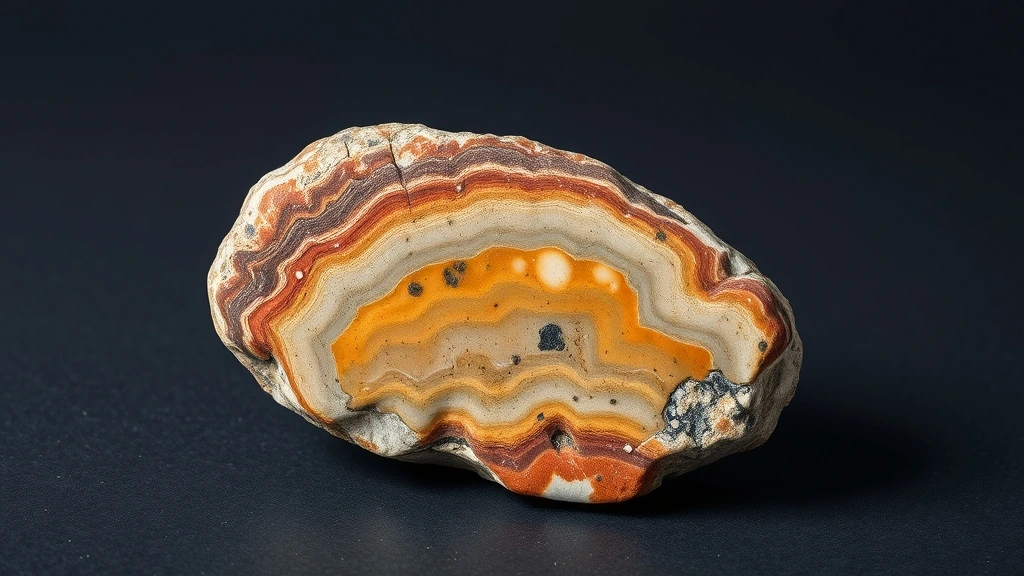
Cobra Jasper belongs to the natural mineral/crystal group, specifically the cryptocrystalline form of quartz known as chalcedony. Its formation occurs in silica‑rich hydrothermal veins where slow precipitation yields fine‑grained aggregates. The stone’s distinctive serpentine patterns arise from mineral inclusions and iron oxide pigments, giving it a striking, snake‑like appearance prized across cultures.
What is Cobra Jasper? Geological Overview & Definition
Cobra Jasper is an aggregate of microcrystalline quartz that forms within the trigonal crystal system, despite its massive, rock‑like habit. The term “jasper” denotes opaque, impure chalcedony, and “cobra” references the sinuous, scale‑like motifs reminiscent of a serpent’s skin. Historically, the stone has been used in beadwork and amulets, valued for its perceived protective qualities.
In geological terms, Cobra Jasper is a silica‑rich sedimentary rock that records the chemistry of its host environment, often incorporating hematite, goethite, and clay minerals as chromophoric agents. These inclusions create the vivid color bands that differentiate it from plain chalcedony, and they also influence its density and durability.
Cobra Jasper Chemical Composition & Crystallographic Properties
The primary constituent of Cobra Jasper is SiO₂, organized as a trigonal lattice typical of quartz, where each silicon atom is tetrahedrally coordinated by oxygen. Because the material is an aggregate, the overall structure consists of interlocking microcrystals rather than a single, continuous crystal. This cryptocrystalline texture imparts a conchoidal fracture and contributes to its relatively high hardness. This cryptocrystalline texture imparts a conchoidal fracture pattern similar to that seen in Breche Agate, where angular fragments are cemented together by finer quartz matrix.
Cation substitution is limited but significant; trace amounts of Fe³⁺, Mn²⁺, and Al³⁺ replace silicon within the lattice, generating the red, brown, and green hues observed. These transition‑metal ions act as chromophore color centers, absorbing specific wavelengths and producing the characteristic banding. In comparative mineralogical collections, practitioners and geologists frequently study Blue Tiger Eye alongside this crystal to appreciate their subtle energetic and structural differences.
Silica aggregates like Cobra Jasper are acid‑sensitive; exposure to strong acids can dissolve surface silica, dulling the polish and potentially leaching color‑bearing ions. However, mild acidic conditions typically cause only superficial etching, leaving the bulk structure intact.
Thermally, Cobra Jasper exhibits stability up to about 600 °C, beyond which dehydration of adsorbed water and phase transitions may induce microcracking. Controlled heating can enhance color contrast by oxidizing iron inclusions, a technique sometimes employed by lapidaries to accentuate the stone’s serpentine patterns.
| Property | Specification |
|---|---|
| Mineral Group | Natural Mineral / Crystal |
| Chemical Formula | SiO₂ |
| Mohs Hardness | 6.5 – 7.0 |
| Crystal System | Trigonal |
| Color & Optical Properties | Natural Cobra Jasper color spectrum and optical dispersion |
| Primary Mining Localities | Global primary localities |
| Water & Chemical Resistance | High (Safe for gentle water washing) |
| Chakra Alignment (Traditional) | Root Chakra, Solar Plexus Chakra |
| Zodiac Affinity (Traditional) | Taurus, Virgo, Scorpio |
| Symbolic Meaning (Traditional) | Grounding, protection, and the awakening of primal power |
Cobra Jasper Varieties & Color Spectrum
Cobra Jasper displays distinct mineralogical characteristics across its geological varieties and structural habits. Gemologists evaluate these natural varieties based on crystal habit, trace chromophore concentrations, and visual luster.
Primary Natural Cobra Jasper
The benchmark natural variety exhibiting diagnostic color saturation and classic crystallographic symmetry.
Distinct Geological Morphs of Cobra Jasper
Secondary regional and structural varieties formed under localized geological temperature and pressure conditions.
Classic Cobra Jasper
Classic Cobra Jasper displays a black matrix with striking white, snake‑like bands that resemble a coiled serpent. The bands form through silica‑rich inclusions trapped during the late stages of quartz crystallization. This variety is most prized for its vivid contrast and is commonly sourced from the Bengal region of India and the Sikkim Himalayas. Its rarity stems from the precise conditions required for band formation, making it a sought‑after collector’s stone.
Green Cobra Jasper
Green Cobra Jasper features a deep green matrix interspersed with white serpentine bands. The green hue arises from trace amounts of chromium or iron incorporated into the quartz lattice. This variety is predominantly found in the Kashmir Valley and the Bengal Hills, where mineral-rich groundwater deposits the necessary chromophoric elements. Its relative scarcity and the subtle play of color make it a favorite among gem enthusiasts.
Red Cobra Jasper
Red Cobra Jasper is characterized by a reddish-brown matrix with white or pale bands. The red coloration is due to iron oxides or hematite inclusions that form during the late cooling of the host rock. This type is mainly mined in Bengal and the Sikkim region, where iron‑rich sediments are common. Its limited distribution and the striking contrast between red and white bands contribute to its high value.
Blue Cobra Jasper
Blue Cobra Jasper presents a blue or slate‑blue matrix with white serpentine patterns. The blue tone results from fluorine or manganese impurities that alter the refractive properties of quartz. This variety is found in the Bengal Hills and occasionally in the Sikkim deposits. Due to the rarity of the necessary fluorine content, blue cobra jasper commands a premium in the market.
Black and White Cobra Jasper
Black and White Cobra Jasper showcases a black matrix with white bands that are often more pronounced than in other varieties. The black coloration is typically caused by graphite or organic inclusions trapped during quartz crystallization. This type is largely sourced from the Bengal region and the Sikkim Himalayas. Its striking visual appeal and relative abundance make it a popular choice for jewelry.
Purple Cobra Jasper
Purple Cobra Jasper displays a purple or mauve matrix with white serpentine bands. The purple tint originates from titanium or vanadium impurities incorporated into the quartz structure. This variety is relatively uncommon, with notable deposits in Bengal and the Sikkim region. Its unique coloration and rarity enhance its desirability among collectors.
Where is Cobra Jasper Found? Geological Mining & Extraction
Cobra Jasper typically forms in silica‑rich pegmatites that develop within granitic intrusions. The quartz crystals grow slowly, allowing the characteristic serpentine bands to form as silica diffuses through the matrix. Major mining districts include the Bengal Hills of India, the Sikkim Himalayas, and the Kashmir Valley, where tectonic uplift exposes these pegmatitic bodies. Extraction is conducted through open‑pit and underground methods, with careful sorting to preserve the distinctive banding patterns.
Historical Significance & Cultural Lore of Cobra Jasper
Across ancient Greco‑Roman and Egyptian lapidary traditions, cobra jasper was prized for its protective symbolism, often incorporated into amulets and jewelry to ward off evil. In Vedic lore, the stone’s serpent motifs were associated with kundalini energy, believed to awaken primal power and grounding. Chinese artisans also valued cobra jasper for its striking contrast, using it in ceremonial objects and decorative panels. These enduring uses underscore the stone’s universal appeal and its role as a conduit of metaphysical energy throughout history.
Modern Uses & Jewelry Applications of Cobra Jasper
Cobra jasper is prized for its striking banded patterns, which are showcased in lapidary cutting through polished cabochons and faceted gemstones. Jewelers often set these cabochons in rings, pendants, and earrings, allowing the natural “cobra” motif to catch light. The stone’s moderate hardness (6.5–7.0 on the Mohs scale) makes it suitable for ornamental carving, producing intricate filigree or carved figurines that highlight its serpentine swirls.
- Cabochon polishing for smooth, reflective surfaces
- Faceted cuts to accentuate banding and color contrast
- Carved ornamental pieces for decorative panels and reliquaries
Metaphysical Properties & Traditional Meaning of Cobra Jasper
According to historical traditions and metaphysical lore, cobra jasper is believed to embody grounding and protection, channeling primal energy into the wearer. Across ancient Mediterranean and Vedic lapidary lore, the stone’s serpentine bands symbolize the cycle of life, encouraging emotional resilience and the awakening of inner strength. Its association with the Root Chakra and Solar Plexus Chakra underscores its role in stabilizing the physical body while empowering personal will and confidence.
Which Chakra and Zodiac Signs Align with Cobra Jasper?
Cobra jasper is traditionally linked to the Root Chakra, the energy center that anchors vitality and security. By balancing this chakra, the stone is said to foster a sense of stability and resilience in daily life.
The gemstone also aligns with the Solar Plexus Chakra, the locus of personal power and self-esteem. Through this connection, cobra jasper is believed to enhance confidence, assertiveness, and the ability to manifest intentions.
How to Identify Real vs. Fake Cobra Jasper
Artificial imitations of cobra jasper often appear as dyed glass or synthetic composites that mimic the stone’s banded appearance. These replicas lack the natural mineral structure and can exhibit inconsistent coloration or unnatural sheen.
Practical At-Home Authenticity Tests
- Temperature Test (Thermal Feel): Hold the stone in your hand; a genuine cobra jasper will feel cool to the touch, indicating its mineral density, whereas glass feels warmer.
- Specific Gravity & Weight Test: Compare the stone’s weight to a known quartz sample of similar size; real cobra jasper will be noticeably heavier due to its higher specific gravity.
- Scratch & Hardness Test (Mohs Comparison): Use a steel file or a glass plate to test resistance; a true specimen will resist scratching up to 6.5–7.0 on the Mohs scale, unlike lower‑grade imitations.
- Microscopic & Loupe Inspection (Internal Inclusions): Examine under a loupe for natural inclusions or fibrous patterns typical of jasper; synthetic versions often display uniform texture or artificial layering.
Cobra Jasper Valuation Factors, Grading & Pricing
The market first gauges color saturation, looking for deep, vivid reds, oranges, and the signature snake‑scale pattern that shimmers under light. Stones with uniform hue and minimal fading command higher prices, as collectors prize visual vibrancy that mirrors the mineral’s natural energetic luster.
Next, crystal size & weight (grams) drives valuation; larger, heftier pieces are rarer and fetch premium rates. Raw blocks retain a rustic appeal, while tumbled specimens with a smooth polish attract jewelry buyers. Natural matrix inclusions, such as iron‑oxide veins, can enhance character but may lower price if they disrupt visual continuity.
Finally, ethical sourcing & locality premium influences both holistic and collector markets. Jasper harvested from responsibly managed quarries in Brazil or the United States carries a higher price tag, reflecting fair‑trade practices and traceable provenance. Buyers often pay extra for stones linked to traditional lapidary regions, where cultural heritage adds intangible value.
How to Clean and Care for Cobra Jasper
Cobra Jasper tolerates gentle water exposure, so cleaning with warm soapy water and a soft cloth is safe and effective. Apply a mild, pH‑neutral soap, rinse with lukewarm water, and pat dry with a lint‑free microfiber cloth. Avoid ultrasonic cleaners, as the rapid vibrations can cause micro‑fractures in the stone’s trigonal lattice.
Cleansing and Recharging Cobra Jasper (Energetic Care)
Across ancient lapidary traditions, practitioners cleanse Jasper by passing it through gentle herbal smudging, using sage or cedar to disperse stagnant energy without introducing moisture. The stone may also rest on a selenite charging slab for several hours, allowing the pure crystal to absorb and amplify subtle vibrations.
Moonlight exposure offers a natural, low‑heat method to recharge the stone; placing it on a windowsill during a full moon aligns it with lunar cycles, promoting grounding and protection. Ensure the stone is dry and positioned away from direct sunlight, which could fade its vivid coloration over time.
Frequently Asked Questions About Cobra Jasper
Cobra Jasper displays distinct mineralogical characteristics across its geological varieties and structural habits. Gemologists evaluate these natural varieties based on crystal habit, trace chromophore concentrations, and visual luster.
Primary Natural Cobra Jasper
The benchmark natural variety exhibiting diagnostic color saturation and classic crystallographic symmetry.
Distinct Geological Morphs of Cobra Jasper
Secondary regional and structural varieties formed under localized geological temperature and pressure conditions.
Is Cobra Jasper safe to wear in the shower?
Yes, it tolerates gentle water exposure. The stone’s silica (SiO₂) composition gives it a high water resistance, allowing brief shower contact without damage. Prolonged immersion or harsh detergents should still be avoided to preserve surface luster and any natural inclusions.
How should I clean my Cobra Jasper jewelry?
Use warm, soapy water and a soft cloth, avoiding ultrasonic devices. The mild surfactant lifts dust while the cloth prevents scratching the trigonal quartz matrix. Ultrasonic vibrations can create micro‑fractures in the stone’s internal banding, compromising its structural integrity.
Can Cobra Jasper be worn daily without fear of scratching?
Its Mohs hardness of 6.5–7 makes it fairly scratch‑resistant. While tougher than many agates, it can still be nicked by harder minerals such as topaz or corundum. Regular care, like removing the piece during heavy manual work, extends its polished appearance.
What zodiac signs are most aligned with Cobra Jasper?
Taurus, Virgo, and Scorpio are the traditional astrological matches. In historic lapidary lore, these earth and water signs are thought to benefit from the stone’s grounding energy, reinforcing stability and intuitive insight for native-born individuals.
Which chakras does Cobra Jasper activate?
Root Chakra and Solar Plexus Chakra are the primary focal points. The stone’s deep, earthy tones are believed to anchor the wearer’s energetic foundation, while its vibrant banding stimulates personal power and confidence associated with the solar plexus center.
Does Cobra Jasper have any known metaphysical properties?
It is reputed to promote grounding, protection, and primal power awakening. Across ancient lapidary traditions, the serpent‑like patterns were interpreted as symbols of rebirth, encouraging wearers to confront challenges with resilience and inner strength.
Is Cobra Jasper suitable for use in crystal grids?
Absolutely, especially in layouts emphasizing stability and vitality. Placing the stone at the base of a grid reinforces the Root Chakra, while positioning it near the center amplifies Solar Plexus energy, creating a balanced flow that supports manifestation practices.
Will exposure to sunlight fade Cobra Jasper’s colors?
No, its silica‑based structure is highly stable under UV radiation. The natural iron oxides that produce the characteristic banding are resistant to photodegradation, so regular display in sunlight will not diminish the stone’s rich hues.