
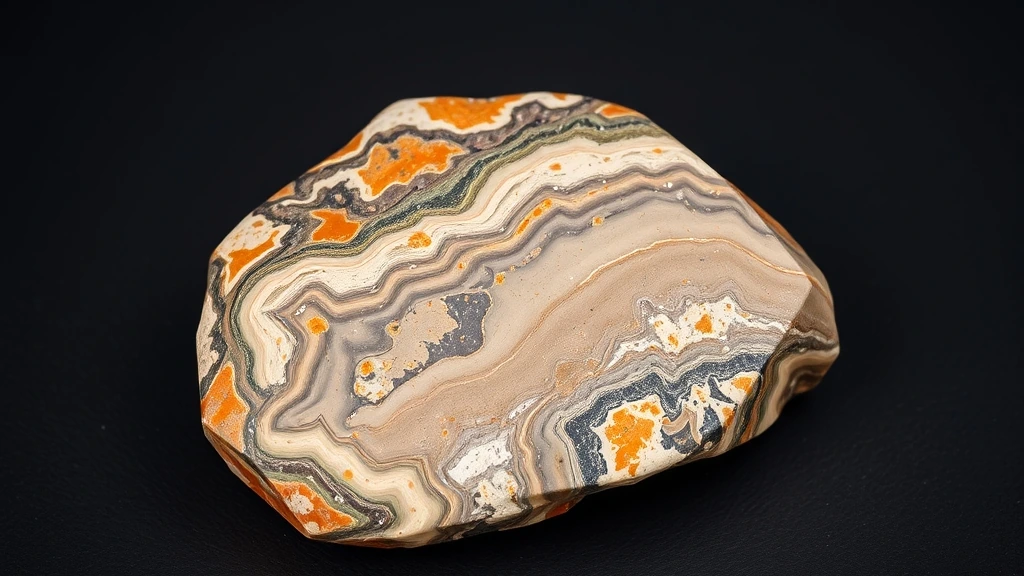
Jasper belongs to the quartz group, a natural mineral aggregate composed of microcrystalline silicon dioxide. Unlike macrocrystalline quartz, its crystals are too small to be seen with the naked eye. This fine-grained texture results in the stone’s characteristic opacity and waxy luster. Geologically, it forms through the precipitation of silica in sedimentary or volcanic environments.
What is Jasper Gemstone? Geological Overview & Definition
Jasper is classified as a variety of chalcedony, which is itself a microcrystalline form of quartz. It is not a single mineral species but a rock composed of interlocking silica fibers. This cryptocrystalline structure gives the stone its unique physical properties and durability.
The name derives from the Greek word *iaspis*, meaning “speckled stone.” It is found worldwide in sedimentary basins and volcanic regions. Jasper often contains impurities that create intricate patterns and colors. These variations make each piece geologically distinct and visually unique.
Jasper Gemstone Chemical Composition & Crystallographic Properties
The fundamental chemical identity of jasper is silicon dioxide (SiO₂). Its crystal system is hexagonal, reflecting the underlying structure of its quartz parent. The lattice consists of silicon atoms tetrahedrally coordinated with oxygen atoms. This arrangement forms a robust, three-dimensional framework that defines its physical stability.
Color variations arise from trace element impurities and iron oxide inclusions. Hematite and limonite particles act as chromophores, producing red, yellow, and brown hues. These inclusions are dispersed throughout the silica matrix, creating the stone’s opaque appearance. The specific mineralogy of these impurities determines the final color spectrum.
Jasper exhibits acid sensitivity only in extreme conditions, as silica is generally resistant. It does not dissolve in standard mineral acids, ensuring long-term stability. Thermal behavior is stable, with no significant phase changes at jewelry temperatures. This thermal inertia makes it safe for daily wear and various heat treatments.
| Property | Specification |
|---|---|
| Mineral Group | Natural Mineral / Crystal |
| Chemical Formula | SiO₂ (with varying impurities) |
| Mohs Hardness | 6.5–7 |
| Crystal System | Hexagonal |
| Specific Gravity (Density) | 2.5–2.9 |
| Refractive Index | 1.54–2.65 |
| Color & Optical Properties | Natural Jasper Gemstone color spectrum and optical dispersion |
| Primary Mining Localities | Global primary localities |
| Water & Chemical Resistance | High (Safe for gentle water washing) |
| Chakra Alignment (Traditional) | Root Chakra |
| Zodiac Affinity (Traditional) | Taurus, Virgo, Capricorn |
| Symbolic Meaning (Traditional) | Grounding, stability, and protection |
Jasper Varieties & Comprehensive Sub-Types
Red Jasper
Red Jasper is a deep terracotta-red opaque chalcedony heavily pigmented with micro-particles of hematite. This iron oxide inclusion creates its characteristic earthy tone and robust physical appearance. It is widely recognized in metaphysical practices as a supreme grounding stone for the root chakra.
The stone typically exhibits a uniform, non-banded morphology rather than distinct layering. Its high density and hardness make it a durable choice for heavy jewelry pieces. In the global gem trade, it remains one of the most accessible and affordable jasper varieties.
Ocean Jasper (Orbicular Jasper)
Ocean Jasper is a rare silicified rhyolite primarily sourced from the coast of Madagascar. It displays striking multi-colored concentric spherical eyes known as orbicular patterns. These formations result from the rapid cooling of volcanic ash and silica-rich fluids.
The stone features a matrix of blue, green, and white hues surrounding dark central cores. This unique aesthetic distinguishes it from standard banded jaspers in the lapidary market. Due to limited mine output, high-quality specimens command a premium price among collectors.
Picture Jasper (Landscape Jasper)
Picture Jasper presents warm tan, desert brown, and sand-colored tones with intricate geological details. It features dendritic sediment layers that resemble miniature landscape paintings or topographical maps. These patterns form through the slow precipitation of manganese and iron oxides.
The stone’s visual appeal lies in its natural, artistic composition rather than uniform color. Lapidaries often cut these pieces to highlight specific scenic formations within the matrix. It is highly valued for its unique, one-of-a-kind aesthetic in decorative arts.
Bumblebee Jasper
Bumblebee Jasper is a vibrant volcanic sedimentary rock originating from Indonesian volcanic regions. It is composed of bands of sulfur, arsenic minerals like realgar, and hematite. The striking yellow and black stripes mimic the appearance of a bumblebee.
This variety is geologically distinct due to its high sulfur content and volcanic origin. The intense coloration makes it visually arresting but requires careful handling during polishing. It is a sought-after specialty stone in the modern crystal healing community.
Mookaite Jasper
Mookaite Jasper is a silicified radiolarian sediment discovered near Mooka Creek in Western Australia. It features rich burgundy, mustard, and cream swirls created by ancient marine microorganisms. The radiolarian fossils within the stone provide its distinctive textured appearance.
The stone’s complex color palette results from varying mineral impurities during the silicification process. It is relatively new to the global gem market but has gained rapid popularity. Its unique geological history sets it apart from traditional iron-oxide jaspers.
Dalmatian Jasper
Dalmatian Jasper is a creamy feldspar-quartz host rock spotted with black arfvedsonite amphibole inclusions. These dark spots create a pattern that closely resembles the coat of a Dalmatian dog. The stone is actually a type of spotted jasper rather than a true quartz variety.
The black spots are composed of sodium-rich amphibole minerals embedded in the lighter matrix. This variety is often used in beads and cabochons for its playful visual appeal. It is less common than red jasper but widely available in the trade.
Gemologists differentiate these varieties primarily by their mineralogical composition and specific inclusion patterns. While all are opaque quartz varieties, their unique geological origins dictate their trade value. Lapidaries select cutting methods based on whether the stone features banding, orbicular eyes, or distinct spots.
Where is Jasper Gemstone Found? Geological Mining & Extraction
Jasper deposits are typically found in sedimentary basins and volcanic regions where silica-rich fluids permeate host rocks. The primary extraction regions include Brazil, India, and Madagascar, which host vast reserves of various jasper types. Mining operations often target specific geological formations known for high-quality, unfractured stone.
In many locations, jasper is extracted from pegmatite dikes or weathered volcanic ash layers. These geological settings provide the necessary pressure and chemical environment for silicification. The ease of access to these deposits makes jasper one of the most widely mined gemstones globally.
Historical Significance & Cultural Lore of Jasper Gemstone
Ancient civilizations, including the Egyptians and Romans, valued jasper for its durability and vibrant colors. Archaeological artifacts reveal its use in funerary jewelry and protective amulets dating back thousands of years. The stone was often carved into seals and beads for both decorative and spiritual purposes.
Throughout history, jasper has been associated with strength and endurance in various cultural traditions. Medieval alchemists believed it could protect the wearer from negative influences. This enduring legacy has cemented its status as a timeless gemstone in modern jewelry design.
Modern Uses & Jewelry Applications of Jasper Gemstone
Lapidaries primarily cut jasper into cabochons because its opaque nature prevents light from penetrating to create brilliance. This smooth, domed shape best showcases the stone’s intricate, earthy patterns and vibrant color bands. Faceting is rarely used, as the lack of transparency renders traditional facet cuts ineffective for displaying fire or luster.
- Cabochon Carving: The most common form, highlighting natural patterns and colors.
- Ornamental Carving: Used for intaglio seals, cameos, and decorative architectural elements.
- Beads and Carvings: Popular in bohemian jewelry and artisanal crafts due to its durability.
Metaphysical Properties & Traditional Meaning of Jasper Gemstone
According to historical traditions and metaphysical lore, jasper is revered as a powerful stone of grounding and stability. It is believed to anchor the wearer to the physical world, fostering a sense of security and emotional resilience. Ancient healers often prescribed it to alleviate anxiety and promote a calm, steady mindset during turbulent times.
The stone’s deep earth tones are said to resonate with the body’s physical energy, encouraging protection against negative influences. Practitioners suggest that jasper helps transform fear into constructive action, supporting personal growth and endurance. Its enduring presence in various cultures underscores its role as a symbol of strength and perseverance.
Which Chakra and Zodiac Signs Align with Jasper Gemstone?
In metaphysical practice, jasper is intrinsically linked to the Root Chakra, also known as Muladhara. This energy center, located at the base of the spine, governs feelings of safety, survival, and physical well-being. By balancing this chakra, jasper is believed to enhance one’s connection to the earth and promote a sense of groundedness.
Astrologically, jasper aligns with the earth signs of Taurus, Virgo, and Capricorn. These zodiac signs share the stone’s qualities of practicality, reliability, and determination. Wearing jasper is thought to amplify the inherent strengths of these signs, supporting their pursuit of stability and long-term goals.
How to Identify Real vs. Fake Jasper Gemstone
Distinguishing genuine jasper from artificial imitations requires careful observation of its physical properties. Common fakes include synthetic glass, dyed quartz, and plastic replicas that mimic the stone’s appearance. While high-quality jasper is abundant, low-grade stones are often treated or replaced entirely by cheaper materials to deceive buyers.
Practical At-Home Authenticity Tests
- Temperature Test (Thermal Feel): Genuine jasper feels cool to the touch initially and warms slowly. Glass or plastic imitations often feel warmer or change temperature much faster due to lower thermal conductivity.
- Specific Gravity & Weight Test: Real jasper has a density of 2.5–2.9 g/cm³, making it feel heavier than its size suggests. Glass imitations typically feel lighter, while leaded glass may feel unnaturally heavy.
- Scratch & Hardness Test (Mohs Comparison): With a Mohs hardness of 6.5–7, jasper can scratch glass and steel but not quartz. If the stone scratches easily with a steel knife, it is likely a softer imitation like plastic or low-quality glass.
- Microscopic & Loupe Inspection (Internal Inclusions): Use a 10x loupe to check for natural inclusions and color zoning. Synthetic glass often contains tiny bubbles or swirls, while dyed stones may show color concentrated in cracks or surface pores.
Jasper Gemstone Valuation Factors, Grading & Pricing
Market value is primarily driven by Color Saturation, where deep, consistent hues command higher premiums. Experts assess tone uniformity to ensure the stone lacks patchy or faded areas. High optical clarity and a vibrant waxy luster further distinguish top-tier specimens from lower-grade material.
The Carat Weight significantly impacts pricing, as larger, unfractured pieces are rarer and more desirable. Facet symmetry is crucial for cut stones, ensuring optimal light reflection and structural integrity. The presence of distinct matrix patterns or inclusions can either enhance uniqueness or reduce value depending on the specific variety.
Geographical Provenance Premium often elevates prices for stones from renowned mining regions with established reputations. Wholesale costs typically remain low due to Jasper’s abundance, while retail margins reflect curation and branding. Current market trends show steady demand for unique, story-rich stones from specific historical locales.
How to Clean and Care for Jasper Gemstone
To maintain the stone’s integrity, always use warm soapy water and a soft cloth for gentle cleaning. This method effectively removes surface oils and dust without risking damage to the mineral structure. Avoid using ultrasonic cleaners, as the vibrations can cause structural fractures in the stone.
Regular inspection for hairline cracks is recommended, especially after exposure to temperature changes. Store Jasper separately from harder gemstones to prevent surface abrasion during handling. Proper care ensures the stone retains its natural waxy luster and vibrant coloration over time.
Cleansing and Recharging Jasper Gemstone (Energetic Care)
For energetic maintenance, utilize smoke smudging with sage or palo santo to clear stagnant energy. This dry method respects the stone’s physical structure while addressing metaphysical beliefs about energy flow. Allow the smoke to pass gently over the surface without direct flame contact.
Alternatively, place the Jasper on a selenite plate or under moonlight for recharging. These passive techniques avoid water exposure entirely, ensuring no risk of moisture-related damage. This approach aligns with the mineral’s low solubility and high water resistance profile.
Frequently Asked Questions About Jasper Gemstone
What is the chemical composition of jasper?
Jasper is primarily composed of cryptocrystalline quartz, or silica (SiO₂). Its distinctive colors arise from trace impurities like iron oxides and other minerals. This composition gives it a Mohs hardness of 6.5–7, making it durable for daily jewelry use.
Can jasper be worn in the shower or bath?
Yes, jasper is safe for gentle water washing due to its high water resistance. As a dense form of quartz, it does not dissolve or degrade in water. However, avoid prolonged exposure to harsh chemicals or extreme temperature changes to maintain its structural integrity.
Is it safe to clean jasper in an ultrasonic cleaner?
No, you should avoid ultrasonic cleaners to prevent structural fractures. Instead, use warm soapy water and a soft cloth for safe maintenance. This gentle method preserves the stone’s surface without risking damage from high-frequency vibrations or thermal shock.
Which zodiac signs are aligned with jasper?
Jasper is traditionally associated with Taurus, Virgo, and Capricorn. These earth signs resonate with the stone’s stabilizing energy. Wearing jasper can support the grounding qualities naturally present in these zodiac personalities.
Which chakra does jasper primarily activate?
Jasper is specifically aligned with the Root Chakra. This connection supports feelings of security, stability, and physical well-being. It helps anchor the wearer to the earth, promoting a sense of protection and balance.
How hard is jasper on the Mohs scale?
Jasper rates between 6.5 and 7 on the Mohs hardness scale. This makes it harder than most common gemstones, such as calcite or fluorite. Its durability ensures it resists scratching during everyday wear, maintaining its polished appearance.
What is the specific gravity of jasper?
Jasper has a density ranging from 2.5 to 2.9 g/cm³. This specific gravity helps distinguish it from lighter or heavier stones during identification. The variation depends on the specific mineral impurities present within the silica matrix.
Why does jasper have such varied colors?
Color variations result from different trace elements mixed into the silica structure. Iron oxides typically produce reds, yellows, and browns, while other minerals create greens or blacks. This diversity makes each jasper specimen geologically unique.