
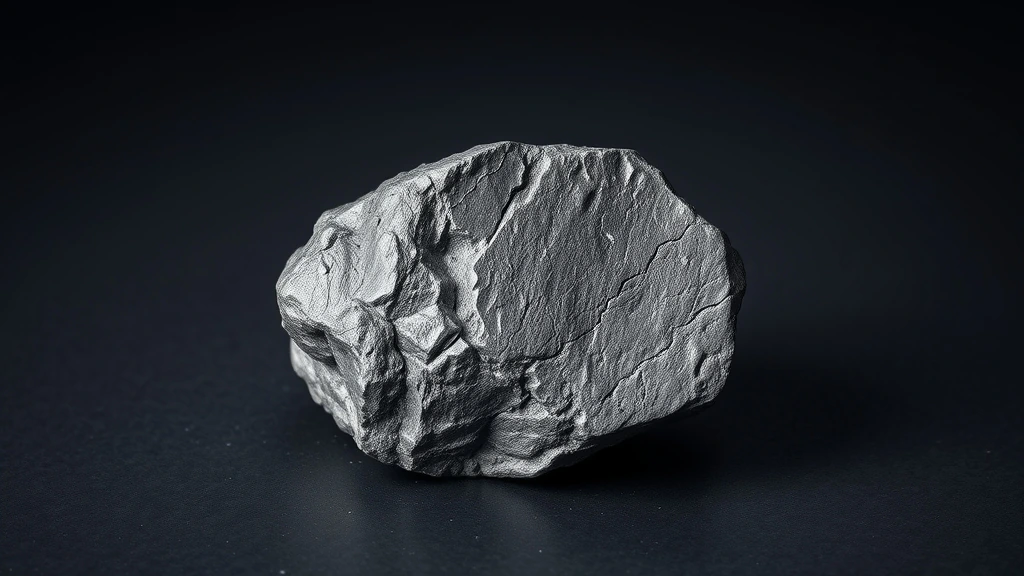
Hematite belongs to the Oxides (Iron Oxide Group), a primary class of minerals formed by the combination of metal cations with oxygen anions. Its occurrence spans banded iron formations, hydrothermal veins, and lateritic soils, where oxidizing conditions precipitate the characteristic trigonal (rhombohedral/tabular) crystal habit. This mineral’s dense, metallic luster and high specific gravity (≈5.26) have made it a staple in both industrial iron production and ornamental gem cutting.
What is Hematite Gemstone? Geological Overview & Definition
Hematite gemstone is the polished, faceted form of the natural mineral Fe₂O₃, prized for its deep, reflective metallic sheen and rich red‑brown tones. Though often confused with synthetic “black iron oxide,” true hematite retains its trigonal crystal symmetry, which influences its cleavage and fracture patterns.
In gemological contexts, hematite is valued for its high specific gravity and ability to produce a mirror‑like polish, making it a popular choice for beads, cabochons, and statement rings. Its durability, combined with a relatively low cost, allows designers to incorporate large, bold pieces without compromising structural integrity.
Hematite Gemstone Chemical Composition & Crystallographic Properties
The crystal lattice of hematite is trigonal (rhombohedral/tabular), belonging to the space group *R‑3c*. Its unit cell consists of alternating layers of Fe³⁺ cations and O²⁻ anions, creating a compact, densely packed framework that accounts for the mineral’s high density of 5.26 g/cm³.
While the ideal formula is Fe₂O₃, minor cation substitution (e.g., Al³⁺, Ti⁴⁺) can occur, subtly altering the refractive indices (nω = 3.150–3.220, nε = 2.870–2.940) and occasionally shifting the hue toward darker tones. These substitutions are typically limited to trace amounts and do not affect the overall trigonal symmetry.
Hematite’s color arises from charge‑transfer (CT) chromophore centers where Fe³⁺ absorbs specific wavelengths of visible light, producing its characteristic metallic gray to rust‑red appearance. Acid exposure, especially to strong mineral acids, can partially reduce Fe³⁺ to Fe²⁺, leading to a temporary loss of luster and a slight color fade.
Thermally, hematite is stable up to about 1,500 °C, at which point it undergoes a phase transition to the γ‑Fe₂O₃ (maghemite) form. Upon cooling, it reverts to the α‑phase, preserving its trigonal structure. This thermal resilience makes hematite suitable for heat‑set jewelry settings and high‑temperature polishing processes.
| Property | Specification |
|---|---|
| Mineral Group | Oxides (Iron Oxide Group) |
| Chemical Formula | Fe₂O₃ (Iron Oxide) |
| Mohs Hardness | 5.5–6.5 |
| Crystal System | Trigonal (Rhombohedral / Tabular) |
| Specific Gravity (Density) | 5.26 |
| Refractive Index | ”n” ω = 3.150–3.220, ”n” ε = 2.870–2.940 |
| Color & Optical Properties | Natural Hematite Gemstone color spectrum and optical dispersion |
| Primary Mining Localities | Brazil (Minas Gerais), Australia, China, Russia, USA |
| Water & Chemical Resistance | Sensitive: Iron Oxide Content (Prone to oxidation/rust; keep dry) |
| Chakra Alignment (Traditional) | Root Chakra (Muladhara) |
| Zodiac Affinity (Traditional) | Aries, Aquarius, Scorpio |
| Symbolic Meaning (Traditional) | Strong grounding, mental fortitude, willpower, and psychic anchoring |
Hematite Gemstone Varieties & Color Spectrum
Hematite exhibits a diverse range of appearances, primarily dictated by particle size and oxidation states. The most common form is the massive, earthy variety known as red ochre, which has been used for pigment since prehistoric times. This form features a high concentration of fine-grained α-Fe₂O₃ crystals that create a deep, rusty red hue.
Specular Hematite
Often referred to as “bloodstone” in gemological trade, this variety displays a striking metallic luster and mirror-like surface. It forms in banded iron formations where iron-rich fluids precipitated in thin, reflective layers. The visual signature is a brilliant, silvery-red flash that distinguishes it from duller massive types.
Micaceous Hematite
This variety is characterized by its flaky, sheet-like structure that resembles mica in texture and appearance. The micaceous cleavage allows the stone to split into thin, flexible plates with a distinct pearly sheen. It is often found in association with quartz and feldspar in metamorphic schists.
Banded Hematite
Commonly seen in decorative stone and tumbled gems, this variety features distinct concentric banding of red and black layers. These bands result from cyclical changes in sedimentation rates within ancient marine environments. The high specific gravity of 5.26 makes these stones feel significantly heavier than their size suggests.
Red Ochre
This is the most widespread and geologically significant form of hematite, appearing as a soft, powdery red earth. It consists of extremely fine particles that aggregate into massive, non-crystalline deposits. Its high iron content makes it a primary source for industrial pigments and historical cave paintings.
Where is Hematite Gemstone Found? Geological Mining & Extraction
Hematite is predominantly extracted from banded iron formations (BIFs), which are ancient sedimentary rocks deposited in Precambrian oceans. These massive deposits are found globally, with major mining operations in Brazil, Australia, and India. The ore is typically processed through crushing and magnetic separation to isolate the dense magnetic hematite grains.
Regional gem-quality specimens often originate from metamorphic terrains where heat and pressure have recrystallized the iron oxide. Notable sources include the Pilbara region of Western Australia and the Minas Gerais state in Brazil. These areas yield high-luster specimens suitable for cabochons and ornamental carvings.
Historical Significance & Cultural Lore of Hematite Gemstone
Ancient civilizations valued hematite for its perceived protective properties and its use as a vital red pigment. In ancient Egypt, it was ground into powder to create kohl, a cosmetic applied to the eyes for both aesthetic and medicinal purposes. Roman soldiers also carried small hematite amulets, believing the stone could stop bleeding and ward off evil spirits.
Archaeological evidence reveals that hematite was central to early human artistic expression, particularly in cave paintings. Its association with the Root Chakra in modern metaphysical practices stems from its deep connection to the earth and stability. This enduring legacy highlights the mineral’s dual role as both a practical resource and a spiritual symbol.
Modern Uses & Jewelry Applications of Hematite Gemstone
Lapidaries primarily cut hematite into cabochons due to its opaque nature and metallic luster, which does not benefit from faceting. The stone’s high density and hardness make it ideal for durable jewelry pieces that withstand daily wear. Artisans also carve it into ornamental objects, leveraging its distinctive adulariescent sheen when polished.
- Cabochon Cutting: Smooth, domed surfaces maximize the stone’s metallic luster and iridescent flash.
- Faceted Jewelry: Rarely faceted, as the opacity prevents light transmission necessary for brilliance.
- Ornamental Carving: Used in cameos and intaglios, where its dark body color provides strong contrast.
- Industrial Applications: Beyond jewelry, it serves as a pigment in paints and inks.
Metaphysical Properties & Traditional Meaning of Hematite Gemstone
According to historical traditions and metaphysical lore, hematite is revered for its profound grounding energy and ability to anchor the spirit to the physical plane. Practitioners believe it enhances mental fortitude and willpower, helping users maintain focus during challenging periods. The stone is often associated with protection, acting as a shield against negative environmental influences.
In esoteric circles, hematite is considered a stone of psychic anchoring, facilitating a clear connection between the mind and body. It is believed to promote emotional stability and resilience, particularly for those experiencing stress or anxiety. This mineral is often recommended for meditation practices aimed at strengthening personal boundaries and inner strength.
Which Chakra and Zodiac Signs Align with Hematite Gemstone?
Hematite is canonically aligned with the Root Chakra (Muladhara), which governs survival, security, and physical stability. This connection stems from the stone’s earthy, iron-rich composition, which resonates with the foundational energies of the body. Activating this chakra is said to foster a sense of safety and groundedness in daily life.
Astrologically, hematite is most strongly associated with Aries, Aquarius, and Scorpio. These signs often benefit from the stone’s protective and stabilizing properties, which complement their inherent traits. Aries may find balance in its grounding nature, while Aquarius and Scorpio might appreciate its support for mental clarity and emotional depth.
How to Identify Real vs. Fake Hematite Gemstone
Artificial imitations of hematite are common, often involving synthetic glass or dyed stones designed to mimic the natural metallic luster. These replicas may lack the specific gravity and thermal properties of genuine iron(III) oxide. Consumers should be cautious of stones that appear too uniform or lack the subtle iridescence found in natural specimens.
Practical At-Home Authenticity Tests
- Temperature Test (Thermal Feel): Genuine hematite feels distinctly cool to the touch initially and warms slowly, unlike plastic or glass imitations which warm up rapidly.
- Specific Gravity & Weight Test: Real hematite has a high specific gravity of 5.26, making it feel significantly heavier than its size suggests compared to glass or plastic.
- Scratch & Hardness Test (Mohs Comparison): With a Mohs hardness of 5.5–6.5, hematite can scratch glass but may be scratched by quartz or steel needles.
- Microscopic & Loupe Inspection (Internal Inclusions): Under a loupe, natural hematite often shows subtle internal fractures or metallic inclusions, whereas fakes may appear perfectly clear or contain air bubbles.
Hematite Gemstone Valuation Factors, Grading & Pricing
Color Saturation defines the primary aesthetic value of this iron-rich mineral. High-grade specimens exhibit a deep, uniform metallic gray to black tone. Consistency in hue across the entire surface significantly elevates market desirability.
Optical clarity and luster are critical for distinguishing premium stones from common varieties. A strong, mirror-like metallic luster indicates a well-formed crystal structure. Any dullness or pitting reduces the gemstone’s overall visual appeal.
Carat Weight influences pricing, though large, flawless specimens are relatively rare in the market. Facet symmetry ensures optimal light reflection, enhancing the stone’s metallic sheen. The presence of matrix or inclusions typically lowers the grade and value.
Geographical Provenance Premium applies to stones from historically significant mining regions. Wholesale prices fluctuate based on supply chain stability and demand trends. Retail values often include a markup for certification and branding.
How to Clean and Care for Hematite Gemstone
Hematite is highly sensitive to moisture due to its high iron content. Do not submerge in water to prevent oxidation and rust formation. Liquid exposure can permanently damage the surface luster and structural integrity.
Avoid ultrasonic cleaners and steam treatments entirely, as these methods introduce excessive moisture. Instead, polish with a dry microfiber cloth to remove dust and oils. This gentle dry cleaning preserves the stone’s metallic finish safely.
Cleansing and Recharging Hematite Gemstone (Energetic Care)
For energetic maintenance, use smoke smudging with sage or palo santo. This dry method cleanses the stone without risking chemical degradation. Ensure the smoke dissipates completely before storing the gemstone.
Place the hematite on a selenite plate under moonlight for recharging. This dry, passive technique aligns with the mineral’s physical limitations. It restores energetic balance while keeping the iron oxide surface completely dry.
Frequently Asked Questions About Hematite Gemstone
What is the chemical composition of hematite?
Hematite is iron(III) oxide, Fe₂O₃. It belongs to the α‑Fe₂O₃ polymorph and crystallizes in the trigonal system. The high iron content gives the stone its characteristic metallic luster and a density of about 5.26 g/cm³, making it noticeably heavy for its size.
How hard is hematite on the Mohs scale?
Its hardness ranges from 5.5 to 6.5. This places hematite between apatite and orthoclase, so it resists everyday scratches but can be nicked by harder gemstones. Because of this moderate hardness, careful handling and proper storage are recommended for jewelry pieces.
Can I wear hematite jewelry while swimming or in the rain?
No – keep hematite dry. The iron oxide content makes it prone to oxidation and rust when exposed to moisture. Water can cause surface staining and weaken the stone’s luster, so avoid swimming, showering, or exposing the gem to rain.
Is it safe to clean hematite in an ultrasonic cleaner?
Do not submerge hematite in water or use ultrasonic cleaning. The vibration and moisture accelerate iron oxidation, potentially dulling the surface. Instead, gently polish the stone with a dry microfiber cloth to restore its shine without risk.
Which zodiac signs are most compatible with hematite?
Aries, Aquarius, and Scorpio are the aligned signs. These signs are said to benefit from hematite’s grounding energy, which can enhance willpower, mental clarity, and emotional stability—qualities traditionally associated with these astrological profiles.
Which chakra does hematite primarily activate?
Root Chakra (Muladhara). Hematite’s dense, earthy vibration is believed to anchor the wearer’s energy, fostering a sense of security and physical grounding that aligns with the root chakra’s function in the subtle body.
Does hematite exhibit any notable optical properties?
It has a high refractive index (nω = 3.150–3.220, nε = 2.870–2.940). This contributes to its metallic to sub‑metallic luster and strong reflectivity. The anisotropic nature can produce subtle pleochroism, giving the stone a faint color shift when viewed from different angles.
How should I store hematite to preserve its appearance?
Store hematite separately in a soft pouch or lined drawer. Because the stone is sensitive to scratches and moisture, keeping it away from harder gems and damp environments prevents oxidation, surface abrasion, and loss of its characteristic sheen.