
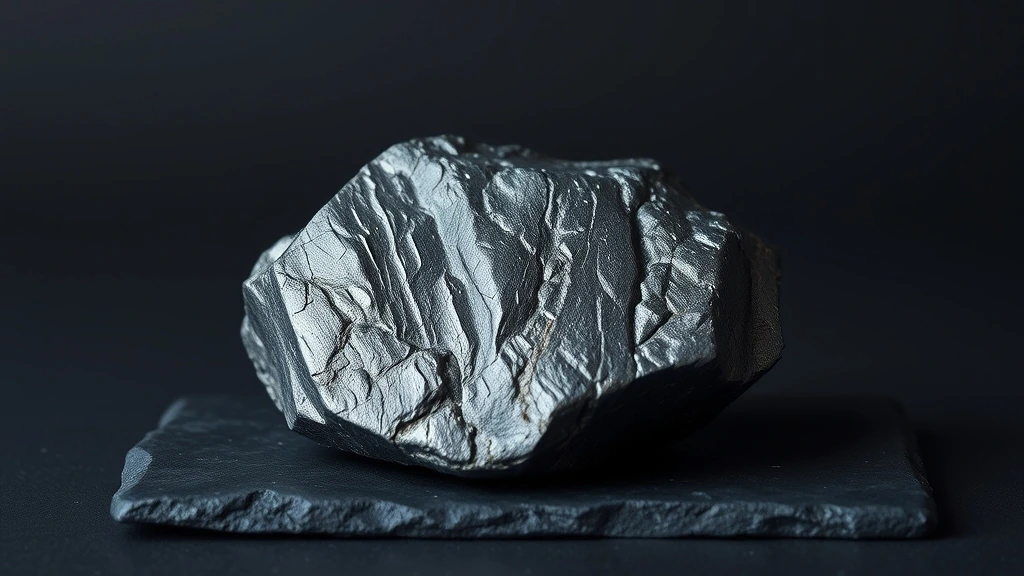
Specular hematite belongs to the Oxides mineral group, specifically the iron oxide family. It crystallizes in a Trigonal (Rhombohedral / Tabular) system, forming plate‑like crystals that often display a mirror‑like luster. The mineral is commonly found in metamorphic and sedimentary environments, where iron‑rich sediments undergo recrystallization under high pressure and temperature. Its characteristic metallic sheen results from finely layered crystal structures that reflect light uniformly across the visible spectrum.
What is Specular Hematite? Geological Overview & Definition
Specular hematite is a form of the mineral hematite that has undergone a unique growth process, producing a highly reflective, mirror‑like surface. This optical effect is caused by the alignment of thin, parallel crystal plates that refract light in a uniform direction, creating a specular appearance. The mineral is typically found in metamorphic rocks such as schist and gneiss, where iron‑rich sediments have been subjected to intense heat and pressure. In addition to its aesthetic appeal, specular hematite is valued for its high iron content and density, which contribute to its weighty feel and durability.
Specular Hematite Chemical Composition & Crystallographic Properties
The chemical formula for specular hematite is Fe₂O₃, a pure iron(III) oxide. Its crystal lattice is rhombohedral, belonging to the trigonal crystal system, and is characterized by a hexagonal close‑packed arrangement of oxygen ions with iron cations occupying two-thirds of the octahedral sites. Cation substitution is rare; however, trace amounts of manganese or titanium can occasionally replace iron, subtly altering the mineral’s color and magnetic properties. While specular hematite’s iron‑rich lattice offers grounding energy, the complementary warmth of Ruby In Kyanite can enhance its protective qualities.
Specular hematite is acid‑resistant, showing little reaction to dilute hydrochloric or nitric acids, which is typical of iron oxides. The chromophore responsible for its color centers arises from oxygen vacancies and iron ion valence states, producing the characteristic black or reddish tones. Thermal treatment can induce phase changes: heating above 500 °C can transform hematite into magnetite or wüstite, while cooling restores the original structure. These thermal behaviors are crucial for understanding the mineral’s stability in high‑temperature geological settings.
| Property | Specification |
|---|---|
| Mineral Group | Oxides (Iron Oxide Group) |
| Chemical Formula | Fe₂O₃ (Iron Oxide) |
| Mohs Hardness | 5.5 – 6.5 |
| Crystal System | Trigonal (Rhombohedral / Tabular) |
| Specific Gravity (Density) | 5.26 |
| Refractive Index | 2.940 – 3.220 |
| Color & Optical Properties | Natural Specular Hematite color spectrum and optical dispersion |
| Primary Mining Localities | Brazil (Minas Gerais), Australia, China, Russia, USA |
| Water & Chemical Resistance | Sensitive: Iron Oxide Content (Prone to oxidation/rust; keep dry) |
| Chakra Alignment (Traditional) | Root Chakra (Muladhara) |
| Zodiac Affinity (Traditional) | Aries, Aquarius, Scorpio |
| Symbolic Meaning (Traditional) | Strong grounding, mental fortitude, willpower, and psychic anchoring |
Specular Hematite Varieties & Color Spectrum
Specular Hematite displays distinct mineralogical characteristics across its geological varieties and structural habits. Gemologists evaluate these natural varieties based on crystal habit, trace chromophore concentrations, and visual luster. In comparative mineralogical collections, practitioners and geologists frequently study Fossil Shell Jasper alongside this crystal to appreciate their subtle energetic and structural differences.
Primary Natural Specular Hematite
The benchmark natural variety exhibiting diagnostic color saturation and classic crystallographic symmetry.
Distinct Geological Morphs of Specular Hematite
Secondary regional and structural varieties formed under localized geological temperature and pressure conditions.
Mirror Hematite
Formed in high‑temperature hydrothermal veins, mirror hematite displays a brilliant, metallic luster that resembles a polished steel surface. Thin, parallel lamellae of Fe‑oxide crystals grow in a tabular habit, producing a mirror‑like sheen that is prized by lapidaries. This variety is most abundant in the iron‑rich districts of the Czech Republic and Brazil, yet fine specimens are considered rare due to the precise cooling conditions required.
Black‑Silver Hematite
Black‑silver hematite occurs where minute inclusions of graphite or magnetite interrupt the iron‑oxide lattice, creating a striking two‑tone effect. The dual‑tone metallic reflectivity is enhanced by a subtle play of light across the crystal faces, often revealing a faint iridescence. Large, flawless plates are chiefly sourced from the Lake Superior region of the United States, where glacial metamorphism concentrates the mineral.
Blue‑Sheen Hematite
In oxidizing environments rich in trace copper, hematite can acquire a faint blue‑metallic sheen caused by nanoscale Cu‑Fe oxide solid solutions. These crystals develop in weathered lateritic profiles of the Katanga Copper Belt in the Democratic Republic of Congo. The blue tint is delicate and fades with exposure, making well‑preserved specimens highly collectible.
Red‑Gold Hematite
When minute hematite crystals intergrow with goethite, a reddish‑gold metallic luster emerges, reminiscent of ancient fire. This variety forms in tropical laterite soils where intense weathering concentrates iron and manganese. Notable deposits occur in the Pilbara region of Western Australia, where the red‑gold specimens are prized for their vivid contrast and limited supply.
Iridescent Hematite
Iridescent hematite displays a rainbow‑like play of colors due to interference from nanoscale lamellar structures within the crystal. These structures arise in low‑temperature sedimentary basins where alternating layers of silica and iron oxide precipitate over millions of years. The most spectacular examples are found in the Silesian Iron Ore Basin of Poland, where mining has uncovered large, flat plates with vivid iridescence.
Specular Hematite from Meteoric Iron
A rare extraterrestrial form, meteoritic specular hematite, forms when iron‑rich meteorites oxidize during atmospheric entry, producing a glossy, mirror‑finished surface. The rapid cooling creates a unique micro‑texture distinct from terrestrial varieties. Specimens have been recovered from the Sahara strewn field, offering collectors a glimpse of space‑altered iron oxide.
Where is Specular Hematite Found? Geological Mining & Extraction
Specular hematite typically occurs in trigonal rhombohedral tabular crystals hosted within banded iron formations, lateritic caps, and high‑grade hydrothermal veins. The mineral crystallizes from iron‑rich fluids that infiltrate sandstone or shale, precipitating as thin, reflective plates along cleavage planes. In many deposits, the ore is extracted through selective underground mining, followed by careful mechanical splitting to preserve the mirror surfaces.
Major extraction centers include the Lake Superior iron ranges of the United States, the Czech Moravia region, and the Katanga Copper Belt of the Democratic Republic of Congo. In these locales, miners employ a combination of conventional drilling and precision hand‑sorting to isolate the specular plates from gangue, ensuring that the high‑luster specimens remain intact for gem‑cutting and scientific study.
Historical Significance & Cultural Lore of Specular Hematite
Across ancient lapidary traditions, specular hematite was valued for its reflective brilliance, symbolizing protection and strength. In ancient Egypt, polished hematite mirrors appear in tomb inventories, suggesting use in funerary rites to guide the soul. Greco‑Roman writers such as Pliny the Elder described the stone as “iron glass,” attributing to it the power to ward off evil and enhance mental clarity.
In Vedic and early Chinese texts, the stone’s grounding qualities were linked to the Root Chakra (Muladhara), reinforcing willpower and psychic anchoring. Artisans in the Indus Valley fashioned specular hematite beads for trade, while Chinese alchemists incorporated the mineral into talismans intended to stabilize the body’s vital energies. Throughout these cultures, the stone’s metallic sheen was believed to mirror the inner self, fostering resilience and clarity.
Modern Uses & Jewelry Applications of Specular Hematite
Specular hematite’s mirror‑like luster makes it a favorite for contemporary lapidary work, where artisans often employ cabochon cuts to showcase its reflective surface or precision faceting to create dazzling sparkle. The mineral’s high density (5.26 g/cm³) lends a substantial feel to rings, pendants, and cufflinks, while its moderate hardness (5.5‑6.5 Mohs) allows skilled carvers to produce intricate ornamental motifs without excessive brittleness. Designers also incorporate specular hematite into mixed‑metal settings, pairing it with silver or gold to accentuate its metallic sheen.
- Polished cabochons for pendants and earrings
- Faceted beads for bracelets and necklaces
- Carved cameos, intaglios, and decorative inlays
- Integrated into contemporary art jewelry and sculptural pieces
Metaphysical Properties & Traditional Meaning of Specular Hematite
According to historical traditions and metaphysical lore, specular hematite is celebrated for its grounding power, anchoring the wearer’s energy to the physical world and fostering mental clarity. Across ancient Mediterranean and Vedic lapidary traditions, the stone has been invoked to bolster willpower, protect against negative influences, and enhance psychic stability, reflecting its dense, reflective nature. Its metallic sheen is also associated with the transformation of raw emotional turbulence into focused, purposeful action.
Which Chakra and Zodiac Signs Align with Specular Hematite?
In esoteric systems, specular hematite resonates most strongly with the Root Chakra (Muladhara), supporting foundational stability, physical vitality, and a sense of security. Practitioners report that wearing the stone during meditation can deepen the connection to Earth’s energies, reinforcing personal boundaries and fostering a calm, centered mindset.
The stone’s astrological correspondences are limited to Aries, Aquarius, and Scorpio. Aries benefits from the stone’s assertive grounding, enhancing courage and decisive action; Aquarius finds support for innovative thinking while remaining emotionally balanced; and Scorpio experiences amplified inner strength and transformation through the stone’s stabilizing influence. No other zodiac signs are traditionally linked to specular hematite.
How to Identify Real vs. Fake Specular Hematite
Artificial imitations of specular hematite include high‑index glass, dyed quartz, and polymer composites that mimic its metallic sheen but lack the stone’s characteristic density and magnetic response. Synthetic hematite crystals may be produced in labs, yet they often exhibit uniform clarity and lack the subtle internal striations of natural specimens. Dyed replicas, typically coated with metallic pigments, can appear convincing under casual inspection but fail rigorous physical tests.
Practical At-Home Authenticity Tests
- Temperature Test (Thermal Feel): Natural specular hematite feels cool to the touch and retains that coolness longer than glass or plastic, which quickly equilibrate to ambient temperature.
- Specific Gravity & Weight Test: Holding the stone, notice its unusually heavy weight for its size; a simple water displacement test can confirm a specific gravity near 5.26, far above that of common imitations.
- Scratch & Hardness Test (Mohs Comparison): Using a steel file (≈6.5 Mohs), a genuine specimen will resist scratching, whereas glass or lower‑hardness substitutes will show visible marks.
- Microscopic & Loupe Inspection (Internal Inclusions): Under 10× magnification, natural specular hematite displays fine, parallel growth lines and occasional microscopic fractures, while synthetic glass appears uniformly clear with no internal features.
Specular Hematite Valuation Factors, Grading & Pricing
The first key factor is Color Saturation. A specimen that displays a deep, uniform reddish‑brown to almost black hue without mottling commands a higher price, as the visual vibrancy signals a well‑formed crystal lattice and minimal surface oxidation. Collectors often associate this saturation with a stronger energetic luster, which can elevate market demand. Consistency across the specimen’s surface is therefore a primary grading criterion.
Next, Crystal Size & Weight (Grams) drives valuation. Larger, heavier pieces—typically measured in grams rather than carats—are prized for their mass and presence. Whether the specimen is raw or tumbled, a polished finish that highlights the natural tabular faces enhances its appeal. Natural matrix inclusions, such as iron‑rich veins or intergrown hematite, add character but may reduce value if they obscure the overall clarity.
Finally, Ethical Sourcing & Locality Premium influences pricing in both holistic and collector markets. Provenance from responsibly mined deposits, especially those with documented traceability, commands a premium. Locality reputation—such as well‑known hematite beds in the United States, Brazil, or the Democratic Republic of Congo—can also affect desirability and price, as certain regions are celebrated for producing specimens with exceptional purity and form.
How to Clean and Care for Specular Hematite
Cleaning should always be performed with a dry microfiber cloth. Gently wipe the surface to remove dust and fingerprints, ensuring no moisture contacts the stone. Avoid ultrasonic cleaners, soaking, or any liquid exposure, as iron oxidation can quickly tarnish the specimen and diminish its natural luster. Store the cleaned hematite in a low‑humidity environment, preferably in a breathable pouch or wrapped in cotton to prevent moisture buildup.
Cleansing and Recharging Specular Hematite (Energetic Care)
For energetic cleansing, place the hematite under gentle moonlight for a few hours; the soft illumination helps reset its vibrational field without exposing it to heat. Alternatively, resting the stone on a selenite charging slab allows the selenite’s subtle electromagnetic influence to cleanse and amplify the hematite’s grounding energy. Herbal smudging with sage or palo santo can be performed by wafting the smoke over the stone, but the mineral should remain dry and never be exposed to direct flame or heat sources. These methods preserve the crystal lattice while supporting the stone’s metaphysical properties.
Frequently Asked Questions About Specular Hematite
Specular Hematite displays distinct mineralogical characteristics across its geological varieties and structural habits. Gemologists evaluate these natural varieties based on crystal habit, trace chromophore concentrations, and visual luster.
Primary Natural Specular Hematite
The benchmark natural variety exhibiting diagnostic color saturation and classic crystallographic symmetry.
Distinct Geological Morphs of Specular Hematite
Secondary regional and structural varieties formed under localized geological temperature and pressure conditions.
Is specular hematite safe to wear in the shower?
No, specular hematite is not safe for shower exposure due to its iron oxide content. Prolonged contact with water accelerates oxidation, leading to visible rusting and surface degradation. Always remove jewelry before bathing to preserve the stone’s metallic luster.
How should I clean my specular hematite jewelry?
Clean the stone using only a dry microfiber cloth to gently remove dust and oils. Avoid submerging it in water or using liquid cleaners, as moisture triggers irreversible oxidation. Regular dry polishing maintains the specular surface without compromising structural integrity.
Can I use an ultrasonic cleaner on specular hematite?
Ultrasonic cleaners are strictly prohibited for this mineral because the process requires water submersion. The iron oxide composition is highly susceptible to rapid rusting when exposed to liquids. Stick to dry brushing or cloth polishing to prevent permanent surface damage.
What is the hardness of specular hematite on the Mohs scale?
Specular hematite registers between 5.5 and 6.5 on the Mohs hardness scale. This moderate durability makes it suitable for rings and pendants, though it remains vulnerable to scratches from harder materials like quartz. Handle with care to preserve the crystal structure.
Which zodiac signs are compatible with specular hematite?
Astrological traditions associate this stone with Aries, Aquarius, and Scorpio. These signs are believed to benefit from the mineral’s intense grounding properties and mental fortitude. Wearing it may enhance willpower and emotional stability for these specific zodiac alignments.
Which chakra does specular hematite primarily activate?
This mineral aligns exclusively with the Root Chakra (Muladhara), located at the base of the spine. It supports feelings of safety, stability, and physical vitality. Practitioners use it to anchor energy and promote a strong connection to the earth.
What is the chemical composition of specular hematite?
The primary chemical formula is Fe₂O₃, representing pure iron oxide. This composition gives the stone its characteristic metallic sheen and high density. Understanding this chemistry is crucial for proper storage, as it dictates the material’s sensitivity to environmental moisture.
Why does specular hematite turn brown or orange over time?
Discoloration indicates oxidation, a natural chemical reaction between iron and moisture in the air. This process creates rust-like patches that dull the original silver appearance. Store the stone in a dry environment to minimize exposure to humidity and prevent further degradation.