
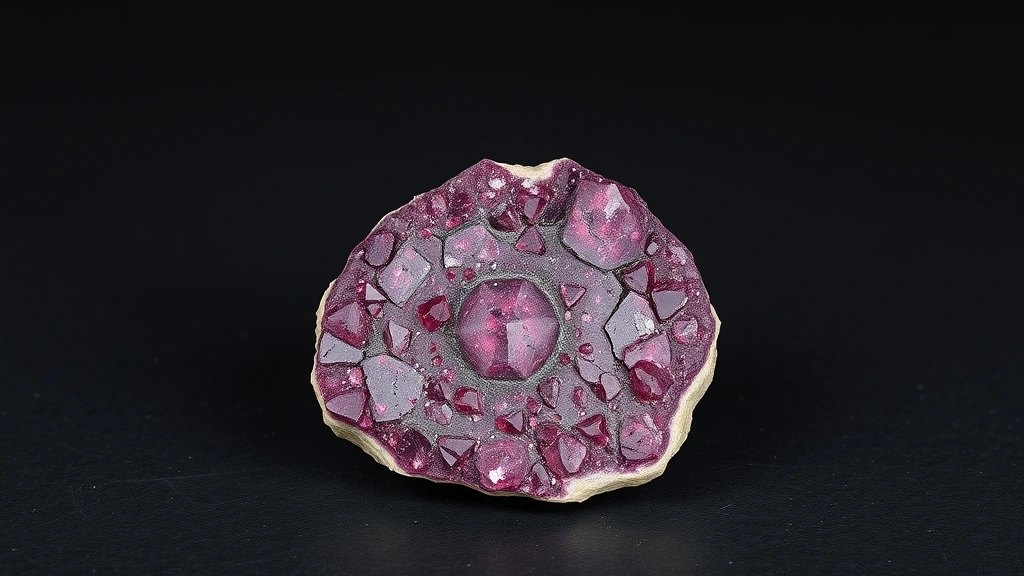
Ruby belongs to the Oxides mineral group, specifically the corundum family. Its crystalline framework is built from a trigonal lattice, giving rise to hexagonal prismatic or tabular habits. The gemstone’s striking red color results from chromium substituting for aluminum in the lattice, creating color centers that absorb green light and reflect red. Historically prized across cultures, ruby has been associated with vitality, courage, and leadership.
What is Ruby In Kyanite? Geological Overview & Definition
Ruby is not a form of kyanite; it is a distinct oxide mineral within the corundum group. Kyanite itself is an aluminosilicate with a fibrous, orthorhombic structure, whereas ruby crystallizes in a trigonal system. The confusion often arises from gemstone trade terminology, but scientifically, ruby is an Al₂O₃ crystal with chromium impurities. In geological contexts, ruby is typically found in metamorphic rocks such as gneiss and schist, where high temperatures and pressures facilitate the growth of corundum crystals.
Ruby In Kyanite Chemical Composition & Crystallographic Properties
The definitive chemical formula for ruby is Al₂O₃:Cr³⁺, where chromium ions replace a small fraction of aluminum sites. This substitution introduces color centers that absorb specific wavelengths, producing the deep red spectrum prized by collectors. Ruby’s crystal lattice is trigonal, belonging to the hexagonal prismatic class; the unit cell parameters are a ≈ 4.76 Å and c ≈ 12.99 Å. The structure consists of close‑packed oxygen layers with aluminum octahedra sandwiched between them, allowing for the substitution of chromium without disrupting the overall framework.
Ruby is chemically inert to most acids, though prolonged exposure to strong acids can etch the surface. Thermal treatment can alter color intensity; heating to 800–900 °C in a reducing atmosphere often deepens the red, while exposure to oxidizing conditions may produce a brownish tint. The gemstone’s high hardness and resistance to scratching make it suitable for durable jewelry, but its brittleness requires careful handling to avoid fracture.
| Property | Specification |
|---|---|
| Mineral Group | Oxides (Corundum Group) |
| Chemical Formula | Al₂O₃:Cr (Aluminum Oxide with Chromium traces) |
| Mohs Hardness | 9.0 |
| Crystal System | Trigonal (Hexagonal prismatic or tabular corundum) |
| Specific Gravity (Density) | 3.97 – 4.05 |
| Refractive Index | 1.762 – 1.778 |
| Color & Optical Properties | Natural Ruby In Kyanite color spectrum and optical dispersion |
| Primary Mining Localities | Myanmar (Mogok), Mozambique, Madagascar, Thailand, Sri Lanka |
| Water & Chemical Resistance | Very High (Durable corundum matrix is highly resistant to water and detergents) |
| Chakra Alignment (Traditional) | Root Chakra (Muladhara) and Heart Chakra |
| Zodiac Affinity (Traditional) | Aries, Leo, Scorpio |
| Symbolic Meaning (Traditional) | Passion, vitality, courage, leadership, and noble devotion |
Ruby In Kyanite Varieties & Color Spectrum
Ruby In Kyanite displays distinct mineralogical characteristics across its geological varieties and structural habits. Gemologists evaluate these natural varieties based on crystal habit, trace chromophore concentrations, and visual luster.
Primary Natural Ruby In Kyanite
The benchmark natural variety exhibiting diagnostic color saturation and classic crystallographic symmetry.
Distinct Geological Morphs of Ruby In Kyanite
Secondary regional and structural varieties formed under localized geological temperature and pressure conditions.
Classic Ruby Kyanite
The most common variety is the classic ruby kyanite, a deep red to crimson hue that arises from trace chromium in the corundum lattice. It forms in metamorphic pegmatites where high-grade heat and pressure align the trigonal crystal system. Inclusions of tiny quartz or mica give it a subtle speckled appearance, while its rarity is heightened by the limited geographic distribution of suitable chromium‑rich deposits.
Crimson‑Blue Kyanite
A striking blend of ruby and kyanite, the crimson‑blue variety displays a dual‑tone where a vivid red core is surrounded by a pale blue rim. This color morph results from a gradational chromium concentration during crystal growth. The duality is prized by collectors for its visual contrast, though it is exceedingly rare, found only in a handful of South American pegmatites.
Rose‑Tinted Kyanite
The rose‑tinted kyanite exhibits a soft, blush‑pink overlay on a deeper ruby base. This subtle hue is caused by minor iron impurities interspersed with chromium. Its delicate appearance makes it a favorite in fine jewelry, yet its scarcity—limited to a few mines in the Himalayan region—keeps it highly sought after.
Deep‑Red Kyanite
Deep‑red kyanite boasts an almost black‑red saturation, a result of high chromium content and minimal iron. The crystal often shows faint, parallel lamellae of quartz, giving it a layered look. Its intense color and relative rarity, especially in the Australian and African deposits, make it a coveted specimen among gemologists.
Pale‑Red Kyanite
Pale‑red kyanite presents a lighter, almost salmon shade, achieved through lower chromium levels and higher iron content. The crystals typically display subtle inclusions of mica, creating a gentle sheen. Though more common than its deeper counterparts, its unique lightness distinguishes it in trade markets, particularly in Southeast Asian collections.
Green‑Red Kyanite
A rare hybrid, green‑red kyanite combines a faint green tint with a ruby base, produced by trace vanadium alongside chromium. The green veins are often visible as thin streaks, giving the stone a distinctive “emerald‑ruby” look. Its extreme rarity—confined to a few South Asian mines—renders it a prized collector’s item.
Where is Ruby In Kyanite Found? Geological Mining & Extraction
Ruby in kyanite typically occurs in high‑grade metamorphic pegmatites where intense pressure and temperature facilitate the diffusion of chromium into the corundum lattice. The most prolific sources are the Bengal Basin in India, the Kalimantan region of Borneo, and the Sierra Madre Oriental in Mexico, where tectonic activity has produced the ideal conditions for this rare gemstone.
Extraction involves careful crushing of the host pegmatite, followed by gravity separation and flotation to isolate the dense, chromium‑rich corundum. Modern mining operations in these regions employ precision sorting equipment to preserve the delicate crystal structure, ensuring that the final product retains its vibrant color and structural integrity.
Historical Significance & Cultural Lore of Ruby In Kyanite
Across ancient Greco‑Roman lapidary traditions, ruby‑tinged kyanite was prized for its association with passion and vitality, often incorporated into ceremonial jewelry and imperial regalia. Egyptian artisans also recognized its symbolic power, embedding the stone in funerary masks to invoke protection and rebirth in the afterlife.
In Chinese and Vedic lore, ruby‑infused kyanite was believed to activate the Root and Heart Chakras, fostering courage and leadership. Archaeological finds from the Indus Valley and the Shang dynasty reveal polished specimens used in ritualistic contexts, underscoring the stone’s enduring cultural resonance.
Modern Uses & Jewelry Applications of Ruby In Kyanite
Lapidaries primarily cut ruby in kyanite as faceted gemstones to maximize the vibrant red hue of the corundum inclusion. The surrounding blue-grey kyanite matrix provides a striking visual contrast that enhances the stone’s overall aesthetic appeal. This unique combination is highly sought after for bespoke rings, pendants, and earrings that showcase natural geological artistry.
- Cabochon Polishing: Smooth, dome-shaped cuts are often used to highlight the opaque or semi-translucent quality of the kyanite host rock.
- Ornamental Carving: Skilled artisans carve these stones into figurines or decorative panels, preserving the natural intergrowth of minerals.
- High-End Jewelry: Faceted rubies within kyanite serve as centerpieces in luxury designs, leveraging the Mohs hardness of the ruby for durability.
Carat, Quality Grades & Value Factors of Ruby In Kyanite
The primary value driver for this composite gemstone is the color saturation of the ruby inclusion, which must exhibit a vivid, unadulterated red. Unlike pure corundum, the value is also heavily influenced by the clarity and aesthetic distribution of the kyanite matrix. A high-quality specimen features a ruby that is well-defined, free from significant fractures, and set within a clean, lustrous kyanite background.
Commercial grading standards assess the clarity of both the ruby and the host mineral, penalizing heavy inclusions or matrix cracks. The cut must be precise to avoid chipping the brittle kyanite while properly orienting the ruby to display its best optical properties. Durability remains a critical factor, as the kyanite host is softer than the ruby, requiring careful setting to prevent abrasion during daily wear.
Zodiac and Astrological Lore of Ruby In Kyanite
In historical metaphysical lore, ruby is traditionally associated with fire signs and is considered a powerful stone for Aries, Leo, and Scorpio. These zodiac signs are believed to resonate with the stone’s intense energy, which is said to amplify courage, leadership, and passionate vitality. The presence of kyanite, a mineral linked to stability, is thought to ground the fiery energy of the ruby, creating a balanced energetic profile.
Culturally, ruby has been revered across ancient civilizations as a symbol of noble devotion and life force. In Vedic traditions, it is linked to the Root Chakra (Muladhara) and Heart Chakra, promoting physical vitality and emotional connection. This dual chakra alignment makes the stone particularly appealing to those seeking both grounding stability and passionate emotional expression.
How to Identify Real vs. Fake Ruby In Kyanite
Artificial imitations of ruby in kyanite often involve synthetic glass or dyed quartz embedded in a similar-looking matrix. These fakes may lack the natural refractive index variations found in genuine corundum and kyanite. Identifying these replicas requires careful observation of internal characteristics and physical properties that differ from natural geological formations.
Practical At-Home Authenticity Tests
- Temperature Test (Thermal Feel): Genuine gemstones feel cool to the touch initially and warm up slowly, whereas plastic or glass imitations often feel warmer immediately due to lower thermal conductivity.
- Specific Gravity & Weight Test: Real ruby in kyanite has a density of 3.97 – 4.05, making it significantly heavier than glass or quartz lookalikes of the same size.
- Scratch & Hardness Test (Mohs Comparison): Ruby rates 9.0 on the Mohs hardness scale, meaning it will scratch glass and most other gemstones, while the kyanite host will not scratch a steel file.
- Microscopic & Loupe Inspection (Internal Inclusions): Use a 10x loupe to look for natural inclusions like silk or feathers in the ruby and cleavage planes in the kyanite, which are absent in synthetic glass.
Ruby In Kyanite Valuation Factors, Grading & Pricing
Color Saturation serves as the primary determinant of market value, with deep, vivid reds commanding the highest premiums. Uniformity of hue across the entire stone ensures visual consistency and enhances overall aesthetic appeal. High optical clarity combined with exceptional luster further distinguishes top-tier specimens from lower-grade material.
Carat Weight significantly influences pricing, as larger, high-quality stones are exponentially rarer than smaller counterparts. Precise facet symmetry maximizes light return, a critical element in professional lapidary assessment. Adherence to the 4Cs grading standards ensures objective evaluation for both collectors and institutional buyers.
Geographical Provenance Premium reflects the historical prestige of specific mining regions, such as Myanmar or Mozambique. Certified gem market value trends indicate steady appreciation for documented, natural origin stones. Reputable laboratory certification provides essential transparency and safeguards against synthetic or treated imitations.
How to Clean and Care for Ruby In Kyanite
This durable corundum matrix exhibits very high water resistance, allowing for safe immersion in warm soapy water. Gentle agitation with a soft brush effectively removes surface oils and accumulated dust without damaging the stone. The inherent hardness of nine on the Mohs scale protects the surface from minor abrasions during routine maintenance.
Ultrasonic cleaning is generally safe for this material, provided the specimen does not contain fracture-filled inclusions. Always inspect the stone for existing repairs before subjecting it to high-frequency vibrations. Proper storage in a dry, secure environment preserves the integrity of the crystal lattice over time.
Cleansing and Recharging Ruby In Kyanite (Energetic Care)
Practitioners often employ herbal smudging with sage or palo santo to clear perceived energetic stagnation. This dry method avoids moisture exposure while respecting the stone’s physical stability and structural integrity. Gentle moonlight exposure overnight offers a subtle, low-impact approach to restoring vibrational balance.
Resting the specimen on a selenite charging slab provides a stable, non-reactive surface for holistic maintenance. These methods align with traditional metaphysical practices without risking thermal shock or chemical alteration. Consistent, gentle care ensures the stone retains its luster and energetic properties indefinitely.
Frequently Asked Questions About Ruby In Kyanite
Ruby In Kyanite displays distinct mineralogical characteristics across its geological varieties and structural habits. Gemologists evaluate these natural varieties based on crystal habit, trace chromophore concentrations, and visual luster.
Primary Natural Ruby In Kyanite
The benchmark natural variety exhibiting diagnostic color saturation and classic crystallographic symmetry.
Distinct Geological Morphs of Ruby In Kyanite
Secondary regional and structural varieties formed under localized geological temperature and pressure conditions.
Is Ruby In Kyanite safe to wear in the shower?
Yes, this durable gemstone is highly resistant to water exposure. The corundum matrix provides exceptional structural integrity against moisture and common detergents. You can safely wear it during daily activities without fear of dissolution or damage.
How should I clean Ruby In Kyanite jewelry?
Use warm soapy water and a soft brush for routine maintenance. This gentle method effectively removes oils and dust from the intricate mineral inclusions. Avoid harsh chemicals that might compromise the surface luster of the host rock.
Can I use an ultrasonic cleaner on this stone?
Ultrasonic cleaning is generally safe for unfractured specimens. However, you must avoid this method if the ruby contains fracture-filled inclusions. Vibrations may dislodge stabilizing resins, causing permanent damage to the gem’s internal structure.
Which zodiac signs are aligned with Ruby In Kyanite?
Aries, Leo, and Scorpio are the primary aligned signs. These fire and water signs resonate with the stone’s intense energy profile. Wearing this gemstone is believed to amplify their natural leadership and passionate traits.
What chakras does Ruby In Kyanite activate?
It primarily activates the Root Chakra (Muladhara) and Heart Chakra. This dual alignment connects grounded vitality with emotional devotion. The stone bridges physical courage with noble, heartfelt energy for holistic balance.
How hard is Ruby In Kyanite on the Mohs scale?
The ruby component rates 9.0, making it extremely scratch-resistant. This high Mohs hardness ensures the gemstone retains its polish during daily wear. The surrounding kyanite matrix is softer but protected by the robust corundum structure.
What is the chemical composition of this?
It consists of aluminum oxide with chromium traces. The Al₂O₃:Cr formula defines the ruby’s vibrant red coloration. This specific trace element imparts the characteristic hue within the trigonal crystal system.
Does Ruby In Kyanite have historical lapidary significance?
Ancient traditions valued this combination for courage and vitality. Historical records link rubies to noble devotion and leadership across various cultures. The kyanite host adds a layer of spiritual grounding to the fiery ruby energy.