
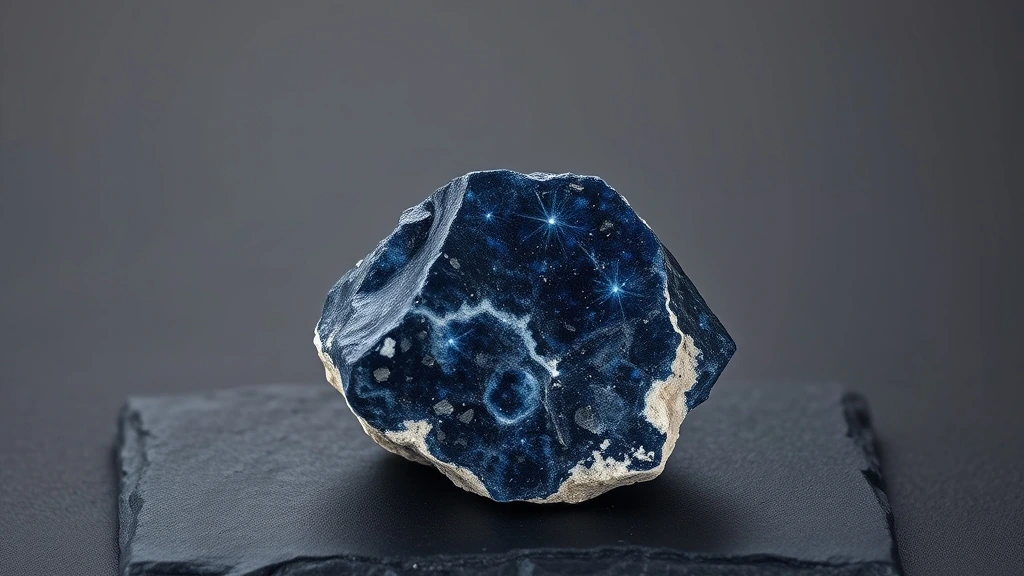
Kyanite belongs to the Natural Mineral / Crystal group, forming exclusively in high-pressure metamorphic environments. It is a polymorph of andalusite and sillimanite, sharing the same chemical composition but differing in crystal structure. This mineral typically crystallizes in elongated, blade-like prisms that exhibit distinct cleavage properties. Its formation is intimately linked to the transformation of clay-rich rocks under intense tectonic stress.
What is Kyanite Gemstone? Geological Overview & Definition
Kyanite is a metamorphic mineral that serves as a key indicator of regional metamorphism in geological settings. It forms at moderate to high pressures, often accompanying garnet and staurolite in schist and gneiss rocks. The term derives from the Greek word *kyanos*, meaning blue, reflecting its most common gem-quality hue.
As a gemstone, kyanite is prized for its anisotropic optical properties and robust chemical stability. It is not a rock but a distinct crystalline species within the aluminosilicate family. Its presence in a rock sample helps geologists reconstruct the pressure-temperature history of the crust. This makes it both a scientific tool and a valuable collector’s item.
Kyanite Gemstone Chemical Composition & Crystallographic Properties
Kyanite crystallizes in the Triclinic crystal system, characterized by unequal axes and oblique angles. This structure results in a distinct lattice arrangement where aluminum and silicon atoms occupy specific tetrahedral and octahedral sites. The unit cell parameters are strictly non-orthogonal, defining its unique geometric identity. This triclinic symmetry is fundamental to its physical behavior and optical character.
The mineral exhibits significant anisotropy, meaning its physical properties vary with direction. Specifically, its hardness is 4.5 parallel to the c-axis but rises to 7 perpendicular to it. This directional strength difference is a hallmark of its internal bonding structure. Gem cutters must account for this to prevent chipping during faceting.
Color in kyanite arises from chromophore color centers, primarily involving trace iron impurities. These impurities alter the electronic structure, absorbing specific wavelengths of light. The resulting blue or green hues depend on the oxidation state and concentration of these ions. Thermal treatment can sometimes enhance these colors, though natural saturation is preferred.
Kyanite is chemically stable and resistant to most acids, making it durable for jewelry use. Its refractive index ranges from 1.712 to 1.734, contributing to its high luster. The mineral does not undergo significant phase changes at standard jewelry temperatures. This thermal stability ensures that the gemstone retains its structural integrity over time.
| Property | Specification |
|---|---|
| Mineral Group | Natural Mineral / Crystal |
| Chemical Formula | Al₂SiO₅ |
| Mohs Hardness | 4.5–5 parallel to one axis 6.5–7 perpendicular to that axis |
| Crystal System | Triclinic |
| Specific Gravity (Density) | 3.53–3.65 measured; 3.67 calculated |
| Refractive Index | n α = 1.712 – 1.718 n β = 1.720 – 1.725 n γ = 1.727 – 1.734 |
| Color & Optical Properties | Natural Kyanite Gemstone color spectrum and optical dispersion |
| Primary Mining Localities | Global primary localities |
| Water & Chemical Resistance | High (Safe for gentle water washing) |
| Chakra Alignment (Traditional) | Crown Chakra, Third Eye Chakra |
| Zodiac Affinity (Traditional) | Aquarius, Pisces |
| Symbolic Meaning (Traditional) | Clarity of thought, mental stability, and spiritual insight |
Kyanite Gemstone Varieties & Color Spectrum
Kyanite presents a remarkable diversity in color, ranging from deep sapphire blue to pale green and violet. These variations are primarily driven by trace element substitutions within the Al₂SiO₅ crystal lattice. Understanding these distinct morphs is essential for accurate gemological identification and valuation.
Blue Kyanite
This is the most commercially significant variety, prized for its intense, velvety blue hue. The color originates from trace amounts of iron and titanium impurities. High-quality specimens often exhibit a distinct pleochroism, appearing blue from one angle and greenish from another.
Green Kyanite
Less common than its blue counterpart, green kyanite derives its tint from specific iron oxidation states. It frequently occurs in metamorphic schists alongside other gem-quality minerals. Collectors value this variety for its unique, earthy aesthetic and triclinic crystal habit.
Violet Kyanite
Violet kyanite is a rare color morph often found in high-pressure metamorphic zones. The purple hue results from complex interactions of trace elements under extreme geological conditions. These stones are highly sought after by collectors for their refractive index brilliance.
Colorless Kyanite
Colorless kyanite is typically transparent and exhibits high luster, resembling quartz or topaz. It is often found in pegmatites or as an accessory mineral in granitic rocks. While less flashy, it is valued for its clarity and density of 3.53–3.65 g/cm³.
White Kyanite
White kyanite is usually opaque or translucent, often containing microscopic inclusions of other minerals. It is commonly found in gneiss and schist formations worldwide. This variety is frequently used in industrial applications due to its anisotropic hardness properties.
Where is Kyanite Gemstone Found? Geological Mining & Extraction
Kyanite primarily forms in high-grade metamorphic rocks such as schist, gneiss, and marble. It is often associated with other aluminosilicate minerals like andalusite and sillimanite. These deposits are typically located in regions that have undergone significant tectonic compression and heat.
Major gem-quality sources include the Himalayas, particularly in Pakistan and India. Other notable mining regions include Brazil, Madagascar, and the United States. Extraction is usually open-pit, targeting the rich metamorphic zones where crystals are well-formed.
Historical Significance & Cultural Lore of Kyanite Gemstone
Kyanite has been known since ancient times, with evidence of use in Mesopotamia and Egypt. It was often mistaken for sapphire or lapis lazuli due to its deep blue color. Ancient civilizations valued it for its durability and striking visual appeal in jewelry.
In modern times, kyanite is associated with mental clarity and spiritual insight in various esoteric traditions. It is linked to the Crown Chakra and Third Eye Chakra, promoting focus and intuition. This gemstone continues to be a favorite among metaphysical practitioners and collectors alike.
Modern Uses & Jewelry Applications of Kyanite Gemstone
Lapidaries value kyanite for its distinctive anisotropic hardness, which allows for precise cutting despite its variable resistance to abrasion. Because the stone cleaves easily along one axis, skilled cutters orient facets to maximize durability and brilliance. This mineral is frequently fashioned into elegant cabochons or faceted gems for rings, pendants, and earrings.
- Faceted Cuts: Prismatic or step cuts highlight the stone’s high refractive index and deep blue color.
- Cabochons: Smooth, domed surfaces emphasize the gem’s velvety luster and unique optical properties.
- Ornamental Carving: Sculptors use kyanite for decorative objects, taking advantage of its ability to split into thin sheets.
- Industrial Applications: Beyond jewelry, high-purity kyanite serves as a raw material for refractory bricks and ceramics.
Metaphysical Properties & Traditional Meaning of Kyanite Gemstone
According to historical traditions and metaphysical lore, kyanite is revered as a stone of clarity of thought and mental stability. Practitioners believe it helps align the mind with higher spiritual truths, fostering a sense of calm during turbulent times. The gem is often associated with spiritual insight, aiding meditation and intuitive perception.
- Mental Clarity: Believed to sharpen focus and reduce mental fog or confusion.
- Emotional Balance: Used to promote inner peace and emotional resilience.
- Spiritual Connection: Thought to enhance intuition and connection to higher consciousness.
Which Chakra and Zodiac Signs Align with Kyanite Gemstone?
In metaphysical practice, kyanite is primarily aligned with the Crown Chakra and the Third Eye Chakra. These energy centers govern spiritual connection, intuition, and higher awareness. The stone’s deep blue hue resonates with the frequencies associated with these upper chakras, promoting mental clarity and spiritual expansion.
- Crown Chakra: Enhances connection to universal consciousness and divine wisdom.
- Third Eye Chakra: Stimulates intuition, psychic abilities, and inner vision.
Astrologically, kyanite is strongly associated with the water signs Aquarius and Pisces. These signs benefit from the stone’s ability to balance emotional sensitivity with intellectual clarity. Aquarians appreciate its grounding effect on innovative ideas, while Pisceans find comfort in its soothing, protective energy.
- Aquarius: Supports intellectual independence and humanitarian ideals.
- Pisces: Enhances empathy, creativity, and spiritual depth.
How to Identify Real vs. Fake Kyanite Gemstone
Distinguishing natural kyanite from imitations requires attention to its unique physical properties. Common fakes include synthetic glass, dyed quartz, or other blue minerals like sapphire. Glass imitations often lack the natural inclusions and specific gravity of genuine kyanite. Careful examination of hardness, weight, and internal features is essential for accurate identification.
- Synthetic Glass: May contain bubbles or swirls not found in natural stones.
- Dyed Quartz: Often shows color concentration in fractures or pores.
- Sapphire: Significantly harder and more durable than kyanite.
Practical At-Home Authenticity Tests
- Temperature Test (Thermal Feel): Hold the stone in your palm for a few seconds. Genuine kyanite feels cool to the touch initially and warms slowly, while glass or plastic imitations often warm up more quickly.
- Specific Gravity & Weight Test: Kyanite has a density of 3.53–3.65 g/cm³. It should feel noticeably heavier than similarly sized glass or quartz, which have lower densities.
- Scratch & Hardness Test (Mohs Comparison): Kyanite’s Mohs hardness varies from 4.5–5 parallel to its axis and 6.5–7 perpendicular. Test carefully on a glass plate (hardness 5.5); kyanite may scratch glass if oriented correctly, but softer imitations will not.
- Microscopic & Loupe Inspection (Internal Inclusions): Use a 10x loupe to examine the stone. Natural kyanite often displays needle-like inclusions, fluid-filled cavities, or distinct cleavage planes. Glass imitations may show circular bubbles or swirl patterns.
Kyanite Gemstone Valuation Factors, Grading & Pricing
Color Saturation is the primary driver of value, with deep, uniform blue hues commanding the highest premiums. Tone uniformity across the entire stone ensures consistent visual appeal for jewelry designers. High optical clarity and a distinct vitreous luster further enhance the gemstone’s overall market desirability.
Carat Weight significantly influences pricing, as large, inclusion-free crystals are exceptionally rare in the global market. Precise facet symmetry maximizes light return, though kyanite’s pleochroism often dictates unique cutting orientations. The presence of matrix or internal inclusions generally reduces value, although some collectors appreciate natural character.
Geographical Provenance Premium applies to stones from renowned localities like Ceylon or Brazil, which often fetch higher prices. Wholesale values fluctuate based on supply chains, while retail prices reflect brand markup and craftsmanship. Understanding these trends helps buyers assess fair market value for their specific specimens.
How to Clean and Care for Kyanite Gemstone
Kyanite possesses anisotropic hardness, meaning it is softer along one axis and more susceptible to structural stress. You must use warm soapy water and a soft cloth to gently remove surface oils and dust. This method safely cleans the stone without risking damage to its delicate crystal lattice structure.
Never place kyanite in an ultrasonic cleaner, as the vibrations can cause structural fractures along its cleavage planes. Avoid steam cleaning as well, since thermal shock may compromise the gemstone’s integrity over time. Regular, gentle maintenance preserves the stone’s luster and ensures its longevity in jewelry settings.
Cleansing and Recharging Kyanite Gemstone (Energetic Care)
For energetic cleansing, use dry methods that respect the mineral’s physical sensitivities and avoid moisture exposure. Smoke smudging with sage or palo santo is an effective way to clear stagnant energy without physical contact. This approach aligns with the stone’s association with mental clarity and spiritual insight.
To recharge your kyanite, place it on a selenite plate or under moonlight overnight. These passive methods allow the crystal to absorb ambient energy safely without risking physical damage. Always ensure the stone is completely dry before storing it in a soft pouch.
Frequently Asked Questions About Kyanite Gemstone
What is the chemical composition of kyanite?
Kyanite is composed of aluminum silicate with the formula Al₂SiO₅. This specific stoichiometry defines its unique mineralogical identity within the polymorph group. Understanding this formula helps distinguish it from andalusite and sillimanite, which share the same elements but differ in crystal structure.
How hard is kyanite on the Mohs scale?
Kyanite exhibits anisotropic hardness, ranging from 4.5 to 7 depending on orientation. It measures 4.5–5 parallel to its c-axis but reaches 6.5–7 perpendicular to it. This directional variation makes it tougher than many gemstones, yet requires careful handling during faceting and setting to avoid chipping along the softer axis.
Is kyanite safe to wear in the shower?
Yes, kyanite is safe for gentle water washing and brief shower exposure. Its high water resistance prevents dissolution or structural degradation during normal hygiene routines. However, avoid prolonged soaking or high-pressure jets, as these conditions can potentially exploit natural cleavage planes within the crystal lattice over time.
Can I clean kyanite in an ultrasonic cleaner?
No, you must avoid ultrasonic cleaners to prevent structural fractures. Instead, use warm soapy water and a soft cloth for safe maintenance. The intense vibrations can exploit the mineral’s anisotropic properties, causing internal stress that leads to cracking or breaking of the delicate crystal structure.
Which zodiac signs are aligned with kyanite?
Aquarius and Pisces are the primary zodiac signs aligned with kyanite. These water and air signs resonate with the stone’s energy of mental clarity and emotional balance. Wearing kyanite may enhance introspective qualities, supporting the intellectual and spiritual growth associated with these specific astrological configurations.
Which chakras does kyanite activate?
Kyanite primarily activates the Crown Chakra and Third Eye Chakra. These energy centers govern higher consciousness, intuition, and spiritual insight. By aligning with these specific chakras, the stone facilitates deeper meditation and enhances the wearer’s ability to perceive subtle energetic frequencies.
What is the crystal system of kyanite?
Kyanite crystallizes in the triclinic system, characterized by its distinct bladed habit. This structure results in its unique anisotropic optical and mechanical properties. The triclinic arrangement is fundamental to understanding its refractive index variations and directional hardness, which are critical for gemological identification and cutting.
How should I store kyanite jewelry?
Store kyanite separately in a soft pouch to prevent surface scratching. Although its hardness is moderate, its anisotropic nature makes it susceptible to chipping if struck by harder minerals. Proper storage preserves the integrity of the facet edges and maintains the stone’s luster for long-term aesthetic appeal.