
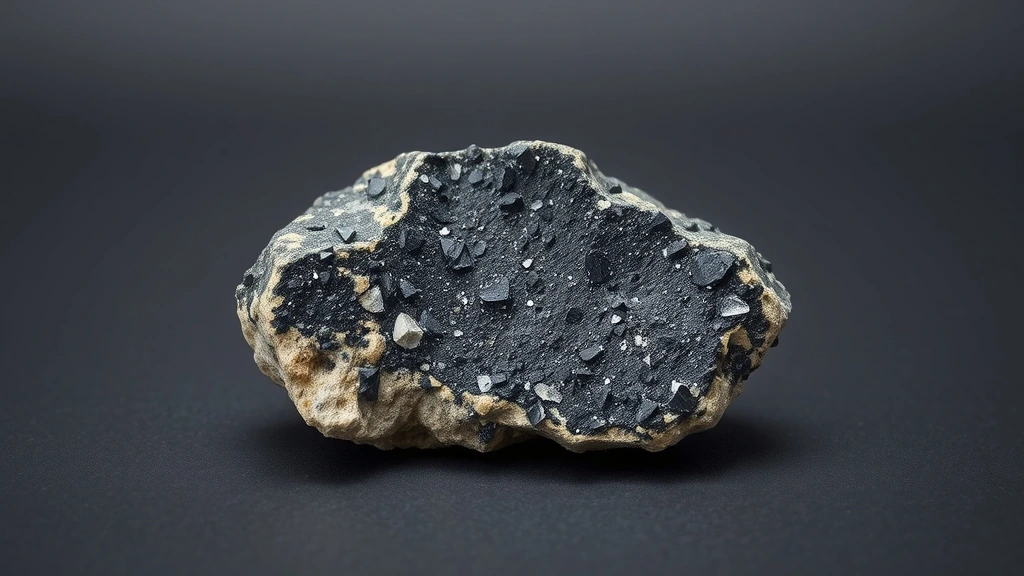
Andalusite belongs to the natural mineral family of orthorhombic silicates, crystallizing in the orthorhombic crystal system. It forms in low‑ to medium‑grade metamorphic rocks, often alongside kyanite and sillimanite, and is prized for its pleochroic play of color that shifts with viewing angle.
What is Andalusite Gemstone? Geological Overview & Definition
Andalusite is a metamorphic aluminosilicate that originates from the recrystallization of clay‑rich sediments under directed pressure and moderate temperatures (≈300–500 °C). Its distinctive pleochroism—changing from green to brown to pink—makes it a favorite among collectors seeking a gemstone with dynamic visual effects.
In the gemstone market, cut and polished andalusite is valued for its unique color zoning and relatively high hardness, which allow it to be set in rings, pendants, and earrings. While not as common as quartz or garnet, its rarity and striking optical properties command premium prices in specialty jewelry.
Andalusite Gemstone Chemical Composition & Crystallographic Properties
The mineral’s formula Al₂SiO₅ reflects a framework of aluminum‑oxygen octahedra linked to silicon‑oxygen tetrahedra, producing a robust orthorhombic lattice. Unit‑cell parameters are unequal (a ≠ b ≠ c) yet all angles remain at 90°, a hallmark of the orthorhombic system.
Cation substitution is limited; trace amounts of Fe³⁺, Ti⁴⁺, or Mn²⁺ can replace Al³⁺, subtly altering hue by creating color centers that absorb specific wavelengths. These minor impurities are responsible for the gemstone’s pleochroic spectrum, from yellow‑green to reddish‑brown.
Andalusite is acid‑resistant under normal conditions, but prolonged exposure to strong hydrofluoric acid can dissolve its silicate framework. Its stability makes it suitable for everyday wear, though cleaning with harsh acids is discouraged.
Thermally, andalusite exhibits a reversible α‑β transition near 500 °C, where the crystal expands anisotropically but retains orthorhombic symmetry. This behavior influences its cleavage and may affect cutting strategies, as rapid heating can induce micro‑fractures if not carefully managed.
| Property | Specification |
|---|---|
| Mineral Group | Natural Mineral / Crystal |
| Chemical Formula | Al₂ SiO₅ |
| Mohs Hardness | 6.5–7.5 |
| Crystal System | Orthorhombic |
| Specific Gravity (Density) | 3.17 (± .04) |
| Refractive Index | n α = 1.629 – 1.640 n β = 1.633 – 1.644 n γ = 1.638 – 1.650 |
| Color & Optical Properties | Natural Andalusite Gemstone color spectrum and optical dispersion |
| Primary Mining Localities | Global primary localities |
| Water & Chemical Resistance | High (Safe for gentle water washing) |
| Chakra Alignment (Traditional) | Heart Chakra |
| Zodiac Affinity (Traditional) | Taurus, Virgo |
| Symbolic Meaning (Traditional) | Emotional balance, clarity of thought, and harmonious relationships |
Andalusite Gemstone Varieties & Color Spectrum
Chrysoberyl-Andalusite (Sillimanite-Andalusite)
This rare variety forms through high-grade metamorphism where andalusite crystals intergrow with sillimanite. The resulting gemstones exhibit a distinctive pleochroism, displaying shades of brown, yellow, and green. Such intergrowths significantly alter the stone’s optical properties and market value.
Brown Andalusite
Commonly found in schist and gneiss, this variety features a warm, earthy brown hue. Its color stems from trace iron impurities within the orthorhombic crystal structure. While less vibrant than other types, it remains the most accessible form for collectors.
Green Andalusite
Emerging from specific metamorphic zones, this variety showcases a subtle, mossy green tone. It often contains microscopic inclusions that enhance its unique visual character. This color morph is prized for its distinct deviation from standard brown tones.
Violet Andalusite
Extremely rare, this variety exhibits a faint violet or purple tint under natural light. The coloration arises from specific trace element substitutions in the Al₂SiO₅ lattice. Finding gem-quality violet andalusite is a significant challenge for gemologists.
Colorless Andalusite
This variety appears transparent to pale gray, highlighting the stone’s high refractive index. It is often cut into faceted gems to maximize brilliance and clarity. Colorless specimens are valued for their purity and lack of visible inclusions.
Where is Andalusite Gemstone Found? Geological Mining & Extraction
Andalusite primarily occurs in metamorphic rocks such as schist, gneiss, and marble. These deposits form under high-pressure, low-temperature conditions typical of regional metamorphism. The mineral often appears as porphyroblasts within the host rock matrix.
Major mining regions include Brazil, India, and the United States. In Brazil, andalusite is extracted from schist deposits in Minas Gerais. India yields significant quantities from the Aravalli Range, while US deposits are found in New York and Maine.
Historical Significance & Cultural Lore of Andalusite Gemstone
Ancient civilizations utilized andalusite primarily as a gemstone for jewelry and decorative objects. Archaeological findings in Europe and Asia reveal its use in medieval amulets. The stone was often mistaken for other minerals due to its variable coloration.
In modern gemology, andalusite is recognized for its scientific importance in metamorphic studies. Its presence helps geologists determine the pressure and temperature history of rock formations. This dual role bridges the gap between aesthetic value and geological research.
Modern Uses & Jewelry Applications of Andalusite Gemstone
Lapidaries primarily cut andalusite into faceted gems or smooth cabochons to maximize its unique optical properties. The stone’s moderate hardness allows for precise polishing, revealing its characteristic schiller or chatoyancy. While less common than corundum, it serves as a distinctive accent in contemporary jewelry designs.
- Faceted Cuts: Oval and emerald cuts are popular for displaying the stone’s refractive index and subtle color variations.
- Cabochon Settings: Smooth, domed cuts highlight the silk-like luster often found in high-quality specimens.
- Ornamental Carvings: Larger crystals are occasionally carved into artistic figurines or decorative inlays for collectors.
Safety & Mineral Profile of Andalusite
Safe handling and physical stability
Andalusite is a silicate mineral that is chemically stable under normal environmental conditions. It is not known to release toxic substances, and its composition does not contain hazardous heavy metals such as lead or arsenic. However, like many silicates, fine dust generated during cutting or polishing can be inhaled and may irritate the respiratory tract; therefore, specimens should be handled with gloves and, when necessary, a mask. The mineral is moderately hard (Mohs 5.5–6.5) and can be scratched by harder materials, but it does not exhibit significant acid reactivity or softness that would make it suitable for everyday wear. Consequently, Andalusite is generally treated as a collector display mineral rather than a gemstone for jewelry, where durability and resistance to abrasion are critical.
Scientific, educational, and mineralogical significance
Andalusite serves as an important indicator mineral in metamorphic petrology. Its presence, along with kyanite and sillimanite, defines the Al₂SiO₅ polymorph series and provides insights into the pressure–temperature history of metamorphic rocks. In museum collections, Andalusite specimens are used to illustrate crystal symmetry, anisotropy, and the concept of polymorphism. Researchers also employ it in studies of optical anisotropy, birefringence, and the effects of trace elements on crystal growth. Thus, Andalusite occupies a valuable niche in both educational displays and advanced mineralogical research.
Mineralogical Group and Planetary Lore of Andalusite
Andalusite was first described in 1846 by the German mineralogist Karl Friedrich von Zittel after its discovery in the Andalusia region of Spain, from which it derives its name. Historically, early mineralogists classified it within the orthorhombic crystal system and noted its characteristic pleochroism and cleavage. According to early lapidary texts, Andalusite was sometimes associated with the planet Mercury due to its metallic luster and was believed to confer clarity of thought, although such associations lack scientific basis. In modern mineralogical literature, Andalusite remains a key reference point for the study of metamorphic facies and the thermodynamic stability of the Al₂SiO₅ polymorphs.
How to Identify Real vs. Fake Andalusite Gemstone
Distinguishing genuine andalusite from imitations requires attention to specific physical characteristics, as synthetic glass and dyed replicas are common in the market. Artificial imitations often lack the natural inclusions and subtle color zoning found in mined specimens. Synthetic glass may appear too perfect, with no internal flaws or natural luster variations.
Practical At-Home Authenticity Tests
- Temperature Test (Thermal Feel): Genuine andalusite feels cool to the touch initially and warms slowly, whereas plastic imitations warm up almost instantly.
- Specific Gravity & Weight Test: With a density of 3.17, the stone feels noticeably heavier than glass or plastic of the same size.
- Scratch & Hardness Test (Mohs Comparison): Andalusite has a hardness of 6.5–7.5, meaning it can scratch glass but may be scratched by a diamond or topaz.
- Microscopic & Loupe Inspection (Internal Inclusions): Use a 10x loupe to look for natural inclusions like rutile needles or mineral flakes, which are absent in synthetic glass.
Andalusite Gemstone Valuation Factors, Grading & Pricing
Market value hinges primarily on Color Saturation, where deep, uniform tones command the highest premiums. Gemologists assess tone consistency across the entire stone to ensure visual harmony. Additionally, high optical clarity and a distinct vitreous luster significantly elevate the gemstone’s aesthetic appeal.
Pricing is further influenced by Carat Weight, as larger specimens of this variety are inherently rarer. Precise facet symmetry maximizes light return, enhancing the stone’s overall brilliance. The presence of matrix material or internal inclusions can reduce value, though some collectors appreciate unique inclusion patterns.
Geographical Provenance Premium plays a critical role in determining final retail prices. Stones from renowned localities often fetch higher bids due to their historical significance. Current wholesale trends indicate steady demand, while retail values fluctuate based on cut quality and origin certification.
How to Clean and Care for Andalusite Gemstone
To maintain the stone’s integrity, use warm soapy water and a soft cloth for gentle cleaning. This method effectively removes oils and dust without risking surface damage. Always rinse thoroughly with clean water to eliminate any residual soap film.
It is crucial to avoid ultrasonic cleaners entirely, as the vibrations can cause structural fractures. The gemstone’s orthorhombic crystal structure makes it susceptible to stress-induced cracking under high-frequency sound waves. Stick to manual, low-impact cleaning methods to preserve the stone’s long-term durability.
Cleansing and Recharging Andalusite Gemstone (Energetic Care)
For energetic maintenance, utilize smoke smudging with sage or palo santo to clear stagnant energy. This dry method respects the mineral’s physical properties while addressing metaphysical cleansing needs. Ensure the stone is dry before and after the process to prevent moisture exposure.
Alternatively, place the gemstone on a selenite plate under moonlight for passive recharging. This gentle approach avoids any physical stress on the crystal lattice. It allows the stone to absorb ambient energy without the risks associated with water or heat.
Frequently Asked Questions About Andalusite Gemstone
Is Andalusite safe to wear in the shower?
Yes, Andalusite is safe for gentle water exposure without risk of dissolution. The stone possesses high water resistance, making it suitable for brief contact with shower water. However, prolonged soaking or exposure to harsh chemicals should be avoided to maintain the gem’s luster.
Can I clean Andalusite in an ultrasonic cleaner?
No, you should strictly avoid using ultrasonic cleaners for this gemstone. The vibrations can cause structural fractures within the crystal lattice. Instead, use warm soapy water and a soft cloth for safe, effective cleaning that preserves the stone’s integrity.
Which zodiac signs are aligned with Andalusite?
Andalusite is traditionally associated with Taurus, Gemini, and Leo. These earth and fire signs benefit from the stone’s grounding properties. Wearing this gemstone is believed to enhance stability and creative expression for individuals born under these specific astrological alignments.
Which chakras does Andalusite activate?
Andalusite primarily activates the Heart Chakra. This dual connection helps balance physical grounding with emotional openness. It supports the flow of energy between the body’s foundation and its emotional center, promoting holistic well-being.
What is the Mohs hardness of Andalusite?
Andalusite rates between 6.5 and 7.5 on the Mohs scale. This moderate hardness makes it durable enough for everyday jewelry, such as rings and pendants. However, it is softer than sapphire, so care is required to prevent scratches from harder minerals like quartz.
What is the chemical formula of Andalusite?
The chemical formula for Andalusite is Al₂SiO₅. It is a polymorph of kyanite and sillimanite, sharing the same composition but differing in crystal structure. This orthorhombic crystal system defines its unique physical properties and optical characteristics in gemological analysis.
What is the refractive index of Andalusite?
Andalusite exhibits a refractive index ranging from 1.629 to 1.650. These values help gemologists distinguish it from similar-looking stones like garnet or tourmaline. Precise measurement of nα, nβ, and nγ is essential for accurate identification in professional laboratory settings.
What is the specific gravity of Andalusite?
Andalusite has a specific gravity of 3.17 ± 0.04. This density is slightly lower than garnet but higher than quartz, aiding in visual identification. Hydrostatic weighing confirms this value, providing a reliable method for separating Andalusite from lookalikes in gemstone grading.