
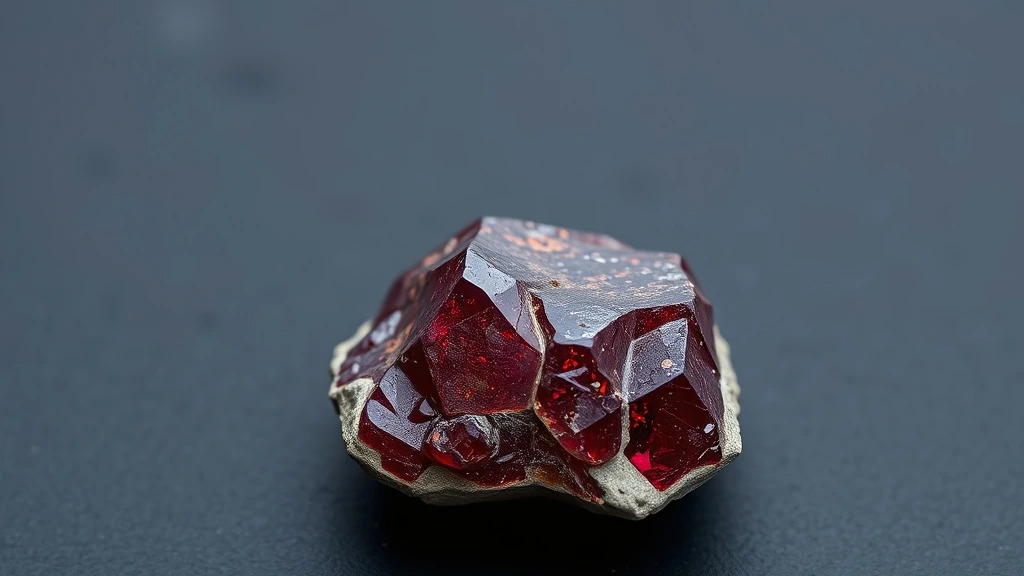
Corundum stands as a premier example of a Natural Mineral / Crystal, distinguished by its rigid structural integrity. Unlike sedimentary aggregates, it forms through high-temperature metamorphic processes. This geological origin ensures its status as one of the most durable substances on Earth. Its crystalline nature allows for precise optical and mechanical properties that define its gemological value.
What is Corundum Gemstone? Geological Overview & Definition
Corundum typically forms in metamorphic rocks like marble and schist, where high pressure alters original minerals. It also appears in igneous environments, specifically within kimberlite pipes and basaltic lava flows. These distinct geological settings influence the stone’s clarity and the specific trace elements present within its lattice.
As a gem-quality mineral, corundum is prized for its resistance to abrasion and chemical weathering. The term “corundum” encompasses all varieties, including ruby and sapphire, which differ only in color centers. Understanding its formation helps gemologists identify natural stones versus synthetic lab-grown counterparts.
Corundum Gemstone Chemical Composition & Crystallographic Properties
Corundum crystallizes in the Trigonal system, forming hexagonal prisms with pyramidal terminations. Its lattice structure consists of a close-packed array of oxygen anions. Aluminum cations occupy two-thirds of the octahedral sites, creating a stable Al₂O₃ stoichiometry. This specific arrangement contributes significantly to its high density and mechanical strength.
Trace cation substitution introduces impurities that alter optical properties without disrupting the core lattice. For instance, chromium ions replace aluminum atoms to produce the red hue of ruby. These chromophore color centers are responsible for the stone’s diverse spectral range. The lattice remains robust despite these substitutions, maintaining its characteristic hardness.
Corundum exhibits remarkable acid sensitivity resistance, remaining inert in most common laboratory acids. It only dissolves in hot, concentrated sulfuric or hydrofluoric acid mixtures. This chemical stability makes it ideal for industrial applications like abrasives and cutting tools. Its durability ensures longevity in jewelry and high-wear environments.
Thermally, corundum displays high thermal conductivity and stability up to its melting point. It undergoes no phase transitions at standard geological temperatures, preserving its crystal structure. This thermal resilience allows it to survive extreme metamorphic events. Consequently, it remains one of the most reliable indicators of high-grade geological processes.
| Property | Specification |
|---|---|
| Mineral Group | Natural Mineral / Crystal |
| Chemical Formula | Al₂ O₃ |
| Mohs Hardness | 9.0 |
| Crystal System | Trigonal |
| Specific Gravity (Density) | 3.95–4.10 |
| Refractive Index | nowrap |
| Color & Optical Properties | Natural Corundum Gemstone color spectrum and optical dispersion |
| Primary Mining Localities | Global primary localities |
| Water & Chemical Resistance | High (Safe for gentle water washing) |
| Chakra Alignment (Traditional) | Root Chakra, Sacral Chakra |
| Zodiac Affinity (Traditional) | Leo, Scorpio |
| Symbolic Meaning (Traditional) | Strength, willpower, protection, and success |
Corundum Gemstone Varieties & Color Spectrum
Ruby
Ruby is the precious red variety of corundum, deriving its intense hue from chromium impurities within the crystal lattice. This element substitutes for aluminum, creating a vibrant spectral signature that defines the gem’s value. High-quality rubies exhibit a “pigeon’s blood” red, a term reserved for the most saturated and vivid tones.
Geologically, rubies often form in marble or limestone deposits, where hydrothermal fluids introduce the necessary trace elements. Common inclusions include rutile needles, known as “silk,” which can enhance fluorescence under UV light. The rarity of clean, high-clarity stones makes untreated rubies exceptionally valuable in the global market.
Sapphire
Sapphire encompasses all corundum varieties except red, with blue being the most traditional and commercially significant. The iconic blue color arises from iron and titanium substitutions in the crystal structure. These elements create a charge transfer mechanism that absorbs specific wavelengths of visible light.
Blue sapphires are frequently found in metamorphic schist and gneiss rocks, often associated with high-pressure environments. Inclusions such as rutile silk and hematite flakes are common, providing unique internal patterns. The presence of these inclusions helps gemologists identify the geographic origin of the stone.
Padparadscha
Padparadscha is a rare, pinkish-orange variety of corundum, often described as resembling a lotus flower. Its delicate color is caused by trace amounts of chromium and iron within the crystal lattice. This specific combination produces a soft, warm hue that is highly sought after by collectors.
True natural padparadschas are extremely scarce, making them more valuable than many standard sapphires. Synthetic versions are common, so certification is essential to verify the stone’s natural origin. The term itself is derived from the Sinhalese words for “lotus” and “water.”
Star Sapphire
Star sapphire features a distinctive six-rayed star pattern, known as asterism, visible on the gem’s surface. This optical phenomenon is caused by intersecting inclusions of rutile needles aligned in three directions. The star effect is most prominent when the stone is cut en cabochon.
The quality of the star depends on the sharpness of the rays and the clarity of the body color. A well-formed star should be centered and symmetrical, with no distortion. This variety is highly prized for its unique visual appeal and mystical properties.
Green Sapphire
Green sapphire is a less common variety, resulting from trace amounts of chromium or other impurities. The color can range from olive to deep forest green, depending on the specific elemental composition. These stones are often found in the same deposits as blue sapphires.
Due to their rarity, green sapphires are less well-known than their blue counterparts. They are valued for their unique hue and potential for high clarity. The market for these stones is niche but growing among specialized collectors.
Where is Corundum Gemstone Found? Geological Mining & Extraction
Corundum forms in diverse geological settings, including metamorphic schists, gneisses, and marble deposits. These environments provide the high pressures and temperatures necessary for crystal growth. Additionally, alluvial deposits are a major source, where weathering releases corundum into river systems.
Primary mining regions include Myanmar, Sri Lanka, Madagascar, and Thailand. Each location produces distinct color variations and inclusion patterns, influencing the gem’s market value. Artisanal and industrial mining methods vary, with careful extraction required to preserve the integrity of the crystals.
Historical Significance & Cultural Lore of Corundum Gemstone
Corundum has been prized since antiquity, with ancient civilizations using it for both ornamental and protective purposes. In India, rubies were considered sacred, often associated with the planet Mars and warrior virtues. Archaeological findings reveal corundum artifacts dating back thousands of years, highlighting its enduring appeal.
The gemstone’s hardness made it ideal for early abrasives, while its beauty secured its place in royal jewelry. Legends often attribute mystical powers to corundum, linking it to strength and protection. This rich history continues to influence its cultural significance and market desirability today.
Modern Uses & Jewelry Applications of Corundum Gemstone
Corundum’s exceptional durability makes it a cornerstone of high-end jewelry, prized for its ability to retain brilliance over decades. Lapidaries exploit its trigonal crystal system to create precise facets that maximize light return and visual impact. This mineral serves as the primary source for both ruby and sapphire, commanding significant value in the global gem market.
- Faceted Cutting: Standard brilliant and mixed cuts enhance the stone’s refractive index, creating intense fire and scintillation.
- Cabochon Polishing: Smooth, domed cuts are used for star sapphires to display their characteristic six-rayed asterism.
- Ornamental Carving: High-quality material is carved into intricate sculptures, beads, and architectural inlays for historical preservation.
Metaphysical Properties & Traditional Meaning of Corundum Gemstone
According to historical traditions and metaphysical lore, corundum is revered as a stone of profound strength and unyielding willpower. Practitioners believe it acts as a powerful shield, offering protection against negative energies and physical harm. This mineral is often associated with achieving personal success and maintaining mental clarity during challenging life transitions.
Wearers frequently report an enhanced sense of confidence and emotional resilience when engaging with this gemstone. The energy is described as grounding yet dynamic, fostering a deep connection to one’s inner power. Such beliefs highlight the stone’s role in promoting success and steadfast determination in various cultural contexts.
Which Chakra and Zodiac Signs Align with Corundum Gemstone?
In esoteric practice, corundum is primarily aligned with the Root Chakra, which governs stability, security, and physical survival. This connection reinforces the stone’s reputation for providing a solid foundation and grounding energy. By anchoring the wearer, it helps mitigate anxiety and fosters a sense of safety in the material world.
The gemstone also resonates strongly with the Sacral Chakra, influencing creativity, passion, and emotional flow. This dual alignment supports a balance between grounded stability and dynamic personal expression. Such energetic properties make it a versatile tool for holistic well-being and emotional balance.
How to Identify Real vs. Fake Corundum Gemstone
Distinguishing natural corundum from imitations requires careful observation, as synthetic glass and dyed replicas are widely available. Artificial imitations often mimic color but lack the intrinsic optical properties of genuine mineral specimens. Understanding these differences is crucial for collectors and buyers seeking authentic gemstones.
Practical At-Home Authenticity Tests
- Temperature Test (Thermal Feel): Genuine corundum feels noticeably cooler to the touch than glass or plastic imitations due to its higher thermal conductivity.
- Specific Gravity & Weight Test: Natural corundum has a density of 3.95–4.10, making it significantly heavier than glass of the same size.
- Scratch & Hardness Test (Mohs Comparison): With a Mohs hardness of 9, corundum will scratch glass and most other gemstones without sustaining damage.
- Microscopic & Loupe Inspection (Internal Inclusions): A 10x loupe reveals natural inclusions like silk or rutile needles, whereas glass often contains circular bubbles.
Corundum Gemstone Valuation Factors, Grading & Pricing
Market valuation begins with Color Saturation, which dictates the primary aesthetic appeal of the stone. Experts assess the uniformity of tone across the entire crystal structure to ensure visual consistency. High-grade specimens exhibit exceptional optical clarity and a distinct vitreous luster that enhances their brilliance.
The Carat Weight of a corundum piece significantly influences its overall market price and desirability. Precise facet symmetry is critical for maximizing light return and minimizing visual distortion during inspection. The presence of visible inclusions or matrix material can reduce value, though some natural features are accepted.
Geographical Provenance Premium often elevates the price of stones from renowned mining regions globally. Wholesale and retail market values fluctuate based on supply chains and current collector demand trends. Understanding these dynamics helps buyers make informed decisions regarding long-term investment potential.
How to Clean and Care for Corundum Gemstone
To maintain the integrity of your corundum, use warm soapy water and a soft cloth for gentle cleaning. This method effectively removes surface oils and dust without risking damage to the delicate facet edges. Always rinse thoroughly with clean water and dry with a lint-free towel immediately.
It is crucial to avoid ultrasonic cleaners, as they can induce structural fractures in the crystal lattice. While corundum is hard, it possesses specific cleavage planes that are susceptible to high-frequency vibrations. Manual cleaning with mild detergents ensures the stone remains safe and visually pristine over time.
Cleansing and Recharging Corundum Gemstone (Energetic Care)
For energetic maintenance, place the gemstone on a selenite plate overnight to absorb ambient lunar energy. This dry method respects the mineral’s physical structure while facilitating spiritual cleansing without moisture exposure. Ensure the environment is dry to prevent any potential surface etching or residue buildup.
Alternatively, use smoke smudging with sage or palo santo to clear stagnant energy from the stone. Hold the gemstone in the smoke briefly, allowing the aromatic vapors to circulate around its surface. These dry techniques align with the mineral’s low solubility and ensure long-term preservation.
Frequently Asked Questions About Corundum Gemstone
What is the chemical composition of corundum?
Corundum is composed of aluminum oxide, with the formula Al₂O₃. This pure mineral structure defines its exceptional stability and durability in nature. Trace elements like chromium or iron create the vibrant colors seen in rubies and sapphires.
How hard is corundum on the Mohs scale?
Corundum ranks 9 on the Mohs hardness scale, making it the defining mineral for that level. Only diamond is harder, which makes corundum highly resistant to scratching in daily wear. This durability ensures that jewelry retains its polish and luster for decades of use.
Can I wear corundum jewelry in the shower?
Yes, corundum is safe for gentle water washing and shower exposure. Its high water resistance means it will not dissolve or degrade when wet. However, avoid harsh soaps that might clog settings, as the stone itself remains structurally sound under moisture.
Is it safe to use an ultrasonic cleaner?
No, you should avoid ultrasonic cleaners to prevent structural fractures in the stone. Instead, use warm soapy water and a soft cloth for safe cleaning. This gentle method preserves the integrity of the crystal lattice without risking internal damage.
Which zodiac signs are aligned with corundum?
Corundum is traditionally aligned with Leo and Scorpio. These signs resonate with the stone’s energy of strength and willpower. Wearing corundum is believed to enhance personal power and protective qualities for these specific astrological profiles.
Which chakras does corundum activate?
Corundum primarily activates the Root Chakra and Sacral Chakra. These energy centers relate to stability, grounding, and creative vitality. The stone’s earthy tones support balance within these specific chakras, promoting a sense of security and passion.
What is the crystal system of corundum?
Corundum crystallizes in the Trigonal system, forming hexagonal prisms and rhombohedra. This geometric arrangement contributes to its unique optical properties and durability. Understanding this structure helps gemologists identify natural stones versus synthetic alternatives accurately.
What is the specific gravity of corundum?
Corundum has a density range of 3.95–4.10, which is higher than quartz. This specific gravity helps distinguish it from other gemstones during physical testing. The density reflects its tightly packed aluminum and oxygen atomic structure, contributing to its weight.