
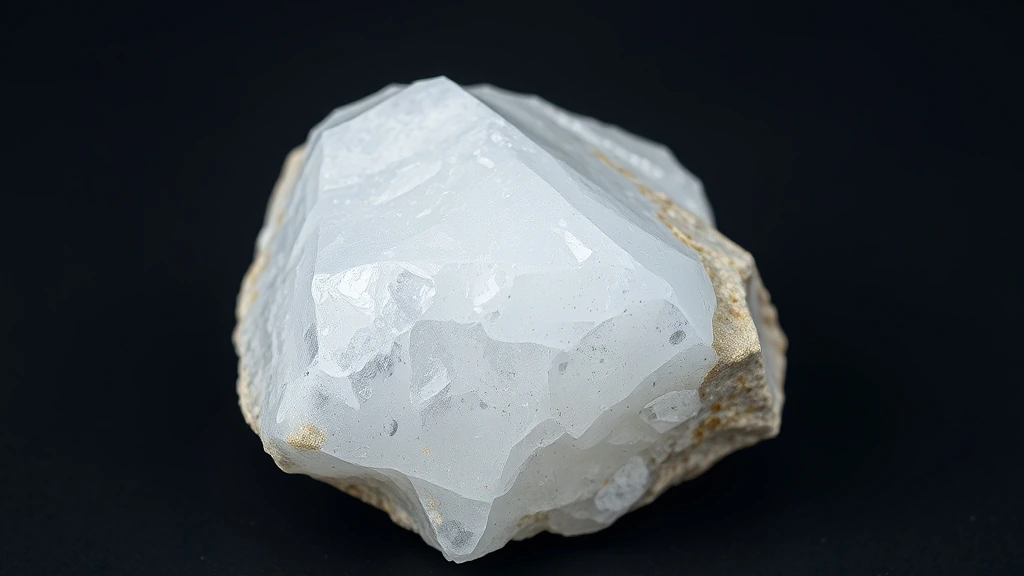
Leucosapphire belongs to the Oxides mineral group, specifically the corundum subgroup, which forms under high-temperature metamorphic conditions. It is chemically identical to ruby and blue sapphire, differing only in trace element content. This stone crystallizes in igneous and metamorphic rocks, often alongside other gem-quality corundum varieties. Its geological origin typically involves the alteration of aluminum-rich rocks. Understanding this parent group is essential for accurate mineral identification.
What is Leucosapphire (white Sapphire) Gemstone? Geological Overview & Definition
Leucosapphire is defined as a colorless corundum gemstone, distinguished by its lack of visible color due to minimal chromophore presence. It forms in metamorphic schists and marbles where aluminum-rich minerals undergo recrystallization. The term “leuco” derives from Greek, meaning white, reflecting its pristine, transparent appearance. This variety is highly prized for its brilliance and durability in jewelry settings.
Geologically, it often coexists with other sapphire colors in the same deposit, indicating similar formation environments. The stone’s clarity depends on the purity of the source material and the absence of inclusions. Metamorphic pressure drives the crystallization process, aligning the atomic structure into a stable lattice. This geological context helps gemologists trace the origin of specific leucosapphire specimens.
Leucosapphire (white Sapphire) Gemstone Chemical Composition & Crystallographic Properties
Leucosapphire crystallizes in the Trigonal system, forming hexagonal bipyramidal or prismatic crystals. Its lattice structure is based on a hexagonal close-packed arrangement of oxygen anions. Aluminum cations occupy two-thirds of the octahedral sites within this structure. This specific arrangement grants the stone its exceptional mechanical strength and stability.
The chemical formula is primarily Al₂O₃, with trace amounts of iron and titanium. These minor elements may be present but do not significantly alter the color. Cation substitution is minimal, preserving the stoichiometric balance of the crystal. The absence of strong chromophores ensures the stone remains visually colorless.
Leucosapphire exhibits high acid sensitivity resistance, as corundum is chemically inert to most acids. It does not dissolve in standard laboratory acids, making it durable for industrial and jewelry use. Thermal behavior is stable, with no significant phase changes at standard jewelry temperatures. This thermal stability ensures the gem retains its optical properties under heat.
The refractive index ranges from 1.762 to 1.778, contributing to its high brilliance. This optical property is a direct result of its dense crystal lattice. The stone’s density ranges from 3.98 to 4.06 g/cm³, aiding in identification. These physical constants are critical for distinguishing leucosapphire from other white gemstones.
| Property | Specification |
|---|---|
| Mineral Group | Oxides (Corundum Group) |
| Chemical Formula | Al₂O₃:Fe,Ti (Aluminum Oxide with Iron/Titanium traces) |
| Mohs Hardness | 9.0 |
| Crystal System | Trigonal (Hexagonal bipyramidal or prismatic corundum) |
| Specific Gravity (Density) | 3.98 – 4.06 |
| Refractive Index | 1.762 – 1.778 |
| Color & Optical Properties | Natural Leucosapphire (white Sapphire) Gemstone color spectrum and optical dispersion |
| Primary Mining Localities | Sri Lanka, Madagascar, Myanmar, Australia, Kashmir |
| Water & Chemical Resistance | Very High (Fully resistant to water and standard detergents) |
| Chakra Alignment (Traditional) | Throat Chakra and Third Eye Chakra |
| Zodiac Affinity (Traditional) | Virgo, Libra, Sagittarius |
| Symbolic Meaning (Traditional) | Wisdom, royalty, fidelity, mental focus, and spiritual clarity |
Leucosapphire (white Sapphire) Gemstone Varieties & Color Spectrum
Kashmir White Sapphire
Formed in high‑grade metamorphic schists of the Kashmir Himalayas, this variety crystallizes under temperatures of 800‑900 °C and pressures of 5–6 kbar. It is prized for its milky‑white body tone and faint silvery sheen caused by microscopic rutile needles. Inclusions are typically silk‑like, and the stones are exceedingly rare, fetching premium prices on the global market.
Sri Lankan “Ceylon” White Sapphire
Developed in the gem‑bearing alluvial gravels of the Ratnapura district, Ceylon white sapphires grow in granite‑derived pegmatites rich in aluminum and trace titanium. Their hallmark is a crystalline clarity with occasional black spinel or rutile inclusions that create a subtle “star” effect. Although more abundant than Kashmir, high‑quality stones with excellent cut are still limited, making them a coveted choice for fine jewelry.
Australian “Murray River” White Sapphire
Extracted from alluvial deposits along the Murray River, these sapphires originate in basaltic volcanic rocks that have undergone extensive weathering. They display a bright, almost glassy luster and are often free of visible inclusions, giving a clean, icy appearance. The relatively recent discovery (1990s) and modest supply have positioned Murray River whites as a cost‑effective alternative for designers seeking large, flawless stones.
Madagascar “Ilakaka” White Sapphire
Ilakaka’s leucosapphires form in lateritic soils overlying metamorphic schists, where aluminum‑rich fluids precipitate corundum crystals. The stones are distinguished by a soft, opalescent glow and occasional color zoning from faint yellowish hues near the surface. While the region produces a high volume of sapphires overall, true white specimens of gem quality remain scarce, enhancing their desirability among collectors.
Burmese “Mogok” White Sapphire
Mogok’s famed “royal” sapphires emerge from granite‑derived metamorphic veins that contain abundant iron and titanium, imparting a subtle cream‑white tint. Characteristic needle‑like rutile inclusions create a delicate asterism when cut en cabochon. The combination of historic mining heritage and limited high‑grade material makes Mogok whites a symbol of timeless elegance.
Synthetic “Czochralski” White Sapphire
Produced in laboratory furnaces using the Czochralski pulling method, these stones replicate natural leucosapphire’s crystal lattice with precise control over trace elements. They exhibit perfect optical homogeneity and are virtually inclusion‑free, offering a consistent high refractive index across the batch. Though not a natural variety, synthetic whites dominate the market for industrial optics and affordable jewelry, underscoring the importance of distinguishing them from their natural counterparts.
Where is Leucosapphire (white Sapphire) Gemstone Found? Geological Mining & Extraction
Leucosapphires are chiefly hosted in aluminum‑rich metamorphic rocks such as schists, gneisses, and granitic pegmatites where corundum crystals grow from hydrothermal fluids bearing iron and titanium. In these settings, the gemstones are recovered either from primary vein deposits or from secondary alluvial concentrations that have been concentrated by river action over millions of years.
Major mining districts include Kashmir (India/Pakistan), Ratnapura (Sri Lanka), Mogok (Myanmar), Ilakaka (Madagascar), and the Murray River basin (Australia). Modern extraction employs a blend of artisanal hand‑picking in river gravels and mechanized open‑pit mining in hard‑rock veins, followed by careful sorting to separate the translucent whites from darker corundum and associated minerals.
Historical Significance & Cultural Lore of Leucosapphire (white Sapphire) Gemstone
White sapphires have adorned the crowns of ancient Persian and Roman royalty, valued for their association with wisdom and purity. Archaeological finds include a 2nd‑century BC Persian diadem set with leucosapphires and a Roman cameo where the stone’s high refractive index enhanced the luminous effect of the carving.
In Eastern traditions, the stone was believed to balance the Throat and Third Eye Chakras, fostering mental focus and spiritual clarity; it appears in medieval Turkish poetry as a symbol of royal fidelity. Across zodiacal lore, Virgo, Libra, and Sagittarius are said to receive the stone’s protective energy, reinforcing its enduring mythic status.
Modern Uses & Jewelry Applications of Leucosiamond (white Sapphire) Gemstone
Leucosapphire is prized for its high refractive index and near‑colorless brilliance, making it a versatile choice for both classic and contemporary designs. Skilled lapidaries cut the stone into brilliant‑faceted gems for engagement rings, while cabochon cuts highlight its silky luster in pendants and earrings. Ornamental carving also showcases its durability in intricate cameos and decorative inlays.
- Brilliant‑cut round, oval, and cushion shapes for fine jewelry
- Smooth cabochon slabs for brooches, tiaras, and watch dials
- Carved cameos, intarsia, and architectural accents
Carat, Quality Grades & Value Factors of Leucosapphire (white Sapphire) Gemstone
The market values leucosapphire primarily through the 4Cs—Color, Clarity, Cut, and Carat weight. Because the stone is essentially colorless, the slightest hint of blue or gray can enhance its rarity, while a high clarity grade (few inclusions) boosts sparkle. Expert cutting maximizes light return, and larger carats command exponential price jumps, especially for stones exceeding 2 ct.
Durability is a key selling point: with a Mohs hardness of 9, leucosapphire resists scratches and suits daily‑wear pieces such as rings and bracelets. Grading labs apply the same criteria used for traditional corundum, assigning a “VS” (Very Slightly Included) or “IF” (Internally Flawless) designation based on microscopic examination. Provenance, treatment disclosure, and the stone’s specific gravity (≈3.98–4.06) also influence final valuation.
Zodiac and Astrological Lore of Leucosapphire (white Sapphire) Gemstone
In Western astrology, leucosapphire aligns with Virgo, Libra, and Sagittarius, channels that are said to sharpen mental acuity and promote balanced judgment. Wearers often place the gem in the Throat Chakra to aid clear communication and in the Third Eye Chakra for heightened intuition and spiritual insight.
Historically, white sapphire has been a symbol of royalty and fidelity across cultures, from ancient Persian courts to Victorian England, where it served as a “cheaper” alternative to diamond while retaining regal brilliance. Its esoteric reputation for wisdom and spiritual clarity continues to make it a favored talisman for scholars, artists, and seekers of inner truth.
How to Identify Real vs. Fake Leucosapphire (white Sapphire) Gemstone
Artificial imitations of leucosapphire include glass, cubic zirconia, and low‑grade synthetic corundum that may be dyed to mimic a milky appearance. These substitutes often lack the stone’s characteristic high refractive index and specific gravity, and they can exhibit bubbles, uneven coloration, or a greasy feel. Recognizing these clues helps prevent costly misidentifications.
Practical At-Home Authenticity Tests
- Temperature Test (Thermal Feel): Real leucosapphire feels cool to the touch and retains that coolness longer than glass or cubic zirconia, which quickly warm to skin temperature.
- Specific Gravity & Weight Test: Weigh the stone on a precise scale; a genuine leucosapphire (SG ≈ 3.98–4.06) will be noticeably heavier than glass of the same size.
- Scratch & Hardness Test (Mohs Comparison): Using a steel file (Mohs ≈ 5.5), gently try to scratch an inconspicuous edge; leucosapphire will not be marked, whereas softer imitations will show visible scratches.
- Microscopic & Loupe Inspection (Internal Inclusions): Examine under 10×–30× magnification; natural leucosapphire displays tiny rutile needles or feather‑like inclusions, while synthetic or glass stones often appear completely flawless or show bubbles.
Leucosapphire (white Sapphire) Gemstone Valuation Factors, Grading & Pricing
Color Saturation is the foremost driver of price for leucosapphire. A truly white stone exhibits a faint, even hue that reads as pure ice rather than a grayish or yellowish cast. Grading labs assess tone uniformity across the girdle and evaluate the subtle luster that distinguishes high‑grade material from lower‑quality equivalents.
Carat Weight influences value exponentially, but only when paired with excellent facet symmetry and minimal inclusions. Larger stones (above 2 ct) are rare, and their market price spikes if the crown and pavilion are precisely aligned, allowing optimal light return. Visible matrix or cloud‑type inclusions can downgrade a gem dramatically, even if the carat count is high.
Geographical Provenance Premium adds a nuanced layer to pricing, with sapphires from Kashmir, Sri Lanka, and Myanmar often commanding a 15‑30 % premium over comparable stones from Brazil or Madagascar. Wholesale trends show steady demand, while retail prices fluctuate with fashion cycles that favor minimalist white jewelry. Seasonal spikes typically occur in the spring bridal market, when leucosapphire is paired with diamonds for a “colorless” aesthetic.
How to Clean and Care for Leucosapphire (white Sapphire) Gemstone
Clean with warm soapy water and a soft brush. Gently work the brush along each facet to dislodge dust and oils, then rinse with lukewarm water and pat dry with a lint‑free cloth. Ultrasonic cleaners should generally be avoided or used with extreme caution, as high-frequency vibrations can cause microscopic fissures. Avoid harsh chemicals, acids, or abrasive pads, as they can erode the surface polish and compromise the stone’s natural luster.
Cleansing and Recharging Leucosapphire (white Sapphire) Gemstone (Energetic Care)
For energetic renewal, place the stone on a smudge‑purified selenite plate and allow it to rest under the light of a full moon for several hours; the mineral’s low solubility ensures no physical alteration while the moonlight clears residual vibrations. Alternatively, pass the gem through a gentle stream of incense smoke, rotating it slowly to expose all faces to the purifying vapor without introducing moisture.
Another safe method is to visualize a white light enveloping the sapphire while it rests on a clean, non‑metallic surface such as a wooden tray. This mental recharging respects the stone’s crystalline structure and reinforces its esoteric qualities of wisdom and spiritual clarity.
Frequently Asked Questions About Leucosapphire (white Sapphire) Gemstone
Is leucosapphire safe to wear in the shower?
Yes, it is fully resistant to water and standard detergents. Leucosapphire possesses a Mohs hardness of 9.0, making it exceptionally durable against daily moisture. You can safely wear it while bathing without risking structural damage or chemical degradation.
Can I use an ultrasonic cleaner on white sapphire?
Ultrasonic cleaners should generally be avoided or used with extreme caution, as high-frequency vibrations can cause microscopic fissures. For routine maintenance, we recommend using warm soapy water and a soft brush instead. This gentle approach preserves the stone’s luster while effectively removing accumulated oils and dirt.
What is the chemical composition of leucosapphire?
It consists of aluminum oxide with trace iron and titanium. The primary formula is Al₂O₃, identical to other sapphire varieties. These specific trace elements influence its optical properties and subtle color variations within the white spectrum.
Which zodiac signs are aligned with leucosapphire?
Virgo, Libra, and Sagittarius are the primary aligned signs. These astrological associations reflect the stone’s energy of mental focus and clarity. Wearing leucosapphire may enhance the inherent traits of these signs, promoting balance and intellectual sharpness.
Which chakras does white sapphire activate?
It primarily activates the Throat Chakra and Third Eye Chakra. This alignment supports spiritual clarity and effective communication. By balancing these energy centers, the stone helps users express their truth with confidence and perceive deeper insights.
How hard is leucosapphire on the Mohs scale?
It ranks at 9.0 on the Mohs hardness scale. This places it just below diamond, making it highly resistant to scratching. Its trigonal crystal system contributes to this exceptional durability, ensuring it withstands daily wear in jewelry settings.
What is the refractive index of white sapphire?
The refractive index ranges from 1.762 to 1.778. This high value indicates strong light dispersion and brilliance. Combined with its density, this optical property allows leucosapphire to exhibit a sparkling, glassy luster under various lighting conditions.
Does leucosapphire have any specific esoteric meanings?
It symbolizes wisdom, royalty, fidelity, and spiritual clarity. These attributes make it a powerful stone for mental focus and personal integrity. Many wearers use it to enhance their decision-making processes and maintain a calm, centered mindset.