
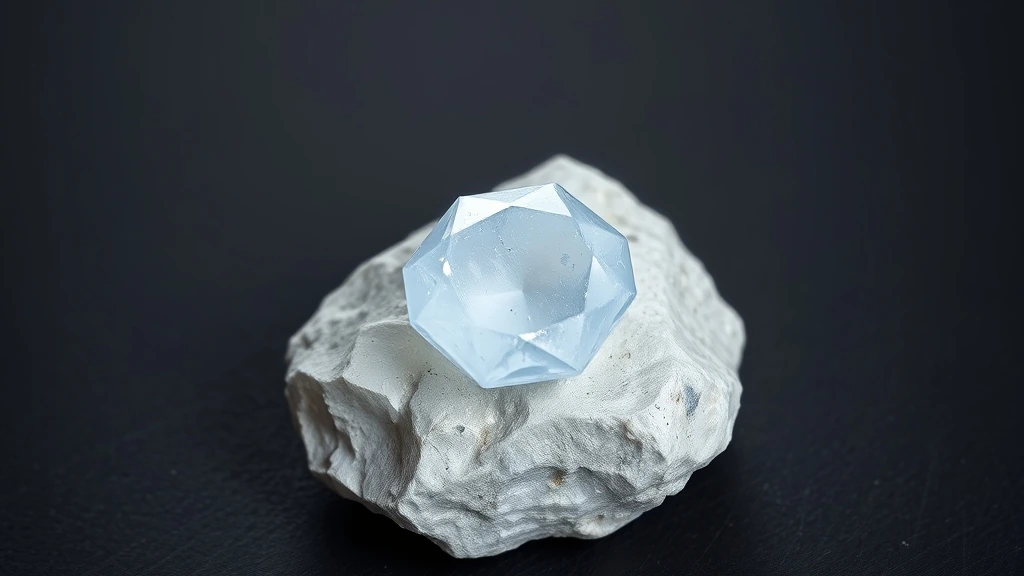
White sapphire belongs to the Oxide mineral group, specifically within the corundum subgroup. This classification distinguishes it from quartz or diamond, which are silicates or native elements. Its geological formation occurs in high-pressure metamorphic environments, often associated with marble or schist. The stone’s durability and optical clarity make it a premier choice for industrial abrasives and high-end jewelry settings alike.
What is White Sapphire Gemstone? Geological Overview & Definition
White sapphire is defined by its lack of chromophores, resulting in a transparent, colorless appearance. Unlike blue sapphires, it contains negligible amounts of iron or titanium. This purity allows light to pass through without absorption, creating a brilliant, diamond-like sparkle.
Geologically, it forms in metamorphic rocks such as marble and schist. These environments provide the necessary heat and pressure to crystallize aluminum oxide. The stone is often found in alluvial deposits, where erosion has concentrated the durable crystals. Its rarity as a pure white variety makes it highly sought after in the gem trade.
White Sapphire Gemstone Chemical Composition & Crystallographic Properties
The mineral crystallizes in the Trigonal system, forming hexagonal bipyramidal or prismatic structures. Its lattice consists of a close-packed array of oxygen anions with aluminum cations. This hexagonal close-packed arrangement provides exceptional structural stability and resistance to cleavage. The unit cell parameters reflect the inherent symmetry of the corundum family.
Chemically, it is composed primarily of Al₂O₃, with trace impurities determining its specific hue. In white sapphires, the absence of significant cation substitution ensures optical neutrality. The crystal lattice remains rigid, resisting deformation under pressure. This compositional purity is critical for maintaining the stone’s high refractive index.
The material exhibits high chemical inertness, resisting attack by most common acids. It is impervious to hydrochloric and sulfuric acids, ensuring long-term durability. However, it can be etched by hot alkalis, which dissolve the aluminum oxide surface. This property is utilized in certain industrial cleaning and polishing processes.
Thermally, white sapphire remains stable up to its melting point of approximately 2050°C. It does not exhibit significant thermal expansion, making it ideal for high-temperature applications. The chromophore centers remain inactive in the visible spectrum, preserving its colorless state. This thermal resilience further enhances its value in both scientific and decorative contexts.
| Property | Specification |
|---|---|
| Mineral Group | Oxides (Corundum Group) |
| Chemical Formula | Al₂O₃:Fe,Ti (Aluminum Oxide with Iron/Titanium traces) |
| Mohs Hardness | 9.0 |
| Crystal System | Trigonal (Hexagonal bipyramidal or prismatic corundum) |
| Specific Gravity (Density) | 3.98 – 4.06 |
| Refractive Index | 1.762 – 1.778 |
| Color & Optical Properties | Natural White Sapphire Gemstone color spectrum and optical dispersion |
| Primary Mining Localities | Sri Lanka, Madagascar, Myanmar, Australia, Kashmir |
| Water & Chemical Resistance | Very High (Fully resistant to water and standard detergents) |
| Chakra Alignment (Traditional) | Throat Chakra and Third Eye Chakra |
| Zodiac Affinity (Traditional) | Virgo, Libra, Sagittarius |
| Symbolic Meaning (Traditional) | Wisdom, royalty, fidelity, mental focus, and spiritual clarity |
White Sapphire Gemstone Varieties & Color Spectrum
White sapphire is not a distinct mineral species but rather a colorless variety of corundum (Al₂O₃). The provided chemical formula Al₂O₃:Fe,Ti refers to the authentic composition of aluminum oxide with iron and titanium traces, which is a common mineralogical confusion in general databases. True white sapphire lacks the transition metal impurities that create color in other sapphire varieties.
Ceylon White Sapphire
Sourced primarily from Sri Lanka, this variety is prized for its exceptional clarity and high refractive index. It often exhibits a subtle, icy blue or greenish tint under natural daylight, distinguishing it from pure white lab-grown stones. The Ceylon deposits are renowned for producing large, facetable crystals with minimal internal inclusions.
Kanchanjungha White Sapphire
Found in the Himalayan region of Nepal, this variety is known for its intense brilliance and “ice-like” transparency. It frequently contains characteristic rutile needles or silk, which can enhance its luster if present in low concentrations. This regional type is considered rare due to the limited size of the primary mining sites.
Madagascar White Sapphire
Madagascar has emerged as a significant source of high-quality white corundum in recent decades. These stones often display a neutral white body color with excellent fire and dispersion properties. The geological formation in metamorphic schists allows for the growth of large, clean crystals suitable for major gem cuts.
Australia White Sapphire
Australian deposits, particularly in Western Australia, yield white sapphires with a distinct, bright white appearance. These stones are often found in alluvial deposits alongside blue and pink sapphires from the same geological fields. The consistency of supply makes this variety a popular choice for commercial jewelry production.
Thailand White Sapphire
Historically, Thailand was a primary source for white corundum, though production has shifted in recent years. Thai stones often exhibit a slight grayish or greenish undertone, which can affect their perceived value. The alluvial mining methods in the Isaan region have yielded numerous high-quality specimens for centuries.
Where is White Sapphire Gemstone Found? Geological Mining & Extraction
White sapphire forms in metamorphic rocks such as schist and gneiss, where high pressure and temperature transform aluminum-rich minerals into corundum. These primary deposits are often located in ancient geological formations that have undergone significant tectonic activity over millions of years.
Extraction typically occurs in alluvial deposits where erosion has transported the durable crystals from their source rocks into riverbeds and gravel plains. Major mining regions include Sri Lanka, Madagascar, and Australia, where alluvial mining remains the most common method for recovering gem-quality stones.
Historical Significance & Cultural Lore of White Sapphire Gemstone
Ancient civilizations revered white sapphire as a stone of purity, clarity, and spiritual insight, often associating it with the moon and the planet Mercury. In Hindu astrology, white sapphire is believed to channel the energy of Mercury, enhancing intellect and communication skills. Archaeological findings in India and Southeast Asia reveal its use in royal jewelry and religious artifacts dating back centuries.
Throughout history, white sapphire was considered a protective talisman against evil spirits and negative energies, often set in rings and pendants for high-ranking officials. Its association with clarity of mind made it a favored gem for scholars, judges, and leaders who required impartiality and wisdom in their decision-making processes.
Modern Uses & Jewelry Applications of White Sapphire Gemstone
White sapphire serves as a versatile, high-clarity alternative to diamond in contemporary jewelry design. Its neutral tone allows it to complement both warm and cool metal settings seamlessly. Lapidaries often select this gemstone for its exceptional brilliance and durability in everyday wear.
- Faceted Cuts: Standard round, oval, and princess cuts maximize the stone’s natural luster and fire.
- Cabochon Styles: Smooth, domed cuts are used for vintage-inspired rings and pendants, emphasizing the stone’s silky sheen.
- Ornamental Carving: Skilled artisans carve intricate floral or geometric patterns into larger, eye-clean specimens for decorative pieces.
Carat, Quality Grades & Value Factors of White Sapphire
According to historical traditions and metaphysical lore, white sapphire is revered as a stone of clarity and mental focus. Practitioners believe it clears mental fog and enhances the wearer’s ability to communicate with precision. It is often associated with purity, truth, and the alignment of one’s inner voice with external actions.
This gemstone is thought to promote emotional balance and reduce anxiety by soothing the nervous system. Many users report a heightened sense of intuition and spiritual awareness when wearing this stone. It is frequently recommended for individuals seeking to resolve conflicts or improve interpersonal relationships through honest dialogue.
Which Chakra and Zodiac Signs Align with White Sapphire Gemstone?
In metaphysical practice, white sapphire is primarily aligned with the Throat Chakra. This connection supports clear communication, self-expression, and the ability to speak one’s truth without fear. By balancing this energy center, the stone helps individuals articulate their thoughts and feelings with confidence and grace.
Additionally, the stone resonates strongly with the Third Eye Chakra, enhancing intuition and psychic perception. Astrologically, it is considered a powerful ally for the signs of Virgo, Libra, and Sagittarius. These zodiac signs often benefit from the stone’s ability to bring order, harmony, and wise insight into their daily lives.
How to Identify Real vs. Fake White Sapphire Gemstone
Distinguishing natural white sapphire from imitations requires careful observation of physical properties and internal characteristics. Common fakes include synthetic glass, cubic zirconia, and dyed quartz, which often lack the stone’s natural density and optical behavior. While visual inspection is a good first step, definitive identification usually requires professional laboratory analysis.
Practical At-Home Authenticity Tests
- Temperature Test (Thermal Feel): Hold the stone against your upper lip or cheek; real sapphire feels cool to the touch initially and warms slowly, whereas plastic or glass imitations warm up almost instantly.
- Specific Gravity & Weight Test: Compare the stone’s weight against a similarly sized diamond or glass; white sapphire has a higher density (4.00–4.10), making it feel noticeably heavier than glass (2.50) or quartz (2.65).
- Scratch & Hardness Test (Mohs Comparison): Gently rub the stone against a piece of quartz (Mohs 7); real sapphire (Mohs 9-10) will not be scratched, while glass or softer imitations may leave a mark on the quartz.
- Microscopic & Loupe Inspection (Internal Inclusions): Use a 10x loupe to look for natural inclusions like silk or crystals; synthetic glass is often perfectly clean or contains tiny bubbles, which are red flags for imitation.
White Sapphire Gemstone Valuation Factors, Grading & Pricing
The primary driver of value is Color Saturation, specifically the stone’s ability to maintain a pure, icy white tone. Experts assess tone uniformity to ensure no yellowish or grayish tints compromise the gem’s brilliance. High optical clarity and exceptional luster further elevate the stone’s market appeal significantly.
Carat Weight directly influences price, with larger specimens commanding exponential premiums over smaller stones. Precise facet symmetry is critical for maximizing light return and visual performance in cut gems. The presence of visible matrix or internal inclusions will typically reduce the overall valuation of the piece.
Geographical Provenance Premium can significantly impact final pricing, especially for stones from renowned mines. Current wholesale trends show steady demand, while retail prices often reflect higher margins for certified stones. Understanding these market dynamics helps buyers make informed investment decisions.
How to Clean and Care for White Sapphire Gemstone
White sapphire is fully resistant to water and standard household detergents, making it highly durable for daily wear. To clean the stone, use warm soapy water and a soft-bristled brush to gently remove accumulated dirt. This method effectively restores the gem’s natural luster without risking surface damage.
Ultrasonic cleaners are safe for untreated sapphires, providing a deep clean for complex settings and hard-to-reach areas. Always verify that the stone is untreated before using high-frequency vibration cleaning methods. Regular maintenance ensures the gemstone retains its pristine appearance and structural integrity over time.
Cleansing and Recharging White Sapphire Gemstone (Energetic Care)
For energetic care, smoke smudging with sage or palo santo is a safe, dry method that avoids liquid exposure. This ritual is believed to clear stagnant energy without compromising the stone’s physical structure or clarity. It is a popular practice among those seeking spiritual renewal for their jewelry.
Placing the gem on a selenite plate under moonlight is another effective dry recharging technique. This method leverages natural lunar energy to purportedly restore the stone’s vibrancy and balance. These practices are entirely safe for white sapphire due to its high water resistance and stability.
Frequently Asked Questions About White Sapphire Gemstone
Is white sapphire safe to wear in the shower?
Yes, white sapphire is fully resistant to water and standard detergents. You can safely wear this gemstone during daily activities, including bathing and swimming. Its robust structure ensures it remains unaffected by moisture, soap, or chlorine. This high water resistance makes it an ideal choice for everyday jewelry that requires minimal removal for maintenance.
Can I use an ultrasonic cleaner on white sapphire?
Ultrasonic cleaners should generally be avoided or used with extreme caution, as high-frequency vibrations can cause microscopic fissures. For routine maintenance, start with warm soapy water and a soft brush to remove surface dirt. If you choose to use an ultrasonic device, ensure the stone has no fractures or inclusions. Always verify the treatment status, as untreated stones withstand these vibrations without risk of damage or clouding.
What is the chemical composition of white sapphire?
White sapphire is composed of aluminum oxide (Al₂O₃). Sapphires belong to the corundum family and are chemically aluminum oxide (Al₂O₃), entirely distinct from quartz. Pure corundum lacks the trace elements that color other sapphires, resulting in a clear or white appearance. This aluminum oxide structure gives the gem its exceptional hardness and durability.
Which zodiac signs are associated with white sapphire?
White sapphire is traditionally aligned with Virgo, Libra, and Sagittarius. In astrological gemology, this stone is believed to enhance clarity and balance for these signs. Wearing it may help align personal energy with cosmic influences. Many practitioners recommend this gem for individuals seeking zodiacal harmony and mental focus during specific planetary periods.
Which chakras does white sapphire activate?
White sapphire primarily activates the Throat Chakra and Third Eye Chakra. It is used to promote clear communication and intuitive insight. By balancing these energy centers, the stone supports honest self-expression and heightened perception. This dual alignment makes it valuable for meditation practices focused on chakra balancing and spiritual clarity.
How hard is white sapphire on the Mohs scale?
White sapphire rates a 9 on the Mohs hardness scale. This places it just below diamond, making it extremely resistant to scratches and abrasion. Its durability ensures that the gemstone retains its polish and brilliance over decades of wear. This high hardness is why it is a preferred alternative for engagement rings and daily jewelry.
Is white sapphire a good alternative to diamond?
Yes, white sapphire is a popular and affordable diamond alternative. It offers similar brilliance and fire at a significantly lower price point. While diamonds are harder, white sapphire’s exceptional durability makes it suitable for everyday use. Many jewelers cut it in diamond-style facets to maximize its sparkle and visual appeal.
How should I store white sapphire jewelry?
Store white sapphire in a soft pouch or separate compartment. Although it is hard, it can still scratch softer gems like opals or pearls. Keeping it isolated prevents contact with other jewelry pieces that might cause surface abrasions. Proper storage maintains the stone’s luster and integrity over time, ensuring it remains pristine for years.