
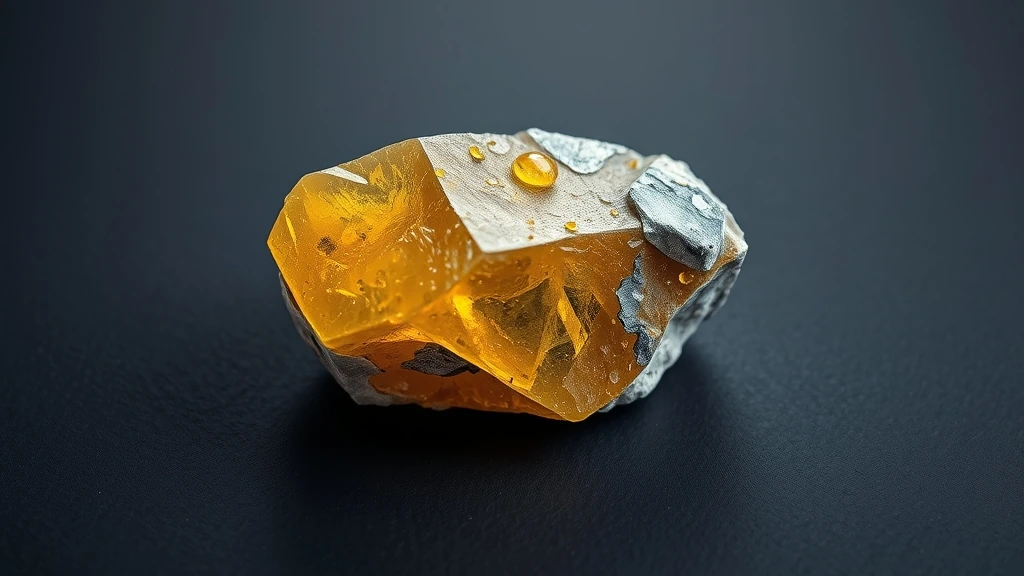
Yellow sapphire belongs to the Oxides mineral group, specifically the corundum species. This geological classification places it alongside ruby and blue sapphire, sharing identical structural frameworks. The stone forms within metamorphic and igneous rock environments, where high pressure and temperature facilitate crystal growth. Its presence in these specific geological settings ensures the stability required for large, gem-quality crystals to develop over millions of years.
What is Yellow Sapphire? Geological Overview & Definition
Yellow sapphire is a naturally occurring gemstone derived from the corundum mineral family. It is distinguished by its distinct yellow hue, which ranges from pale lemon to deep golden tones. This coloration results from specific trace element substitutions within the crystal lattice during formation. In comparative mineralogical collections, practitioners and geologists frequently study Spessartine Garnet alongside this crystal to appreciate their subtle energetic and structural differences.
The stone is prized for its exceptional durability and luster, ranking just below diamond in hardness. It is primarily found in alluvial deposits and metamorphic schists across regions like Sri Lanka and Madagascar. These geological origins contribute to the stone’s clarity and vibrant color saturation.
Yellow Sapphire Chemical Composition & Crystallographic Properties
The crystal system of yellow sapphire is strictly Trigonal, manifesting as hexagonal bipyramidal or prismatic forms. This structure dictates the stone’s cleavage properties and optical behavior under magnification. The lattice is composed of oxygen ions arranged in a hexagonal close-packed configuration. Unlike the trigonal lattice of yellow sapphire, the earthy Mookaite Jasper crystallizes in the monoclinic system, offering a contrasting mineral structure.
The primary chemical composition is Al₂O₃, where aluminum cations occupy specific sites within the lattice. Trace amounts of iron and titanium substitute for aluminum, creating the characteristic yellow color. These chromophores absorb specific wavelengths of light, reflecting yellow to the observer. In comparative mineralogical collections, practitioners and geologists frequently study Clear Quartz Rock Crystal alongside this crystal to appreciate their subtle energetic and structural differences.
The gemstone exhibits high chemical stability, showing negligible sensitivity to common acids or alkalis. This inertness makes it ideal for jewelry that requires long-term durability and resistance to environmental wear. Its thermal conductivity is moderate, allowing it to retain heat without structural degradation.
Under high temperatures, the crystal lattice remains stable, though extreme heat can alter color centers. Proper thermal treatment can enhance color intensity without compromising the refractive index of 1.762 – 1.778. This thermal resilience is a key factor in its widespread use in high-end gemology.
| Property | Specification |
|---|---|
| Mineral Group | Oxides (Corundum Group) |
| Chemical Formula | Al₂O₃:Fe,Ti (Aluminum Oxide with Iron/Titanium traces) |
| Mohs Hardness | 9.0 |
| Crystal System | Trigonal (Hexagonal bipyramidal or prismatic corundum) |
| Specific Gravity (Density) | 3.98 – 4.06 |
| Refractive Index | 1.762 – 1.778 |
| Color & Optical Properties | Natural Yellow Sapphire color spectrum and optical dispersion |
| Primary Mining Localities | Sri Lanka, Madagascar, Myanmar, Australia, Kashmir |
| Water & Chemical Resistance | Very High (Fully resistant to water and standard detergents) |
| Chakra Alignment (Traditional) | Throat Chakra and Third Eye Chakra |
| Zodiac Affinity (Traditional) | Virgo, Libra, Sagittarius |
| Symbolic Meaning (Traditional) | Wisdom, royalty, fidelity, mental focus, and spiritual clarity |
Yellow Sapphire Varieties & Color Spectrum
The chromatic diversity of yellow sapphires stems primarily from varying concentrations of iron impurities within the corundum lattice. These trace elements interact with light to produce hues ranging from pale lemon to intense golden yellow. Titanium often coexists with iron, subtly influencing the stone’s saturation and secondary color tones.
Ceylon Yellow Sapphire
Sri Lankan sapphires are renowned for their exceptional clarity and vibrant, pure yellow hues. These stones typically form in alluvial deposits, resulting in fewer internal inclusions than their continental counterparts. The Ceylon variety commands a premium in the gem market due to its high refractive index and brilliance.
Kashmir Yellow Sapphire
Historically, Kashmir yielded rare yellow corundums with a distinctive peachy or golden overtone. These stones often exhibit a soft, velvety appearance caused by microscopic silk inclusions. The Kashmir origin is now extremely rare, making surviving specimens highly sought-after collector’s items.
Thai Yellow Sapphire
Thailand produces abundant yellow sapphires, often characterized by a deeper, olive-tinged yellow hue. These stones frequently contain visible rutile needles or other mineral inclusions, which can reduce transparency. Despite lower clarity, their rich color saturation makes them popular for affordable jewelry.
Burmese Yellow Sapphire
Myanmar, or Burma, contributes significant quantities of yellow corundum to the global supply chain. These gems often display a warm, honeyed yellow color with excellent Mohs hardness durability. The Burmese variety is prized for its balanced tone and resistance to thermal treatment.
Australian Yellow Sapphire
Australian deposits yield yellow sapphires that often possess a unique, slightly greenish-yellow tint. These stones are typically found in laterite soils, where weathering processes concentrate the corundum crystals. The Australian origin is recognized for its distinct chromatic signature and robust physical structure.
Where is Yellow Sapphire Found? Geological Mining & Extraction
Yellow sapphires primarily form in metamorphic rocks and volcanic basalt, where high pressure and temperature facilitate corundum crystallization. Alluvial deposits, created by the erosion of primary sources, are the most common sites for commercial extraction. These secondary deposits allow for easier recovery of well-formed, durable crystals.
Major mining regions include Sri Lanka, Thailand, Myanmar, and Australia, each offering distinct geological characteristics. Pegmatite and basaltic dykes serve as the primary host rocks for these valuable minerals. Modern extraction methods combine traditional panning with advanced mechanical sorting to maximize yield and quality.
Historical Significance & Cultural Lore of Yellow Sapphire
Ancient civilizations revered yellow sapphires as symbols of wisdom, royalty, and spiritual clarity. In Hindu tradition, the stone is associated with the Jupiter planet, believed to enhance mental focus and fidelity. Archaeological artifacts from the Indus Valley and ancient Persia confirm its long-standing cultural importance.
European royalty frequently incorporated yellow sapphires into crowns and ceremonial regalia during the medieval period. The gem’s association with the Throat Chakra and Third Eye Chakra persists in modern esoteric practices. This enduring legacy underscores the stone’s timeless appeal across diverse cultural contexts.
Modern Uses & Jewelry Applications of Yellow Sapphire
Yellow sapphire is most often cut as a brilliant‑cut round or oval to maximize its vivid golden hue and high refractive index. Cabochon styles are favored for Art Deco pieces, where the stone’s uniform color shines without facet fire. Ornamental carving—into pendants, brooches, and intricate intarsia—exploits the gemstone’s hardness, allowing fine detail without chipping.
- Brilliant‑cut rings and earrings showcase maximum sparkle.
- Cabochon pendants emphasize a smooth, glowing surface.
- Faceted bracelets and cocktail rings combine color depth with fire.
- Carved cameos and intarsia panels highlight the stone’s durability for detailed work.
Carat, Quality Grades & Value Factors of Yellow Sapphire
The market evaluates yellow sapphire primarily through the 4Cs: Color, Clarity, Cut, and Carat weight. A saturated, evenly distributed golden tone with minimal gray or brown undertones commands premium prices, while high clarity—free of visible inclusions to the naked eye—adds to rarity. Expert cutters align facets to enhance the stone’s refractive index (1.762‑1.778), producing a lively sparkle that distinguishes top‑grade material.
Durability is a key selling point; at Mohs 9, yellow sapphire resists scratching and is suitable for everyday wear in rings and bracelets. Grading labs such as GIA and IGI apply strict criteria, assigning grades from “Excellent” to “Good” based on cut precision, color saturation, and inclusion visibility. Larger carat weights (over 2 ct) with vivid color and flawless clarity can command exponential price increases, especially when paired with certified provenance.
Zodiac and Astrological Lore of Yellow Sapphire
In Vedic and Western astrology, yellow sapphire is the talisman of Virgo, Libra, and Sagittarius, believed to amplify mental clarity and spiritual insight. The stone is said to align the Throat and Third Eye Chakras, fostering articulate expression and intuitive vision, qualities prized by scholars and leaders alike.
Culturally, the gemstone has adorned royal crowns and temple icons for centuries, symbolizing wisdom, royalty, and fidelity. In Greco-Roman and Near Eastern traditions, it was set in royal signet rings to convey wisdom and authority, while in Indian astrology it is prescribed to balance planetary influences of Jupiter, enhancing prosperity and ethical judgment.
How to Identify Real vs. Fake Yellow Sapphire
Artificial imitations of yellow sapphire include cubic zirconia, glass, and lower‑grade quartz that are often dyed to mimic the stone’s golden hue. Synthetic sapphire, produced by the Verneuil or flux method, shares the same chemical composition but may exhibit characteristic growth patterns visible under magnification. Dyed replicas can lose color when exposed to heat or chemicals, providing a simple clue to their inauthenticity.
Practical At-Home Authenticity Tests
- Temperature Test (Thermal Feel): Genuine sapphire feels cool to the touch and retains that coolness longer than glass or quartz, which quickly equilibrates to ambient temperature.
- Specific Gravity & Weight Test: Using a simple hydrostatic balance, a real yellow sapphire (SG ≈ 3.98‑4.06) will feel noticeably heavier than a glass imitation of the same size.
- Scratch & Hardness Test (Mohs Comparison): A sapphire will not be scratched by a steel file (Mohs ≈ 5.5) or quartz (Mohs ≈ 7); a glass or quartz fake will show micro‑scratches under a jeweler’s loupe.
- Microscopic & Loupe Inspection (Internal Inclusions): Natural sapphires display characteristic needle‑like rutile inclusions or silk, whereas synthetics show curved growth lines and glass lacks any inclusions altogether.
Yellow Sapphire Valuation Factors, Grading & Pricing
The market places the highest premium on color saturation that is vivid, evenly distributed, and free of grayish or brownish undertones. A pure golden hue that remains consistent from pavilion to crown signals superior quality, while strong luster and high optical clarity further enhance perceived value. Gemologists also assess the stone’s transparency, noting any inclusions that may diminish brilliance.
Weight remains a decisive factor, with carat weight influencing price exponentially once a threshold of visual appeal is met. Larger stones command higher per‑carat rates, but only when paired with excellent facet symmetry and adherence to the 4Cs lapidary standards for cut, clarity, color, and carat. Precise symmetry maximizes light return, reinforcing the sapphire’s fire and sparkle.
A geographical provenance premium rewards sapphires from historically celebrated mines such as Kashmir, Sri Lanka, and Madagascar, where unique trace element signatures are prized. Certified gems bearing reputable origin reports often fetch higher bids, reflecting consumer confidence in authenticity and ethical sourcing. Market trends show a steady rise in demand for responsibly mined yellow sapphires, driving price appreciation across the certified segment.
How to Clean and Care for Yellow Sapphire
Cleaning a yellow sapphire is straightforward: use warm soapy water and a soft brush to gently remove surface grime, then rinse with clean water and pat dry with a lint‑free cloth. This method respects the stone’s hardness of 9 on the Mohs scale and its resistance to water and standard detergents. Ultrasonic cleaners should generally be avoided or used with extreme caution, as high-frequency vibrations can cause microscopic fissures. Regular cleaning preserves the stone’s brilliance while maintaining its structural integrity.
Cleansing and Recharging Yellow Sapphire (Energetic Care)
For holistic upkeep, place the sapphire in a bowl of dried herbs such as sage or lavender and allow the aromatic smoke to drift over the stone, gently clearing any energetic stagnation. This dry smudging technique respects the mineral’s physical properties while aligning with traditional metaphysical practices.
Alternatively, expose the gemstone to soft moonlight for several hours or rest it on a clean selenite slab, both of which are considered safe, non‑thermal methods to rejuvenate its vibrational field. These practices avoid heat or intense sunlight, ensuring the crystal lattice remains intact while enhancing the stone’s perceived spiritual clarity.
Frequently Asked Questions About Yellow Sapphire
Is yellow sapphire safe to wear in the shower?
Yes, yellow sapphire is fully resistant to water and standard detergents. The stone’s Mohs hardness of 9.0 ensures it withstands daily moisture exposure without degradation. You can safely wear it during showers, swimming, or handwashing. Avoid only harsh industrial chemicals that might damage metal settings.
How should I clean my yellow sapphire?
Use warm soapy water and a soft-bristled brush for routine maintenance. This method effectively removes oils and dust without scratching the surface. Ultrasonic cleaners are safe for untreated stones, but avoid them if the gem has fractures. Dry thoroughly with a lint-free cloth to prevent water spots.
What is the chemical composition of yellow sapphire?
It consists primarily of aluminum oxide with trace iron impurities. The specific formula is Al₂O₃:Fe,Ti, where iron traces create the characteristic golden hue. Titanium may also be present in minor quantities. This composition distinguishes it from other corundum varieties like blue sapphire.
Which zodiac signs are aligned with yellow sapphire?
Virgo, Libra, and Sagittarius are the primary astrological alignments. Traditional Vedic astrology associates this stone with Jupiter, enhancing wisdom and royalty. Wearing it is believed to bring mental focus and spiritual clarity to these signs. Consult a professional astrologer for personalized recommendations.
Which chakras does yellow sapphire activate?
It resonates strongly with the Throat Chakra and Third Eye Chakra. These energy centers govern communication, truth, and intuitive perception. The stone’s esoteric keywords include wisdom, fidelity, and mental focus. Meditating with the gem can help balance these specific energetic pathways.
Is yellow sapphire durable enough for daily wear?
Yes, its 9.0 Mohs hardness makes it exceptionally durable. It ranks second only to diamond on the hardness scale, resisting scratches from everyday activities. The trigonal crystal system provides structural integrity for rings and bracelets. Proper setting design further protects the stone from impact.
What is the refractive index of yellow sapphire?
The refractive index ranges between 1.762 and 1.778. This high value contributes to the stone’s brilliant brilliance and fire under light. Gemologists use this metric to distinguish sapphire from lookalikes like topaz or spinel. The density typically falls between 3.98 and 4.06.
Can I use an ultrasonic cleaner on my sapphire?
Ultrasonic cleaners should generally be avoided or used with extreme caution, as high-frequency vibrations can cause microscopic fissures. The vibrations effectively dislodge grime from hard-to-reach areas without damaging the crystal lattice. However, avoid this method if the stone has inclusions or fractures. Always inspect the gem before placing it in the cleaner.