
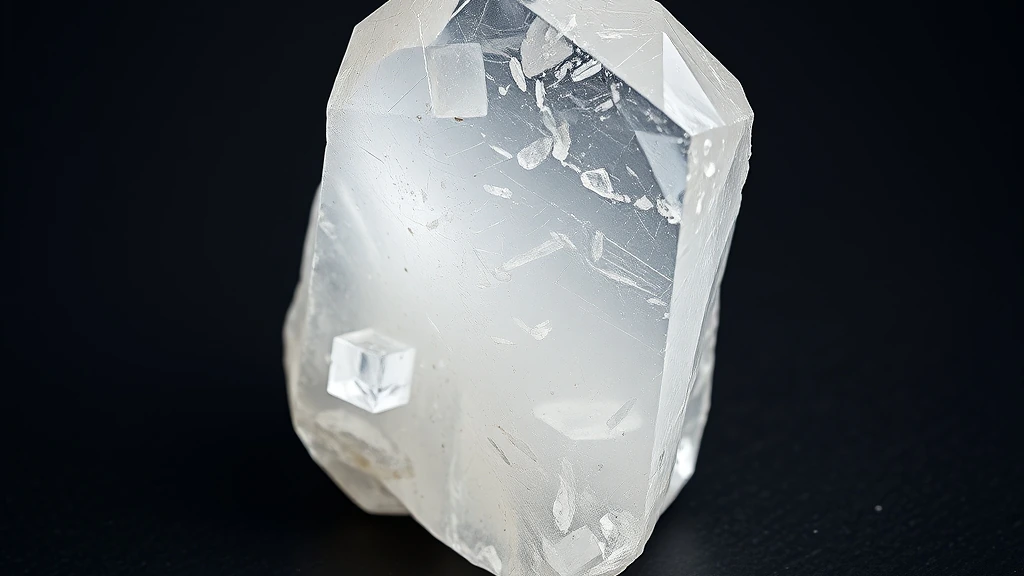
Clear quartz belongs to the vast silicate mineral group, specifically classified as a tectosilicate within the quartz family. This geological classification highlights its framework structure, where silicon and oxygen atoms form a continuous three-dimensional lattice. As a major constituent of the Earth’s crust, it forms under diverse pressure and temperature conditions. Its stability allows it to persist through significant geological cycles, often crystallizing in igneous, metamorphic, and sedimentary environments.
What is Clear Quartz (rock Crystal) Gemstone? Geological Overview & Definition
Clear quartz, often called rock crystal, is defined by its lack of visible inclusions or color tints. It forms when silica-rich fluids cool slowly within open cavities, allowing large, well-formed crystals to develop. This process typically occurs in hydrothermal veins or geodes, where fluid dynamics dictate crystal size and clarity.
The stone serves as a universal baseline for optical and physical property testing in gemology. Its purity distinguishes it from smoky, amethyst, or citrine varieties, which contain specific trace elements. Understanding its formation helps gemologists identify synthetic imitations or heat-treated specimens. Consequently, it remains a critical material for studying crystal growth mechanisms in natural systems.
Clear Quartz (rock Crystal) Gemstone Chemical Composition & Crystallographic Properties
Clear quartz crystallizes in the trigonal crystal system, exhibiting either rhombohedral or trapezohedral habits. Its lattice structure consists of a helical arrangement of silicon-oxygen tetrahedra, creating a robust and dense framework. This specific geometry results in piezoelectric properties, allowing the stone to generate an electric charge under mechanical stress.
The primary chemical composition is pure silicon dioxide (SiO₂), with minimal cation substitution due to the rigid lattice constraints. Unlike many other minerals, it lacks significant chromophore color centers, which explains its characteristic transparency. Any slight tinting usually results from trace aluminum or lithium substitutions rather than transition metals.
Thermal behavior reveals high stability, though rapid cooling can induce internal stress fractures. The stone is resistant to most acids, except hydrofluoric acid, which attacks the silica network directly. This chemical inertness ensures long-term durability in both geological settings and jewelry applications. Its refractive index remains consistent, providing reliable optical benchmarks for identification.
| Property | Specification |
|---|---|
| Mineral Group | Silicates (Tectosilicates / Quartz Group) |
| Chemical Formula | SiO₂ (Silicon Dioxide) |
| Mohs Hardness | 7.0 |
| Crystal System | Trigonal (Rhombohedral / Trapezohedral) |
| Specific Gravity (Density) | 2.65 |
| Refractive Index | 1.544 – 1.553 |
| Color & Optical Properties | Natural Clear Quartz (rock Crystal) Gemstone color spectrum and optical dispersion |
| Primary Mining Localities | Brazil, Madagascar, USA (Arkansas), Swiss Alps |
| Water & Chemical Resistance | High (Fully resistant to water and moisture) |
| Chakra Alignment (Traditional) | All Chakras (Universal Harmonizer) |
| Zodiac Affinity (Traditional) | All Zodiac Signs (Especially Leo and Aries) |
| Symbolic Meaning (Traditional) | Master energy amplifier, clarity, purification, and focus |
Quartz Varieties & Comprehensive Sub-Types
Amethyst
This violet macrocrystalline quartz derives its color from iron impurities subjected to natural irradiation, creating distinct color centers. Geologically, it forms in volcanic rhyolite or basalt, often displaying striking banding morphology that reflects changing oxidation states during crystal growth.
In the gem trade, high-quality amethyst is prized for its deep royal purple hue and clarity. It remains a cornerstone of the quartz family, valued for its aesthetic appeal and widespread availability in various cut styles.
Citrine
Natural citrine is exceptionally rare, formed by heat treatment of amethyst or through high-temperature geological processes involving iron. Most commercial citrine is actually heat-treated amethyst, which stabilizes the golden-yellow to amber coloration without fading in sunlight.
Gemologists distinguish natural stones by their subtle color zoning and lack of artificial heating indicators. This variety is highly sought after for its warm, sunny appearance and durability in jewelry settings.
Rose Quartz
This soft pink variety owes its hue to microscopic fibrous inclusions of dumortierite-like borosilicate minerals, rather than simple impurities. It typically forms in hydrothermal veins within granite or gneiss, often appearing as massive, non-crystalline blocks.
The stone’s gentle coloration makes it a premier choice for carvings and cabochons. Its translucent to opaque nature requires careful cutting to maximize the soft, diffused light that characterizes this beloved gemstone.
Smoky Quartz
Colored by natural radioactive irradiation of aluminum centers, this stone ranges from translucent brown to opaque black. The color intensity correlates with the duration and intensity of exposure to radiation in the host rock.
Smoky quartz is geologically significant as it often forms in pegmatite dikes alongside other quartz varieties. Its robust nature and earthy tones make it a popular choice for sculptural pieces and large faceted gems.
Rutilated Quartz
This variety features clear rock crystal quartz containing acicular needle-like inclusions of rutile, a titanium dioxide mineral. These golden, copper, or black needles create intricate, three-dimensional patterns within the transparent host crystal.
High-quality specimens with well-aligned, dense rutile needles command premium prices in the collector market. The inclusion morphology is critical for valuation, as chaotic or sparse patterns are less desirable than structured, “fairy hair” arrangements.
Strawberry Quartz
Characterized by red or orange specks of lepidocrocite, hematite, or goethite, this stone resembles a strawberry in appearance. These iron oxide inclusions are scattered throughout clear or pale pink quartz, creating a distinctive visual texture.
It is primarily sourced from specific deposits in Brazil and Madagascar, where it is often found in hydrothermal veins. The stone is valued for its unique, rustic aesthetic and is commonly cut into cabochons to highlight the internal speckling.
Ametrine
This rare gemstone is a single crystal displaying natural color zoning between purple amethyst and golden citrine sectors. It is sourced almost exclusively from the Anahi mine in Bolivia, making it geographically limited and highly collectible.
Gemologists verify authenticity by examining the sharp transition between color zones, which cannot be replicated by joining separate stones. Its dual-color nature makes it a standout piece in high-end jewelry collections.
Prasiolite (Green Quartz)
This leek-green variety is almost exclusively produced through controlled heat treatment of iron-bearing amethyst. The process alters the color centers to create a stable, transparent green hue that is rarely found in nature.
While natural green quartz is exceedingly rare, treated prasiolite is widely accepted in the trade when properly disclosed. Its vibrant color and clarity make it a popular alternative to more expensive green gemstones.
Gemologists differentiate these varieties primarily by analyzing inclusion types, color zoning, and chemical impurities under magnification. Lapidary practices vary significantly, as each sub-type requires specific cutting techniques to optimize its unique optical and structural characteristics.
Where is Clear Quartz (rock Crystal) Gemstone Found? Geological Mining & Extraction
Clear quartz is predominantly extracted from pegmatite dikes and hydrothermal veins within granitic intrusions. These geological formations provide the necessary space and chemical environment for large, high-purity crystals to develop over millions of years.
Major mining regions include Brazil, Madagascar, and the United States, where open-pit and underground mining techniques are employed. The extraction process focuses on recovering large, inclusion-free crystals suitable for high-end gem cutting and industrial applications.
Historical Significance & Cultural Lore of Clear Quartz (rock Crystal) Gemstone
Ancient civilizations revered clear quartz as a universal harmonizer and a conduit for spiritual energy. Archaeological artifacts from Greece and Rome reveal its use in scrying mirrors and protective amulets, symbolizing purity and divine insight.
The stone’s clarity was believed to enhance mental focus and amplify the wearer’s intentions. This enduring legacy continues to influence modern crystal healing practices and metaphysical traditions worldwide.
Modern Uses & Jewelry Applications of Clear Quartz (rock Crystal) Gemstone
Lapidaries value clear quartz for its exceptional clarity and durability, making it ideal for precision cutting. Its trigonal crystal system allows for symmetrical faceting that maximizes light return. This versatility supports both high-end jewelry and large-scale architectural ornamentation.
- Faceted Cuts: Standard round, oval, and emerald cuts highlight the stone’s transparency.
- Cabochons: Smooth, domed surfaces are used for inlays and bezel settings.
- Ornamental Carving: Large geodes are carved into sculptures, bowls, and decorative pillars.
- Industrial Components: Piezoelectric properties enable use in watches and electronic oscillators.
Metaphysical Properties & Traditional Meaning of Clear Quartz (rock Crystal) Gemstone
According to historical traditions and metaphysical lore, this stone serves as a powerful conduit for spiritual energy. It is revered for its ability to amplify intentions and promote mental clarity. Practitioners often use it to purify negative energy from the environment.
The stone resonates deeply with seekers of truth and focus. It is believed to enhance intuition and align the user’s energy with higher consciousness. This universal appeal makes it a staple in meditation and healing practices worldwide.
Which Chakra and Zodiac Signs Align with Clear Quartz (rock Crystal) Gemstone?
Clear quartz is universally recognized as a universal harmonizer that supports all seven chakras. It balances energy flow throughout the entire body without favoring a single center. This makes it an essential tool for overall energetic alignment and stability.
Astrologically, it aligns with all zodiac signs, offering broad compatibility. However, it shows particular resonance with Leo and Aries due to their fiery nature. These signs benefit from the stone’s ability to ground and focus their intense energy.
How to Identify Real vs. Fake Clear Quartz (rock Crystal) Gemstone
Distinguishing natural quartz from synthetic imitations requires careful observation of physical properties. Common fakes include synthetic glass, dyed calcite, and plastic replicas. These substitutes often lack the natural inclusions and thermal characteristics of genuine mineral specimens.
Practical At-Home Authenticity Tests
- Temperature Test (Thermal Feel): Hold the stone in your palm for thirty seconds. Real quartz feels cool initially and warms slowly, while plastic or glass may feel warmer or heat up faster.
- Specific Gravity & Weight Test: Compare the stone to a similar-sized piece of glass. Genuine quartz has a specific gravity of 2.65, making it slightly heavier than most glass substitutes.
- Scratch & Hardness Test (Mohs Comparison): Attempt to scratch a copper coin (Mohs 3) or glass (Mohs 5.5). Real quartz, rated at Mohs 7, will scratch both materials without sustaining damage.
- Microscopic & Loupe Inspection (Internal Inclusions): Examine the stone under a 10x loupe. Look for natural fluid inclusions or feather-like fractures. Perfectly clear stones with no internal features may indicate synthetic glass.
Clear Quartz (rock Crystal) Gemstone Valuation Factors, Grading & Pricing
The primary driver of value in transparent specimens is Color Saturation, specifically the absence of any tint. High-grade rock crystal must exhibit perfect neutrality without yellowish or grayish undertones. Uniform tone across the entire facet surface ensures consistent light reflection and visual appeal.
Carat Weight significantly influences pricing, as larger flawless crystals are exponentially rarer than smaller stones. Precise facet symmetry maximizes brilliance, while the presence of matrix or internal inclusions drastically reduces market value. Collectors pay premiums for specimens with exceptional optical clarity and minimal internal stress fractures.
Geographical Provenance Premium often elevates the price of historically significant or aesthetically unique deposits. Current wholesale trends show stable demand for high-clarity gem material, while retail prices fluctuate based on cut quality. Understanding these market dynamics helps buyers distinguish between standard commercial stones and collector-grade specimens.
How to Clean and Care for Clear Quartz (rock Crystal) Gemstone
This mineral is fully resistant to water and moisture, allowing for safe immersion during maintenance. You should easily clean the stone using warm water and a drop of mild soap. Gently scrub the surface with a soft brush to remove accumulated dirt and oils.
Ultrasonic cleaning is suitable for most specimens, provided the stone is not heavily fractured. Avoid using harsh chemicals or abrasive pads that could scratch the surface. Rinse thoroughly with clean water and dry with a lint-free cloth to prevent spotting.
Cleansing and Recharging Clear Quartz (rock Crystal) Gemstone (Energetic Care)
For energetic maintenance, use dry methods that respect the mineral’s physical integrity. Smoke smudging with sage or palo santo is a popular ritual to clear stagnant energy. This process requires no water contact, ensuring the stone remains physically undisturbed during the ceremony.
Alternatively, place the crystal on a selenite plate or under moonlight for recharging. These methods align with the stone’s universal harmonizer properties without risking physical damage. Always ensure the environment is dry to maintain the crystal’s luster and structural stability.
Frequently Asked Questions About Clear Quartz (rock Crystal) Gemstone
Is clear quartz safe to wear in the shower?
Yes, clear quartz is fully resistant to water and moisture. As a stable silicate mineral, it does not dissolve or degrade when exposed to humidity. You can confidently wear your jewelry while bathing without worrying about structural damage. The chemical formula SiO₂ ensures long-term durability in wet environments.
Can I clean my clear quartz in an ultrasonic cleaner?
Generally, yes, but exercise caution with fractured stones. Clear quartz is suitable for ultrasonic cleaning unless it contains heavy internal fractures. For routine maintenance, warm water and mild soap are the safest and most effective methods. Always inspect the stone for inclusions before using high-frequency vibrations.
Which zodiac signs are most compatible with clear quartz?
It resonates with all zodiac signs, especially Leo and Aries. This universal stone supports the fiery energy of these signs while balancing others. Its neutral nature allows it to harmonize with any astrological profile. It acts as a master energy amplifier for personal intent and clarity.
What chakra does clear quartz align with?
It aligns with all chakras as a universal harmonizer. Unlike stones tied to specific energy centers, clear quartz balances the entire system. It facilitates the free flow of energy throughout the body. This makes it ideal for purification and focus during meditation or healing sessions.
How hard is clear quartz on the Mohs scale?
It has a Mohs hardness of 7.0. This makes it significantly harder than most common minerals, including topaz. It resists scratching from everyday materials like steel or glass. However, it can still be scratched by diamonds or corundum, so store it separately.
What is the chemical composition of clear quartz?
It consists purely of silicon dioxide (SiO₂). This simple structure contributes to its exceptional stability and clarity. The absence of impurities gives it its characteristic transparent appearance. Its refractive index ranges from 1.544 to 1.553, creating subtle brilliance.
Does clear quartz lose its color or clarity over time?
No, it remains optically stable under normal conditions. Unlike organic gems, it does not fade or dry out. Exposure to sunlight or heat will not alter its transparency. Its trigonal crystal system provides structural integrity that preserves its visual appeal indefinitely.
Is clear quartz suitable for daily wear jewelry?
Yes, its hardness and durability make it ideal for daily use. With a density of 2.65, it feels substantial yet comfortable. It withstands minor impacts better than softer stones. Just avoid dropping it on hard surfaces to prevent chipping along cleavage planes.