
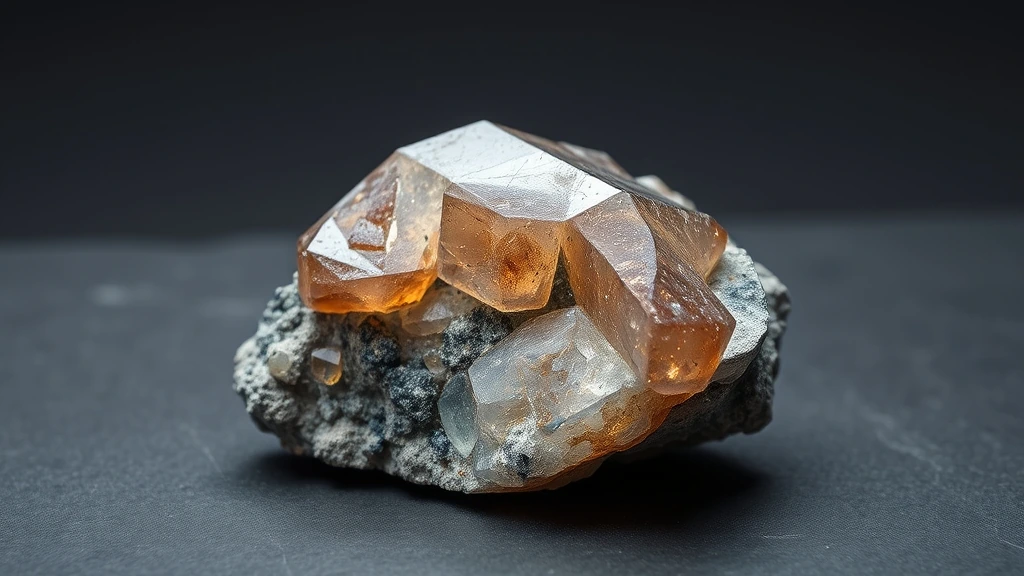
Titanium Quartz belongs to the Tectosilicates subclass within the broader Silicate mineral group. It is fundamentally a quartz variety, meaning its structural backbone consists of a continuous three-dimensional framework of silica tetrahedra. The “flame aura” designation refers specifically to the surface treatment applied to the crystal. This process does not alter the internal lattice but adds a distinct visual layer. Consequently, it remains chemically identical to standard rock crystal quartz.
What is Titanium Quartz (flame Aura)? Geological Overview & Definition
The term “flame aura” describes a specific vapor deposition technique used in gemology. This process coats the quartz surface with a microscopic layer of titanium oxide. The resulting interference patterns produce vibrant, flame-like colors ranging from gold to violet. This treatment is superficial and does not penetrate the crystal lattice. In comparative mineralogical collections, practitioners and geologists frequently study Angel Aura Quartz alongside this crystal to appreciate their subtle energetic and structural differences.
Geologically, the base material is natural alpha-quartz, which forms in hydrothermal veins. The parent mineral is strictly classified within the trigonal crystal system. The aura effect is entirely artificial, created in laboratory conditions rather than geological settings. Therefore, it is a treated gemstone, not a naturally occurring mineral variety. In comparative mineralogical collections, practitioners and geologists frequently study Meteoric Amethyst Canadian alongside this crystal to appreciate their subtle energetic and structural differences.
Titanium Quartz (flame Aura) Chemical Composition & Crystallographic Properties
The underlying quartz crystal adopts a trigonal crystal system, specifically exhibiting rhombohedral or trapezohedral habits. Its lattice structure is a robust network of silicon and oxygen atoms. The refractive index typically ranges from 1.544 to 1.553, contributing to its brilliance. This structural integrity allows the stone to withstand significant mechanical stress.
The primary chemical formula remains SiO₂, with no significant cation substitution in the base lattice. The coloration arises from the titanium dioxide (TiO₂) coating, not internal chromophores. This thin film creates optical interference effects known as thin-film interference. The coating is chemically stable but can be damaged by harsh abrasion.
Quartz is highly resistant to most acids, maintaining its chemical inertness in standard environments. Thermal behavior is stable, though extreme heating may degrade the surface coating. The density of the stone is approximately 2.65 g/cm³, consistent with pure quartz. This physical stability makes it suitable for long-term jewelry use.
| Property | Specification |
|---|---|
| Mineral Group | Silicates (Tectosilicates / Quartz Group) |
| Chemical Formula | SiO₂ (Silicon Dioxide) |
| Mohs Hardness | 7.0 |
| Crystal System | Trigonal (Rhombohedral / Trapezohedral) |
| Specific Gravity (Density) | 2.65 |
| Refractive Index | 1.544 – 1.553 |
| Color & Optical Properties | Natural Titanium Quartz (flame Aura) color spectrum and optical dispersion |
| Primary Mining Localities | Brazil, Madagascar, USA (Arkansas), Swiss Alps |
| Water & Chemical Resistance | High (Fully resistant to water and moisture) |
| Chakra Alignment (Traditional) | All Chakras (Universal Harmonizer) |
| Zodiac Affinity (Traditional) | All Zodiac Signs (Especially Leo and Aries) |
| Symbolic Meaning (Traditional) | Master energy amplifier, clarity, purification, and focus |
Titanium Quartz (flame Aura) Varieties & Color Spectrum
Titanium quartz, commonly known as flame aura, is a man-made gemstone created by depositing a thin layer of titanium onto natural quartz. This process results in a vibrant, iridescent coating that shifts through hues of gold, orange, and violet. The base crystal remains pure silicon dioxide, ensuring the stone retains its Mohs hardness of 7.0.
Golden Flame Aura
This variety features a dominant golden-yellow titanium coating that mimics the appearance of citrine. The color saturation is typically uniform, creating a warm, sun-like glow under direct light. It is the most commercially popular form due to its aesthetic appeal and affordability.
Violet Flame Aura
Violet flame quartz displays a purple-to-blue iridescent sheen that contrasts sharply with the clear base crystal. This morph is often associated with spiritual clarity and is highly sought after by metaphysical practitioners. The coating thickness varies, influencing the intensity of the refractive index effects.
Rainbow Flame Aura
Rainbow flame quartz exhibits a multi-spectral titanium layer that shifts through the entire visible color spectrum. This variety is rarer in high-quality specimens, as the coating must be applied with extreme precision. The dynamic color play makes it a favorite for high-end jewelry design.
Clear Flame Aura
Clear flame quartz features a subtle, pale titanium overlay that enhances the crystal’s natural transparency. This variety is prized for its minimalist elegance and ability to amplify light without overwhelming the stone. It is often used in meditation tools for its purification and focus properties.
Smoky Flame Aura
Smoky flame quartz combines the brownish base of smoky quartz with a vibrant titanium aura. The contrast between the dark host crystal and the bright coating creates a dramatic visual effect. This variety is less common, as the smoky base requires specific geological conditions to form.
Where is Titanium Quartz (flame Aura) Found? Geological Mining & Extraction
The base quartz crystals are primarily extracted from pegmatite deposits in Brazil, Madagascar, and the United States. These regions are renowned for producing high-purity, inclusion-free quartz suitable for coating. The trigonal crystal system of these crystals ensures structural stability during the manufacturing process.
The titanium coating is applied in controlled industrial facilities, not natural geological settings. This man-made enhancement allows for consistent color and quality across production batches. While the quartz is natural, the aura is a laboratory-created feature that defines the gemstone’s market identity.
Historical Significance & Cultural Lore of Titanium Quartz (flame Aura)
Although titanium quartz is a modern invention, its base material has been revered since ancient times. Civilizations such as the Egyptians and Romans valued clear quartz for its spiritual clarity and purification properties. The stone was often used in amulets to ward off negative energy and enhance mental focus.
The addition of the titanium aura represents a contemporary evolution of this ancient tradition. Modern practitioners view it as a master energy amplifier that harmonizes all chakras. This fusion of natural mineral heritage and advanced technology continues to shape its cultural significance today.
Modern Uses & Jewelry Applications of Titanium Quartz (flame Aura)
Titanium‑treated quartz is prized for its vivid, metallic‑blue iridescence, making it a favorite in contemporary lapidary work. Artisans often employ laser cutting or precision saws to preserve the flame‑aura surface while shaping the stone into sleek cabochons or faceted gems. The result is striking pendants, rings, and earrings that catch light with a rainbow‑like shimmer, and the material also lends itself to decorative carving for ornamental objects such as paperweights and crystal figurines.
- Cabochon settings highlight the stone’s internal fire without distracting facets.
- Faceted cuts amplify the aura’s play of color, ideal for high‑impact jewelry.
- Carved ornamental pieces showcase the stone’s translucency and unique surface patterns.
Metaphysical Properties & Traditional Meaning of Titanium Quartz (flame Aura)
According to historical traditions and metaphysical lore, Titanium Quartz (flame Aura) is regarded as a master energy amplifier, capable of intensifying intention and clearing mental fog. Practitioners believe its radiant hue promotes clarity, purification, and focused determination, helping the wearer cut through emotional blockages. The stone’s universal resonance is said to harmonize the entire energy field, supporting both personal growth and collective uplift.
Which Chakra and Zodiac Signs Align with Titanium Quartz (flame Aura)?
In esoteric systems, this stone is linked to all chakras, acting as a universal harmonizer that balances root, sacral, solar plexus, heart, throat, third‑eye, and crown centers simultaneously. Its all‑encompassing vibration is thought to synchronize the subtle body, allowing seamless flow of life force throughout the energetic network.
Astrologically, Titanium Quartz (flame Aura) is aligned with all zodiac signs, with a particular emphasis on Leo and Aries. These fire signs are believed to benefit most from the stone’s empowering boost, enhancing courage, leadership, and dynamic creativity while still supporting the broader astrological spectrum.
How to Identify Real vs. Fake Titanium Quartz (flame Aura)
Artificial imitations of flame‑aura quartz include surface‑treated glass, polymer resin, and dyed natural quartz that mimic the metallic sheen but lack the stone’s genuine crystal lattice. Synthetic glass often displays uniform coloration without the subtle internal striations characteristic of true titanium‑treated quartz. Dyed replicas may show uneven color bands or a glossy surface that feels plastic rather than stone.
Practical At-Home Authenticity Tests
- Temperature Test (Thermal Feel): Genuine quartz feels cool to the touch and retains that coolness longer than glass or plastic, which quickly warm up in the hand.
- Specific Gravity & Weight Test: With a density of 2.65 g/cm³, real titanium quartz feels noticeably heavier than glass (≈2.5 g/cm³) of comparable size.
- Scratch & Hardness Test (Mohs Comparison): Using a steel file (hardness ~5.5), a real specimen will resist scratching, whereas glass or dyed quartz (hardness ~5–6) may show surface marks.
- Microscopic & Loupe Inspection (Internal Inclusions): Under 10× magnification, authentic quartz reveals natural growth lines, minute fractures, or subtle iridescent layers, while fakes often display bubbles, uniform coatings, or a lack of internal structure.
Titanium Quartz (flame Aura) Valuation Factors, Grading & Pricing
Color saturation drives market value; the most prized specimens display a vivid, flame‑like iridescence that shifts across the spectrum. Buyers assess the visual vibrancy and the consistency of the internal metallic sheen, rewarding stones that maintain brilliance from every angle. A deep, uniform hue signals careful natural formation and commands higher prices.
Crystal size and weight are measured in grams, with larger, well‑proportioned pieces fetching premium rates. The market distinguishes raw versus tumbled polish quality, rewarding stones that retain a smooth, glossy finish without excessive surface abrasion. Natural matrix inclusions, when subtle, can enhance character, but heavy fractures or clouded zones reduce the gram‑based valuation.
Ethical sourcing increasingly influences collector demand, especially for stones linked to holistic practices. Proven ethical sourcing and locality premium—such as responsibly mined material from recognized districts—adds a moral premium that many buyers are willing to pay. Transparent supply chains also protect the market from counterfeit or environmentally harmful specimens.
How to Clean and Care for Titanium Quartz (flame Aura)
Titanium Quartz tolerates moisture and can be safely cleaned with warm water and a mild soap solution. Gently immerse the stone, using a soft brush to dislodge any debris, then rinse thoroughly with clean water. The mineral’s high water resistance allows ultrasonic cleaning, provided the piece is not heavily fractured or cracked.
After cleaning, pat the quartz dry with a lint‑free microfiber cloth and store it in a low‑humidity environment to prevent any surface spotting. Avoid abrasive pads or harsh chemicals, as they can dull the flame‑like luster that defines the stone’s aesthetic appeal.
Cleansing and Recharging Titanium Quartz (flame Aura) (Energetic Care)
For energetic renewal, place the quartz on a clean selenite charging slab and allow the natural sublime vibration of selenite to cleanse its field for several hours. This method respects the crystal lattice while gently resetting its amplified energy without introducing heat or moisture.
Alternatively, expose the stone to gentle moonlight or perform a brief herbal smudging with sage, ensuring the smoke passes lightly over the surface. Both practices rejuvenate clarity and focus without compromising structural integrity, offering a safe, holistic approach to maintaining the stone’s metaphysical properties.
Frequently Asked Questions About Titanium Quartz (flame Aura)
Is titanium quartz safe to wear in the shower or while swimming?
Yes, it is fully water‑resistant. The flame‑Aura coating adheres to the quartz substrate, allowing the stone to endure daily exposure to water, steam, and humidity without degradation. Its silicon dioxide matrix remains chemically stable, making it ideal for active lifestyles.
How should I clean titanium quartz to maintain its flame Aura effect?
Clean it with warm water and a mild soap, then rinse and pat dry. This gentle method removes oils and residues while preserving the metallic sheen. For tougher grime, a soft brush can be used, but abrasive pads should be avoided to protect the coating layer.
Can I use an ultrasonic cleaner on titanium quartz?
Yes, ultrasonic cleaning is safe unless the stone is heavily fractured. The low‑frequency vibrations dislodge microscopic particles without harming the quartz lattice. If the piece shows cracks, limit cleaning to hand washing to prevent fracture propagation.
Does titanium quartz have any specific zodiac associations?
It aligns with all zodiac signs, especially Leo and Aries. In astrological practice, the stone is believed to amplify the bold, dynamic energies of fire signs while still offering universal support to every sign’s intentions. Its energetic amplification is a key attribute.
Which chakras does titanium quartz balance?
It works on all chakras as a universal harmonizer. The stone’s vibrational frequency is said to clear blockages from the root to the crown, promoting overall energetic flow. Practitioners often place it on the body center to achieve holistic alignment.
Will the flame Aura coating fade over time?
The coating is durable and retains its iridescent hue for years with proper care. Exposure to harsh chemicals or extreme temperature shifts can accelerate wear, so routine cleaning with mild soap and avoiding prolonged direct sunlight helps preserve the metallic luster.
Is titanium quartz suitable for everyday jewelry like rings and bracelets?
Absolutely, its hardness of 7 on the Mohs scale makes it wear‑resistant. The combination of quartz’s durability and the protective Aura coating allows the stone to withstand daily impacts, making it a popular choice for fashionable yet resilient accessories.
Can titanium quartz be used in meditation or crystal healing practices?
Yes, it is prized for clarity, purification, and focus. Practitioners hold the stone or place it on an altar to amplify intention, leveraging its master energy amplification properties. Its universal chakra alignment supports a balanced meditative state.