
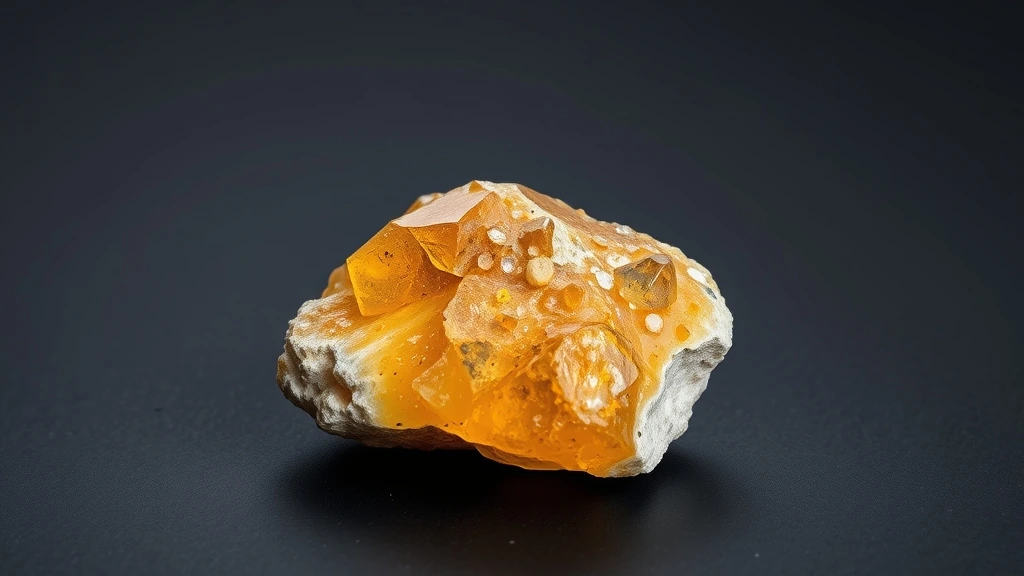
Citrine belongs to the silicate family, specifically the tectosilicate subgroup of the quartz family. As a member of the Quartz Group, it crystallizes from silica‑rich hydrothermal solutions and is commonly found in pegmatites, volcanic rhyolites, and sedimentary deposits. The stone’s formation involves natural or artificial heating of amethyst or smoky quartz, which reorganizes iron impurities into stable color‑producing centers. Its durability, transparency, and vibrant hue have made it a staple in both jewelry and metaphysical practices.
What is Citrine? Geological Overview & Definition
Citrine is the yellow to golden variety of quartz, distinguished from its colorless counterpart by the presence of trace ferric iron (Fe³⁺) that has been activated through heat treatment or natural geothermal processes. The stone’s hue is not due to external pigments but to internal color centers that absorb specific wavelengths of light, giving it its characteristic brilliance. If you’re drawn to the sunny energy of citrine, you may also appreciate the similarly uplifting vibration of Mango Quartz, whose warm orange‑gold tones complement citrine’s golden glow while offering its own distinct heart‑chakra resonance.
In mineralogical terms, citrine is a gem‑quality quartz and not a separate mineral species; it shares the same chemical formula SiO₂ as all quartz varieties. Its classification rests on its color and formation history rather than a unique crystal chemistry, which is why it is listed as a varietal name rather than a distinct mineral species.
Citrine Chemical Composition & Crystallographic Properties
Citrine crystallizes in the Trigonal (Rhombohedral) crystal system, the same symmetry as all quartz, featuring a three‑fold rotational axis and a hexagonal lattice that repeats every 0.33 nm along the c‑axis. The unit cell comprises a continuous network of SiO₄ tetrahedra linked at each corner, creating a robust three‑dimensional framework that imparts the stone’s notable hardness of 7 on the Mohs scale.
The stone’s color originates from Fe³⁺ ions substituting for Si⁴⁺ within the lattice, accompanied by charge‑balancing vacancies. Heat treatment drives these iron ions into specific lattice sites, forming color centers that absorb blue‑green light and transmit yellow to amber wavelengths. This process is reversible only under extreme conditions, making the color stable for most practical uses.
Citrine is chemically inert to most acids, but prolonged exposure to hydrofluoric acid can attack the Si–O bonds, gradually dissolving the crystal. Its refractive index (1.544–1.553) and specific gravity (2.65–2.66) remain consistent across the color range, reflecting the unchanged silica framework despite the presence of trace iron.
Thermally, citrine exhibits color stability up to about 400 °C; beyond this, the Fe³⁺ centers may reorganize, potentially fading to a lighter hue or reverting to a colorless state. Controlled heating is therefore employed in the gemstone industry to enhance or modify color, a practice that underscores citrine’s unique relationship between crystal chemistry and visual appearance.
| Property | Specification |
|---|---|
| Mineral Group | Silicates (Tectosilicates / Quartz Group) |
| Chemical Formula | SiO₂ (Silicon Dioxide with Fe³⁺ traces) |
| Mohs Hardness | 7.0 |
| Crystal System | Trigonal (Rhombohedral) |
| Specific Gravity (Density) | 2.65 – 2.66 |
| Refractive Index | 1.544 – 1.553 |
| Color & Optical Properties | Natural Citrine color spectrum and optical dispersion |
| Primary Mining Localities | Brazil, Madagascar, Russia (Ural), Spain, Bolivia |
| Water & Chemical Resistance | High (Water resistant) |
| Chakra Alignment (Traditional) | Solar Plexus and Sacral Chakra |
| Zodiac Affinity (Traditional) | Gemini, Leo, Virgo |
| Symbolic Meaning (Traditional) | Abundance, manifestation, joyful vitality, and mental motivation |
Citrine Varieties & Color Spectrum
Citrine exhibits a remarkable range of hues derived from iron impurities within the quartz lattice. The most prized specimens display a deep, saturated orange that mimics the warmth of amber. This coloration results from Fe³⁺ ions interacting with the crystal structure under specific geological pressures.
Imperial Citrine
Imperial Citrine represents the rarest and most valuable form of the stone, originating primarily from Brazil. Its intense, reddish-orange hue is attributed to natural irradiation processes occurring deep within the earth. Collectors highly value this variety for its vivid saturation and lack of visible inclusions.
Madeira Citrine
Madreña Citrine features a distinct yellowish-brown tone reminiscent of sherry wine, often found in Argentina. The color arises from aluminum substitution in the silica tetrahedra, creating a unique optical signature. This variety is frequently confused with heat-treated stones due to its muted, earthy palette.
Lemon Citrine
Lemon Citrine presents a pale, bright yellow appearance that is widely available in the global market. While often associated with heat treatment of amethyst, natural occurrences exist in specific Brazilian deposits. Its lighter tone makes it suitable for large faceted cuts and elaborate jewelry designs.
Smoky Citrine
Smoky Citrine displays a brownish-gray coloration that can range from light tan to dark chocolate. This morph is typically found in pegmatite veins where iron oxidation has progressed significantly. The stone’s subdued elegance appeals to those preferring understated gemstones with a natural, earthy aesthetic.
Brazilian Citrine
Brazilian Citrine encompasses a broad spectrum of orange and yellow shades mined from the state of Minas Gerais. These deposits are renowned for producing high-clarity crystals with minimal lattice defects. The region’s geological stability allows for the formation of large, gem-quality specimens over millions of years.
Where is Citrine Found? Geological Mining & Extraction
Citrine primarily forms within granitic pegmatites, where slow cooling allows for the growth of large, clear crystals. These igneous intrusions provide the necessary chemical environment for iron incorporation into the silica matrix. Mining operations focus on extracting blocks that yield high-quality rough material for cutting.
Major commercial sources include Brazil, Argentina, and Madagascar, each offering distinct color profiles. Brazilian mines produce the most vibrant imperial hues, while Argentine deposits often yield softer, wine-toned stones. Extraction methods involve careful blasting and manual sorting to preserve the integrity of the fragile crystal structures.
Historical Significance & Cultural Lore of Citrine
Ancient civilizations revered citrine as a stone of wealth and prosperity, often embedding it in amulets for protection. Roman and Greek artisans crafted intricate carvings from the material, associating it with the sun god Apollo. Archaeological findings reveal its use in ceremonial objects intended to attract abundance and success.
Medieval European lore described citrine as a healing stone that could cure ailments and boost mental clarity. Alchemists believed its golden glow could transmute base metals into precious substances, symbolizing spiritual enlightenment. This enduring legacy has cemented its status as a symbol of vitality and creative power in modern gemology.
Modern Uses & Jewelry Applications of Citrine
Citrine’s exceptional durability and vibrant hue make it a premier choice for faceted gemstones and intricate cabochon designs in fine jewelry. Lapidaries favor this variety of quartz for its resistance to scratching, allowing for complex cuts that maximize brilliance without compromising structural integrity. Beyond standard rings and pendants, artisans frequently employ citrine in ornamental carvings and architectural accents due to its consistent color saturation.
- Faceted Cuts: Oval, emerald, and round brilliant cuts are standard for maximizing the stone’s fire and luster.
- Cabochon Polishing: Smooth, domed surfaces highlight the stone’s translucency and are often used in vintage-inspired jewelry settings.
- Ornamental Carvings: Large, inclusion-free crystals are carved into decorative objects, beads, and architectural inlays.
- Jewelry Settings: Commonly set in gold or white gold to complement its warm, golden tones.
Metaphysical Properties & Traditional Meaning of Citrine
According to historical traditions and metaphysical lore, citrine is revered as the merchant’s stone, symbolizing prosperity and financial success. Practitioners believe its warm energy attracts abundance and helps maintain a positive, optimistic outlook during challenging times. This gemstone is often associated with the concept of joyful vitality, encouraging the wearer to embrace life with enthusiasm and confidence.
In spiritual contexts, citrine is thought to enhance mental motivation and clarity, aiding in the manifestation of personal goals. It is believed to clear negative energy and promote a sense of inner peace and emotional balance. By aligning with the body’s energy centers, citrine supports the flow of creative power and personal will, fostering a deep sense of manifestation and self-empowerment.
Which Chakra and Zodiac Signs Align with Citrine?
Citrine is traditionally aligned with the Solar Plexus Chakra (Manipura), which governs personal power, confidence, and self-esteem. It also resonates with the Sacral Chakra (Svadhisthana), influencing creativity, emotional balance, and sexual energy. This dual alignment makes citrine a powerful stone for enhancing personal drive and creative expression, helping individuals overcome self-doubt and fear.
In astrological practice, citrine is considered the birthstone or protective stone for Gemini, Leo, and Virgo. For Geminis, it enhances communication and adaptability; for Leos, it amplifies natural charisma and leadership qualities. Virgos benefit from its grounding influence, which supports their analytical nature and desire for perfection, fostering a harmonious balance between logic and intuition.
How to Identify Real vs. Fake Citrine
Distinguishing natural citrine from imitations is crucial, as synthetic glass, dyed amethyst, and heat-treated quartz are common substitutes in the market. While natural citrine contains trace Fe³⁺ ions responsible for its color, fakes often lack these natural inclusions or exhibit uniform, unnatural color distribution. Understanding the subtle differences in optical properties and physical characteristics is essential for accurate identification.
Practical At-Home Authenticity Tests
- Temperature Test (Thermal Feel): Natural citrine feels cool to the touch initially and warms slowly, whereas glass imitations tend to warm up more quickly under body heat due to lower thermal conductivity.
- Specific Gravity & Weight Test: Citrine has a specific gravity of 2.65 – 2.66, making it slightly heavier than glass of the same size. Comparing the stone to a known glass sample of similar dimensions can reveal subtle weight differences.
- Scratch & Hardness Test (Mohs Comparison): With a Mohs hardness of 7.0, citrine can scratch glass (hardness 5.5) but will not be scratched by a steel knife blade (hardness 5.5). Glass imitations may scratch more easily or exhibit different wear patterns.
- Microscopic & Loupe Inspection (Internal Inclusions): Under a 10x loupe, natural citrine often displays tiny, needle-like inclusions or gas bubbles, while dyed stones may show color concentration along crystal fractures. Synthetic glass is typically flawless or contains spherical bubbles.
Citrine Valuation Factors, Grading & Pricing
Market value primarily hinges on Color Saturation, where deep, honey-amber hues command the highest premiums. A vivid, uniform tone indicates optimal iron impurity distribution within the silica lattice. This visual vibrancy is further enhanced by the stone’s natural energetic luster, which reflects light sharply. Collectors prioritize stones that maintain this brilliance without appearing artificially heated or dyed.
Pricing is directly correlated with Crystal Size & Weight (Grams), as larger specimens are rarer and more desirable. Raw crystals are valued for their natural matrix inclusions, which provide geological authenticity and character. Tumbled stones are graded strictly on polish quality, ensuring a smooth, defect-free surface. Dimensional integrity and weight in grams serve as the primary metrics for commercial valuation.
Ethical Sourcing & Locality Premium significantly influences pricing in holistic and collector markets. Stones from renowned deposits, such as the Brazilian Minas Gerais region, often carry a higher value. Buyers increasingly demand transparency regarding mining practices and environmental stewardship. Provenance documentation can elevate a specimen’s status from a simple commodity to a prized collectible.
How to Clean and Care for Citrine
Citrine is highly water-resistant, making it safe for standard household cleaning routines. To maintain its optical clarity, clean gently with warm soapy water and a soft microfiber cloth. This method effectively removes oils and dust without damaging the stone’s surface. Avoid abrasive materials that could scratch the silica structure during the cleaning process.
Regular maintenance ensures the gemstone retains its characteristic sparkle and structural integrity. After washing, rinse thoroughly with clean water to remove any soap residue. Dry the stone immediately with a lint-free cloth to prevent water spots. Store citrine separately from harder gems to avoid potential surface abrasions.
Cleansing and Recharging Citrine (Energetic Care)
Holistic practitioners often use dry methods to cleanse citrine, preserving its physical and metaphysical properties. Herbal smudging with sage or palo santo is a popular technique for clearing stagnant energy. This process involves passing the stone through the smoke without direct contact with the flame. It is a safe, non-invasive method that respects the mineral’s structural stability.
For recharging, resting the stone on a selenite slab or exposing it to gentle moonlight is recommended. These methods are believed to restore the stone’s energetic balance without thermal stress. Direct intense sunlight or domestic heating should be avoided, as heat can alter the crystal lattice. Consistent, low-impact care ensures the citrine remains vibrant and energetically potent.
Frequently Asked Questions About Citrine
Is citrine water‑resistant enough for everyday wear?
Yes, citrine is highly water‑resistant. Its quartz structure (SiO₂) does not dissolve in water, allowing it to endure exposure to rain, hand washing, or brief immersion. However, prolonged soaking is unnecessary; a quick rinse and gentle drying keep the stone’s surface free of mineral deposits.
How should I clean citrine jewelry at home?
Clean citrine gently with warm soapy water and a soft microfiber cloth. The mild detergent removes oils without scratching the trigonal crystal lattice, while the cloth prevents abrasion. Rinse briefly with lukewarm water, pat dry, and avoid abrasive pads that could dull the facet edges.
Can I use an ultrasonic cleaner on citrine?
Ultrasonic cleaning is not recommended for citrine. The high‑frequency vibrations can create micro‑fractures in the quartz matrix, especially at inclusions or fractures. Stick to manual cleaning with warm soapy water and a soft cloth to preserve the stone’s refractive index and brilliance.
What is the hardness of citrine and how does it affect durability?
Citrine rates 7.0 on the Mohs hardness scale. This makes it resistant to scratches from most everyday objects, though it can still be nicked by harder minerals like topaz or diamond. Its density of 2.65–2.66 g/cm³ contributes to a solid feel in settings.
Which zodiac signs are traditionally associated with citrine?
Citrine aligns with Gemini, Leo, and Virgo. Astrologers believe the stone amplifies the communicative energy of Gemini, the confidence of Leo, and the analytical focus of Virgo. Wearing citrine during key planetary transits is thought to enhance abundance and personal motivation.
Which chakras does citrine support in crystal healing practices?
Citrine is linked to the Solar Plexus and Sacral Chakras. These energy centers govern personal power, creativity, and emotional vitality. Practitioners place the stone on the Manipura (Solar Plexus) to boost confidence, or on the lower abdomen to stimulate joyful vitality.
Does citrine’s color ever fade with exposure to sunlight?
Citrine’s golden hue is stable under normal lighting conditions. The Fe³⁺ trace that imparts its warm color is not photo‑sensitive, so prolonged sunlight does not cause fading. Nonetheless, storing the gem in a soft pouch protects it from surface abrasions that could dull its luster.
Is citrine suitable for use in rings that experience frequent impact?
Citrine can be set in rings, but impact resistance is moderate. While its 7.0 hardness resists scratches, the crystal can fracture under sharp blows. Choosing protective settings—such as bezel or channel styles—helps distribute stress and safeguards the stone’s crystal system.