
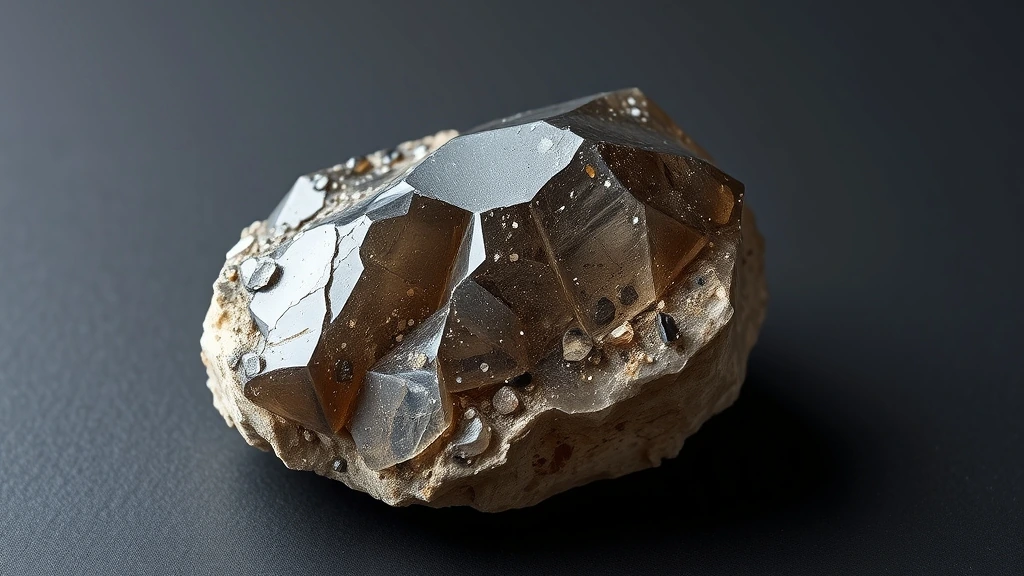
Smoky quartz belongs to the tectosilicate family, the most abundant silicate group in the Earth’s crust. Its framework of SiO₄ tetrahedra creates a robust three‑dimensional lattice that defines the quartz mineral group. Formed in igneous, metamorphic, and sedimentary environments, it crystallizes from silica‑rich fluids under a range of temperatures and pressures. The stone’s characteristic smoky coloration is a product of radiation‑induced color centers within this stable structure.
What is Smoky Quartz Gemstone? Geological Overview & Definition
Smoky quartz is the irradiated variety of α‑quartz, displaying a color spectrum from light gray to almost black. The hue results from natural or artificial exposure to ionizing radiation that creates color‑producing electron traps within the crystal lattice. Its transparency varies, producing both brilliant faceted gems and opaque cabochons prized in jewelry.
In the field, smoky quartz occurs as well‑formed prisms, drusy coatings, and massive aggregates in pegmatites, granitic veins, and alluvial deposits. Because it shares the same crystal habit as clear quartz, identification relies on color, inclusions, and sometimes spectroscopic analysis to confirm the presence of radiation‑induced centers.
Smoky Quartz Gemstone Chemical Composition & Crystallographic Properties
The mineral’s chemical formula SiO₂ reflects a pure silica composition, though trace aluminum or iron may substitute into the lattice, influencing color development. Its Trigonal (Rhombohedral / Trapezohedral) crystal system yields a characteristic six‑sided prism terminated by a pyramidal point, consistent across all quartz varieties.
Lattice parameters follow the α‑quartz structure, with helically arranged SiO₄ tetrahedra that generate a chiral framework. This arrangement makes the crystal acid‑sensitive; prolonged exposure to strong acids can dissolve surface layers, altering luster and potentially affecting color centers.
The smoky hue originates from color centers—specifically, trapped electrons adjacent to aluminum impurities created by natural radiation. Heating above ~400 °C can anneal these centers, fading the color, while controlled reheating can restore it, a property exploited in gemstone treatment.
Thermally, smoky quartz remains stable up to its fracture temperature of ~573 °C, beyond which it transforms to high‑temperature β‑quartz. This transition is reversible upon cooling, preserving the original trigonal symmetry but potentially resetting the color centers if the stone is heated in an oxidizing environment.
| Property | Specification |
|---|---|
| Mineral Group | Silicates (Tectosilicates / Quartz Group) |
| Chemical Formula | SiO₂ |
| Mohs Hardness | 7 – lower in impure varieties (defining mineral) |
| Crystal System | Trigonal (Rhombohedral / Trapezohedral) |
| Specific Gravity (Density) | 2.65; variable 2.59–2.63 in impure varieties |
| Refractive Index | n ω = 1.543–1.545 n ε = 1.552–1.554 |
| Color & Optical Properties | Natural Smoky Quartz Gemstone color spectrum and optical dispersion |
| Primary Mining Localities | Brazil, Madagascar, USA (Arkansas), Swiss Alps |
| Water & Chemical Resistance | High (Fully resistant to water and moisture) |
| Chakra Alignment (Traditional) | All Chakras (Universal Harmonizer) |
| Zodiac Affinity (Traditional) | All Zodiac Signs (Especially Leo and Aries) |
| Symbolic Meaning (Traditional) | Master energy amplifier, clarity, purification, and focus |
Quartz Varieties & Comprehensive Sub‑Types
Amethyst
Amethyst forms in hydrothermal veins where silica‑rich fluids encounter iron‑bearing host rocks. Irradiation of Fe²⁺ to Fe³⁺ creates [FeO₄]⁴⁻ color centers, producing the signature violet to royal‑purple hue. Crystals grow as macrocrystalline, often showing parallel banding and occasional fluid inclusions that record the pressure‑temperature history. With a Mohs hardness of 7, amethyst is a staple of the global gemstone market, prized for its chakra association with the third eye and crown.
Citrine
Citrine develops in the same hydrothermal environments as amethyst but requires natural solar heating or later thermal treatment to convert Fe‑related color centers to golden‑yellow. Pure citrine is rare; most commercial stones are heat‑treated amethyst that have lost their violet color. The resulting quartz exhibits a transparent to translucent body with occasional growth zoning that can be seen under magnification. Its bright amber tone makes it a popular “solar plexus” stone and a high‑value commodity in the jewelry trade.
Rose Quartz
Rose quartz originates in low‑temperature pegmatitic settings where minute fibrous inclusions of a dumortierite‑like borosilicate mineral scatter light, imparting a soft pink to rose‑red color. These microscopic inclusions create a milky translucency and a characteristic conchoidal fracture. The stone’s density is slightly lower than pure quartz due to the inclusions, and it is widely harvested for its heart‑chakra reputation. Rose quartz commands a steady market, especially in the fashion and wellness sectors.
Smoky Quartz
Smoky quartz acquires its translucent brown to deep black tone through natural radioactive irradiation of aluminum impurity centers within the crystal lattice. The process creates color centers that absorb visible light, giving the stone its signature smoky appearance. Typically found as massive, granular aggregates, smoky quartz may display subtle banding where radiation intensity varied during formation. It is valued as a grounding stone and remains a staple in both high‑end and commercial jewelry collections.
Rutilated Quartz
Rutilated quartz forms when acicular rutile (TiO₂) needles infiltrate growing quartz crystals in silica‑rich veins. The needles appear golden, copper‑red, or black, creating striking asterism and a “star‑burst” effect. These inclusions are often aligned parallel to the crystal’s c‑axis, aiding identification under polarized light. The clear host quartz retains a Mohs hardness of 7, while the rutile inclusions add visual drama, making the variety highly sought after by collectors and designers.
Strawberry Quartz
Strawberry quartz is a clear or pale pink quartz that incorporates red or orange specks of iron oxides such as lepidocrocite, hematite, or goethite. These inclusions form microscopic platelets that scatter light, producing a blush‑like surface reminiscent of a strawberry’s flesh. The stone often shows growth zoning where iron‑oxide concentration varies, giving a subtle banded appearance. Its distinctive coloration secures a niche market among gemstone enthusiasts who favor natural, unenhanced colors.
Ametrine
Ametrine is a single crystal that naturally zones into purple amethyst and golden citrine sectors, a phenomenon caused by localized variations in iron oxidation state during crystal growth. The zoning is typically sharp and symmetrical, allowing the stone to be cut to showcase both colors in one facet. Found almost exclusively in the Anahí mine, Bolivia, the rarity of true ametrine drives premium pricing. Gemologists rely on spectroscopic analysis to confirm the dual‑color origin and rule out artificial treatment.
Prasiolite (Green Quartz)
Prasiolite, or green quartz, is produced by controlled heat treatment of iron‑bearing amethyst, converting Fe³⁺ color centers to a leek‑green hue. In rare natural occurrences, the green color forms in low‑temperature hydrothermal veins where iron is present in the silica solution. The resulting quartz is transparent to translucent with occasional growth banding that reflects the thermal gradient during formation. Marketed as a green alternative to emerald, prasiolite enjoys steady demand in fashion jewelry.
Comparative Summary – Gemologists differentiate these quartz varieties by examining color‑center chemistry, inclusion type, and growth zoning under magnification and spectroscopic tools. Amethyst, citrine, and prasiolite are identified by iron‑related color centers; smoky quartz by aluminum‑irradiation centers; rose quartz by fibrous borosilicate inclusions; rutilated quartz by rutile needles; strawberry quartz by iron‑oxide specks; and ametrine by distinct, symmetrical zoning of amethyst and citrine. These diagnostic features guide cutting, grading, and market classification.
Where is Smoky Quartz Gemstone Found? Geological Mining & Extraction
Smoky quartz is most abundant in granite‑derived pegmatites and hydrothermal vein systems where aluminum impurities are present. The crystal grows in cavities and fractures, often forming massive, granular aggregates that are mined from open pits or underground shafts.
Major production centers include Brazil’s Minas Gerais, the United States (Colorado and Arkansas), Madagascar, and Russia’s Ural Mountains. In each locale, miners extract the ore by crushing pegmatite blocks, then separate smoky quartz using gravity‑separation tables and hand‑sorting to preserve the delicate smoky coloration.
Historical Significance & Cultural Lore of Smoky Quartz Gemstone
Ancient Romans prized smoky quartz for its protective qualities, embedding it in signet rings and amulets to ward off evil. Archaeological finds from the Indus Valley and Mesoamerican sites reveal polished smoky quartz beads used in trade, indicating its early value as a grounding talisman.
In traditional Chinese medicine, smoky quartz was believed to anchor chi, while Native American tribes used it in vision quests to enhance clarity and connection to the earth. Across cultures, the stone’s dark, smoky hue symbolized mystery, strength, and the ability to transform negative energy into stability.
Modern Uses & Jewelry Applications of Smoky Quartz Gemstone
Smoky quartz is prized for its tranquil smoky hue and versatility in contemporary design, making it a staple in both high‑end and artisanal pieces. Lapidary artisans often cut the stone into elegant cabochons that showcase its silky translucency, while skilled faceters produce brilliant brilliant‑cut gems for rings and pendants. In addition, large blocks are carved into ornamental objects such as vases, figurines, and decorative panels, where the stone’s natural depth adds a sophisticated ambience.
- Cabochon settings highlight the stone’s soft luster and are popular in earrings and brooches.
- Faceted cuts maximize sparkle for engagement rings, cocktail rings, and watch crowns.
- Ornamental carving yields statues, paperweights, and architectural accents for interior design.
Metaphysical Properties & Traditional Meaning of Smoky Quartz Gemstone
According to historical traditions and metaphysical lore, smoky quartz is regarded as a grounding stone that absorbs negative energies and transforms them into positive vibrations. It is believed to calm anxiety, promote emotional resilience, and foster a sense of inner stability during turbulent times. The stone’s muted color is also associated with humility, encouraging wearers to release ego‑driven ambitions and embrace authentic self‑expression.
Which Chakra and Zodiac Signs Align with Smoky Quartz Gemstone?
In energetic practice, smoky quartz is said to harmonize all chakras, acting as a universal synchronizer that balances the subtle body from root to crown. Practitioners use it to align the entire chakra system, supporting meditation, spiritual grounding, and overall vitality.
Astrologically, smoky quartz is linked to all zodiac signs, with a special affinity for Leo and Aries. These fire signs are thought to benefit from the stone’s stabilizing influence, which tempers impulsive energy while enhancing confidence and purposeful action.
How to Identify Real vs. Fake Smoky Quartz Gemstone
Artificial imitations of smoky quartz include glass dyed with iron oxide, synthetic quartz grown in labs, and resin‑filled composites that mimic the stone’s smoky tone. These substitutes often lack the natural inclusions and subtle density variations of genuine quartz, making careful examination essential for collectors and buyers.
Practical At-Home Authenticity Tests
- Temperature Test (Thermal Feel): Real quartz feels cool to the touch and retains that coolness longer than glass or plastic, which quickly warm up to skin temperature.
- Specific Gravity & Weight Test: Genuine smoky quartz has a density around 2.65 g/cm³; a simple water‑displacement test will reveal a heavier feel compared with lighter glass imitations.
- Scratch & Hardness Test (Mohs Comparison): With a hardness of 7, smoky quartz will scratch glass (≈5.5) but not be scratched by a steel file (≈6.5); glass will show visible scratches from the same tool.
- Microscopic & Loupe Inspection (Internal Inclusions): Under 10× magnification, natural smoky quartz often displays tiny healed fractures, cloudiness, or mineral inclusions, whereas synthetic or dyed glass appears uniformly clear or shows surface bubbles.
Smoky Quartz Gemstone Valuation Factors, Grading & Pricing
Color Saturation is the foremost driver of price. Deep, uniform smoky tones command premium rates, while pale or unevenly colored stones are discounted. Clarity and luster also influence valuation; a high‑shine surface free of cloudiness enhances market appeal. Buyers often request certified color grading to verify consistency.
Carat Weight plays a secondary yet critical role. Larger stones are rarer, but weight alone does not guarantee value; well‑proportioned facet symmetry and a balanced cut are essential for optimal brilliance. The presence of a matrix or visible inclusions can lower price, especially when they disrupt light performance. Certified weighing reports help establish transparent pricing.
Geographical Provenance Premium can add a noticeable surcharge. Smoky quartz from historic mines in Brazil, Madagascar, or the United States often fetch higher wholesale and retail prices due to perceived rarity. Market trends show steady demand, with prices rising modestly during gem‑fair seasons. Tracking auction results provides insight into current valuation dynamics.
How to Clean and Care for Smoky Quartz Gemstone
Easily cleaned with warm water and mild soap, smoky quartz tolerates gentle hand washing. Soak the stone for a few minutes, then use a soft brush to remove surface grime, rinsing thoroughly with clean water. The gemstone is fully water‑resistant, making this method safe for daily maintenance.
Ultrasonic cleaning is suitable unless heavily fractured; a stable stone can be placed in an ultrasonic bath for a short cycle to dislodge stubborn particles. If the gem shows cracks or chips, avoid ultrasonic exposure to prevent further damage. Always dry the piece with a lint‑free cloth before storage.
Cleansing and Recharging Smoky Quartz Gemstone (Energetic Care)
For energetic clearing, smoke smudging is ideal: pass the stone through the gentle plume of sage or palo santo, allowing the purifying smoke to envelop the gem. This method respects the quartz’s silica composition and does not introduce moisture.
Alternatively, place the gemstone on a selenite plate or under moonlight overnight to recharge its subtle energies. Both dry techniques avoid any risk of solubility while restoring the stone’s natural vibrancy.
Frequently Asked Questions About Smoky Quartz Gemstone
Is smoky quartz fully water‑resistant?
Yes, smoky quartz is fully resistant to water and moisture. Its silica (SiO₂) structure makes it impervious to everyday exposure to rain, swimming, or washing, so you can wear it in the shower or while washing hands without fear of damage.
Can I clean smoky quartz with an ultrasonic cleaner?
Yes, it can be safely cleaned in an ultrasonic bath unless the stone is heavily fractured. Warm water and a mild soap will remove surface grime, and the ultrasonic vibrations help dislodge particles from crevices, preserving the stone’s transparent to smoky luster.
How hard is smoky quartz compared to other gemstones?
Smoky quartz rates 7 on the Mohs scale, though impure varieties may be slightly softer. This hardness gives it good scratch resistance, making it suitable for daily wear, yet it should still be protected from hard impacts that could cause chipping.
Which zodiac signs benefit most from smoky quartz?
All zodiac signs can work with smoky quartz, with special resonance for Leo and Aries. The stone’s grounding energy supports the fire‑driven confidence of Aries and the radiant ambition of Leo, while still offering subtle balance to every other sign.
Which chakras does smoky quartz align with?
Smoky quartz is a universal harmonizer that aligns with all chakras. Its stabilizing vibrations help clear blockages throughout the energy system, promoting overall equilibrium rather than focusing on a single chakra point.
Does smoky quartz change color when exposed to heat?
Heat can deepen the brown‑gray tone of smoky quartz but will not alter its chemical composition. Controlled heating may enhance the stone’s smoky saturation, a technique sometimes used by lapidaries to achieve richer hues.
What is the typical density of smoky quartz, and does it vary?
Pure smoky quartz has a density of about 2.65 g/cm³, ranging from 2.59–2.63 g/cm³ in impure varieties. These slight variations stem from trace inclusions or fluid‑filled cavities, which can affect the stone’s weight and feel in jewelry settings.
How does the refractive index of smoky quartz affect its appearance?
Smoky quartz exhibits a refractive index of nω = 1.543–1.545 and nε = 1.552–1.554, giving it a subtle brilliance. This optical property creates a gentle play of light that enhances the stone’s smoky translucency, especially when cut with polished facets.