
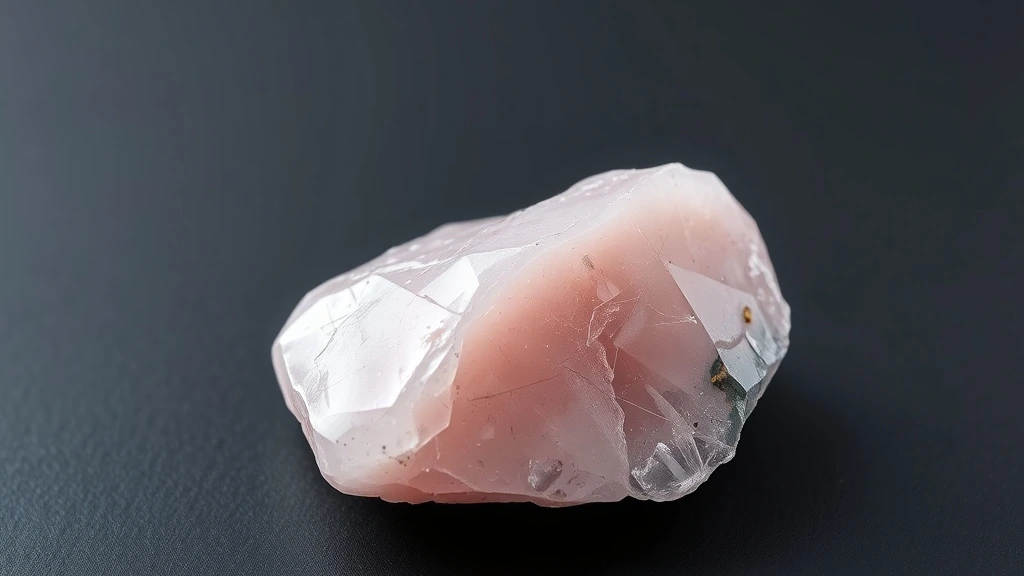
Rose quartz belongs to the vast silicate mineral family, specifically classified as a tectosilicate within the quartz group. This framework structure consists of silicon and oxygen tetrahedra linked in a continuous three-dimensional network. As a polymorph of alpha-quartz, it exhibits piezoelectric properties and high chemical stability. Geologically, it forms in igneous and metamorphic environments, often associated with feldspar-rich granite bodies. The stone’s durability makes it suitable for various jewelry applications despite its moderate hardness.
What is Rose Quartz ? Geological Overview & Definition
Rose quartz is a cryptocrystalline to macrocrystalline variety of alpha-quartz, distinguished by its soft pink to salmon coloration. Unlike many gemstones, it rarely forms large, clear single crystals suitable for faceting. Instead, it typically occurs in massive, banded, or drusy aggregates. This structural characteristic limits its use to cabochons, carvings, and tumbled stones. In comparative mineralogical collections, practitioners and geologists frequently study Strawberry Quartz alongside this crystal to appreciate their subtle energetic and structural differences.
The geological origin is primarily linked to pegmatite dikes and granitic intrusions. It frequently coexists with feldspar, mica, and tourmaline in these high-temperature environments. The pink coloration is attributed to microscopic inclusions of dumortierite or titanium-bearing minerals. These inclusions scatter light, creating the stone’s characteristic soft, milky appearance.
Rose Quartz Chemical Composition & Crystallographic Properties
The fundamental chemical formula is SiO₂, representing a pure silicon dioxide structure. Crystallographically, it crystallizes in the trigonal system, specifically within the rhombohedral or trapezohedral classes. This lattice arrangement dictates its physical properties, including its specific gravity of 2.65. The structure is highly stable, resisting most acids except hydrofluoric acid. In comparative mineralogical collections, practitioners and geologists frequently study Black Jade And Pink Thulite alongside this crystal to appreciate their subtle energetic and structural differences.
Color centers arise from chromophoric impurities rather than major elemental substitutions. Recent studies suggest that trace amounts of titanium or aluminum create color centers within the lattice. These defects absorb specific wavelengths of light, reflecting the pink spectrum. The refractive index ranges from 1.544 to 1.553, contributing to its moderate luster.
Thermal behavior reveals that rose quartz is sensitive to high temperatures. Heating above 250°C can cause the pink color to fade or disappear entirely. This instability is due to the structural rearrangement of the color-causing inclusions. Therefore, heat treatment is generally avoided to preserve the stone’s natural aesthetic value.
The lattice structure allows for minor cation substitution, though the core framework remains intact. These substitutions do not significantly alter the stoichiometry but influence optical properties. The stone’s piezoelectric nature remains consistent with other quartz varieties. Understanding these properties ensures proper handling and preservation of the gemstone.
| Property | Specification |
|---|---|
| Mineral Group | Silicates (Tectosilicates / Quartz Group) |
| Chemical Formula | SiO₂ (Silicon Dioxide) |
| Mohs Hardness | 7.0 |
| Crystal System | Trigonal (Rhombohedral / Trapezohedral) |
| Specific Gravity (Density) | 2.65 |
| Refractive Index | 1.544 – 1.553 |
| Color & Optical Properties | Natural Rose Quartz Gemstone color spectrum and optical dispersion |
| Primary Mining Localities | Brazil, Madagascar, USA (Arkansas), Swiss Alps |
| Water & Chemical Resistance | High (Fully resistant to water and moisture) |
| Chakra Alignment (Traditional) | All Chakras (Universal Harmonizer) |
| Zodiac Affinity (Traditional) | All Zodiac Signs (Especially Leo and Aries) |
| Symbolic Meaning (Traditional) | Master energy amplifier, clarity, purification, and focus |
Rose Quartz Varieties & Color Spectrum
Brazilian Rose Quartz
This variety originates from the massive pegmatite deposits of Minas Gerais, Brazil, which serve as the primary global source for commercial-grade material. The stone typically exhibits a pale, translucent pink hue caused by trace amounts of aluminum and other impurities within the silica lattice. Large, clean blocks are frequently extracted here, allowing for the production of substantial cabochons and sculptural pieces.
African Rose Quartz
Found predominantly in Madagascar and the Democratic Republic of Congo, this variety often displays deeper, more saturated pink tones compared to its Brazilian counterpart. The coloration is frequently attributed to microscopic inclusions of dumortierite or other titanium-bearing minerals dispersed throughout the crystal structure. These deposits are known for producing high-quality gem material with excellent clarity and vibrant chromatic intensity.
Indian Rose Quartz
Sourced from the Deccan Plateau, this regional variety is characterized by a softer, milky appearance with subtle pink undertones. The stone often contains fine, needle-like inclusions of rutile or other silicate minerals that contribute to its characteristic waxy luster. While generally less intense in color than African stones, Indian quartz is highly valued for its smooth texture and uniformity.
Australian Rose Quartz
Mined from the vast pegmatite fields of New South Wales, this variety typically presents a very light, almost white-pink coloration. The geological formation process results in stones that are often quite large but may contain minor fractures or cloudiness. Despite its paler shade, it remains a significant contributor to the global supply chain for carved ornamental objects.
Siberian Rose Quartz
Historically significant and now rare, this variety was once a major source of high-quality pink quartz in Europe. The stones from the Ural Mountains region often exhibit a distinct, cool-toned pink that distinguishes them from warmer tropical varieties. Modern extraction is limited, making well-preserved specimens from this region highly sought after by collectors and museum curators.
Synthetic Rose Quartz
While not a natural variety, laboratory-grown rose quartz is produced to mimic the aesthetic qualities of natural stones for industrial use. These synthetic crystals are created using hydrothermal methods that replicate the high-pressure conditions of natural pegmatite formation. They are chemically identical to natural quartz but lack the complex inclusion patterns found in geologically formed specimens.
Where is Rose Quartz Found? Geological Mining & Extraction
Rose quartz primarily forms within pegmatite veins, which are coarse-grained igneous rocks that crystallize from the last stages of magma cooling. These geological formations provide the necessary space and chemical environment for large, pure quartz crystals to develop over millions of years. The pink coloration typically arises from trace impurities incorporated during this slow crystallization process.
Major commercial mining operations are concentrated in Brazil, Madagascar, and the United States, particularly in the state of North Carolina. Extraction methods often involve open-pit mining to access the large, accessible pegmatite bodies that yield high-volume material. Smaller, artisanal operations in regions like Sri Lanka and India also contribute to the global supply through targeted prospecting.
Historical Significance & Cultural Lore of Rose Quartz
Ancient civilizations, including the Greeks and Romans, revered rose quartz as a symbol of love, beauty, and emotional healing. Archaeological excavations have uncovered carved rose quartz artifacts dating back to the Neolithic period, indicating its long-standing value in ritualistic and decorative contexts. The stone was frequently used in amulets and jewelry, believed to enhance interpersonal harmony and attract affection.
Throughout the Middle Ages and Renaissance, rose quartz remained a popular material for intaglio carvings and cameos, often associated with Venus and Aphrodite. Its soft pink hue was thought to possess soothing properties, making it a favored stone for meditation and spiritual practices. This enduring cultural significance has cemented its status as a timeless gemstone in both historical and contemporary contexts.
Where is Rose Quartz Found? Geological Mining & Extraction
Rose quartz typically forms in granite pegmatites and metamorphic schists across various continents. Major deposits are located in Madagascar, Brazil, and the United States, particularly in North Carolina.
Extraction methods vary from open-pit mining to underground shafts, depending on the deposit’s depth. Industrial-scale operations in Madagascar yield large, high-quality blocks for the global gem market.
Historical Significance & Cultural Lore of Rose Quartz
Ancient civilizations, including the Egyptians and Romans, used rose quartz in funerary artifacts and amulets. These archaeological finds suggest the stone was valued for its protective and healing properties.
Medieval lore associated the gem with love and beauty, often gifting it to signify deep affection. This enduring cultural significance persists in modern metaphysical practices and jewelry design.
Modern Uses & Jewelry Applications of Rose Quartz
Lapidaries primarily cut rose quartz into smooth cabochons due to its soft, translucent appearance and lack of strong luster. Faceted cuts are rare because the stone’s internal inclusions often obscure brilliance and fire. Consequently, artisans favor polished surfaces that highlight the gentle pink hue.
- Cabochon Jewelry: Rings, pendants, and earrings showcasing the stone’s milky translucency.
- Ornamental Carving: Sculptural pieces, vases, and decorative bowls for interior design.
- Beaded Accessories: Strands for bracelets and necklaces, often paired with white or clear quartz.
Metaphysical Properties & Traditional Meaning of Rose Quartz
According to historical traditions and metaphysical lore, rose quartz is revered as the Stone of Unconditional Love. Practitioners believe it opens the heart chakra, fostering self-acceptance and emotional healing. It is frequently used in meditation to promote inner peace and reduce anxiety.
This gemstone is associated with emotional resonance, helping individuals release past trauma and resentment. Its gentle energy is thought to enhance compassion and forgiveness in relationships. Many users report a calming effect during stressful periods.
Which Chakra and Zodiac Signs Align with Rose Quartz ?
Rose quartz is universally recognized as a Universal Harmonizer, aligning with all seven chakras. It balances the entire energy system, promoting holistic well-being. This broad alignment makes it suitable for anyone seeking spiritual equilibrium.
Astrologically, it resonates with all zodiac signs, particularly Leo and Aries. These fire signs benefit from its cooling, soothing properties. It helps temper their intense energy with compassion and patience.
How to Identify Real vs. Fake Rose Quartz
Artificial imitations include synthetic glass, dyed white quartz, and plastic replicas. Glass imitations often appear too perfect, lacking natural imperfections. Dyed quartz may show color concentration in cracks or pores.
Practical At-Home Authenticity Tests
- Temperature Test (Thermal Feel): Real rose quartz feels cool to the touch initially. It warms up slowly, whereas plastic or glass may feel room temperature immediately.
- Specific Gravity & Weight Test: Genuine quartz has a specific gravity of 2.65. It feels heavier than plastic or lightweight glass of the same size.
- Scratch & Hardness Test (Mohs Comparison): With a Mohs hardness of 7.0, real quartz will not be scratched by a steel knife or glass. Imitations like plastic or calcite will show visible scratches.
- Microscopic & Loupe Inspection (Internal Inclusions): Use a 10x loupe to check for natural inclusions. Real stones often contain tiny mineral specks or fluid inclusions. Glass imitations typically contain round air bubbles.
Rose Quartz Valuation Factors, Grading & Pricing
Market value is primarily driven by Color Saturation and tone uniformity across the stone. High-quality specimens exhibit a consistent, medium-pink hue without dull gray or brown undertones. Optical clarity and a vitreous luster significantly enhance the gemstone’s overall visual appeal and desirability.
Specimen Size & Weight directly influences price, with larger, flawless crystals commanding substantial premiums. Precise tumbled polish and natural geometry maximizes light return, while the presence of matrix or inclusions reduces commercial value. Collectors often prefer stones with minimal internal fractures to ensure long-term structural integrity.
Geographical Provenance Premium plays a critical role in high-end market positioning. Specific origins like Madagascar or Brazil often fetch higher wholesale and retail prices. Current trends show steady demand for ethically sourced material, stabilizing value across global trade channels.
How to Clean and Care for Rose Quartz
This mineral is fully resistant to water, allowing for simple maintenance with warm water and mild soap. Gently scrub the surface with a soft brush to remove accumulated dust and oils. Rinse thoroughly and dry with a lint-free cloth to prevent water spots.
You may use an ultrasonic cleaner for deeper sanitation, provided the stone is not heavily fractured. Avoid this method if visible cracks exist, as vibrations could propagate existing damage. Always inspect the gemstone carefully before subjecting it to ultrasonic frequencies.
Cleansing and Recharging Rose Quartz (Energetic Care)
For energetic maintenance, place the stone on a selenite plate to facilitate passive energy transfer. This dry method avoids any risk of moisture damage or chemical interaction with the crystal structure. It allows the quartz to absorb ambient positive energy safely and effectively.
Alternatively, perform smoke smudging using sage or palo santo to purify the stone. Hold the quartz near the rising smoke without direct flame contact. This traditional practice honors the mineral’s spiritual associations while preserving its physical integrity.
Frequently Asked Questions About Rose Quartz
Is rose quartz safe to wear in the shower?
Yes, rose quartz is fully resistant to water and moisture. You can safely wear it during showers or while swimming without fear of degradation. The stone’s stable silicon dioxide composition ensures it does not dissolve or weaken when exposed to humidity or liquid water.
Can I clean rose quartz in an ultrasonic cleaner?
Generally, yes, but exercise caution with heavily fractured stones. It is easily cleaned with warm water and mild soap for routine maintenance. While suitable for ultrasonic cleaning, avoid this method if the gemstone has significant internal fractures to prevent further damage.
Which zodiac signs are most compatible with rose quartz?
It aligns with all zodiac signs, especially Leo and Aries. This universal stone supports emotional balance for every astrological profile. However, its warm energy resonates particularly strongly with the fiery signs of Leo and Aries, enhancing their natural confidence and vitality.
Which chakra does rose quartz primarily activate?
It functions as a universal harmonizer for all chakras. Unlike stones tied to specific energy centers, rose quartz promotes overall energetic balance. It acts as a master energy amplifier, helping to purify and align the entire chakra system simultaneously for holistic well-being.
What is the Mohs hardness of rose quartz?
Rose quartz has a Mohs hardness of 7.0. This makes it durable enough for most daily jewelry wear, such as rings or pendants. However, it is still susceptible to scratching from harder materials like diamond or corundum, so proper storage is recommended.
Does rose quartz lose its color over time?
No, the pink hue is stable under normal conditions. The coloration results from trace impurities within the crystal lattice, which remain permanent. Avoid prolonged exposure to extreme heat or harsh chemicals, but standard sunlight and air will not cause the stone to fade.
What is the chemical composition of rose quartz?
Its primary chemical formula is SiO₂, or silicon dioxide. This places it firmly in the quartz mineral family. The specific pink tint arises from microscopic inclusions of dumortierite or titanite, which scatter light to create the characteristic soft rose hue.
How should I store rose quartz to prevent damage?
Store it in a soft pouch or separate jewelry box. Although hard, it can scratch other softer gems or be scratched by harder ones. Keeping it isolated protects its refractive index clarity and prevents physical abrasion that could dull its natural luster over time.