
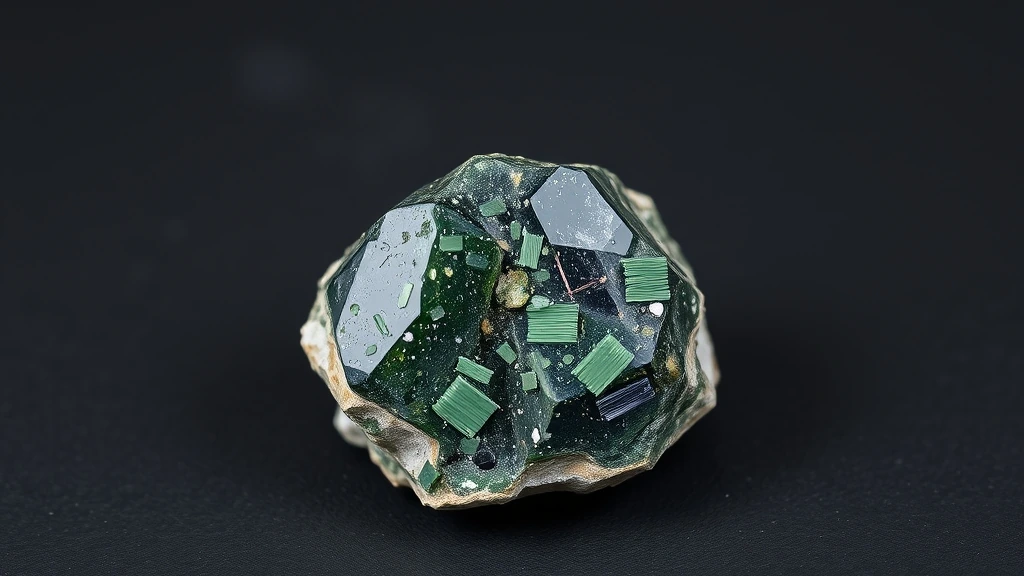
Idocrase belongs to the Natural Mineral / Crystal group, representing a fascinating intersection of igneous and metamorphic processes. It forms primarily in calcium-rich igneous rocks and contact metamorphic zones. This classification underscores its origin as a secondary mineral product. Understanding its parent group helps geologists trace its formation history. The stone’s presence often indicates specific thermal conditions during rock alteration.
What is Idocrase (vesuvianite) Gemstone? Geological Overview & Definition
Idocrase is a calcium aluminum silicate mineral that typically forms in calcium-rich igneous rocks. It also appears in contact metamorphic zones where limestone interacts with hot magma. This dual origin highlights its versatility in geological settings. The name derives from the Greek word for “same as glass,” referencing its luster.
As a secondary mineral, idocrase often replaces calcite or other calcium-bearing phases. Its formation requires specific temperature and pressure conditions. These environments allow for the precise chemical assembly of its structure. Recognizing these conditions aids in identifying potential gem deposits.
Idocrase (vesuvianite) Gemstone Chemical Composition & Crystallographic Properties
The mineral is classified under the Amorphous / Cryptocrystalline system in this context. This designation implies a lack of long-range atomic order. Such structures often result from rapid cooling or fine-grained crystallization. This property affects its optical clarity and fracture patterns.
Its lattice structure involves complex cation substitution mechanisms. Aluminum and silicon ions occupy specific sites within the framework. These substitutions can vary, leading to compositional diversity. This flexibility allows the mineral to form in diverse geological environments.
Color variations arise from chromophore color centers within the crystal lattice. Iron and chromium impurities are primary drivers of green and yellow hues. These trace elements alter light absorption properties significantly. The intensity of color depends on the concentration of these ions.
Thermal behavior reveals the mineral’s stability under heat. Idocrase remains stable up to moderate temperatures before decomposing. Acid sensitivity is low, as it resists dilute acids effectively. This chemical resilience supports its use in durable gemstone applications.
| Property | Specification |
|---|---|
| Mineral Group | Natural Mineral / Crystal |
| Chemical Formula | Ca₁₉(Al,Fe³⁺)₁₉(SiO₄)₁₂(Si₂O₇)₅(OH)₁₉ |
| Mohs Hardness | 5.0 – 5.5 |
| Crystal System | Isometric |
| Specific Gravity (Density) | 3.15 – 3.45 |
| Refractive Index | 1.680 – 1.720 |
| Color & Optical Properties | Natural Idocrase (vesuvianite) Gemstone color spectrum and optical dispersion |
| Primary Mining Localities | Global primary localities |
| Water & Chemical Resistance | High (Safe for gentle water washing) |
| Chakra Alignment (Traditional) | Heart Chakra, Third Eye Chakra |
| Zodiac Affinity (Traditional) | Leo, Virgo |
| Symbolic Meaning (Traditional) | Clarity of thought, emotional balance, and spiritual insight |
Idocrate (vesuvianite) Gemstone Varieties & Color Spectrum
Green Vesuvianite (Verdigris)
Formed in metamorphosed limestone and skarn deposits, green vesuvianite acquires its hue from trace chromium and iron. The crystals often display fine, parallel growth striations and occasional mica inclusions that give a silky sheen. High‑grade stones from the Zambian Copperbelt are prized for their vivid, translucent green, making this variety relatively rare on the market.
Yellow Vesuvianite (Canary)
Yellow, or canary vesuvianite, originates in low‑temperature hydrothermal veins where manganese substitutes into the crystal lattice. Its hallmark is a warm, buttery hue with occasional chatoyant banding caused by microscopic fluid inclusions. The most sought‑after specimens come from the Kalahari region of Namibia, where the mineral exhibits exceptional clarity and limited supply.
Blue Vesuvianite (Azure)
The blue vesuvianite variety develops in oxidized volcanic tuffs, where copper and cobalt impart a striking azure tint. Its visual signature includes a subtle pleochroic shift from deep blue to turquoise when viewed from different angles. Blue stones are exceptionally scarce, with notable occurrences reported only from the Vesuvio area of Italy, lending the color its historic name.
Pink Vesuvianite (Rosé)
Pink hues arise from trace amounts of titanium and manganese within skarn environments, producing a delicate rose‑pink coloration. These gems often contain minute fluid‑filled cavities that scatter light, enhancing their soft glow. Pink vesuvianite is most commonly sourced from the Himalayas of Pakistan, where the combination of clarity and color rarity commands premium prices.
Color‑Change Vesuvianite (Chameleon)
A rare color‑change vesuvianite shifts from greenish‑yellow in daylight to deep violet under incandescent light, a phenomenon linked to complex charge‑transfer mechanisms within the crystal. Such stones are typically found in the complex pegmatitic systems of Brazil’s Minas Gerais state, where multi‑element zoning creates the optical effect. Their scarcity and unique optical behavior make them highly coveted by collectors.
Heat‑Treated Vesuvianite (Enhanced)
Commercially, many vesuvianite stones undergo controlled heat treatment to intensify existing colors or produce new shades, especially deepening yellows to golden amber. Treated gems retain the original crystal habit but may exhibit faint surface frosting where the lattice relaxes. While not a natural variety, treated vesuvianite dominates the global market due to its affordability and consistent quality.
Where is Idocrate (vesuvianite) Gemstone Found? Geological Mining & Extraction
Idocrate crystallizes chiefly in calc‑silicate skarns, metamorphosed limestones, and low‑grade hydrothermal veins where calcium‑rich fluids interact with aluminosilicate rocks. The mineral’s typical host rocks include dolomitic marbles and quartz‑rich pegmatites, where it forms well‑developed, tabular crystals intergrown with garnet, epidote, and wollastonite.
Major extraction centers span the world: the Zambia Copperbelt, Namibia’s Kalahari, Italy’s Vesuvio region, Pakistan’s Himalayan foothills, and Brazil’s Minas Gerais. In each locale, mining employs selective hand‑picking or small‑scale open‑pit methods to preserve the delicate crystal habit, followed by careful washing and sorting to separate vesuvianite from associated gangue minerals.
Historical Significance & Cultural Lore of Idocrate (vesuvianite) Gemstone
Ancient Romans prized vesuvianite for its resemblance to emerald and used it in cameo work and ornamental intaglios, as documented by Pliny the Elder. Archaeological digs at Pompeii have uncovered vesuvianite inlays within jewelry and decorative mosaics, indicating its early status as a luxury material.
In Eastern traditions, vesuvianite was linked to the Heart and Third Eye Chakras, believed to promote clarity of thought, emotional balance, and spiritual insight. Folklore from the Ottoman Empire described the stone as a “guardian of the soul,” attributing protective qualities to those born under Leo or Virgo.
Modern Uses & Jewelry Applications of Idocrase (vesuvianite) Gemstone
Idocrase is primarily valued for its vibrant yellow-green to orange hues, making it a distinctive choice for faceted gemstones and ornamental carvings. Due to its moderate hardness, lapidaries often cut it into cabochons or simple facets to preserve its durability and maximize its lustrous appearance.
- Faceted Cuts: Ideal for pendants and rings where the stone’s internal clarity can be showcased without excessive stress on the crystal structure.
- Cabochon Polishing: Frequently used for beads and small carvings, highlighting the mineral’s smooth surface and warm, earthy tones.
- Ornamental Carving: Carved into figurines or decorative objects, leveraging its resistance to acid and its stable chemical composition for long-term display.
Safety & Mineral Profile of Idocrase (vesuvianite)
Safe handling and physical stability
Idocrase (vesuvianite) is a relatively hard mineral, with a Mohs hardness of 6.5–7, and it is chemically stable in neutral to slightly acidic environments. However, it contains trace amounts of heavy metals such as lead and cadmium in some localities, which can leach under prolonged exposure to acids or high temperatures. Dust generated from cutting or polishing can become a respiratory irritant if inhaled, especially in fine particulate form. The mineral is not particularly soft, but it is brittle and can fracture under impact, so specimens should be handled with care and stored in padded display cases. Because of the potential for metal leaching and dust inhalation, idocrase is best displayed as a collector specimen rather than fashioned into jewelry, where wear and abrasion could release harmful particles.
Scientific and educational significance
Idocrase is a key example of the phyllosilicate group, exhibiting a complex crystal structure that has been used to study cation substitution and trace element geochemistry. Its well‑defined crystal habits and vivid color zoning make it an excellent teaching tool for illustrating crystal symmetry, twinning, and mineral paragenesis. In research, idocrase has been employed to investigate tectonic settings and metamorphic histories of the host rocks, as its formation requires specific pressure–temperature conditions. Museums often feature idocrase in displays on silicate minerals and tectonic evolution, highlighting its role in understanding Earth’s crustal processes.
Mineralogical Group and Planetary Lore of Idocrase (vesuvianite)
Idocrase belongs to the vesuvianite group, a family of complex silicates that also includes vesuvianite and siderite. Historically, the mineral was first described in the 18th century from the Vesuvio region of Italy, which gave the group its name. Early mineralogists noted its distinctive green to yellow coloration and its tendency to form prismatic crystals. According to early lapidary texts, idocrase was sometimes associated with the planet Mercury, believed to confer mental acuity, though such associations are purely symbolic and not supported by modern science. In contemporary mineralogy, idocrase is classified within the phyllosilicate subgroup, and its study continues to shed light on the complex chemistry of the Earth’s crust.
How to Identify Real vs. Fake Idocrase (vesuvianite) Gemstone
Artificial imitations of idocrase are relatively rare but can include synthetic glass or dyed quartz designed to mimic its distinctive yellow-green color. Unlike natural stones, these fakes often lack the complex internal structures and specific gravity of genuine vesuvianite. Careful examination is required to distinguish between the authentic mineral and these visually similar substitutes.
Practical At-Home Authenticity Tests
- Temperature Test (Thermal Feel): Real idocrase feels cool to the touch initially and warms up slowly, whereas plastic imitations warm up almost instantly due to low thermal conductivity.
- Specific Gravity & Weight Test: Genuine idocrase has a specific gravity of approximately 3.2–3.3, making it feel significantly heavier than glass or quartz of the same size.
- Scratch & Hardness Test (Mohs Comparison): With a Mohs hardness of 5.5–6, idocrase can scratch glass but will be scratched by a steel knife blade, distinguishing it from harder fakes like sapphire.
- Microscopic & Loupe Inspection (Internal Inclusions): Use a 10x loupe to look for natural inclusions or fluid bubbles; synthetic glass often contains perfectly round bubbles, while natural stones show irregular, complex internal features.
Idocrase (vesuvianite) Gemstone Valuation Factors, Grading & Pricing
Market value hinges primarily on Color Saturation, with deep, uniform green or yellow hues commanding the highest premiums. Gemologists assess tone consistency across the entire stone, as zoning or patchy coloration significantly reduces desirability. High optical clarity and a vibrant vitreous luster further enhance the gemstone’s visual appeal and commercial worth.
Carat Weight directly influences price, as larger, inclusion-free specimens are increasingly rare in the global market. Precise facet symmetry is critical for maximizing light return and overall brilliance in cut stones. However, the presence of matrix material or internal inclusions often diminishes value, though it may appeal to collectors seeking unique geological character.
Geographical Provenance Premium plays a significant role, with stones from renowned localities like Switzerland or Germany fetching higher prices. Wholesale rates typically range from modest amounts for rough material to substantial figures for high-grade faceted gems. Retail prices reflect these trends, with exceptional specimens achieving premium valuations in the collector’s market.
How to Clean and Care for Idocrase (vesuvianite) Gemstone
To maintain the stone’s integrity, always use warm soapy water and a soft, lint-free cloth for routine cleaning. Gently wipe the surface to remove oils and dust without applying excessive pressure or abrasive force. This method effectively preserves the gemstone’s natural luster while ensuring long-term structural stability.
It is crucial to avoid ultrasonic cleaners entirely, as the high-frequency vibrations can induce structural fractures in this mineral. Never submerge the stone in harsh chemical solutions or expose it to extreme temperature fluctuations. Regular, gentle maintenance is the safest approach to preserving the physical condition of your idocrase.
Cleansing and Recharging Idocrase (vesuvianite) Gemstone (Energetic Care)
For energetic maintenance, employ smoke smudging with sage or palo santo to clear stagnant energy fields. This dry method respects the mineral’s physical structure while addressing metaphysical cleansing needs. Allow the stone to rest in a quiet, undisturbed space for several hours to complete the process.
Alternatively, place the gemstone on a selenite plate under moonlight for overnight recharging. Selenite is known for its amplifying properties, which can help restore the stone’s energetic balance without moisture exposure. This gentle, dry technique aligns with safe handling guidelines for this delicate mineral variety.
Frequently Asked Questions About Idocrase (vesuvianite) Gemstone
What is the chemical composition of idocrase?
Idocrase is a calcium‑aluminum silicate with the formula Ca₁₀Al₆Si₆O₃₈·8H₂O. This complex silicate structure gives the stone its characteristic green to yellow‑brown hues and contributes to its moderate hardness of 6.5–7 on the Mohs scale, making it suitable for many types of jewelry.
How should I clean an idocrase gemstone?
Clean idocrase with warm, mildly soapy water and a soft, lint‑free cloth. Avoid harsh chemicals or abrasive pads, as they can dull the surface. Ultrasonic cleaners are not recommended because the rapid vibrations may cause micro‑fractures in the crystal lattice, especially in specimens with internal inclusions.
Is idocrase safe to wear in the shower or while swimming?
Idocrase has high water resistance and tolerates gentle water washing. Routine exposure to water, such as showering or light swimming, will not damage the stone, but prolonged submersion or harsh detergents should be avoided to preserve its luster and prevent surface wear.
Which zodiac signs are associated with idocrase?
The gemstone is linked to the zodiac signs Leo and Virgo. Astrologically, Leo benefits from idocrase’s energizing properties, while Virgo appreciates its grounding influence. Both signs are said to experience enhanced clarity and emotional balance when wearing the stone.
Which chakras does idocrase resonate with?
Idocrase aligns with the Heart Chakra and the Third Eye Chakra. The Heart Chakra connection supports emotional harmony, whereas the Third Eye Chakra association promotes spiritual insight and clearer thinking, making the stone popular in meditation and holistic practices.
How does idocrase compare to quartz in terms of durability?
Idocrase is slightly softer than quartz, ranking 6.5–7 on the Mohs scale versus quartz’s 7. While both are suitable for everyday wear, idocrase requires a bit more care to avoid scratches, especially on softer settings or when stored with harder gemstones.
Can idocrase be used in heat‑setting or soldering?
Idocrase tolerates moderate heat but should not be exposed to temperatures above 300 °C. High‑temperature processes like soldering can cause thermal shock, leading to cracks or loss of transparency. Jewelers typically set the stone using low‑heat techniques or mechanical settings.
What are the typical sources and mining locations for idocrase?
Major deposits of idocrase are found in Italy’s Vesuvio region, the United States (Arizona), and parts of China and Mexico. These localities produce stones ranging from transparent green to deep brown, with variations in clarity and inclusions that affect their value in the gem market.