
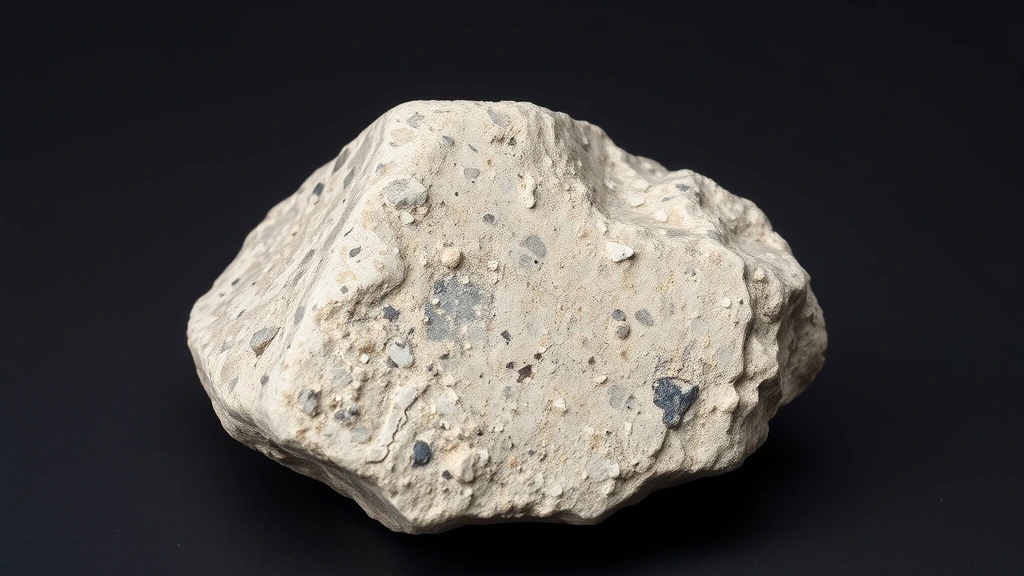
Chiastolite belongs to the natural mineral group of silicate crystals, specifically the andalusite polymorph of Al₂SiO₅. Formed under low‑pressure, high‑temperature conditions of regional metamorphism, it crystallizes in the orthorhombic system and often occurs in schist, gneiss, and quartzite. The characteristic cross‑shaped inclusions are composed of graphite or other carbonaceous material, giving the stone its historic name “cross stone.” Its durability and striking pattern have made it a favored material for jewelry, lapidary art, and metaphysical practices across cultures.
What is Chiastolite (cross Stone)? Geological Overview & Definition
Chiastolite is a metamorphic silicate that represents a distinct variety of andalusite, distinguished by a dark, cruciform inclusion pattern visible on polished surfaces. These inclusions form during crystal growth when carbon‑rich fluids become trapped, creating the iconic cross that has been revered in ancient lapidary traditions.
The stone typically occurs in medium‑grade metamorphic terrains where aluminum‑rich sediments have been subjected to temperatures of 300–500 °C and pressures of 2–8 kbar. It is commonly extracted from metamorphic belts in Brazil, the United States, and parts of Europe, where it appears as tabular to prismatic crystals embedded in host rocks such as schist and quartzite.
Chiastolite (cross Stone) Chemical Composition & Crystallographic Properties
Chiastolite’s chemical formula Al₂SiO₅ places it within the aluminosilicate family, sharing its composition with the polymorphs kyanite and sillimanite. Its orthorhombic crystal system features three mutually perpendicular axes of unequal length, producing a characteristic prismatic habit that can be cleaved along {010}.
The lattice accommodates limited cation substitution, allowing trace amounts of Fe³⁺, Mg²⁺, or Ti⁴⁺ to replace Al³⁺ without disrupting the overall structure. Such substitutions can subtly shift the refractive index (1.62–1.63) and influence the stone’s density (3.13–3.16 g cm⁻³). In comparative mineralogical collections, practitioners and geologists frequently study Black Kyanite alongside this crystal to appreciate their subtle energetic and structural differences.
Chiastolite is relatively acid‑sensitive; prolonged exposure to strong acids can leach surface aluminum and degrade the crystal lattice, especially along cleavage planes. However, the embedded carbonaceous inclusions are more resistant, preserving the cross pattern even after mild chemical weathering. Similarly, the fossilized ammonite Orthoceras demonstrates remarkable resilience to acidic environments, making it a useful comparative example when discussing Chiastolite’s durability under chemical exposure.
The dark cruciform zones act as chromophore centers, absorbing specific wavelengths and imparting the stone’s deep green to brown‑black hues. Upon heating above 600 °C, these inclusions can oxidize, causing the cross to fade and the crystal to assume a more uniform coloration, a transformation noted in archaeological heat‑treatment practices.
| Property | Specification |
|---|---|
| Mineral Group | Natural Mineral / Crystal |
| Chemical Formula | Al₂SiO₅ (Andalusite) |
| Mohs Hardness | 7.0 – 7.5 |
| Crystal System | Orthorhombic |
| Specific Gravity (Density) | 3.13 – 3.16 |
| Refractive Index | 1.62 – 1.63 |
| Color & Optical Properties | Natural Chiastolite (cross Stone) color spectrum and optical dispersion |
| Primary Mining Localities | Global primary localities |
| Water & Chemical Resistance | High (Safe for gentle water washing) |
| Chakra Alignment (Traditional) | Heart Chakra |
| Zodiac Affinity (Traditional) | Taurus, Libra |
| Symbolic Meaning (Traditional) | Emotional balance, inner peace, and spiritual clarity |
Chiastolite (cross Stone) Varieties & Color Spectrum
Chiastolite (cross Stone) displays distinct mineralogical characteristics across its geological varieties and structural habits. Gemologists evaluate these natural varieties based on crystal habit, trace chromophore concentrations, and visual luster.
Primary Natural Chiastolite (cross Stone)
The benchmark natural variety exhibiting diagnostic color saturation and classic crystallographic symmetry.
Distinct Geological Morphs of Chiastolite (cross Stone)
Secondary regional and structural varieties formed under localized geological temperature and pressure conditions.
Andalusite Chiastolite
This variety derives from orthorhombic Andalusite (Al₂SiO₅) and displays a distinctive cross‑shaped banding. The cross is formed by intersecting inclusions of mica and quartz that refract light differently, creating a subtle, almost invisible cross when viewed from certain angles. Andalusite chiastolite is typically found in light brown to reddish‑brown hues, with a slight greenish tint in some specimens. Its rarity stems from the precise pressure–temperature conditions required for the cross‑banding to develop, making it a prized collector’s item.
Kyanite Chiastolite
Kyanite, another polymorph of Al₂SiO₅, can occasionally exhibit cross‑banding when it crystallizes in elongated, fibrous formations. The cross appears as a faint, blue‑tinged intersection due to the mineral’s high refractive index (1.62–1.63). These specimens are usually blue‑green to gray and are most often found in metamorphic pegmatites. Because kyanite is less common than Andalusite, kyanite chiastolite is considered a rare find, prized for its striking color contrast.
Sillimanite Chiastolite
Sillimanite, the third polymorph of Al₂SiO₅, rarely shows cross‑banding. When present, the cross is subtle, formed by thin, parallel layers of quartz inclusions that intersect at right angles. The stone typically presents a white to pale gray background with faint brown or greenish streaks. Sillimanite chiastolite is extremely uncommon, largely due to the narrow stability field of sillimanite and the specific conditions required for cross‑banding.
Black Chiastolite (Jet‑like Variant)
Some Andalusite chiastolite specimens develop a blackened, jet‑like appearance when subjected to high‑temperature metamorphism. The cross is still visible, but the overall color shifts to a deep black or charcoal gray. These stones often contain graphitic inclusions that enhance the cross effect. Black chiastolite is prized for its dramatic contrast and is often used in jewelry that emphasizes bold, symbolic motifs.
Green Chiastolite (Emerald‑tinted Variant)
In certain localities, Andalusite chiastolite incorporates trace amounts of chromium or vanadium, imparting a subtle green hue. The cross remains visible, but the green tint gives the stone an emerald‑like sheen. These specimens are typically found in greenish‑brown to olive color ranges. Green chiastolite is moderately rare, with most known specimens originating from the Sierra Nevada region of Spain.
Red Chiastolite (Ruby‑tinted Variant)
Red chiastolite occurs when iron oxides are incorporated during crystallization, producing a reddish‑brown background. The cross is accentuated by the contrasting iron‑rich inclusions. These stones are often found in red‑brown to maroon color ranges and are considered rare due to the limited availability of iron‑rich Andalusite deposits.
Where is Chiastolite (cross Stone) Found? Geological Mining & Extraction
Chiastolite is typically extracted from orthorhombic pegmatite veins within metamorphic terranes, where the high‑temperature, high‑pressure environment favors the formation of Andalusite, kyanite, and sillimanite. The most prolific deposits are located in the Sierra Nevada of Spain, the Alps of Europe, and the Carpathian region of Eastern Europe. Mining operations focus on hand‑cutting and laser‑sawing to preserve the delicate cross‑banding, followed by careful polishing to enhance the visual effect.
Historical Significance & Cultural Lore of Chiastolite (cross Stone)
Across ancient lapidary traditions, chiastolite has been revered for its symbolic cross, representing balance and harmony. In Greco‑Roman culture, the stone was incorporated into amulets believed to protect against emotional turmoil, while Egyptian artisans used it in jewelry that symbolized the cross of life. Chinese texts from the Han dynasty reference a similar stone, noting its use in spiritual rituals to promote inner peace. These historical uses underscore chiastolite’s enduring appeal as a symbol of emotional balance and spiritual clarity.
Modern Uses & Jewelry Applications of Chiastolite (cross Stone)
Chiastolite, a variety of andalusite, is prized for its distinctive cross‑shaped banding, which lends itself to elegant lapidary treatments. Skilled cutters often produce cabochons that accentuate the stone’s natural cross, while faceted cuts highlight its refractive properties and subtle pleochroism. In addition, artisans carve ornamental pieces—such as pendants, brooches, and decorative panels—using the stone’s contrasting colors to create visual intrigue.
- Cabochon: Polished, domed surface that showcases the cross pattern.
- Faceted: Multiple facets enhance brilliance and reveal internal structure.
- Ornamental carving: Engraved or inlaid designs for jewelry and decorative objects.
Metaphysical Properties & Traditional Meaning of Chiastolite (cross Stone)
According to historical traditions and metaphysical lore, Chiastolite is associated with emotional balance and inner peace. Across ancient Mediterranean and Vedic lapidary practices, the stone’s cross motif symbolizes the intersection of the physical and spiritual realms, encouraging the wearer to align heart energy with universal harmony. Its reputed ability to foster spiritual clarity makes it a favored talisman for meditation and healing rituals.
Which Chakra and Zodiac Signs Align with Chiastolite (cross Stone)?
Chiastolite is traditionally linked to the Heart Chakra, the center of compassion and emotional equilibrium. The stone’s soothing energy is believed to open the heart to love and forgiveness, fostering a sense of well‑being.
Chiastolite aligns with the zodiac signs Taurus and Libra. Those born under these signs are thought to resonate with the stone’s grounding and balancing qualities, enhancing stability and harmonious relationships.
How to Identify Real vs. Fake Chiastolite (cross Stone)
Artificial imitations of Chiastolite often appear as synthetic glass or dyed quartz, lacking the mineral’s characteristic orthorhombic crystal structure and natural cross banding. Synthetic replicas may also exhibit uniform coloration and absence of internal inclusions, distinguishing them from genuine specimens.
Practical At-Home Authenticity Tests
- Temperature Test (Thermal Feel): Real Chiastolite feels noticeably cooler to the touch than glass or synthetic stones, reflecting its higher thermal conductivity.
- Specific Gravity & Weight Test: Measure the stone’s weight relative to its volume; authentic Chiastolite typically has a specific gravity between 3.13 and 3.16, heavier than most glass substitutes.
- Scratch & Hardness Test (Mohs Comparison): Use a standard Mohs hardness kit; Chiastolite should scratch materials rated below 7.0–7.5 and resist scratching by harder substances.
- Microscopic & Loupe Inspection (Internal Inclusions): Under magnification, genuine Chiastolite displays characteristic fibrous inclusions and pleochroic streaks, whereas synthetic versions often show uniform texture and lack of internal features.
Chiastolite (cross Stone) Valuation Factors, Grading & Pricing
The primary determinant of market value is Color Saturation, specifically the stark contrast between the dark chiastolite inclusions and the lighter andalusite host. High-grade specimens exhibit deep, opaque black crosses that stand out sharply against a pale, translucent background. This visual vibrancy enhances the stone’s natural energetic luster, making it highly desirable for lapidary work.
Valuation also depends heavily on Crystal Size & Weight (Grams), as larger pieces command significantly higher prices due to rarity. Raw specimens are assessed by their dimensional integrity, while tumbled stones are graded on the quality of their polish and surface finish. Natural matrix inclusions are often preserved to highlight the unique geological formation of the cross patterns.
Finally, Ethical Sourcing & Locality Premium plays a crucial role in the holistic and collector markets. Stones from renowned historical localities often carry a price premium due to their archaeological and metaphysical significance. Buyers increasingly prioritize provenance, ensuring that extraction methods respect environmental standards and local mining communities.
How to Clean and Care for Chiastolite (cross Stone)
Chiastolite possesses a robust Mohs Hardness of 7.0 to 7.5, making it highly resistant to physical abrasion and chemical degradation. For routine maintenance, immerse the stone in warm soapy water and gently agitate it with a soft cloth to remove surface oils. This method effectively restores the stone’s natural luster without damaging its structural integrity.
Due to its high water resistance and stable crystal lattice, chiastolite is safe for ultrasonic cleaning. This advanced cleaning method is particularly effective for intricate carvings or tumbled stones where manual cleaning might be difficult. Always ensure the ultrasonic cleaner is set to a standard frequency to avoid any potential stress on the mineral.
Cleansing and Recharging Chiastolite (cross Stone) (Energetic Care)
For holistic energetic maintenance, practitioners often employ herbal smudging to clear stagnant energy from the stone’s lattice. Passing the chiastolite through the smoke of sage or palo santo is a traditional method that requires no physical contact. This dry technique preserves the stone’s surface while addressing its metaphysical properties according to ancient lapidary traditions.
Alternatively, placing the stone on a selenite charging slab allows for passive energy renewal through crystal resonance. This method leverages the natural piezoelectric properties of selenite to harmonize the chiastolite’s vibrational frequency. It is essential to avoid direct intense sunlight or domestic heating, as thermal shock can disrupt the mineral’s internal structure.
Frequently Asked Questions About Chiastolite (cross Stone)
Chiastolite (cross Stone) displays distinct mineralogical characteristics across its geological varieties and structural habits. Gemologists evaluate these natural varieties based on crystal habit, trace chromophore concentrations, and visual luster.
Primary Natural Chiastolite (cross Stone)
The benchmark natural variety exhibiting diagnostic color saturation and classic crystallographic symmetry.
Distinct Geological Morphs of Chiastolite (cross Stone)
Secondary regional and structural varieties formed under localized geological temperature and pressure conditions.
What is the chemical composition of chiastolite?
Chiastolite is a variety of the mineral Andalusite with the formula Al₂SiO₅. Andalusite crystallizes in the orthorhombic system, giving chiastolite its distinctive cross‑shaped inclusions that are prized in lapidary work. The mineral’s density ranges from 3.13 to 3.16 g/cm³, and it has a Mohs hardness of 7.0–7.5, making it durable for everyday jewelry.
Is chiastolite safe to wear in the shower?
Yes, chiastolite is highly water‑resistant and can be gently washed in the shower. Its crystalline structure resists water absorption, so a brief rinse or mild soap solution will not damage the stone. Avoid harsh chemicals or prolonged soaking, which could dull its natural luster.
Can I clean chiastolite with an ultrasonic cleaner?
Chiastolite can be safely cleaned in an ultrasonic cleaner using warm soapy water. The ultrasonic waves help remove surface grime without affecting the stone’s integrity. After cleaning, dry the piece with a soft cloth to prevent water spots and preserve its brilliance.
How should I store chiastolite to prevent damage?
Store chiastolite in a soft, lined pouch or a separate compartment of a jewelry box. This protects it from scratches and accidental impacts. Avoid storing it with softer minerals like calcite or gypsum, which could scratch its surface over time.
Which zodiac signs are associated with chiastolite?
Chiastolite is linked to the zodiac signs Taurus and Libra. In astrological traditions, these signs are said to resonate with the stone’s calming and balancing energies, supporting emotional equilibrium and harmonious relationships.
Which chakra does chiastolite correspond to?
Chiastolite is connected to the Heart Chakra. This association reflects the stone’s reputed ability to promote emotional balance, inner peace, and spiritual clarity, aligning with the heart’s role in love and compassion.
Does chiastolite have any special metaphysical properties?
Chiastolite is believed to foster emotional balance, inner peace, and spiritual clarity. In metaphysical lore, the stone’s cross pattern symbolizes unity and harmony, encouraging wearers to seek equilibrium between body, mind, and spirit.
Can chiastolite be used for polishing or as a in jewelry?
Yes, chiastolite is suitable for polishing and use in jewelry. Its hardness and resistance to abrasion make it a reliable choice for rings, pendants, and bracelets. Proper polishing enhances its natural cross‑shaped inclusions, creating a striking visual effect that appeals to collectors and enthusiasts alike.