
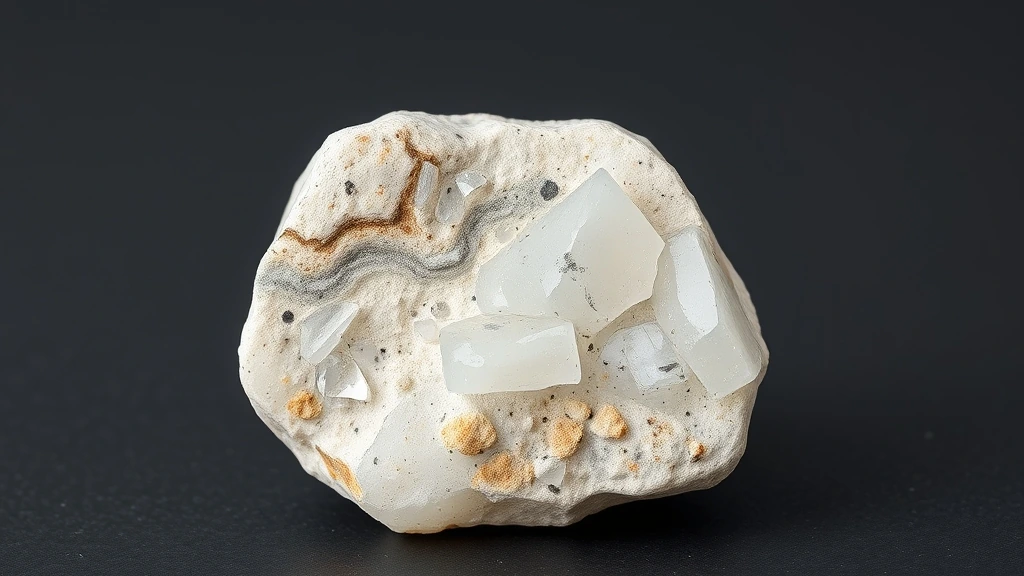
Quartzite belongs to the silicate family, specifically the tectosilicate subgroup known as the Quartz Group. Formed by the recrystallization of pure quartz sandstone under regional metamorphism, it inherits the dense, interlocking grain structure of its parent mineral. This process eliminates porosity, yielding a rock that is both chemically simple and physically robust, prized in jewelry for its clarity and durability.
What is Quartzite Gemstone? Geological Overview & Definition
Quartzite is a metamorphic aggregate in which individual quartz crystals have fused together during high‑temperature, high‑pressure events. The resulting rock retains the trigonal (rhombohedral / trapezohedral) crystal symmetry of its quartz constituents, even though the aggregate itself lacks a single, continuous lattice.
In gemological terms, quartzite is valued for its translucent to opaque appearance, often displaying subtle veining or color zoning that enhances its aesthetic appeal. While it is not a single crystal, its uniform composition of quartz grains gives it a consistent refractive index and hardness, allowing it to be cut into cabochons, beads, and polished slabs for high‑end jewelry.
Quartzite Gemstone Chemical Composition & Crystallographic Properties
The primary chemical constituent of quartzite is SiO₂, inherited from the quartz grains that dominate its fabric. Because quartzite is an aggregate rather than a single mineral, its overall formula reflects the sum of its quartz components, without additional cations or anions. This simplicity accounts for its chemical stability and resistance to most acids, though prolonged exposure to hydrofluoric acid can etch the surface.
Each quartz grain within quartzite retains the trigonal (rhombohedral / trapezohedral) crystal system, characterized by a three‑fold rotational axis and a hexagonal lattice that is slightly distorted. The grains interlock in a mosaic pattern, eliminating preferred orientation but preserving the fundamental symmetry of quartz at the microscopic level.
Color variations arise from chromophore impurities such as iron oxides, titanium, or manganese that substitute into the quartz lattice during metamorphism. These trace elements create color centers that absorb specific wavelengths, producing hues ranging from pale pink to deep amber. The overall color is further modulated by fluid inclusions and micro‑fractures that scatter light.
Thermally, quartzite remains stable up to about 800 °C, beyond which quartz undergoes the α‑β transition, potentially causing micro‑cracking. Upon heating, the rock expands anisotropically due to the directional nature of the trigonal lattice, a factor gem cutters consider when annealing or stabilizing the stone. Its low thermal conductivity also makes quartzite an effective heat sink in ornamental applications.
| Property | Specification |
|---|---|
| Mineral Group | Silicates (Tectosilicates / Quartz Group) |
| Chemical Formula | SiO₂ (Silicon Dioxide) |
| Mohs Hardness | 7.0 |
| Crystal System | Trigonal (Rhombohedral / Trapezohedral) |
| Specific Gravity (Density) | 2.65 |
| Refractive Index | 1.544 – 1.553 |
| Color & Optical Properties | Natural Quartzite Gemstone color spectrum and optical dispersion |
| Primary Mining Localities | Brazil, Madagascar, USA (Arkansas), Swiss Alps |
| Water & Chemical Resistance | High (Fully resistant to water and moisture) |
| Chakra Alignment (Traditional) | All Chakras (Universal Harmonizer) |
| Zodiac Affinity (Traditional) | All Zodiac Signs (Especially Leo and Aries) |
| Symbolic Meaning (Traditional) | Master energy amplifier, clarity, purification, and focus |
Quartz Varieties & Comprehensive Sub‑Types
Amethyst
Amethyst forms in hydrothermal veins where silica‑rich fluids encounter iron impurities; irradiation of Fe³⁺ to Fe⁴⁺ creates the characteristic violet to royal‑purple hue. The crystals grow as macrocrystalline trigonal prisms, often displaying parallel banding and occasional cavernous inclusions of quartz‑rich fluid. Commercially, amethyst ranks among the highest‑value quartz gems, prized for its clarity and its traditional association with the crown chakra and third‑eye meditation.
Citrine
Citrine originates in the same iron‑bearing quartz deposits as amethyst, but natural solar‑induced coloration is rare; most market citrine is produced by controlled heat‑treatment of amethyst, converting Fe⁴⁺ centers to yellow‑orange colloidal states. The resulting stones exhibit a honey‑gold translucence with occasional growth zoning that can mimic natural banding. Because of its abundance through treatment, citrine is widely available and celebrated as a solar‑plexus prosperity stone in modern jewelry.
Rose Quartz
Rose quartz develops in silica‑rich sedimentary basins where microscopic fibrous inclusions of a dumortierite‑like borosilicate mineral scatter light, imparting a soft pink to rose‑red color. The crystal habit is typically massive and cryptocrystalline, lacking the well‑defined prisms seen in other quartz varieties. High‑grade rose quartz is sourced mainly from Brazil and Madagascar and is revered as the premier heart‑chakra crystal for its gentle, nurturing energy.
Smoky Quartz
Smoky quartz acquires its translucent brown to deep black tone through natural radioactive irradiation of aluminum impurity centers within the crystal lattice. The coloration is often uniform, though some stones display parallel growth bands that accentuate depth. Because the stone is abundant in pegmatitic deposits worldwide, smoky quartz is a staple in both ornamental and metaphysical markets, valued as a master grounding stone.
Rutilated Quartz
Rutilated quartz forms when acicular rutile (TiO₂) needles infiltrate a clear quartz host during slow crystallization in pegmatites, producing striking golden, copper, or black inclusions. The needles may align parallel to the crystal’s c‑axis, creating a “starburst” effect that is highly prized by collectors. Trade‑grade rutilated quartz commands premium prices, especially when the rutile is densely packed yet does not compromise overall transparency.
Strawberry Quartz
Strawberry quartz is a clear or pale pink quartz matrix that incorporates red‑orange specks of lepidocrocite, hematite, or goethite, often appearing as a natural “strawberry” pattern. These iron‑oxide inclusions form during late‑stage hydrothermal alteration, producing a flecked appearance that distinguishes it from dyed pink quartz. While less common than other varieties, high‑quality strawberry quartz is sought after for its unique aesthetic and its association with emotional balance.
Ametrine
Ametrine is a rare, naturally zoned quartz that displays distinct sectors of amethyst (purple) and citrine (golden yellow) within a single crystal lattice. This zoning results from variable iron oxidation states across the growth chamber of the Anahi mine in Bolivia, where temperature gradients cause differential irradiation. Because true natural ametrine is scarce, it commands high prices and is celebrated for harmonizing the energies of both the crown and solar‑plexus chakras.
Prasiolite (Green Quartz)
Prasiolite, or green quartz, is produced by controlled heat treatment of iron‑bearing amethyst, converting Fe⁴⁺ centers to a pale leek‑green hue. The process yields transparent macrocrystalline stones with subtle growth banding that can be enhanced by polishing. Though synthetic green quartz exists, natural‑origin prasiolite from Brazil and the United States remains the most valued, prized for its soothing green color and association with the heart chakra.
Comparative Summary – Gemologists differentiate these quartz varieties primarily through color origin (irradiation, heat‑treatment, or inclusions), inclusion type (rutile needles, iron‑oxide specks, or fibrous borosilicates), and crystallographic features such as banding, zoning, and habit. Microscopic spectroscopy confirms Fe⁴⁺ versus Fe³⁺ states, while polarized light microscopy reveals rutile orientation, enabling precise classification for trade and appraisal.
Where is Quartzite Gemstone Found? Geological Mining & Extraction
Quartzite gemstones are harvested from pegmatitic veins and hydrothermal quartz veins that cut through granitic host rocks, where slow cooling allows large, well‑formed crystals to develop. Major extraction zones include Brazil’s Minas Gerais, Madagascar’s Ilakaka region, and the United States’ Arkansas and California pegmatite districts, each offering distinct crystal sizes and purity levels.
In these locales, mining employs selective hand‑picking and controlled blasting to preserve crystal integrity, followed by flotation and hand‑sorting to separate gem‑quality quartz from matrix material. The final stones are then cut on precision lapidary equipment to maximize brilliance while retaining characteristic inclusions that define each variety.
Historical Significance & Cultural Lore of Quartzite Gemstone
Since antiquity, quartzite has adorned Egyptian pharaohs, Roman triumphs, and Mesoamerican altars, valued for its durability and perceived ability to channel divine energy. Archaeological finds include polished amethyst intaglios from the 6th century BC and rose‑quartz beads recovered from Indus‑Valley sites, underscoring its widespread ceremonial use.
Across cultures, quartzite has been linked to spiritual purification, with amethyst guarding against intoxication in Greek lore, citrine symbolizing solar power in Hindu tradition, and smoky quartz serving as a protective talisman among Native American tribes. These enduring narratives reinforce quartzite’s role as a universal harmonizer of body, mind, and spirit.
Modern Uses & Jewelry Applications of Quartzite Gemstone
Quartzite is prized for its durability and vibrant coloration, making it ideal for high-wear jewelry pieces. Its Mohs hardness of 7.0 ensures it resists everyday scratches better than many other gemstones. Lapidaries often cut it into faceted stones or smooth cabochons to highlight its unique banding patterns.
- Faceted Cuts: Standard brilliant or oval cuts maximize brilliance in clear or saturated specimens.
- Cabochons: Smooth, domed cuts are preferred for translucent stones with distinct internal patterns.
- Ornamental Carving: Large blocks are carved into sculptures, inlays, and architectural accents due to their strength.
Metaphysical Uses & Origins of Quartzite
According to historical traditions and metaphysical lore, quartzite is revered as a powerful stone of clarity and purification. Practitioners believe it acts as a master energy amplifier, enhancing the wearer’s focus and mental acuity. It is often used to dispel negative thoughts and promote a state of calm, objective observation.
This stone is associated with emotional resonance that encourages self-reliance and inner strength. It is thought to help individuals maintain their center during chaotic times. By aligning with universal energies, quartzite supports holistic well-being and spiritual grounding.
Which Chakra and Zodiac Signs Align with Quartzite Gemstone?
Quartzite is traditionally aligned with All Chakras, serving as a universal harmonizer. It is believed to balance the entire energy system, ensuring smooth flow from the root to the crown. This comprehensive alignment makes it a versatile tool for meditation and energy work.
In astrology, quartzite resonates with All Zodiac Signs, though it holds special affinity for Leo and Aries. These fire signs appreciate the stone’s ability to amplify confidence and drive. Its energetic properties support the bold and expressive nature of these zodiacal archetypes.
How to Identify Real vs. Fake Quartzite Gemstone
Buyers must be cautious of artificial imitations, including synthetic glass and dyed replicas. Glass imitations often lack the natural inclusions and specific weight of genuine quartzite. Dyed stones may show color pooling in fractures, which is a clear sign of artificial enhancement.
Practical At-Home Authenticity Tests
- Temperature Test (Thermal Feel): Genuine quartzite feels cool to the touch initially and warms slowly. Glass imitations tend to warm up much faster due to different thermal conductivity properties.
- Specific Gravity & Weight Test: Real quartzite has a density of 2.65, making it feel heavier than similarly sized glass. If the stone feels surprisingly light, it may be a low-density imitation.
- Scratch & Hardness Test (Mohs Comparison): With a Mohs hardness of 7.0, quartzite will scratch glass and steel easily. It should not be scratched by a steel knife, which tests for hardness around 5.5.
- Microscopic & Loupe Inspection (Internal Inclusions): Use a 10x loupe to check for natural inclusions like mineral specks or fluid-filled fractures. Perfectly clear stones with no internal features may indicate synthetic glass or high-quality lab-grown material.
Quartzite Gemstone Valuation Factors, Grading & Pricing
Market value hinges primarily on Color Saturation and overall tone uniformity across the stone. High-grade specimens display vivid, consistent hues without muddy or patchy areas. Additionally, optical clarity and a strong vitreous luster significantly enhance desirability among collectors.
Carat Weight directly influences price, with larger, flawless stones commanding exponential premiums. Precise facet symmetry ensures optimal light return, maximizing the gem’s visual brilliance. Conversely, visible matrix inclusions or internal fractures can drastically reduce the final valuation.
Geographical Provenance Premium often elevates prices for stones from renowned localities. Current wholesale trends show steady demand for high-quality material, while retail margins remain robust. Understanding these market dynamics helps buyers negotiate fair prices for premium quartzite.
How to Clean and Care for Quartzite Gemstone
Due to its high water resistance, quartzite is easily cleaned with warm water and mild soap. Gently scrub the surface with a soft brush to remove dirt and oils. This method safely preserves the stone’s polish without causing chemical damage.
The gem is suitable for ultrasonic cleaning unless it is heavily fractured. Always inspect the stone for cracks before using an ultrasonic cleaner. If significant fractures exist, stick to manual cleaning to prevent further structural damage.
Cleansing and Recharging Quartzite Gemstone (Energetic Care)
For energetic maintenance, use dry methods that respect the mineral’s physical integrity. Smoke smudging with sage or palo santo is a popular technique for clearing negative energy. This process requires no water, ensuring the stone remains completely dry and safe.
Alternatively, place the quartzite on a selenite plate or expose it to moonlight overnight. These methods gently recharge the stone’s vibrational frequency without physical stress. Avoid direct sunlight for prolonged periods to prevent potential color fading.
Frequently Asked Questions About Quartzite Gemstone
What is the chemical composition of quartzite?
Quartzite is composed entirely of silicon dioxide (SiO₂). This pure mineral structure results from the metamorphic transformation of sandstone under intense heat and pressure. The SiO₂ lattice provides exceptional chemical stability and durability. It resists most acids and environmental degradation effectively.
How hard is quartzite on the Mohs scale?
Quartzite rates a 7.0 on the Mohs hardness scale. This makes it significantly harder than steel and resistant to everyday scratches. Its Mohs hardness ensures longevity for jewelry and architectural applications. It rivals the durability of natural quartz crystals.
Can I wear quartzite jewelry in the shower?
Yes, quartzite is fully resistant to water and moisture. You can safely wear it during showers or swimming without damage. Its high water resistance prevents any structural weakening or discoloration. It remains stable even in prolonged wet conditions.
Is quartzite suitable for ultrasonic cleaning?
Yes, it is suitable for ultrasonic cleaning unless heavily fractured. You can also use warm water and mild soap for routine maintenance. Ensure the stone lacks significant internal cracks before using an ultrasonic cleaner. This method effectively removes oils and debris safely.
Which zodiac signs align with quartzite?
Quartzite aligns with all zodiac signs, especially Leo and Aries. Its universal energy supports every astrological profile effectively. However, it resonates strongly with the fire signs Leo and Aries. These connections enhance vitality, courage, and personal power.
Which chakras does quartzite activate?
Quartzite activates all chakras as a universal harmonizer. It balances the entire energetic system simultaneously. This stone serves as a universal harmonizer for spiritual practitioners. It promotes holistic alignment without favoring a single center.
What is the crystal system of quartzite?
Quartzite belongs to the trigonal crystal system. Specifically, it exhibits rhombohedral or trapezohedral forms. This trigonal structure influences its optical properties and cleavage patterns. Understanding this helps identify authentic specimens accurately.
What is the refractive index of quartzite?
Quartzite has a refractive index between 1.544 and 1.553. This value determines how light bends through the stone. The refractive index contributes to its characteristic luster and brilliance. It is slightly lower than diamond but higher than glass.