
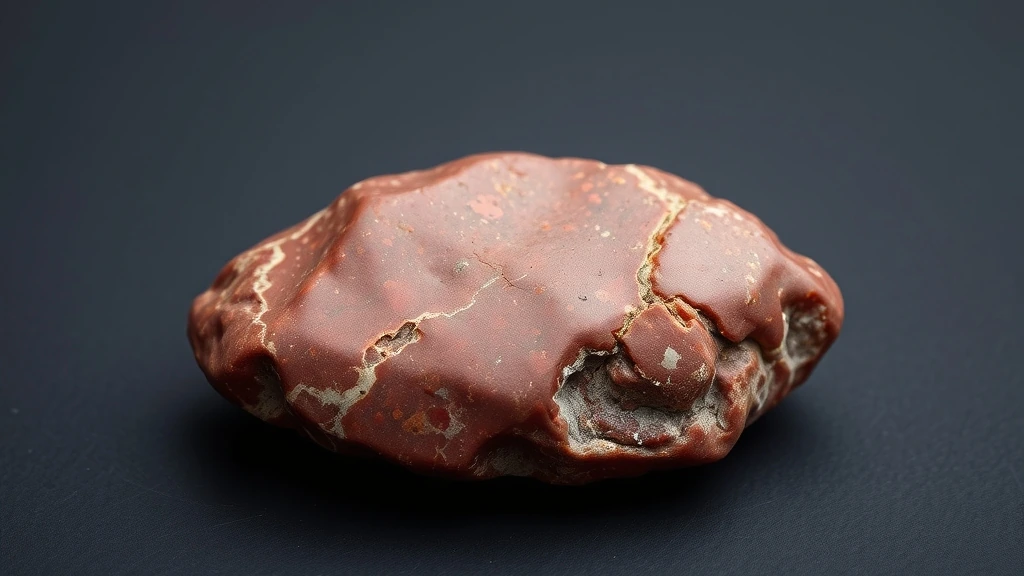
Red Jasper belongs to the natural mineral/crystal family, specifically the chalcedony subgroup of microcrystalline quartz. Formed in sedimentary basins and volcanic tuffs, it is an aggregate of intergrown silica fibers that solidify under low‑temperature hydrothermal conditions, preserving the trigonal symmetry of its quartz constituents.
What is Red Jasper Gemstone? Geological Overview & Definition
Red Jasper is an aggregate of microcrystalline quartz (SiO₂) whose red hue originates from finely dispersed Fe₂O₃ particles acting as chromophores. The stone typically occurs in nodular or massive forms within sedimentary iron‑rich layers, where silica‑rich fluids precipitate and replace the host material.
In gemological terms, Red Jasper is classified as a chalcedony variety, distinguished from true jasper by its finer grain size and more uniform coloration. Its trigonal crystal system is inherited from the quartz crystals that compose the aggregate, even though the rock itself lacks a single, continuous lattice.
Red Jasper Gemstone Chemical Composition & Crystallographic Properties
The primary component of Red Jasper is microcrystalline quartz (SiO₂), with iron oxide (Fe₂O₃) substituting for trace silicon sites, creating the characteristic red coloration. Because it is an aggregate rather than a single crystal, the overall density ranges from 2.58 to 2.64 g/cm³ and the refractive index varies between 1.530 and 1.543.
Its trigonal crystal system reflects the underlying quartz lattice, where each silica tetrahedron shares oxygen atoms in a continuous three‑dimensional network. The intergrowth of countless tiny crystals yields a cryptocrystalline texture that is isotropic to the naked eye but reveals subtle anisotropy under polarized light.
Red Jasper is acid‑sensitive; exposure to strong acids can dissolve the silica framework, releasing iron ions and dulling the surface. Thermal treatment up to about 400 °C can enhance the red hue by driving off adsorbed water and promoting oxidation of Fe²⁺ to Fe³⁺, deepening the chromophore effect.
Overall, the stone’s chemical stability, combined with its moderate hardness and vibrant color, makes Red Jasper a prized material for carvings, beads, and ornamental objects that require both durability and aesthetic appeal.
| Property | Specification |
|---|---|
| Mineral Group | Natural Mineral / Crystal |
| Chemical Formula | SiO₂ (Chalcedony variety, impure with Fe₂O₃) |
| Mohs Hardness | 6.5 – 7.0 |
| Crystal System | Trigonal |
| Specific Gravity (Density) | 2.58 – 2.64 |
| Refractive Index | 1.530 – 1.543 |
| Color & Optical Properties | Natural Red Jasper Gemstone color spectrum and optical dispersion |
| Primary Mining Localities | Global primary localities |
| Water & Chemical Resistance | High (Safe for gentle water washing) |
| Chakra Alignment (Traditional) | Root Chakra |
| Zodiac Affinity (Traditional) | Taurus, Virgo, Capricorn |
| Symbolic Meaning (Traditional) | Grounding, physical vitality, and emotional stability |
Jasper Varieties & Comprehensive Sub‑Types
Red Jasper
Red Jasper forms in silicified sedimentary basins where iron‑rich fluids precipitate hematite micro‑inclusions within chalcedony. The resulting deep terracotta‑red, opaque stone displays a uniform microcrystalline texture and occasional faint banding caused by variations in Fe₂O₃ concentration. Because of its intense color and grounding properties, it commands a strong market presence as the premier root‑chakra stone for both collectors and metaphysical practitioners.
Ocean Jasper (Orbicular Jasper)
Ocean Jasper originates from silicified rhyolite intrusions on Madagascar’s southern plateau, where rapid cooling creates concentric, orbicular “eyes.” These spherical patterns are composed of alternating layers of quartz and iron oxides, giving each eye a multicolored halo of reds, greens, and blues. Its rarity and striking visual effect make it a high‑value item in the gemstone trade, especially among lapidary artists seeking unique ornamental cabochons.
Picture Jasper (Landscape Jasper)
Picture Jasper develops in volcanic ash deposits that later undergo silicification, preserving dendritic iron‑oxide veins that resemble miniature landscapes. The stone’s warm tan, desert‑brown, and sand‑colored palette is accentuated by natural “scene” inclusions such as river‑like streaks and horizon‑like bands. Its evocative imagery drives demand among jewelry designers who market it as a “living painting” in polished beads and pendants.
Bumblebee Jasper
Bumblebee Jasper is a volcanic sedimentary rock formed from eruptions in Indonesia’s high‑temperature volcanic arcs. It contains vivid bands of sulfur‑rich realgar/orpiment interleaved with hematite, producing the characteristic yellow‑black striping reminiscent of a bumblebee’s coat. The striking contrast and limited supply keep it a niche collector’s item, prized for both its bold aesthetic and its rarity in the global market.
Mookaite Jasper
Mookaite Jasper derives from silicified radiolarian ooze deposited in the Mooka Creek basin of Western Australia. The stone’s swirling patterns of burgundy, mustard, and cream arise from radiolarian skeletons cemented by silica and tinted by iron oxides. Its distinctive color play and relatively abundant Australian sources make it a staple in commercial jewelry, often cut into cabochons and beads for mass‑market collections.
Dalmatian Jasper
Dalmatian Jasper forms within feldspar‑quartz host rocks that have been infiltrated by black arfvedsonite amphibole nodules. The resulting creamy matrix dotted with sharp black speckles mimics the coat of a Dalmatian dog, giving the stone its name. Though not as hard as true quartz, its eye‑catching pattern secures a steady niche market for ornamental carvings and decorative tiles.
Comparative Summary: In lapidary practice, gemologists differentiate these jasper varieties by examining inclusion type, banding morphology, and host rock context—hematite‑rich micro‑particles for Red Jasper, concentric orbicular eyes for Ocean Jasper, dendritic landscape veins for Picture Jasper, sulfur‑arsenic bands for Bumblebee Jasper, radiolarian‑derived swirls for Mookaite, and amphibole speckles for Dalmatian. Microscopic petrographic analysis and refractive‑index testing (1.530‑1.543) confirm each variety’s unique mineralogical fingerprint.
Where is Red Jasper Gemstone Found? Geological Mining & Extraction
Red Jasper is primarily extracted from silicified sandstone and limestone formations where iron‑oxide‑rich fluids have percolated during diagenesis. These deposits occur in the United States (particularly the Great Plains of Nebraska and Kansas), Brazil’s Minas Gerais region, and parts of India’s Rajasthan state, where open‑pit mining and hand‑picking methods are employed.
Modern extraction relies on controlled blasting and hydraulic separation to liberate the dense, opaque nodules from surrounding matrix rock. After removal, the material is washed, sorted by color intensity, and sent to cutting facilities where it is shaped into cabochons, beads, or ornamental slabs for the gemstone market.
Historical Significance & Cultural Lore of Red Jasper Gemstone
Red Jasper has been treasured since the Neolithic era, appearing in burial chambers of the Indus Valley and as talismans in ancient Egyptian tombs, where it symbolized blood, life, and protection. Archaeologists have uncovered polished Red Jasper beads in Mycenaean graves, indicating its role in trade networks that linked the Mediterranean to the Near East.
In folklore, the stone was believed to anchor the wearer’s spirit to the earth, enhancing physical vitality and emotional stability—attributes still echoed in modern metaphysical practices that associate Red Jasper with the Root Chakra. Its enduring reputation as a grounding talisman underscores a cross‑cultural reverence that spans millennia.
Modern Uses & Jewelry Applications of Red Jasper Gemstone
Red Jasper is primarily valued for its durability and opaque, earthy aesthetic, making it ideal for cabochon cutting rather than faceting. The stone’s high Mohs hardness allows lapidaries to polish it into smooth, rounded domes that showcase its uniform color and subtle banding patterns. This material is extensively used in men’s jewelry, including signet rings and cufflinks, where its rugged appearance complements masculine design elements.
- Cabochons: The most common cut, highlighting the stone’s waxy luster and deep red hues.
- Carvings: Frequently sculpted into cameos, intaglios, and religious icons due to its resistance to chipping.
- Architectural Ornamentation: Used in historical mosaics and modern decorative inlays for its consistent color saturation.
- Beads & Pendants: Cut into uniform shapes for bracelets and necklaces, appealing to those seeking durable daily wear.
Metaphysical Properties & Traditional Meaning of Red Jasper Gemstone
According to historical traditions and metaphysical lore, Red Jasper is revered as a powerful stone of grounding and physical vitality. Ancient cultures believed it could anchor the wearer’s energy to the earth, providing a sense of stability during turbulent times. This stone is often associated with emotional stability, helping individuals manage stress and maintain a calm demeanor under pressure.
Practitioners suggest that Red Jasper enhances physical endurance and boosts confidence, making it a popular choice for athletes and performers. Its deep red color is symbolically linked to the life force, encouraging physical vitality and resilience. By fostering a connection to the natural world, the stone is said to promote a balanced and grounded state of being.
Which Chakra and Zodiac Signs Align with Red Jasper Gemstone?
In metaphysical practice, Red Jasper is strictly aligned with the Root Chakra, also known as Muladhara. This chakra governs survival, security, and basic physical needs, resonating deeply with the stone’s earthy energy. The stone’s dense, heavy nature is believed to stimulate this energy center, promoting a sense of safety and rootedness in the physical realm.
Astrologically, Red Jasper is canonically associated with the earth signs of Taurus, Virgo, and Capricorn. These zodiac signs share the stone’s characteristics of practicality, patience, and determination. Wearing Red Jasper is thought to amplify these innate traits, supporting the wearer’s goals through steady, consistent effort and reliable strength.
How to Identify Real vs. Fake Red Jasper Gemstone
Distinguishing genuine Red Jasper from artificial imitations requires attention to subtle visual and physical cues. Common fakes include dyed chalcedony, which may show uneven color distribution, and synthetic glass, which often lacks natural inclusions. Plastic replicas are also prevalent, typically feeling lighter and warmer to the touch than the real mineral.
Practical At-Home Authenticity Tests
- Temperature Test (Thermal Feel): Genuine Red Jasper feels cool to the touch initially and warms slowly, whereas plastic imitations feel room temperature immediately.
- Specific Gravity & Weight Test: Real jasper has a density of 2.58–2.64, making it feel noticeably heavier than glass or plastic of the same size.
- Scratch & Hardness Test (Mohs Comparison): With a Mohs hardness of 6.5–7.0, Red Jasper can scratch glass but will not be scratched by a steel knife.
- Microscopic & Loupe Inspection (Internal Inclusions): A 10x loupe reveals natural, irregular inclusions and color variations in real stone, while fakes often appear too uniform or contain bubbles.
Red Jasper Gemstone Valuation Factors, Grading & Pricing
The primary driver of value is Color Saturation, where deep, uniform red tones command higher prices. Consistency across the stone’s surface ensures visual appeal and market desirability. Additionally, a smooth, waxy luster enhances the gem’s overall optical clarity.
Carat Weight significantly influences pricing, as larger specimens are rarer and more sought after. Facet symmetry and polish quality also affect the final valuation of cut stones. The presence of distinct matrix patterns or inclusions can either increase or decrease value depending on aesthetic preference.
Geographical Provenance Premium often elevates prices for stones from renowned mines like Brazil or India. Wholesale values typically range from $10 to $50 per carat for standard quality. Retail prices may vary widely based on craftsmanship and brand positioning in the market.
How to Clean and Care for Red Jasper Gemstone
To maintain its integrity, always use warm soapy water and a soft cloth for gentle cleaning. This method effectively removes oils and dirt without damaging the stone’s surface. Avoid ultrasonic cleaners entirely, as vibrations can cause structural fractures in the chalcedony matrix.
Regular inspection ensures that any minor chips or cracks are identified early. Store the gemstone separately to prevent scratches from harder minerals. Proper handling preserves the natural luster and prevents long-term structural degradation.
Cleansing and Recharging Red Jasper Gemstone (Energetic Care)
For energetic maintenance, utilize smoke smudging with sage or palo santo to clear perceived negative energies. This dry method respects the mineral’s physical stability while addressing spiritual cleansing needs. Ensure the area is well-ventilated during this process to avoid residue buildup.
Alternatively, place the stone on a selenite plate or under moonlight for recharging. These passive techniques allow the gemstone to restore its vibrational balance safely. Avoid exposing it to direct sunlight for extended periods to prevent potential color fading.
Frequently Asked Questions About Red Jasper Gemstone
Is red jasper safe to wear in the shower?
Yes, red jasper is highly water-resistant and safe for gentle washing. As a dense variety of chalcedony, it does not dissolve or degrade when exposed to water. However, avoid harsh chemicals or prolonged soaking in hot tubs. Regular rinsing helps remove soap residue that can dull the stone’s natural matte finish over time.
Can I clean red jasper in an ultrasonic cleaner?
No, you should avoid ultrasonic cleaners for red jasper. The high-frequency vibrations can cause structural fractures within the stone’s microcrystalline structure. Instead, use warm soapy water and a soft cloth for safe maintenance. This gentle method preserves the integrity of the gemstone without risking internal damage.
Which zodiac signs are aligned with red jasper?
Red jasper is traditionally aligned with Taurus, Virgo, and Capricorn. These earth signs resonate with the stone’s stabilizing energy and practical nature. Wearing this gemstone is believed to enhance focus and determination for these individuals. It serves as a powerful talisman for grounding and physical vitality during challenging times.
What chakra does red jasper activate?
Red jasper primarily activates the Root Chakra. This energy center is associated with security, survival, and physical connection to the earth. The stone’s deep red color supports stability and emotional balance. It helps anchor your energy, fostering a sense of safety and groundedness in daily life.
How hard is red jasper on the Mohs scale?
Red jasper rates between 6.5 and 7.0 on the Mohs hardness scale. This makes it quite durable and resistant to scratches from common household materials. It is harder than most other semi-precious stones, making it ideal for everyday jewelry. Its toughness ensures it retains its polish and shape even with regular wear.
What is the chemical composition of red jasper?
Red jasper is primarily composed of SiO₂, or silicon dioxide. It belongs to the chalcedony group, which is a microcrystalline form of quartz. The distinctive red color comes from Fe₂O₃, or iron oxide, impurities within the crystal lattice. This composition gives the stone its characteristic opacity and earthy appearance.
Does red jasper have a specific crystal system?
Red jasper crystallizes in the trigonal system. Although it appears massive and non-crystalline to the naked eye, its internal structure follows trigonal symmetry. This classification is shared with other quartz varieties like agate and amethyst. Understanding this structure helps gemologists identify and authenticate the stone accurately.
What is the refractive index of red jasper?
The refractive index of red jasper ranges from 1.530 to 1.543. This optical property measures how light bends as it passes through the stone. It is a key identifier for distinguishing jasper from other similar-looking minerals. Precise measurement ensures accurate grading and valuation in professional gemological laboratories.