
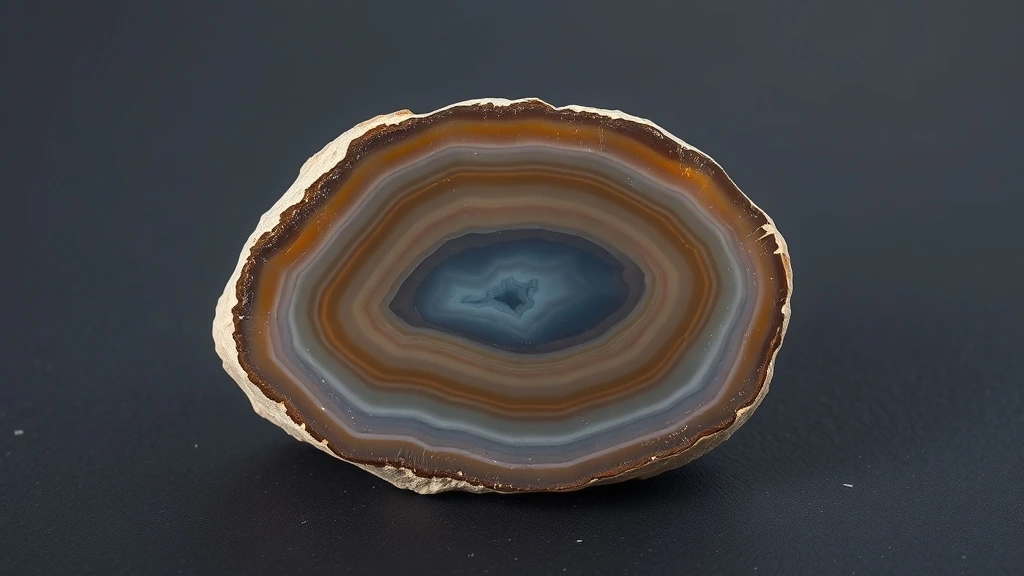
Breche Agate belongs to the silicate family, specifically the chalcedony subgroup of cryptocrystalline quartz. Its formation results from the fibrous, trigonal aggregation of minute quartz crystals that cement together in sedimentary environments. This microcrystalline fabric gives the stone its characteristic banded appearance and contributes to its durability, while its mineralogical lineage links it directly to the broader quartz family.
What is Breche Agate? Geological Overview & Definition
Breche Agate is an aggregate of microcrystalline quartz fibers that have undergone silicification in volcanic or hydrothermal settings. The stone’s distinctive mottled pattern arises from variations in iron oxide inclusions and subtle changes in crystal orientation during deposition.
Historically, the stone has been prized across ancient lapidary traditions for its grounding hues and durability, often fashioned into beads, cabochons, and ornamental carvings. Its name derives from the French word “breche,” meaning “break,” referencing the natural fracture surfaces that reveal its layered structure. In comparative mineralogical collections, practitioners and geologists frequently study Money Agate alongside this crystal to appreciate their subtle energetic and structural differences.
Breche Agate Chemical Composition & Crystallographic Properties
The primary constituent of Breche Agate is SiO₂, organized as a trigonal (microcrystalline/cryptocrystalline fibrous aggregate). Unlike single crystals, the material consists of countless intergrown quartz fibers whose collective symmetry conforms to the trigonal system, producing a pseudo‑hexagonal habit on a macroscopic scale. While Breche Agate’s intricate trigonal quartz fibers create its distinctive pseudo‑hexagonal pattern, the similarly fibrous yet more earthy tones of Fruit Jasper offer a complementary grounding energy for those exploring crystal structures.
Cation substitution is minimal; trace amounts of Fe³⁺ and Mn²⁺ replace silicon within the lattice, creating the stone’s characteristic red‑brown chromophores. These transition‑metal ions act as color centers, absorbing specific wavelengths and imparting the warm palette observed in polished specimens.
Breche Agate is sensitive to strong acids, which can dissolve the silica framework and release the embedded metal ions, leading to surface pitting. However, it remains chemically stable under neutral pH conditions, allowing safe use in jewelry and therapeutic settings.
Thermally, the aggregate exhibits low thermal expansion typical of quartz, but rapid heating can induce micro‑fracturing due to differential stress among the fibrous domains. Controlled annealing may enhance translucency, yet excessive temperatures risk devitrification, altering the stone’s visual character.
| Property | Specification |
|---|---|
| Mineral Group | Silicates (Chalcedony / Cryptocrystalline Quartz) |
| Chemical Formula | SiO₂ (Silicon Dioxide) |
| Mohs Hardness | 6.5 – 7.0 |
| Crystal System | Trigonal (Microcrystalline / Cryptocrystalline fibrous aggregates) |
| Specific Gravity (Density) | 2.60 – 2.65 |
| Refractive Index | 1.544 – 1.553 |
| Color & Optical Properties | Natural Breche Agate color spectrum and optical dispersion |
| Primary Mining Localities | Brazil, Uruguay, Turkey, India, Madagascar |
| Water & Chemical Resistance | High (Safe for gentle warm water and mild soap; avoid harsh acids and chlorine) |
| Chakra Alignment (Traditional) | Root Chakra and Sacral Chakra |
| Zodiac Affinity (Traditional) | Gemini, Virgo, Taurus |
| Symbolic Meaning (Traditional) | Grounding, emotional balance, physical endurance, and protection |
Breche Agate Varieties & Color Spectrum
Breche agate stands out for its distinctive angular clasts embedded within a fine-grained chalcedony matrix. This unique texture results from the fragmentation and subsequent cementation of older agate nodules. The resulting stone displays a chaotic yet visually striking mosaic of contrasting colors and textures.
Classic Banded Breche
This variety features prominent banded chalcedony fragments suspended in a lighter, often translucent matrix. The bands typically exhibit concentric patterns in shades of brown, gray, and white. Geologically, this indicates multiple stages of silica deposition and tectonic disruption. It remains the most commercially accessible form for lapidary work.
Red Matrix Breche
Characterized by intense hematite inclusions, this type displays vibrant red or rust-colored angular pieces. The red hue stems from iron oxide impurities trapped during the initial crystallization phase. These stones often possess a deep, earthy saturation that enhances their visual depth. Collectors prize this variety for its bold, high-contrast aesthetic appeal.
Black Matrix Breche
This rare morph contains dark, manganese-rich or carbonaceous fragments within a pale background. The stark contrast between the black clasts and the lighter matrix creates a dramatic visual effect. Formation occurs in environments with high organic content or specific redox conditions. Its scarcity makes it a sought-after item in high-end gemstone markets.
Multi-Color Breche
Featuring a diverse palette of silica polymorphs, this variety includes green, blue, and yellow angular inclusions. The coloration arises from trace elements like copper, iron, and chromium. Each fragment may display distinct zoning patterns, adding complexity to the overall design. This diversity makes every specimen unique and highly desirable for jewelry designers.
Where is Breche Agate Found? Geological Mining & Extraction
Breche agate primarily forms in volcanic and sedimentary basins where agate nodules undergo tectonic stress. The host rocks are typically rhyolite, basalt, or sandstone, which provide the necessary silica-rich fluids. Fracturing events break the original nodules into angular pieces before new silica cements them. This process creates the characteristic brecciated texture observed in commercial specimens.
Major deposits are located in Brazil, Uruguay, and the United States. Brazilian mines in Rio Grande do Sul yield high-quality, multi-colored breche agate. Uruguay is renowned for its deep red and black matrix varieties. In the US, deposits in Oregon and Texas provide additional sources for the global market.
Historical Significance & Cultural Lore of Breche Agate
Ancient civilizations valued agate for its perceived protective and grounding properties. In Greco-Roman tradition, agate was believed to soothe the mind and protect travelers. Egyptian artisans incorporated agate into amulets and scarabs for funerary rites. The stone’s durability made it ideal for intricate carvings and ceremonial objects.
In Vedic and Chinese traditions, agate symbolized emotional stability and physical endurance. Chinese scholars associated the stone with the earth element, promoting harmony. Archaeological findings reveal agate beads in Neolithic sites across Europe and Asia. These artifacts confirm its long-standing role in spiritual and social practices.
Modern Uses & Jewelry Applications of Breche Agate
Breche Agate is prized for its fibrous, banded appearance, making it a favorite in lapidary cutting where it is often shaped into cabochons or faceted stones to accentuate its natural patterns. The stone’s moderate hardness allows it to be set in rings, pendants, and earrings without excessive wear. Its versatility also extends to ornamental carving, where artisans sculpt intricate motifs for decorative panels and architectural accents.
- Cabochon and faceted jewelry pieces
- Engraved ornamental carvings for home décor
- Decorative inlays in architectural stonework
Metaphysical Properties & Traditional Meaning of Breche Agate
According to historical traditions and metaphysical lore, Breche Agate is believed to foster grounding and emotional equilibrium, encouraging a calm, balanced state of mind. Across ancient Mediterranean and Vedic lapidary lore, the stone is associated with the Root Chakra, anchoring the wearer to stability, and the Sacral Chakra, nurturing creativity and emotional expression. Its symbolic resonance includes protection against negative energies and the enhancement of physical endurance, qualities that have been revered in early archaeological records of stone use.
Which Chakra and Zodiac Signs Align with Breche Agate?
Breche Agate aligns with the Root Chakra, the foundational energy center that governs safety, security, and physical grounding. It also resonates with the Sacral Chakra, the hub of emotional balance, sensuality, and creative flow.
The stone’s astrological affinity is firmly tied to Gemini, Virgo, and Taurus. Those born under these signs are said to find harmony with Breche Agate’s stabilizing and nurturing energies, enhancing their natural traits of adaptability, meticulousness, and grounded practicality.
How to Identify Real vs. Fake Breche Agate
Artificial imitations of Breche Agate often appear as synthetic glass or dyed quartz, lacking the stone’s characteristic fibrous texture and natural banding. These replicas may exhibit a glassy luster, uniform coloration, or a smooth surface that does not reflect the stone’s typical microcrystalline structure.
Practical At-Home Authenticity Tests
- Temperature Test (Thermal Feel): Hold the stone in your hand; genuine Breche Agate feels cool to the touch, whereas glass or dyed quartz warms quickly.
- Specific Gravity & Weight Test: Compare the stone’s weight to a known quartz sample of the same size; Breche Agate should feel slightly heavier due to its higher density.
- Scratch & Hardness Test (Mohs Comparison): Use a standard Mohs hardness kit; Breche Agate should scratch glass (Mohs 6.5–7.0) but not be scratched by a steel file.
- Microscopic & Loupe Inspection (Internal Inclusions): Examine under a loupe; authentic Breche Agate displays fibrous, cryptocrystalline inclusions, whereas synthetic glass shows uniform, glassy texture.
Breche Agate Valuation Factors, Grading & Pricing
The foremost driver of price is color saturation. Deep, uniform bands of amber, orange, or rust that glow with a natural inner luster command premium rates, while muted or uneven hues are graded lower. Collectors also prize stones that display a vivid contrast between the brecciated matrix and the translucent filler, as this visual vibrancy signals minimal dyeing or artificial enhancement.
Next, crystal size & weight (grams) play a decisive role. Larger, dense pieces that weigh several grams and retain a solid, unfractured form fetch higher prices than small, lightweight fragments. Raw breccia that has been expertly tumbled to a high polish is valued above rough, unpolished material, yet natural matrix inclusions such as quartz veins or iron oxide streaks can add character and increase market appeal when they are authentic and not artificially introduced.
Finally, ethical sourcing & locality premium influences both holistic and collector markets. Specimens harvested from recognized quarries in Brazil or Uruguay with documented fair‑trade practices attract a premium, as buyers increasingly seek provenance that respects workers and the environment. Stones that can be traced to a specific historic deposit often command higher prices, reflecting their cultural narrative and the added trust of transparent supply chains.
How to Clean and Care for Breche Agate
Warm soapy water is ideal for solid agates; gently immerse the stone in lukewarm water with a mild, pH‑neutral soap, then rinse with clean water and pat dry with a soft microfiber cloth. Avoid ultrasonic cleaners if the specimen is dyed, heavily fractured, or has undergone any surface treatment, as the vibrations can exacerbate cracks or leach pigments. Store the cleaned agate in a padded pouch or a low‑humidity drawer to prevent accidental scratches and maintain its natural luster.
Cleansing and Recharging Breche Agate (Energetic Care)
Across ancient lapidary traditions, herbal smudging with sage or cedar is used to clear lingering energetic residues; pass the agate through the rising smoke for a few breaths, allowing the gentle aromatics to purify without exposing the stone to moisture. For a subtle, non‑thermal recharge, place the agate on a clean selenite slab overnight, where the selenite’s own high vibrational field can gently amplify the agate’s grounding properties.
Moonlight exposure offers a safe, natural method to restore vibrational balance; set the stone on a windowsill or a soft cloth under a clear night sky for several hours, allowing the subtle lunar energy to harmonize the Root Chakra and Sacral Chakra alignments. Avoid direct intense sunlight, ovens, or any heat source, as excessive thermal stress can fracture the cryptocrystalline structure and diminish both its physical and metaphysical qualities.
Frequently Asked Questions About Breche Agate
Breche Agate displays distinct mineralogical characteristics across its geological varieties and structural habits. Gemologists evaluate these natural varieties based on crystal habit, trace chromophore concentrations, and visual luster.
Primary Natural Breche Agate
The benchmark natural variety exhibiting diagnostic color saturation and classic crystallographic symmetry.
Distinct Geological Morphs of Breche Agate
Secondary regional and structural varieties formed under localized geological temperature and pressure conditions.
Is Breche Agate safe to wear in the shower?
Yes, it is safe for gentle warm water and mild soap. Breche Agate’s quartz composition resists mild water exposure, but avoid harsh acids, chlorine, or prolonged soaking, which can dull its surface. Use a soft cloth to dry after showering to maintain its luster.
How should I clean my Breche Agate to keep its brilliance?
Warm soapy water is ideal for solid Breche Agate. Gently rinse with mild detergent, then pat dry with a microfiber cloth. Avoid abrasive cleaners or ultrasonic baths if the stone is dyed, heavily fractured, or treated, as these can damage surface patterns.
Can I use an ultrasonic cleaner on Breche Agate?
Avoid ultrasonic cleaning for dyed or heavily fractured Breche Agate. While quartz is generally robust, ultrasonic vibration can loosen internal fractures or fade color layers, compromising the stone’s structural integrity and visual appeal.
Which zodiac signs are associated with Breche Agate?
Gemini, Virgo, and Taurus are the aligned zodiac signs. These signs are believed to resonate with the stone’s grounding and emotional-balancing properties, enhancing communication, practicality, and stability in daily life.
Which chakras does Breche Agate influence?
Breche Agate aligns with the Root Chakra and the Sacral Chakra. These chakras govern grounding, physical endurance, and emotional balance, making the stone a popular choice for meditation and protective talismans.
Does Breche Agate contain any harmful elements?
No, it is composed solely of silicon dioxide (SiO₂). This pure quartz composition ensures it is free from toxic metals or radioactive constituents, making it safe for everyday wear and handling.
How durable is Breche Agate for everyday jewelry?
Its Mohs hardness of 6.5–7.0 provides good durability. While it can withstand daily wear, it should be protected from hard impacts and scratches, especially on the more delicate, fibrous surface patterns typical of Breche Agate.
Can Breche Agate be used in high-temperature environments?
It tolerates moderate heat but should not be exposed to extreme temperatures. Prolonged exposure to high heat can cause surface cracking or color changes; keep it away from direct flames or hot surfaces to preserve its structural integrity.