
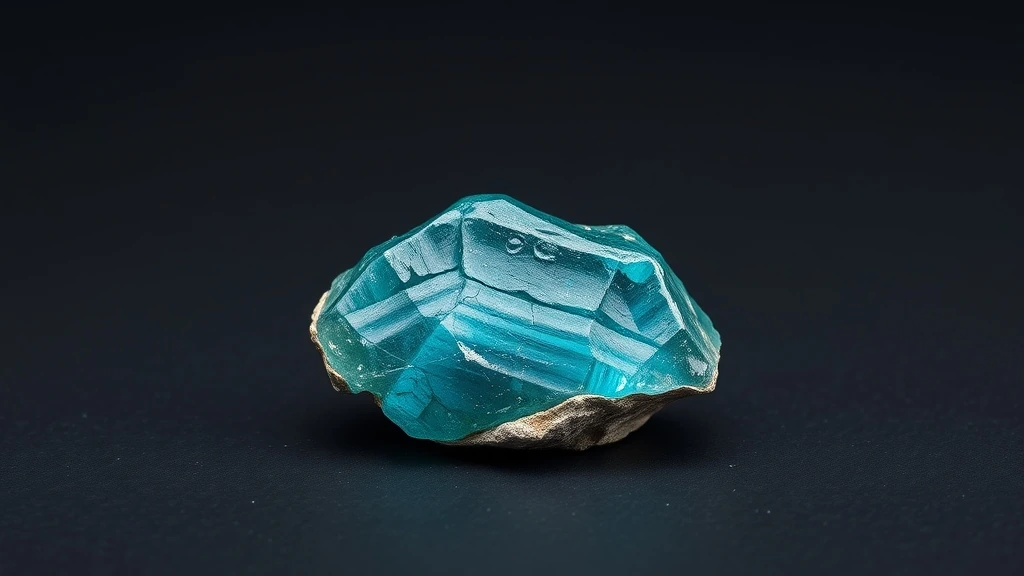
Paraiba tourmaline belongs to the tourmaline supergroup, a complex borosilicate mineral family. As a natural crystal, it forms within granitic pegmatites under specific geochemical conditions. This classification distinguishes it from synthetic simulants or other beryl varieties. The stone’s rarity is driven by limited global deposits and strict chemical requirements for its signature color.
What is Paraiba Tourmaline ? Geological Overview & Definition
Paraiba tourmaline is a rare gem variety of elbaite, characterized by high copper and manganese content. It typically forms in pegmatite dikes associated with alkaline granites. The primary type locality is the state of Paraiba in Brazil, which lends its name to this prized stone. In comparative mineralogical collections, practitioners and geologists frequently study Kinoite alongside this crystal to appreciate their subtle energetic and structural differences.
Geologically, it crystallizes in the trigonal system, often displaying prismatic habit. Its formation requires a unique balance of volatile components and trace metals. This specific geochemical environment is difficult to replicate, contributing to the gem’s high market value.
Paraiba Tourmaline Chemical Composition & Crystallographic Properties
The crystal lattice follows a trigonal symmetry, featuring a complex hexagonal arrangement. This structure allows for extensive cation substitution within the crystal channels. Sodium, calcium, iron, and manganese occupy specific sites, influencing the stone’s physical properties.
The iconic color arises from copper chromophores, which absorb specific wavelengths of light. This results in the distinctive neon blue to green spectrum. The refractive index ranges from 1.610 to 1.640, providing excellent brilliance.
Thermal stability is moderate, with a Mohs hardness between 7.0 and 7.5. The mineral is generally resistant to acids but requires care during cutting. Its density of 3.00–3.20 g/cm³ aids in identification. Proper handling ensures the preservation of its optical integrity.
| Property | Specification |
|---|---|
| Mineral Group | Natural Mineral / Crystal |
| Chemical Formula | Na(Ca,Fe,Mn)₃Al₆(BO₃)₃Si₆O₁₈(OH)₄ |
| Mohs Hardness | 7.0 – 7.5 |
| Crystal System | Trigonal |
| Specific Gravity (Density) | 3.00 – 3.20 |
| Refractive Index | 1.610 – 1.640 |
| Color & Optical Properties | Natural Paraiba Tourmaline Gemstone color spectrum and optical dispersion |
| Primary Mining Localities | Global primary localities |
| Water & Chemical Resistance | High (Safe for gentle water washing) |
| Chakra Alignment (Traditional) | Crown Chakra, Heart Chakra |
| Zodiac Affinity (Traditional) | Aquarius, Pisces |
| Symbolic Meaning (Traditional) | Spiritual awakening, emotional balance, and creative inspiration |
Paraiba Tourmaline Varieties & Color Spectrum
The vibrant spectrum of Paraiba tourmaline is primarily driven by the presence of copper and manganese trace elements within the elbaite crystal lattice. These specific chromophores interact with light to produce the characteristic neon blue, turquoise, and mint green hues that distinguish this gem from other tourmaline species. The intensity and visual signature of each specimen are directly correlated with the concentration and valence state of these metallic ions during geological crystallization.
Neon Blue Paraiba
This iconic and globally coveted variety exhibits an electric, fluorescent cyan-to-swimming-pool blue hue that appears to glow from within under both daylight and incandescent lighting. The copper content (CuO) is the primary chromophore driving this intense electric saturation. Natural specimens displaying pure vivid blue without greenish modifiers command the highest premiums in the international gem trade.
Mint Green Paraiba
Featuring a crisp, highly saturated mint-to-emerald green tone, this variety contains a balanced ratio of manganese and copper. The greenish hue arises when manganese acts as an active optical modifier alongside copper in the crystal structure. These gems possess exceptional vitreous brilliance and are particularly sought after by connoisseurs seeking vibrant, unconventional pastel neon tones.
Turquoise & Blue-Green Paraiba
Representing the classic signature coloration of the original Batalha deposit in Brazil, this variety displays a striking balance between oceanic cyan and tropical lagoon green. Geological pleochroism is prominent in blue-green stones, frequently presenting differing shades of electric teal and neon seafoam green depending on the crystallographic orientation and viewing angle.
Violet to Purple Cuprian Tourmaline
Discovered primarily in Mozambique and Nigeria, these cuprian elbaites exhibit a distinct lavender, violet, or purple body color prior to thermal treatment. The purple component is caused by trivalent manganese (Mn³⁺). When gently heat-treated under controlled laboratory conditions, the manganese is reduced, shifting the color to the iconic electric neon blue while preserving its cuprian chemical identity.
Where is Paraiba Tourmaline Found? Geological Mining & Extraction
Paraiba tourmaline was first discovered in 1989 in the São José da Batalha pegmatite district within the state of Paraíba, Brazil, followed by minor contiguous yields in Rio Grande do Norte. These primary Brazilian deposits are hosted in highly weathered granitic pegmatite veins, where hydrothermal fluids enriched in lithium, boron, and anomalous concentrations of copper crystallized in narrow cavities. Due to decades of artisanal mining, Brazilian deposits are virtually exhausted, rendering top-grade Brazilian material exceedingly rare.
In the early 2000s, significant secondary alluvial deposits of cuprian elbaite were discovered in Mozambique (Alto Ligonha district) and Nigeria (Edoukou). While African cuprian tourmalines share the same copper-bearing chemistry as Brazilian stones, they often form in larger alluvial pebbles, yielding larger carat sizes with exceptional clarity, though Brazilian gems historically retain higher average copper saturation.
Historical Significance & Cultural Lore of Paraiba Tourmaline
The discovery of Paraiba tourmaline by Heitor Dimas Barbosa in 1989 completely revolutionized the international gemstone industry, introducing an electric neon luminescence previously unseen in the mineral kingdom. Barbosa spent over five years systematically tunneling through the rugged hills of Batalha on an intuitive geological hunch before extracting the first neon cyan crystals, which instantly captivated gemologists at the 1990 Tucson Gem Show.
Culturally, because of its recent late-20th-century discovery, Paraiba tourmaline lacks ancient mythological folklore; instead, modern mineralogical lore and metaphysical traditions regard it as the ultimate stone of higher wisdom, clairvoyance, and throat chakra illumination. Collectors and gem historians revere it as one of the most consequential gemological discoveries of the modern era.
Modern Uses & Jewelry Applications of Paraiba Tourmaline
Lapidaries primarily cut Paraiba Tourmaline into faceted gemstones to maximize its intense neon fluorescence and brilliance. The stone’s high dispersion allows cutters to create designs that flash vivid blue and green hues under various lighting conditions. While rare, high-quality material is occasionally carved into cabochons for ornamental pieces, though faceting remains the industry standard for showcasing its optical fire.
- Solitaire Rings: The most popular setting, highlighting the stone’s electric color against platinum or white gold.
- Pendants and Necklaces: Ideal for displaying the gem’s depth and saturation without obstruction.
- Earrings: Often paired with diamonds or sapphires to complement the tourmaline’s unique chromaticity.
- Bespoke Art Jewelry: Used by designers seeking a focal point with high visual impact and rarity.
Carat, Quality Grades & Value Factors of Paraiba Tourmaline
The primary driver of value is color, specifically the vivid neon blue or green hue caused by copper and manganese impurities. Stones exhibiting a pure, electric blue with no secondary green or purple tones command the highest premiums in the market. The saturation of this color must be intense yet balanced, avoiding overly dark or washed-out appearances that diminish the gem’s signature glow.
Clarity is the second critical factor, as eye-clean stones are exceptionally rare due to the mineral’s natural inclusions. While minor inclusions are acceptable, visible flaws significantly reduce the gem’s desirability and market price. Carat weight also plays a major role, as crystals larger than two carats are extremely scarce, causing prices to escalate exponentially with size.
Zodiac and Astrological Lore of Paraiba Tourmaline
In astrological traditions, Paraiba Tourmaline is strongly aligned with Aquarius and Pisces, enhancing their intuitive and creative energies. Aquarians appreciate the stone’s electric blue tone, which resonates with their air-element nature and forward-thinking mindset. Pisceans find the gem’s fluid, watery hues supportive of their deep emotional sensitivity and spiritual connection.
The stone is also associated with the Crown Chakra and Heart Chakra, bridging higher consciousness with emotional balance. Wearers believe it facilitates spiritual awakening and creative inspiration, helping to clear mental blocks and foster emotional harmony. This dual chakra alignment makes it a powerful tool for meditation and personal growth.
How to Identify Real vs. Fake Paraiba Tourmaline
Due to its high value, Paraiba Tourmaline is frequently imitated by synthetic glass, dyed tourmalines, or other blue gemstones like tanzanite or sapphire. Glass imitations often contain tiny bubbles or swirls, while dyed stones may show color concentration along crystal boundaries. Genuine Paraiba exhibits a distinct neon fluorescence under UV light, a trait that most fakes struggle to replicate accurately.
Practical At-Home Authenticity Tests
- Temperature Test (Thermal Feel): Hold the stone against your cheek or wrist; real Paraiba feels cool initially and warms slowly, whereas glass or plastic imitations warm up much faster.
- Specific Gravity & Weight Test: Compare the stone’s weight to a similarly sized glass bead; genuine tourmaline has a density of 3.00–3.20 g/cm³, making it feel noticeably heavier than glass.
- Scratch & Hardness Test (Mohs Comparison): Gently rub the stone against a quartz watch crystal; Paraiba (Mohs 7.0–7.5) should scratch quartz (Mohs 7.0) or show no damage, while glass (Mohs 5.5) will be scratched.
- Microscopic & Loupe Inspection (Internal Inclusions): Use a 10x loupe to look for natural inclusions like tiny crystals or fluid inclusions; glass often shows bubbles, and dyed stones may show color bleeding into fractures.
Paraiba Tourmaline Valuation Factors, Grading & Pricing
The primary driver of value is Color Saturation, specifically the intense neon blue or green hue caused by copper and manganese. Experts assess tone uniformity across the stone, ensuring no zoning or dull areas diminish its electric appearance. High optical clarity and a brilliant luster further elevate the gem’s market desirability.
Carat Weight significantly impacts pricing, as large, eye-clean specimens are exceedingly rare in global deposits. Facet symmetry is critical for maximizing light return, while the presence of matrix or inclusions can lower the grade. Stones with minimal internal fractures command premium prices due to their structural integrity.
Geographical Provenance Premium heavily influences final valuation, with Brazilian and Nigerian origins often commanding higher rates. Wholesale prices fluctuate based on supply chain stability, while retail values reflect brand prestige. Current market trends show steady appreciation for certified, high-quality Paraiba tourmalines.
How to Clean and Care for Paraiba Tourmaline
For routine maintenance, immerse the stone in warm soapy water and gently scrub with a soft cloth. This method effectively removes oils and dust without damaging the crystal structure. Always rinse thoroughly with clean water and dry with a lint-free towel.
You may safely use an ultrasonic cleaner for deeper cleaning, as the mineral’s hardness allows it to withstand the vibrations. Avoid harsh chemicals or steam cleaning, which could potentially degrade the setting or affect the stone’s surface. Regular professional inspections ensure prongs remain secure and the gem remains pristine.
Cleansing and Recharging Paraiba Tourmaline (Energetic Care)
To energetically cleanse the stone, place it on a selenite plate overnight to absorb negative energies. Alternatively, use smoke smudging with sage or palo santo, ensuring the smoke does not directly contact the gem. These dry methods respect the mineral’s physical properties while promoting spiritual balance.
For recharging, expose the Paraiba tourmaline to moonlight for several hours to restore its vibrational frequency. This gentle approach aligns with its association with the Crown and Heart Chakras. Avoid direct sunlight, which may cause thermal stress or potential color fading over time.
Frequently Asked Questions About Paraiba Tourmaline
What gives Paraiba Tourmaline its unique neon color?
Copper and manganese impurities create its signature electric blue-green hue. These trace elements substitute within the crystal lattice, producing a vibrant fluorescence under UV light. This distinct coloration distinguishes it from standard blue tourmalines, which lack these specific metallic inclusions.
Is Paraiba Tourmaline safe to wear in the shower?
Yes, it is safe for gentle water washing. The stone possesses high water resistance, allowing it to withstand brief exposure to moisture without damage. However, avoid prolonged soaking or harsh chemical soaps, as these can degrade the setting or dull the stone’s natural luster over time.
Can I clean Paraiba Tourmaline in an ultrasonic cleaner?
Yes, it is safe for ultrasonic cleaning. For optimal maintenance, use warm soapy water and a soft cloth for daily care. Ultrasonic cleaners are effective for removing stubborn dirt, but ensure the stone is not fractured before subjecting it to high-frequency vibrations.
What is the Mohs hardness of Paraiba Tourmaline?
It rates 7.0 to 7.5 on the Mohs scale. This makes it durable enough for daily wear in rings and bracelets, though it is slightly softer than sapphire. Wearers should still avoid direct impacts with harder minerals to prevent chipping or scratching the polished surface.
Which zodiac signs are aligned with Paraiba Tourmaline?
Aquarius and Pisces are the primary aligned signs. These water and air signs resonate with the stone’s energetic properties, enhancing intuition and emotional expression. Wearing this gemstone is believed to support spiritual growth and creative inspiration for individuals born under these constellations.
Which chakras does Paraiba Tourmaline activate?
It activates the Crown Chakra and Heart Chakra. This dual alignment bridges higher consciousness with emotional balance, promoting spiritual awakening and inner peace. The stone’s energy is said to facilitate a harmonious connection between the mind and the heart, fostering holistic well-being.
What is the chemical formula of Paraiba Tourmaline?
The formula is Na(Ca,Fe,Mn)₃Al₆(BO₃)₃Si₆O₁₈(OH)₄. This complex borosilicate structure defines its trigonal crystal system and physical properties. The presence of manganese and iron is critical for developing the distinctive neon coloration that defines this rare variety.
How should I store Paraiba Tourmaline safely?
Store it in a soft pouch or separate compartment. Although durable, it can scratch softer gems like opal or pearl. Keeping it isolated prevents physical damage and maintains its brilliance. Avoid exposing it to extreme temperature changes, which could potentially stress the crystal structure.