
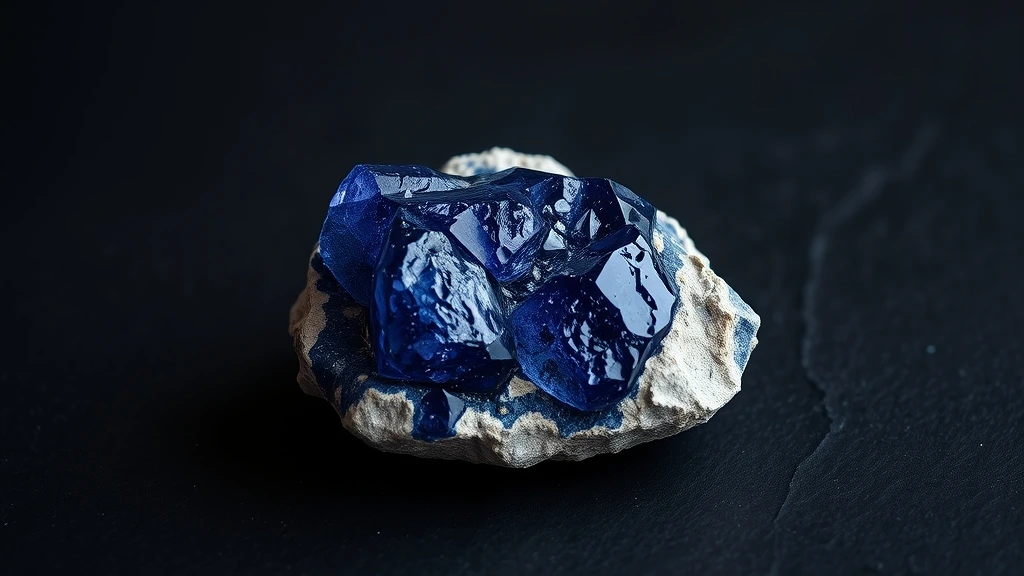
Tanzanite belongs to the zoisite mineral group, a natural silicate crystal formed under high-pressure metamorphic conditions. It is not a synthetic compound but a Natural Mineral / Crystal with distinct geological origins. This classification underscores its status as a primary gem material rather than a secondary aggregate. Its formation requires specific tectonic environments, making it geologically unique among colored gemstones. In comparative mineralogical collections, practitioners and geologists frequently study Cordierite Iolite alongside this crystal to appreciate their subtle energetic and structural differences.
What is Tanzanite? Geological Overview & Definition
Tanzanite is exclusively found in the Merelani Hills of Tanzania, where it forms within metamorphic schist rocks. This localized occurrence makes it one of the most geographically restricted gem minerals on Earth. The stone’s rarity is compounded by its sensitivity to heat and chemical exposure during mining. In comparative mineralogical collections, practitioners and geologists frequently study Charoite alongside this crystal to appreciate their subtle energetic and structural differences.
The gemstone displays strong pleochroism, meaning it appears blue, violet, or purple depending on the viewing angle. This optical property distinguishes it from other blue gemstones like sapphire or aquamarine. Its unique coloration arises from trace elements within its crystal lattice structure.
Tanzanite Chemical Composition & Crystallographic Properties
Tanzanite crystallizes in the Orthorhombic system, featuring a complex lattice arrangement of calcium, aluminum, and silicon. The chemical formula Ca₂Al₃Si₃O₁₂ reflects its silicate nature, with minor substitutions of vanadium and iron. These trace elements are critical for developing its signature blue-violet hue. In comparative mineralogical collections, practitioners and geologists frequently study Blue Kyanite alongside this crystal to appreciate their subtle energetic and structural differences.
The primary chromophore responsible for color is vanadium, which creates specific color centers within the crystal lattice. Iron also contributes to the spectral absorption, enhancing the stone’s vivid appearance. Without these trace impurities, the mineral would remain colorless or pale yellow.
Thermal behavior is a critical concern, as tanzanite is heat-sensitive and may crack under rapid temperature changes. Gemologists recommend gentle heating to stabilize color, avoiding extreme thermal shocks. This property requires careful handling during cutting and polishing processes.
The mineral exhibits a refractive index of 1.69–1.70, contributing to its high brilliance and luster. Its density ranges from 3.10 to 3.38, consistent with its dense silicate composition. These optical and physical properties confirm its identity as a distinct gemological variety of zoisite.
| Property | Specification |
|---|---|
| Mineral Group | Natural Mineral / Crystal |
| Chemical Formula | Ca₂Al₃Si₃O₁₂ |
| Mohs Hardness | 6.5 |
| Crystal System | Orthorhombic |
| Specific Gravity (Density) | 3.10–3.38 |
| Refractive Index | 1.69–1.70 |
| Color & Optical Properties | Natural Tanzanite color spectrum and optical dispersion |
| Primary Mining Localities | Global primary localities |
| Water & Chemical Resistance | High (Safe for gentle water washing) |
| Chakra Alignment (Traditional) | Third Eye Chakra, Crown Chakra |
| Zodiac Affinity (Traditional) | Sagittarius, Aquarius |
| Symbolic Meaning (Traditional) | Spiritual awakening, mental clarity, and transformation |
Tanzanite Varieties & Color Spectrum
Tanzanite exhibits exceptional pleochroism, displaying distinct blue, violet, and burgundy hues depending on the viewing angle. This optical phenomenon arises from its orthorhombic crystal structure, which refracts light differently along each axis. Gemologists classify stones based on the dominance of these spectral colors within the Ca₂Al₃Si₃O₁₂ lattice.
Royal Blue Tanzanite
This variety features a deep, saturated blue hue with minimal violet undertones, representing the highest market value. It typically originates from the deepest sections of the Merelani Hills deposit in Tanzania. The intense coloration results from specific trace elements influencing the refractive index range of 1.69–1.70. Such stones are exceptionally rare, commanding premium prices in the global gemstone trade.
Violet Tanzanite
Characterized by a dominant purple or violet tone, this variety often appears softer and more mystical to the eye. It is frequently found in shallower layers of the mine, where geological conditions favor violet spectral dominance. These stones often contain minor inclusions that can enhance their visual complexity without significantly reducing clarity. The Mohs hardness of 6.5 remains consistent, requiring careful handling during cutting.
Bicolored Tanzanite
Bicolored specimens display a striking transition between blue and violet zones within a single crystal. This natural gradient is highly sought after by collectors for its unique aesthetic appeal. The color zoning occurs due to subtle variations in chemical composition during the mineral’s growth phase. Such stones are prized for their ability to showcase the full pleochroic spectrum simultaneously.
Greenish-Blue Tanzanite
This rarer morph exhibits a distinct teal or greenish-blue tint, often associated with specific iron impurities. It is less common in the commercial market, making it a target for specialized collectors. The presence of these trace elements alters the standard density measurements slightly within the 3.10–3.38 range. Gemologists identify this variety through precise spectroscopic analysis of its crystal system properties.
Unheated Tanzanite
Before thermal treatment, raw tanzanite crystals often appear brownish or yellowish-green. Heating transforms these stones into their signature blue-violet hues by altering the electronic structure of the mineral. Unheated specimens are extremely rare in the trade, as most rough stones undergo this standard enhancement. Collectors value unheated stones for their natural color integrity and geological purity.
Where is Tanzanite Found? Geological Mining & Extraction
Tanzanite forms exclusively in the Merelani Hills of the Arusha region in northern Tanzania. The mineral occurs within pegmatite veins and schistose rocks, associated with specific metamorphic conditions. These geological formations provide the necessary pressure and temperature for the orthorhombic crystals to develop. The deposit is unique, with no other known commercial sources worldwide.
Extraction involves open-pit mining methods, where workers carefully remove overburden to access the host rock. The ore is then crushed and washed to separate the valuable crystals from the matrix. Due to the Mohs hardness of 6.5, tanzanite is susceptible to abrasion during mining operations. Most extracted material is transported to local processing centers for initial sorting and heat treatment.
Historical Significance & Cultural Lore of Tanzanite
Although tanzanite was first identified in 1967, local Maasai people had long used the mineral for decorative purposes. Archaeological evidence suggests that similar zoisite varieties were utilized in ancient African jewelry traditions. The stone’s vibrant colors were believed to possess spiritual awakening properties, aligning with its association with the Third Eye Chakra. These cultural narratives predate its formal scientific classification and global recognition.
The gemstone gained international fame after Tiffany & Co. acquired exclusive rights to the deposit in the 1970s. This commercialization elevated tanzanite to a status symbol, linking it to mental clarity and transformation in modern esoteric practices. Today, it remains a cornerstone of contemporary jewelry design, bridging ancient lore with modern gemology. The mineral’s unique origin story continues to captivate collectors and historians alike.
Modern Uses & Jewelry Applications of Tanzanite
Tanzanite’s vivid violet‑blue hue makes it a favorite for both high‑fashion and everyday pieces. Skilled lapidaries often employ precision faceting to maximize color play, while cabochon cuts highlight its silky depth. Ornamental carvings—such as miniature figurines and decorative inlays—add a touch of luxury to interior décor.
- Faceted rings, earrings, and pendants showcase brilliance and fire.
- Cabochon settings emphasize the stone’s silky, velvety surface.
- Carved cameos and intarsia pieces highlight Tanzanite’s rarity in ornamental art.
Carat, Quality Grades & Value Factors of Tanzanite
The market evaluates Tanzanite primarily through the 4Cs: Color, Clarity, Cut, and Carat weight. Rich, saturated violet‑blue with a hint of purple commands premium prices, while inclusions are generally tolerated if they do not disrupt visual appeal. A well‑executed cut that balances brilliance and depth can significantly enhance perceived value, even at modest carat sizes.
Durability considerations include a Mohs hardness of 6.5, making Tanzanite suitable for earrings and pendants but more vulnerable in rings subject to daily impact. Grading labs apply strict lapidary standards, assessing hue, saturation, and clarity under standardized lighting. Stones with uniform color, minimal inclusions, and optimal proportions achieve the highest commercial grades and command the strongest market demand.
Zodiac and Astrological Lore of Tanzanite
Aligned with Sagittarius and Aquarius, Tanzanite is believed to amplify the adventurous spirit of the archer and the innovative vision of the water‑bearer. Astrologers attribute the stone’s deep violet‑blue resonance to the Third Eye Chakra and Crown Chakra, fostering spiritual awakening and mental clarity for those born under these signs.
Culturally, Tanzanite emerged in the 1960s from Tanzania’s Merelani Hills, quickly becoming a symbol of modern luxury. Its rarity—found in a single geographic locale—has woven it into contemporary myth, positioning the gem as a talisman for transformation and insight across diverse traditions.
How to Identify Real vs. Fake Tanzanite
Artificial imitations range from synthetic glass dyed to mimic Tanzanite’s hue to lower‑cost lab‑grown crystals that replicate its optical properties. Dyed natural stones may lose color when exposed to heat or chemicals, while glass lacks the characteristic refractive index of 1.69–1.70. Recognizing these differences is essential for both collectors and casual buyers.
Practical At-Home Authenticity Tests
- Temperature Test (Thermal Feel): Genuine Tanzanite feels cool to the touch and retains that coolness longer than glass or plastic, due to its higher density and thermal conductivity.
- Specific Gravity & Weight Test: With a density of 3.10–3.38, authentic Tanzanite feels noticeably heavier than a similarly sized glass replica; a simple water displacement test can confirm this range.
- Scratch & Hardness Test (Mohs Comparison): Using a steel file (hardness ~6.5), a real Tanzanite will resist scratching, whereas glass (hardness ~5.5) will show visible marks.
- Microscopic & Loupe Inspection (Internal Inclusions): Under 10× magnification, natural Tanzanite exhibits fine, needle‑like inclusions; synthetic glass appears uniformly clear, and dyed stones may show surface bubbles or uneven coloration.
Tanzanite Valuation Factors, Grading & Pricing
The foremost determinant of a tanzanite’s market price is color saturation. Stones that display a vivid, deep violet‑blue hue with minimal brown or gray undertones command the highest premiums. Uniform hue across the entire facet pattern and a high‑luster, glassy surface further enhance perceived value, while any zoning or dullness reduces it significantly.
Next, carat weight interacts closely with cut quality to shape a gem’s worth. Larger stones are rare, but only when paired with precise facet symmetry and flawless polish do they achieve top‑tier pricing. The industry applies the 4Cs—color, clarity, cut, and carat—using lapidary grading standards that reward well‑proportioned, proportionally balanced pieces, ensuring that weight alone does not inflate price.
Finally, a geographical provenance premium elevates Tanzanite from the Merelani Hills of Tanzania, the sole commercial source, to a coveted status. Certified origin reports from reputable labs add credibility and often raise market value, especially as global demand spikes and supply remains limited. Trends show steady appreciation, with ethically sourced, documented stones outperforming unverified counterparts in resale markets.
How to Clean and Care for Tanzanite
Gentle cleaning of tanzanite is best performed with warm soapy water and a soft cloth, taking care to avoid abrasive actions that could scratch the surface. Rinse the stone briefly in lukewarm water, then pat dry with a lint‑free microfiber cloth to preserve its natural luster. Ultrasonic cleaners should never be used, as the rapid vibrations can induce micro‑fractures in the crystal lattice.
Cleansing and Recharging Tanzanite (Energetic Care)
For holistic maintenance, tanzanite may be lightly smudged with a bundle of dried sage or palo santo, allowing the aromatic smoke to pass over the stone without direct contact. This practice is believed to clear energetic stagnation while leaving the physical surface untouched.
Alternatively, placing the gemstone in moonlight for a few hours or resting it on a clean selenite charging slab can gently renew its vibrational field. Both methods avoid heat and intense sunlight, ensuring the mineral’s crystal structure remains intact while supporting its reputed spiritual awakening properties.
Frequently Asked Questions About Tanzanite
What is the chemical composition of tanzanite?
Tanzanite is a calcium‑aluminum silicate with the formula Ca₂Al₃Si₃O₁₂. This orthorhombic mineral belongs to the zoisite group, and its crystal lattice incorporates trace vanadium that imparts the prized blue‑violet hue when exposed to sunlight.
How hard is tanzanite on the Mohs scale?
Tanzanite rates about 6.5 on the Mohs hardness scale. While harder than many semi‑precious stones, it can still be scratched by quartz or topaz, so protective settings and careful handling are recommended for everyday jewelry.
Can I wear tanzanite while swimming or showering?
Yes, tanzanite has high water resistance and is safe for gentle water washing. A brief rinse with warm soapy water followed by drying with a soft cloth will not affect its color or structural integrity, making it suitable for occasional exposure to water.
Should I use an ultrasonic cleaner on tanzanite?
No, ultrasonic cleaning should be avoided for tanzanite. The vibrations can cause micro‑fractures in the crystal lattice; instead, clean it with warm soapy water and a soft cloth to preserve its brilliance and prevent damage.
Which zodiac signs are associated with tanzanite?
Tanzanite aligns with the Sagittarius and Aquarius signs. Astrologers believe the stone enhances the adventurous spirit of Sagittarius and the innovative mindset of Aquarius, reinforcing its reputation as a catalyst for personal growth.
Which chakras does tanzanite influence?
The gemstone is linked to the Third Eye Chakra and Crown Chakra. Activation of these energy centers is said to promote spiritual awakening, mental clarity, and a sense of higher consciousness, complementing its striking visual appeal.
How can I tell if a tanzanite is natural or treated?
Natural tanzanite typically shows a uniform blue‑violet color, while treated stones often exhibit enhanced saturation from heat or radiation. Under magnification, natural specimens may display subtle inclusions or growth zoning, whereas treated gems can have a more glassy appearance.
What is the typical density range for tanzanite?
Tanzanite’s specific gravity falls between 3.10 and 3.38. This relatively high density, combined with its refractive index of 1.69–1.70, contributes to the stone’s vivid sparkle and helps gemologists distinguish it from similar‑looking minerals.