
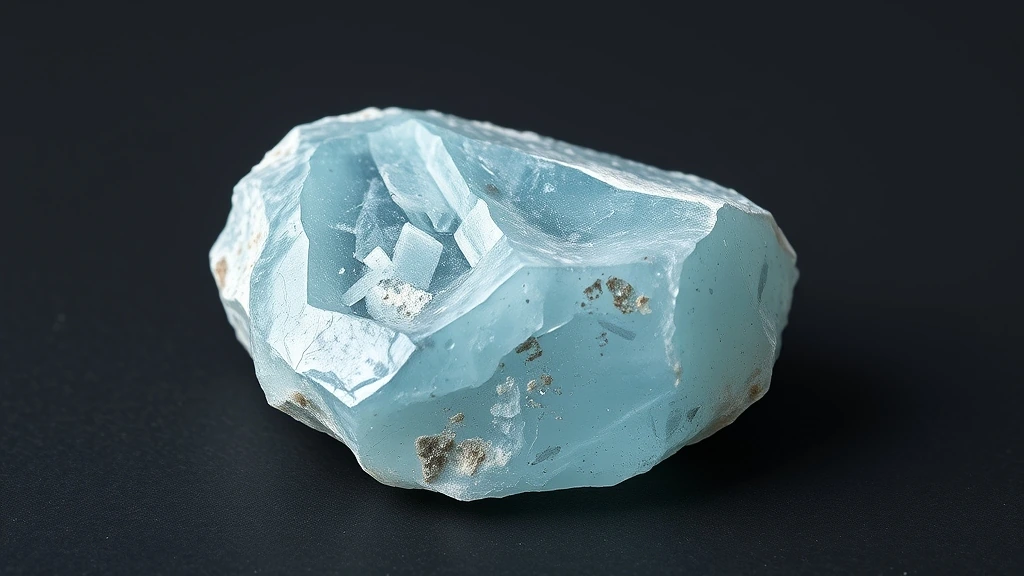
Aquamarine belongs to the Beryl group within the silicate mineral family. Specifically, it is a cyclosilicate characterized by a six-membered ring of silicate tetrahedra. This structural arrangement creates open channels where cations substitute, influencing its physical properties. The stone’s geological origin is tied to pegmatite and granite intrusions.
What is Aquamarine Gemstone? Geological Overview & Definition
Aquamarine derives its name from the Latin *aqua marina*, meaning “sea water.” It forms in pegmatite dikes and granitic rocks, often associated with high-temperature hydrothermal fluids. The chromophore responsible for its color is typically iron ions in a specific oxidation state.
Geologically, it is a beryl variety that crystallizes in hexagonal prisms. Its formation requires aluminum, beryllium, and silica in precise proportions. The stone’s clarity and color depend on trace impurities and crystal growth conditions.
Aquamarine Gemstone Chemical Composition & Crystallographic Properties
Aquamarine crystallizes in the Hexagonal crystal system, forming distinct prismatic shapes. The lattice structure consists of hexagonal rings of silicate tetrahedra. This cyclosilicate framework allows for cation substitution within the crystal channels. The arrangement dictates its cleavage and fracture patterns.
The primary chromophore is Fe²⁺ ions, which absorb light in the red spectrum. This results in the characteristic blue to greenish-blue coloration. Thermal behavior shows that heating can alter the color by changing the iron oxidation state. The mineral is generally stable under normal geological conditions.
Acid sensitivity is low due to the robust silicate structure. However, prolonged exposure to strong acids can etch the surface. The cation substitution of aluminum and beryllium stabilizes the lattice. This stability contributes to its high Mohs hardness and durability.
| Property | Specification |
|---|---|
| Mineral Group | Silicates (Cyclosilicates / Beryl Group) |
| Chemical Formula | Be₃Al₂Si₆O₁₈ (Beryllium Aluminum Cyclosilicate) |
| Mohs Hardness | 7.5 – 8.0 |
| Crystal System | Hexagonal (Prismatic crystals) |
| Specific Gravity (Density) | 2.67 – 2.78 |
| Refractive Index | 1.567 – 1.590 |
| Color & Optical Properties | Natural Aquamarine Gemstone color spectrum and optical dispersion |
| Primary Mining Localities | Brazil (Minas Gerais), Madagascar, Pakistan, Nigeria, Russia |
| Water & Chemical Resistance | High (Safe in warm soapy water; avoid extreme heat and harsh acids) |
| Chakra Alignment (Traditional) | Throat Chakra (Vishuddha) and Heart Chakra |
| Zodiac Affinity (Traditional) | Pisces, Aries, Aquarius |
| Symbolic Meaning (Traditional) | Serenity, clear communication, soothing courage, and emotional purification |
Aquamarine Gemstone Varieties & Color Spectrum
Aquamarine is a beryl variety distinguished by its blue to greenish-blue hue, caused by trace amounts of iron. The color intensity varies significantly based on the specific geological environment and impurity concentrations. Understanding these nuances is critical for accurate gemological identification and valuation.
Santa Maria Blue
This premium variety originates from the Minas Gerais region of Brazil, renowned for its exceptional saturation. The stones exhibit a deep, vivid blue tone that commands the highest market prices globally. Its clarity and color consistency make it the benchmark for high-end aquamarine jewelry.
Zambian Aquamarine
Mined primarily in the Kafue Flats of Zambia, this variety often displays a distinct greenish-blue character. The stones frequently contain visible inclusions, which can affect transparency but add unique visual interest. Zambian material is prized for its large crystal sizes and robust durability.
Nigerian Aquamarine
Found in the Jos Plateau, Nigerian aquamarines typically feature a paler, sky-blue coloration. These stones are often larger in size but may exhibit lower clarity compared to Brazilian counterparts. They remain a significant source of commercial-grade gem material for the global market.
Colombian Aquamarine
Colombian deposits yield stones with a subtle, teal-leaning hue that appeals to collectors seeking unique color profiles. The geological setting in the Andes contributes to the distinct chromatic properties of these gems. While less common than Brazilian material, they offer a compelling alternative for connoisseurs.
Mozambican Aquamarine
Emerging as a major source, Mozambican aquamarines often present a bright, electric blue appearance. The recent discovery of high-quality deposits has significantly impacted global supply chains. These stones are frequently cut into large, faceted gems for statement jewelry pieces.
Russian Aquamarine
Historically significant, Russian aquamarines from the Ural Mountains are known for their pale, icy blue tones. These stones were highly valued during the imperial era for their clarity and elegance. Today, they are primarily of interest to collectors and historical gem enthusiasts.
Where is Aquamarine Gemstone Found? Geological Mining & Extraction
Aquamarine forms within pegmatite intrusions, where slow cooling allows large crystals to develop. These coarse-grained rocks provide the necessary space and chemical environment for beryl growth. The presence of iron impurities during crystallization dictates the final gem color.
Primary mining regions include Brazil, Zambia, and Mozambique, which dominate global production. Brazil’s Minas Gerais state remains the most famous source for high-quality stones. Zambia and Mozambique have become increasingly important due to recent large-scale discoveries.
Historical Significance & Cultural Lore of Aquamarine
Ancient mariners believed aquamarine could ward off storms and protect sailors from drowning. This gem was often carried as a talisman during long voyages across treacherous seas. Its association with water and safety made it a highly prized item in maritime cultures.
In medieval Europe, aquamarine was linked to Mercury, the god of commerce and communication. It was thought to enhance eloquence and aid in diplomatic negotiations. This enduring legacy continues to influence its symbolism in modern jewelry design.
Modern Uses & Jewelry Applications of Aquamarine Gemstone
Aquamarine’s exceptional clarity and durability make it a premier choice for high-end jewelry design and ornamental art. Lapidaries typically cut these gems into faceted brilliant or emerald cuts to maximize their signature sea-blue brilliance. The stone’s resistance to abrasion allows for intricate settings in rings, pendants, and earrings without significant wear risk.
- Faceted Jewelry: Ideal for engagement rings and solitaire pendants due to high refractive index.
- Cabochon Cuts: Used for opalescent or cloudier stones to highlight internal “silk” inclusions.
- Ornamental Carving: Large crystals are carved into vases, bowls, and architectural accents for interior design.
Carat, Quality Grades & Value Factors of Aquamarine
According to historical traditions and metaphysical lore, aquamarine has long been revered as a stone of emotional clarity and inner peace. Sailors historically carried it to ensure safe passage, believing it could calm storms and protect against danger. This legacy reinforces its modern association with serenity and the ability to navigate life’s turbulent waters with grace.
The gemstone is believed to enhance communication and self-expression, helping users articulate their truths with confidence. Its cooling energy is said to soothe anxiety and promote emotional balance, making it a popular choice for meditation and stress relief practices.
Which Chakra and Zodiac Signs Align with Aquamarine Gemstone?
In chakra theory, aquamarine is primarily aligned with the Throat Chakra (Vishuddha), which governs communication and truth. It also resonates deeply with the Heart Chakra, fostering compassion and emotional openness. This dual alignment supports both the expression of feelings and the reception of love, creating a harmonious energetic balance.
Astrologically, aquamarine is the birthstone for Pisces, Aries, and Aquarius. For Pisces, it amplifies intuition and spiritual connection; for Aries, it tempers fiery energy with calm; and for Aquarius, it enhances humanitarian ideals and social harmony. These specific zodiac alignments ensure the stone’s energy complements the inherent traits of each sign.
How to Identify Real vs. Fake Aquamarine Gemstone
Distinguishing natural aquamarine from imitations requires attention to subtle physical and optical characteristics. Common fakes include synthetic glass, which often contains bubble inclusions, and dyed chalcedony, which may show color concentration in fractures. Understanding these differences is crucial for buyers seeking authentic gemstones.
Practical At-Home Authenticity Tests
- Temperature Test (Thermal Feel): Hold the stone against your cheek or wrist. Natural aquamarine feels cool to the touch initially and warms slowly, whereas plastic or glass imitations often feel neutral or warm immediately.
- Specific Gravity & Weight Test: Compare the stone to a similarly sized piece of glass. Aquamarine has a higher specific gravity (2.66–2.78) than glass (2.4–2.8), so it should feel slightly heavier for its size.
- Scratch & Hardness Test (Mohs Comparison): Aquamarine ranks 7.5–8 on the Mohs scale. It can scratch glass (hardness 5.5) and quartz (7), but it will not be scratched by a steel knife (5.5).
- Microscopic & Loupe Inspection (Internal Inclusions): Use a 10x loupe to examine the stone. Natural aquamarine often displays finger-print inclusions or tiny bubbles, while glass imitations may show swirls or spherical bubbles, and synthetic stones may appear unnaturally perfect.
Aquamarine Gemstone Valuation Factors, Grading & Pricing
Color Saturation is the primary driver of value, with deep, vivid blue stones commanding the highest premiums. Tone uniformity across the entire gemstone surface ensures visual consistency and enhances overall aesthetic appeal. High optical clarity and a brilliant luster further elevate the stone’s market desirability among collectors.
Carat Weight significantly impacts pricing, as larger specimens are rarer and often exhibit more intense color depth. Facet symmetry is critical for maximizing light return and brilliance within the crystal structure. The presence of matrix or visible inclusions can reduce value, though some unique inclusions may add character.
Geographical Provenance Premium reflects the reputation of specific mining regions, such as Brazil or Madagascar. Wholesale prices fluctuate based on supply chain dynamics and global economic conditions. Retail market values typically include a significant markup over wholesale costs to cover operational expenses.
How to Clean and Care for Aquamarine Gemstone
Clean your aquamarine with warm soapy water and a soft toothbrush to remove surface oils and dirt. This gentle method preserves the stone’s integrity without risking damage to the crystal lattice. Avoid using harsh acids or extreme heat, which could compromise the gemstone’s structural stability.
Ultrasonic cleaning is generally safe for most aquamarines, provided there are no internal fractures present. Always inspect the stone for cracks before using an ultrasonic cleaner to prevent potential breakage. Regular maintenance ensures the gemstone retains its natural luster and vibrant blue hue.
Cleansing and Recharging Aquamarine Gemstone (Energetic Care)
Use smoke smudging with sage or palo santo to clear negative energy from the aquamarine. This dry method respects the mineral’s physical properties while addressing metaphysical cleansing needs. Ensure the stone is completely dry before storing it in a safe location.
Place the gemstone on a selenite plate under moonlight for overnight recharging. This gentle approach avoids direct sunlight, which can cause thermal stress or color fading. Allow the stone to rest in a cool, dry environment to maintain its energetic balance.
Frequently Asked Questions About Aquamarine Gemstone
Is aquamarine safe to wear in the shower?
Yes, aquamarine is highly water-resistant and safe for shower wear. While it tolerates moisture well, avoid extreme heat from hot showers. Thermal shock can potentially damage the stone over time. Use mild, soap-free cleansers to maintain its luster.
Can I clean aquamarine in an ultrasonic cleaner?
Ultrasonic cleaning is generally safe for intact aquamarine stones. However, you must inspect the gem for internal fractures first. Inclusions or cracks can worsen under high-frequency vibrations. For safety, use warm soapy water and a soft toothbrush instead.
Which zodiac signs are compatible with aquamarine?
Aquamarine is traditionally aligned with Pisces, Aries, and Aquarius. These signs benefit from the stone’s calming and protective energies. Astrological correspondences suggest it enhances clarity and emotional balance. It serves as a powerful talisman for these water and air signs.
What chakras does aquamarine activate?
Aquamarine primarily activates the Throat Chakra (Vishuddha) and Heart Chakra. It facilitates clear communication and emotional healing. Energetic alignment with these centers promotes truth and compassion. This duality makes it ideal for meditation and spiritual growth practices.
How hard is aquamarine on the Mohs scale?
Aquamarine rates 7.5 to 8 on the Mohs hardness scale. This makes it durable enough for daily jewelry wear. It is harder than topaz but softer than sapphire. Scratch resistance is high, though sharp impacts can still cause chipping.
What is the chemical composition of aquamarine?
Aquamarine is a variety of beryl with the formula Be₃Al₂Si₆O₁₈. It is chemically distinct from quartz minerals. Beryllium aluminum silicate is the accurate mineralogical classification. Trace iron impurities create its distinctive blue color.
Does aquamarine fade in direct sunlight?
No, aquamarine is stable and does not fade in sunlight. Unlike some organic gems, it retains its color integrity. Photostability is a key feature of this mineral. You can safely display it in bright rooms without fear of discoloration.
Is aquamarine a good gift for anniversaries?
Yes, aquamarine is the traditional birthstone for March. It symbolizes clarity, courage, and tranquility. Gemological significance makes it a popular choice for gifts. It represents enduring love and clear communication in relationships.