
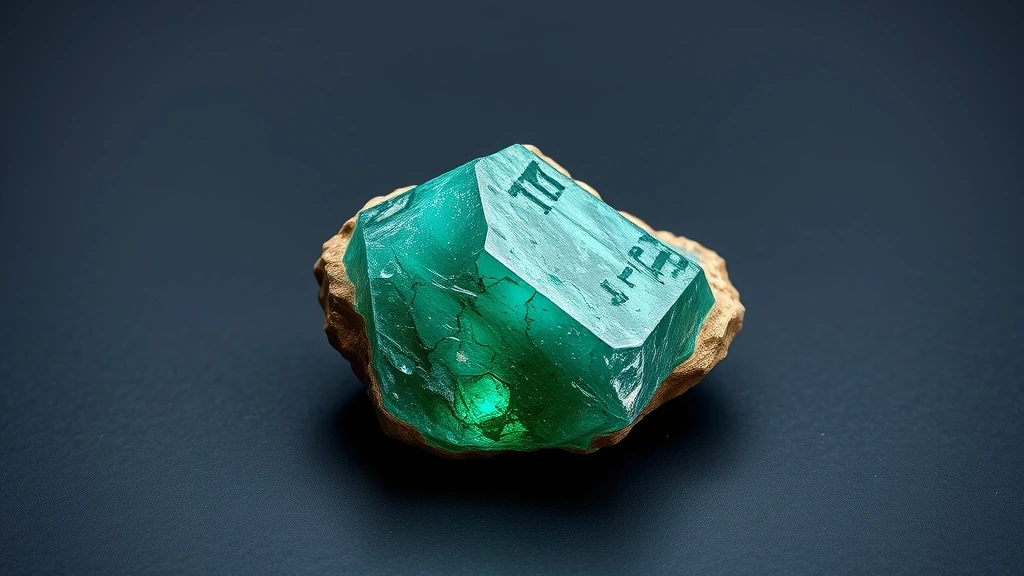
Trapiche emerald belongs to the silicate mineral family, specifically within the cyclosilicate subclass. As a member of the Beryl Group, it shares a fundamental hexagonal prismatic structure with other gemstones like aquamarine. This geological classification places it among the most chemically stable and structurally complex silicates found in nature.
What is Trapiche Emerald? Geological Overview & Definition
Trapiche emerald is distinguished by its unique radial inclusions that form a star pattern within the crystal. These inclusions typically consist of quartz, muscovite, or other minerals trapped during growth. This formation process creates a visually striking six-rayed star that aligns with the crystal’s hexagonal symmetry.
The term “trapiche” derives from the Spanish word for windmill, reflecting the stone’s appearance. Unlike standard emeralds, this variety exhibits a concentric growth pattern visible in cross-section. Geologists identify it by the precise alignment of these inclusions along the crystal’s c-axis, making it a rare gemological specimen. In comparative mineralogical collections, practitioners and geologists frequently study Hanksite alongside this crystal to appreciate their subtle energetic and structural differences.
Trapiche Emerald Chemical Composition & Crystallographic Properties
The primary chemical formula is Be₃Al₂Si₆O₁₈, representing the beryl structure with trace impurities. This cyclosilicate framework consists of six-membered rings of silicate tetrahedra. The crystal lattice is strictly hexagonal, with beryllium and aluminum cations occupying specific structural sites. This arrangement ensures high structural integrity and characteristic optical properties.
Coloration arises from chromium and vanadium ions substituting for aluminum in the lattice. These color centers absorb specific wavelengths of light, resulting in the vibrant green spectrum. The refractive index ranges from 1.565 to 1.602, indicating strong light dispersion. This optical behavior enhances the stone’s brilliance and visual depth.
The mineral exhibits moderate acid sensitivity, though it remains stable under normal environmental conditions. Thermal behavior is characterized by anisotropic expansion, where the crystal expands differently along various axes. This property requires careful handling during cutting to prevent thermal shock. The density of 2.67 to 2.78 g/cm³ reflects its dense, stable atomic packing.
| Property | Specification |
|---|---|
| Mineral Group | Silicates (Cyclosilicates / Beryl Group) |
| Chemical Formula | Be₃Al₂Si₆O₁₈:Cr,V (Beryl with Chromium/Vanadium traces) |
| Mohs Hardness | 7.5 – 8.0 |
| Crystal System | Hexagonal (Hexagonal prismatic beryl) |
| Specific Gravity (Density) | 2.67 – 2.78 |
| Refractive Index | 1.565 – 1.602 |
| Color & Optical Properties | Natural Trapiche Emerald color spectrum and optical dispersion |
| Primary Mining Localities | Colombia (Muzo, Chivor), Zambia, Brazil, Russia |
| Water & Chemical Resistance | Moderate (Gentle brief lukewarm water only; avoid hot water and strong detergents that strip cedar oil) |
| Chakra Alignment (Traditional) | Heart Chakra (Anahata) |
| Zodiac Affinity (Traditional) | Taurus, Gemini, Cancer |
| Symbolic Meaning (Traditional) | Unconditional love, abundance, rejuvenation, and deep heart healing |
Trapiche Emerald Varieties & Color Spectrum
Trapiche emerald is a rare variety of beryl characterized by a distinctive star-like pattern formed by intersecting inclusions. This unique morphology results from specific geological conditions during crystal growth in pegmatite veins. The primary color range spans from pale green to deep, saturated emerald green, influenced by trace elements.
Colombian Trapiche Emerald
Colombian specimens are renowned for their exceptional clarity and vibrant green hues, often exhibiting a perfect six-rayed star pattern. These crystals form in the Muzo and Chivor mines, where specific pressure conditions align the rutile inclusions. The hexagonal symmetry of the host crystal ensures the precise geometry of the trapiche effect.
Brazilian Trapiche Emerald
Brazilian trapiche emeralds typically display a slightly more yellowish-green tone compared to their Colombian counterparts. They are frequently found in the Minas Gerais region, associated with complex pegmatite systems. Inclusions often include quartz and clay minerals, which contribute to the characteristic star-like inclusion pattern.
Zambian Trapiche Emerald
Zambian specimens are known for their deep, bluish-green coloration and high saturation levels. These crystals form in the Katanga region, where unique geochemical environments favor intense chromophore concentration. The refractive index of these stones often sits at the higher end of the beryl spectrum.
African Trapiche Varieties
Various African deposits, including those in Madagascar and Tanzania, produce trapiche emeralds with distinct inclusion signatures. These stones often feature a mix of rutile and hematite needles, creating a complex visual texture. The Mohs hardness remains consistent with standard beryl, ensuring durability for jewelry use.
Synthetic Trapiche Beryl
Laboratory-created trapiche beryls are grown using hydrothermal methods to mimic natural formation processes. These synthetic stones often exhibit perfect symmetry and lack the natural imperfections found in mined specimens. Gemological laboratories use inclusion analysis to distinguish synthetic trapiche from natural emerald varieties.
Rare High-Clarity Morphs
High-clarity trapiche emeralds are exceptionally rare, with fewer than one percent of mined crystals displaying a clean star pattern. These stones command premium prices due to their scarcity and aesthetic perfection. The chemical formula Be₃Al₂Si₆O₁₈:Cr,V remains consistent, but the distribution of chromium varies.
Where is Trapiche Emerald Found? Geological Mining & Extraction
Trapiche emeralds form exclusively within pegmatite veins, which are coarse-grained igneous rocks resulting from the final stages of magma crystallization. The formation of the star pattern requires specific fluid dynamics and pressure conditions during the crystal’s growth phase. These geological constraints limit the global distribution of trapiche emeralds to a few key mining regions.
Primary extraction occurs in Colombia, Brazil, and Zambia, where historical mining operations have identified the most productive deposits. Miners use careful manual extraction techniques to preserve the delicate inclusion structures that define the trapiche effect. The density of these stones, ranging from 2.67 to 2.78, aids in initial field identification.
Historical Significance & Cultural Lore of Trapiche Emerald
Ancient civilizations, including the Muisca and Inca, revered emeralds as sacred stones associated with life and fertility. Archaeological artifacts from South America reveal emerald carvings and jewelry dating back over two thousand years. The Heart Chakra association in esoteric traditions reflects the stone’s historical link to emotional healing and love.
In modern gemology, trapiche emeralds are prized for their unique optical properties and rarity. Collectors value the intricate star patterns as a testament to the earth’s complex geological processes. The stone’s enduring appeal bridges ancient lore and contemporary scientific appreciation for natural crystallography.
Modern Uses & Jewelry Applications of Trapiche Emerald
Trapiche emeralds are prized for their star‑burst pattern, which lapidaries accentuate through precise cabochon and faceted cuts. The radial spokes are often highlighted in a shallow dome to maximize light play, while high‑grade stones may be set in intricate halo settings. Artisans also carve ornamental pendants and brooches, preserving the natural “wheel” motif for collectors.
- Cabochon domes showcase the radial star without excessive facet loss.
- Faceted cuts (e.g., brilliant or emerald) enhance sparkle but risk obscuring the pattern.
- Ornamental carvings retain the natural wheel for decorative art pieces.
Carat, Quality Grades & Value Factors of Trapiche Emerald
The market value of trapiche emerald hinges on the classic 4Cs—color, clarity, cut, and carat weight—each interpreted through the stone’s unique star pattern. Vivid, saturated greens with uniform chromatic distribution command premium prices, while a clean, well‑defined wheel boosts clarity scores. Cut quality is judged by how effectively the facets or cabochon dome reveal the radial spokes without excessive material loss. Carat weight influences price exponentially, yet a smaller stone with an immaculate wheel can outvalue a larger, poorly patterned specimen.
Durability considerations focus on the beryl’s Mohs hardness of 7.5–8.0, making it suitable for rings and daily‑wear pieces when properly set. Lapidary grading standards, such as those of the GIA, require transparent reporting of inclusions, which often appear as fine fissures radiating from the center. Stones with minimal fracture risk and stable specific gravity (2.67–2.78) are deemed more resilient, influencing insurance assessments and resale value.
Zodiac and Astrological Lore of Trapiche Emerald
Astrologically, trapiche emerald aligns with Taurus, Gemini, and Cancer, reinforcing themes of emotional stability, curiosity, and nurturing. Practitioners believe the stone amplifies the Heart Chakra (Anahata), fostering unconditional love and abundant heart healing, making it a favored talisman for those seeking emotional balance.
Culturally, the gemstone traces back to pre‑colonial Mesoamerican societies, where its star‑like pattern symbolized celestial navigation and divine protection. Over centuries, the stone migrated into European courts, where it was prized for its rarity and incorporated into royal regalia, cementing its status as a gemstone of both mystic and material significance.
How to Identify Real vs. Fake Trapiche Emerald
Imitations of trapiche emerald range from colored glass and plastic to dyed quartz that mimic the radial pattern. Synthetic beryl can be produced in labs, but often lacks the natural inclusions and subtle color zoning of genuine stones. Dyed replicas may display overly uniform hue or a glossy surface inconsistent with natural beryl’s refractive index.
Practical At-Home Authenticity Tests
- Temperature Test (Thermal Feel): Hold the stone against the skin; authentic beryl feels cool initially and warms slowly, whereas glass or plastic reaches skin temperature quickly.
- Specific Gravity & Weight Test: Weigh the stone and compare to its volume; a true trapiche emerald (SG ≈ 2.70) will feel heavier than glass of the same size.
- Scratch & Hardness Test (Mohs Comparison): Gently attempt to scratch the surface with a steel file (hardness ≈ 5.5); genuine emerald resists scratching, while glass or quartz shows visible marks.
- Microscopic & Loupe Inspection (Internal Inclusions): Examine under 10×–30× magnification; natural trapiche emerald reveals fine fissures and the characteristic wheel, whereas synthetics often appear flawless or display uniform growth lines.
Trapiche Emerald Valuation Factors, Grading & Pricing
The market prize of a trapiche emerald hinges first on color saturation. Deep, vivid green hues with even distribution across the radial spokes command the highest demand, while any pale or uneven tint reduces value. Optical clarity and a high‑luster surface amplify the stone’s brilliance, making flawless or near‑flawless specimens especially prized.
Carat weight, facet symmetry, and adherence to the 4Cs lapidary grading standards form the second valuation tier. Larger stones with well‑balanced, precisely cut spokes showcase the characteristic “star‑burst” pattern and attract premium prices. Even minor asymmetry or poor polish can diminish the perceived quality, prompting lower offers despite substantial weight.
A geographical provenance premium often adds a decisive markup, especially for trapiche emeralds sourced from historic Colombian or Zambian mines. Certified origin reports from reputable gemological laboratories verify authenticity and support higher market confidence. Recent trends show steady appreciation for ethically mined, provenance‑documented specimens, driving upward price trajectories.
How to Clean and Care for Trapiche Emerald
Ultrasonic and steam cleaning are STRICTLY PROHIBITED due to natural fissures and oil treatments. Gently wipe the stone with a damp, soft cloth, using only lukewarm water if necessary, and immediately pat dry with a clean microfiber towel. Avoid hot water, harsh detergents, or any abrasive actions that could strip the cedar oil finish or exacerbate micro‑cracks. Store the emerald in a low‑humidity environment, preferably in a padded jewelry box, to protect it from sudden temperature changes.
Cleansing and Recharging Trapiche Emerald (Energetic Care)
For holistic maintenance, place the trapiche emerald on a clean selenite slab and allow the gentle crystal energy to neutralize any residual negativity. This method requires no heat, water, or chemicals and respects the stone’s delicate lattice structure.
Alternatively, expose the gem to soft moonlight for a few hours or perform a brief herbal smudging with sage, ensuring the smoke does not contact the surface directly. Both practices refresh the stone’s vibrational field without compromising its physical integrity.
Frequently Asked Questions About Trapiche Emerald
Is Trapiche Emerald safe to wear in the shower?
No, it is not recommended for prolonged water exposure. While brief contact with lukewarm water is generally acceptable, hot water and strong detergents can strip essential cedar oil treatments. These oils fill natural fissures, maintaining the stone’s luster and structural integrity over time.
Can I use an ultrasonic cleaner on this?
Ultrasonic and steam cleaning are strictly prohibited for Trapiche Emerald. The intense vibrations can exacerbate natural fissures and dislodge delicate oil treatments within the crystal lattice. Always clean the stone gently using a damp, soft cloth to preserve its aesthetic and structural stability.
What is the primary chemical composition of Trapiche Emerald?
It is a chromium or vanadium-bearing variety of beryl. The chemical formula is Be₃Al₂Si₆O₁₈:Cr,V, where trace elements impart the characteristic green color. This hexagonal prismatic structure distinguishes it from standard emeralds, which lack the distinct radial inclusion pattern.
Which zodiac signs are most aligned with Trapiche Emerald?
Taurus, Gemini, and Cancer are the primary aligned signs. These earth and air signs resonate with the stone’s energy of unconditional love and abundance. Wearing this gemstone is believed to enhance emotional stability and creative expression for these specific astrological profiles.
Which chakra does Trapiche Emerald specifically activate?
It is exclusively associated with the Heart Chakra (Anahata). This energy center governs deep heart healing and emotional balance. The stone’s unique radial pattern is thought to amplify the flow of unconditional love and rejuvenation through this specific chakra.
How should I properly clean a Trapiche Emerald?
Use only a damp, soft microfiber cloth for cleaning. Avoid abrasive materials or harsh chemical solutions that could damage the surface or remove protective oils. Gentle wiping is sufficient to remove dust and maintain the stone’s vibrant refractive index and visual appeal.
What is the Mohs hardness of Trapiche Emerald?
It ranges from 7.5 to 8.0 on the Mohs scale. This high hardness makes it durable enough for everyday jewelry, though it remains susceptible to sharp impacts. Proper setting and careful handling are essential to prevent chipping along natural cleavage planes.
Why does Trapiche Emerald have a star-like pattern?
The pattern results from radial inclusions of other minerals. These inclusions, often quartz or chlorite, form a hexagonal star across the stone’s surface. This unique formation occurs during slow crystal growth, creating the distinctive trapiche appearance prized by collectors.