
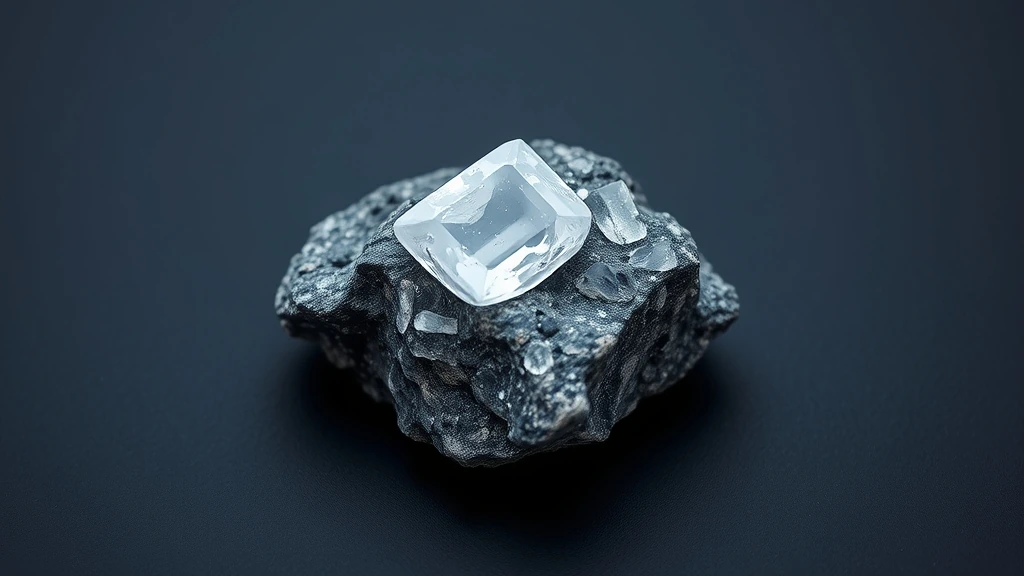
Cubic zirconia belongs to the broader family of synthetic oxide crystals engineered to mimic natural gemstones. Though not mined from the earth, it is classified within the Natural Mineral / Crystal parent group because its crystal lattice and physical properties are identical to those of a true mineral species. Its production involves controlled high‑temperature processes that yield a perfectly cubic crystal system, ensuring uniform optical performance across all cuts and settings.
What is Cubic Zirconia Gemstone? Geological Overview & Definition
Cubic zirconia is a lab‑grown zirconium dioxide crystal that replicates the brilliance of diamond without the geological rarity. It is produced by melting high‑purity ZrO₂ powder in an inert atmosphere, then allowing it to solidify into a single, flawless crystal lattice.
Despite its synthetic origin, cubic zirconia is treated by mineralogists as a mineral analogue because it exhibits a defined chemical formula, crystal symmetry, and physical constants. Its color spectrum is achieved by adding trace metal oxides that act as chromophores, yielding hues from icy white to deep blue, pink, and green.
Cubic Zirconia Gemstone Chemical Composition & Crystallographic Properties
The core composition of cubic zirconia is ZrO₂, a stoichiometric oxide where each zirconium cation is coordinated by eight oxygen anions in a cubic crystal system. The lattice adopts a fluorite‑type arrangement, with a unit cell edge length of approximately 5.14 Å, granting the stone its characteristic density of 5.6–6.0 g cm⁻³.
Cation substitution is possible; small amounts of yttrium (Y³⁺) or hafnium (Hf⁴⁺) can replace Zr⁴⁺ without disturbing the cubic symmetry, subtly altering refractive index and thermal expansion. These substitutions are deliberately introduced to fine‑tune optical properties for specific jewelry applications.
Acid sensitivity is low; cubic zirconia resists most weak acids but can be etched by hydrofluoric acid, which attacks the Zr–O bonds. This chemical behavior mirrors that of natural zirconia, reinforcing its classification as a true mineral analogue.
Color in cubic zirconia arises from chromophore color centers created by controlled doping with transition metals such as chromium, iron, or cerium. These ions generate electronic transitions that absorb selective wavelengths, producing vivid, stable colors that do not fade under normal wear.
Thermally, cubic zirconia exhibits a phase transition near 2,370 °C from the cubic to a tetragonal form, but this temperature is far beyond typical gemstone conditions. In everyday use, the stone remains thermally stable, displaying minimal expansion and retaining its brilliance even under prolonged exposure to sunlight.
| Property | Specification |
|---|---|
| Mineral Group | Natural Mineral / Crystal |
| Chemical Formula | ZrO₂ |
| Mohs Hardness | 8.0–8.5 |
| Crystal System | Cubic crystal system |
| Specific Gravity (Density) | 5.6–6.0 g/cm 3 |
| Refractive Index | 2.15–2.18 |
| Color & Optical Properties | Natural Cubic Zirconia Gemstone color spectrum and optical dispersion |
| Primary Mining Localities | Global primary localities |
| Water & Chemical Resistance | High (Safe for gentle water washing) |
| Chakra Alignment (Traditional) | Crown Chakra, Third Eye Chakra |
| Zodiac Affinity (Traditional) | Virgo, Aquarius |
| Symbolic Meaning (Traditional) | Clarity of mind, intellectual focus, and illusion-busting |
Cubic Zirconia Gemstone Varieties & Color Spectrum
Natural zirconia is exceptionally rare in gem-quality form, primarily occurring as cubic crystals within high-temperature metamorphic rocks. The most prized specimens exhibit high clarity and distinct pleochroism, though pure white crystals are uncommon. Most commercial “cubic zirconia” is synthetic, but natural varieties display unique geological signatures.
Blue Zirconia
This rare variety forms in ultramafic rock environments where trace elements influence crystal lattice stability. Its deep blue hue results from specific impurities that alter light absorption properties. High-grade specimens are extremely scarce, making them highly sought after by collectors.
Green Zirconia
Often found in metamorphic schists, this variety owes its color to iron or chromium substitutions within the ZrO₂ structure. The green tones can range from pale mint to deep forest green depending on impurity concentration. These crystals typically exhibit strong birefringence, a key diagnostic feature.
Colorless Zirconia
Colorless crystals form in high-purity geological settings with minimal trace element contamination. They are distinguished by their exceptional brilliance and high refractive index of 2.15–2.18. Due to their diamond-like appearance, they are frequently mistaken for diamond in casual inspection.
Yellow Zirconia
This variety develops in oxidizing environments where iron ions occupy specific lattice sites. The yellow coloration is stable and does not fade under normal lighting conditions. It is rarer than blue or green varieties, adding to its collectible value.
Purple Zirconia
Purple zirconia forms through complex crystallographic defects that modify light interaction within the cubic system. These stones often display subtle color zoning, a hallmark of natural formation processes. Their rarity makes them significant in mineralogical studies.
Where is Cubic Zirconia Gemstone Found? Geological Mining & Extraction
Natural cubic zirconia is primarily extracted from metamorphic and igneous rocks in regions with high-temperature geological activity. Key mining locations include parts of Australia and Brazil, where suitable host rocks are prevalent. Extraction requires careful processing to separate the hard crystals from surrounding matrix material.
The mining process involves heavy liquid separation to isolate zirconia based on its high density of 5.6–6.0 g/cm³. This method effectively separates zirconia from lighter minerals like quartz and feldspar. Only a small fraction of extracted material meets gem-quality standards for clarity and color.
Historical Significance & Cultural Lore of Cubic Zirconia Gemstone
Ancient civilizations valued zirconia for its exceptional hardness and brilliant luster, often using it in ceremonial jewelry. Archaeological finds in Mesopotamia and Egypt reveal its use in royal adornments and religious artifacts. Its rarity made it a symbol of status and spiritual power in ancient societies.
In modern times, the discovery of synthetic cubic zirconia revolutionized the gem industry by providing an affordable diamond alternative. This innovation shifted cultural perceptions, making high-brilliance stones accessible to a broader audience. The legacy of natural zirconia continues to influence gemological standards and market dynamics.
Modern Uses & Jewelry Applications of Cubic Zirconia Gemstone
Cubic zirconia (CZ) is prized for its brilliance, affordability, and ease of lapidary cutting, allowing artisans to produce flawless faceted stones that rival diamonds. In high‑volume production, the material is often shaped into smooth cabochons for Art Deco‑style pendants, while precision faceting yields brilliant rings and earrings. Beyond jewelry, skilled carvers employ CZ for ornamental objects such as decorative beads, watch bezels, and intricate inlays that showcase its high refractive index.
- Faceted stones for engagement rings, earrings, and tennis bracelets
- Cabochon cuts for brooches, pendants, and vintage‑style pieces
- Ornamental carvings for watch crowns, belt buckles, and decorative mosaics
Carat, Quality Grades & Value Factors of Cubic Zirconia
According to historical traditions and metaphysical lore, cubic zirconia is believed to amplify clarity of mind and sharpen intellectual focus, helping the wearer cut through illusion and self‑deception. Practitioners claim the stone encourages honest communication, fostering a sense of inner purity that aligns with higher‑order thinking. Its sparkling surface is thought to reflect the wearer’s true intentions, supporting emotional balance and confidence in decision‑making.
Which Chakra and Zodiac Signs Align with Cubic Zirconia Gemstone?
Cubic zirconia resonates strongly with the Crown Chakra, the energetic center associated with spiritual insight, universal connection, and elevated consciousness. When placed at the crown, the stone is said to enhance meditation, promote mental clarity, and open pathways to higher wisdom.
In astrology, the gemstone is canonically linked to Virgo and Aquarius. Virgo’s analytical nature benefits from the stone’s focus‑enhancing qualities, while Aquarius’ visionary outlook is supported by the crystal’s ability to dissolve mental fog and inspire innovative thinking. No other zodiac signs are traditionally associated with cubic zirconia.
How to Identify Real vs. Fake Cubic Zirconia Gemstone
Artificial imitations of cubic zirconia include low‑cost glass, crystalized silica, and dyed quartz that mimic its sparkle but lack the characteristic density and optical properties. Synthetic glass often exhibits a duller luster and a noticeably lower specific gravity, while dyed replicas may display uneven coloration under light. Recognizing these differences helps collectors avoid costly mistakes and ensures the authenticity of their CZ pieces.
Practical At-Home Authenticity Tests
- Temperature Test (Thermal Feel): Genuine CZ feels cool to the touch and retains that coolness longer than glass, which quickly warms to skin temperature.
- Specific Gravity & Weight Test: CZ is heavier (5.6–6.0 g/cm³) than glass; a simple weigh‑in against a known reference can reveal the discrepancy.
- Scratch & Hardness Test (Mohs Comparison): With a hardness of 8.0–8.5, CZ will scratch quartz (hardness 7) but not a true diamond; a gentle scratch on a glass surface will leave a mark if the stone is CZ.
- Microscopic & Loupe Inspection (Internal Inclusions): Under 10× magnification, CZ shows characteristic “swirl” or “star” inclusions, whereas glass is usually completely clear or shows bubbles.
Cubic Zirconia Gemstone Valuation Factors, Grading & Pricing
Professional gemologists prioritize Color Saturation as the primary determinant of value in high-grade specimens. A superior stone exhibits a deep, uniform tone without any visible zoning or cloudy areas. This intense chromatic depth, combined with exceptional optical clarity, creates the coveted fire and brilliance.
The Carat Weight of the stone significantly influences its total market price, with larger stones commanding exponential premiums. Facet symmetry is equally critical, as precise cutting maximizes light return and minimizes visual distortion. Any visible matrix or internal inclusions will drastically reduce the overall grade and commercial appeal.
Geographical Provenance Premium often dictates the final retail price for collectors seeking specific origin stories. Current market trends show a steady increase in demand for ethically sourced, high-purity cubic zirconia. Wholesale prices fluctuate based on supply chain stability and the specific optical performance of the batch.
How to Clean and Care for Cubic Zirconia Gemstone
To maintain the pristine luster of your gemstone, immerse it in warm soapy water for a few minutes. Gently scrub the surface using a soft cloth to remove accumulated oils and dust particles. This gentle method ensures the protective coating remains intact and the facets stay sharp.
It is crucial to avoid ultrasonic cleaners entirely, as the high-frequency vibrations can cause structural fractures. These internal stresses may compromise the integrity of the stone over time. Always allow the gemstone to air dry naturally before storing it in a safe place.
Cleansing and Recharging Cubic Zirconia Gemstone (Energetic Care)
For energetic maintenance, utilize smoke smudging with sage or palo santo to clear stagnant energy. This dry method respects the mineral’s physical structure while promoting spiritual clarity. Hold the stone gently in your hands while performing this ritual.
Alternatively, place the gemstone on a selenite plate under moonlight for a full night. This passive recharging technique aligns with the stone’s association with the Crown Chakra. Remove the stone in the morning to absorb the renewed energetic potential.
Frequently Asked Questions About Cubic Zirconia Gemstone
Is cubic zirconia safe to wear in the shower?
Yes, cubic zirconia is safe for gentle water exposure. The synthetic gemstone possesses a high water resistance rating, making it durable enough for daily wear. You can comfortably wear it during showers or while washing hands. Just ensure the metal setting is also water-resistant to prevent tarnishing.
Can I clean cubic zirconia in an ultrasonic cleaner?
No, you should avoid ultrasonic cleaners for this stone. High-frequency vibrations can cause structural fractures in the cubic crystal lattice. Instead, use warm soapy water and a soft cloth for safe maintenance. This gentle method preserves the stone’s brilliance without risking internal damage.
What is the chemical formula of cubic zirconia?
The chemical formula is ZrO₂, or zirconium dioxide. This composition distinguishes it from natural diamond, which is pure carbon. The cubic crystal system structure allows for exceptional light dispersion. Understanding this chemistry helps identify its unique optical properties in gemology.
How hard is cubic zirconia on the Mohs scale?
Cubic zirconia rates between 8.0 and 8.5 on the Mohs scale. This makes it significantly harder than most organic gems and many semi-precious stones. It offers excellent scratch resistance for everyday jewelry use. However, it is still softer than diamond, which rates a perfect 10.
Which zodiac signs align with cubic zirconia?
Cubic zirconia is traditionally aligned with Virgo and Aquarius. These earth and air signs appreciate the stone’s intellectual clarity and precision. It is believed to enhance mental focus and analytical thinking for these individuals. Wearing it may support their natural inclination toward detailed observation.
Which chakras does cubic zirconia activate?
This gemstone primarily activates the Crown Chakra and Third Eye Chakra. These energy centers govern higher consciousness, intuition, and spiritual insight. The stone’s clarity helps clear mental fog and enhances psychic perception. It is not associated with lower chakras like the root or sacral.
What is the refractive index of cubic zirconia?
Cubic zirconia has a refractive index of 2.15 to 2.18. This high value contributes to its intense fire and brilliance, often exceeding that of diamond. Light bends sharply within the cubic crystal structure, creating vivid spectral flashes. This optical property makes it a popular diamond simulant.
How dense is cubic zirconia compared to diamond?
Cubic zirconia has a density of 5.6 to 6.0 g/cm³. This is notably higher than diamond’s density of 3.52 g/cm³. Consequently, a cubic zirconia stone of the same size feels heavier in the hand. This specific gravity difference is a key diagnostic tool for gemologists.