
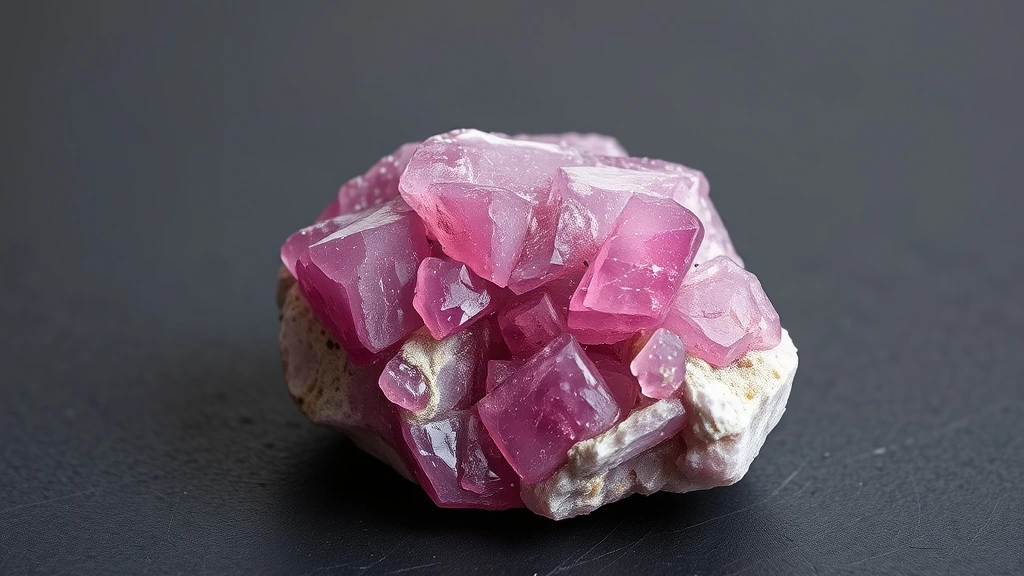
Pink sapphire belongs to the Oxides mineral group, specifically within the Corundum Group. This classification distinguishes it from other gemstones based on its fundamental atomic arrangement. Geologically, it forms in metamorphic environments where aluminum-rich rocks undergo high pressure. The presence of specific trace elements dictates its unique pink hue. Understanding this parentage is crucial for accurate identification.
What is Pink Sapphire? Geological Overview & Definition
Pink sapphire is a gem-quality variety of corundum, distinct from rubies due to its lighter coloration. It forms in metamorphic rocks such as marbles and schists, often alongside other gem minerals. The stone’s value depends heavily on its saturation and lack of visible inclusions. In comparative mineralogical collections, practitioners and geologists frequently study Padparadscha Sapphire alongside this crystal to appreciate their subtle energetic and structural differences.
The term “sapphire” historically referred to all non-red corundum varieties. Today, pink sapphire specifically denotes stones with a pinkish hue. This distinction is vital for gemological certification and market valuation. It sits between red rubies and lighter pink corundum in the color spectrum.
Pink Sapphire Chemical Composition & Crystallographic Properties
Pink sapphire crystallizes in the Trigonal system, forming hexagonal bipyramidal or prismatic shapes. Its lattice structure consists of alternating layers of aluminum and oxygen ions. This hexagonal close-packed arrangement provides exceptional structural stability. The crystal habit often appears as elongated prisms with pyramidal terminations. In comparative mineralogical collections, practitioners and geologists frequently study Zebra Stone Zebra Jasper alongside this crystal to appreciate their subtle energetic and structural differences.
The primary chromophore is Iron (Fe) and Titanium (Ti) substitution within the aluminum oxide lattice. These trace elements create color centers that absorb specific wavelengths of light. The resulting pink hue varies from pale to vivid depending on concentration. Cation substitution is the key mechanism driving this coloration.
Pink sapphire exhibits high chemical resistance to acids and alkalis due to its strong ionic bonds. Its density ranges from 3.98 to 4.06 g/cm³, aiding in physical identification. The refractive index of 1.762 – 1.778 contributes to its brilliant luster. Thermal behavior remains stable under standard gemological heating conditions.
| Property | Specification |
|---|---|
| Mineral Group | Oxides (Corundum Group) |
| Chemical Formula | Al₂O₃:Fe,Ti (Aluminum Oxide with Iron/Titanium traces) |
| Mohs Hardness | 9.0 |
| Crystal System | Trigonal (Hexagonal bipyramidal or prismatic corundum) |
| Specific Gravity (Density) | 3.98 – 4.06 |
| Refractive Index | 1.762 – 1.778 |
| Color & Optical Properties | Natural Pink Sapphire color spectrum and optical dispersion |
| Primary Mining Localities | Sri Lanka, Madagascar, Myanmar, Australia, Kashmir |
| Water & Chemical Resistance | Very High (Fully resistant to water and standard detergents) |
| Chakra Alignment (Traditional) | Throat Chakra and Third Eye Chakra |
| Zodiac Affinity (Traditional) | Virgo, Libra, Sagittarius |
| Symbolic Meaning (Traditional) | Wisdom, royalty, fidelity, mental focus, and spiritual clarity |
Pink Sapphire Varieties & Color Spectrum
Pink sapphires exhibit a remarkable range of hues, from pale blush to intense magenta, determined by trace element concentrations. The chemical formula Al₂O₃:Fe,Ti dictates how light interacts with the crystal lattice. Refractive index values between 1.762 and 1.778 contribute to the stone’s exceptional brilliance and fire.
Madagascar Pink Sapphire
Madagascar is the premier source for vivid, high-saturation pink sapphires, often exhibiting a distinct corundum structure. These stones typically contain rutile silk inclusions that enhance their luster without compromising clarity. The geological formation occurs within metamorphic schist, yielding gems with exceptional color purity.
Ceylon (Sri Lanka) Pink Sapphire
Sri Lankan sapphires are renowned for their delicate, pastel pink tones and high transparency. They often feature trigonal crystal habits that result in excellent facet symmetry. These gems are prized for their subtle esoteric keywords of wisdom and spiritual clarity.
Montana Pink Sapphire
American Montana produces rare, medium-toned pink sapphires with a unique, earthy character. These stones frequently display density readings near 4.06, indicating high purity. Their geological origin in alluvial deposits makes them highly collectible among gemologists.
Burmese Pink Sapphire
Burmese pinks are characterized by a deep, velvety hue and exceptional Mohs hardness of 9.0. They often contain minute, needle-like inclusions that create a soft, satin-like appearance. This variety is historically significant for its association with royalty and fidelity.
Thai Pink Sapphire
Thai sapphires typically present a darker, more subdued pink with a warm undertone. They are often heat-treated to enhance color stability and remove iron impurities. The crystal system remains trigonal, ensuring durability for everyday jewelry use.
Kashmir Pink Sapphire
Kashmir pinks are legendary for their pastel, “velvety” pink color and exceptional clarity. These rare gems often exhibit a unique refractive index that maximizes light return. Their scarcity makes them among the most valuable sapphires in the global market.
Where is Pink Sapphire Found? Geological Mining & Extraction
Pink sapphires primarily form in metamorphic schist and pegmatite host rocks under high-pressure conditions. The chemical formula Al₂O₃:Fe,Ti requires specific trace elements to develop the pink hue. Geological surveys indicate that tectonic activity is essential for concentrating these valuable minerals.
Major mining regions include Madagascar, Sri Lanka, and Montana, where alluvial deposits are common. Extraction methods vary from small-scale panning to large-scale open-pit mining. The density of 3.98 – 4.06 allows for efficient separation from lighter host rock materials.
Historical Significance & Cultural Lore of Pink Sapphire
Ancient civilizations revered pink sapphires for their association with royalty and fidelity in various cultures. Archaeological artifacts from the Mughal Empire showcase these gems in intricate jewelry settings. The esoteric keywords of wisdom and mental focus were believed to enhance spiritual clarity.
In modern times, pink sapphires symbolize spiritual clarity and emotional balance in chakras such as the Throat and Third Eye. Their zodiacs include Virgo, Libra, and Sagittarius, aligning with themes of harmony. This enduring legacy ensures their continued prominence in high-end gemology.
Modern Uses & Jewelry Applications of Pink Sapphire
Pink sapphire is prized for its vivid rose hue and exceptional hardness, allowing artisans to pursue both intricate faceting and smooth cabochon styles. Lapidary cutting often emphasizes a deep, even color, while polished faceted stones showcase brilliant fire in rings, pendants, and earrings. Ornamental carving—such as miniature figurines or decorative inlays—leverages the gem’s durability for lasting art pieces.
- Brilliant round, oval, and cushion cuts for high‑impact jewelry
- Cabochon settings that highlight a uniform pink “silk” surface
- Bezel‑set eternity bands showcasing multiple small stones
- Artistic carvings for watch bezels, tiaras, and luxury décor
Carat, Quality Grades & Value Factors of Pink Sapphire
The market evaluates pink sapphire primarily through the 4Cs: Color, Clarity, Cut, and Carat weight. Color dominates value; a saturated, evenly distributed pink with minimal gray or brown undertones commands premium prices. Clarity is secondary—minor inclusions are acceptable if they do not disrupt transparency, while a precise cut maximizes brilliance and enhances perceived size.
Durability is a key selling point; with a Mohs hardness of 9, pink sapphire resists scratching and suits daily‑wear pieces. Grading labs apply the same standards as for other corundum, assigning grades from “AAA” (top‑tier color and clarity) to “C” (lower saturation, visible inclusions). Carat weight influences price exponentially, but a smaller stone of superior hue often outvalues a larger, duller counterpart.
Zodiac and Astrological Lore of Pink Sapphire
In Western astrology, pink sapphire aligns with Virgo, Libra, and Sagittarius, channels that enhance mental clarity, diplomatic communication, and adventurous optimism. Wearers believe the stone amplifies the Throat Chakra and Third Eye Chakra, fostering articulate expression and intuitive insight.
Historically, the gem has adorned royalty across Persia, India, and Europe, symbolizing wisdom, fidelity, and spiritual purity. Its pink shade was once reserved for queens, reinforcing its reputation as a stone of noble affection and protective energy in many cultural traditions.
How to Identify Real vs. Fake Pink Sapphire
Artificial imitations range from colored glass and cubic zirconia to high‑pressure synthetic corundum, each mimicking the pink hue but lacking the authentic gem’s physical properties. Dyed natural sapphires may display uneven color saturation that fades under prolonged light exposure. Recognizing these differences requires a combination of visual inspection and simple physical tests.
Practical At-Home Authenticity Tests
- Temperature Test (Thermal Feel): Real pink sapphire feels cool to the touch and retains that coolness longer than glass or cubic zirconia, which quickly warm to skin temperature.
- Specific Gravity & Weight Test: Using a calibrated balance, a genuine pink sapphire (density 3.98‑4.06 g/cm³) will feel noticeably heavier than a glass replica of the same size.
- Scratch & Hardness Test (Mohs Comparison): Gently scratch the stone with a quartz point (Mohs 7). A true sapphire will resist scratching, whereas glass or synthetic alternatives will show surface marks.
- Microscopic & Loupe Inspection (Internal Inclusions): Under 10×‑30× magnification, natural pink sapphire reveals characteristic needle‑like rutile inclusions (“silk”) and growth lines; synthetic or glass stones appear uniformly clear or exhibit bubbles.
Pink Sapphire Valuation Factors, Grading & Pricing
Color Saturation is the single most decisive driver of price. A vivid, saturated pink that reads consistently across the stone commands premium rates, while pastel or uneven hues are heavily discounted. Clarity and luster amplify the effect; a high‑shine surface with no visible inclusions showcases the color’s brilliance and boosts market value.
Carat Weight interacts closely with cut quality. Larger stones are rarer, but only when paired with excellent facet symmetry and proportional proportions do they achieve top‑tier pricing. The 4Cs lapidary standards—cut, color, clarity, and carat—are applied rigorously; a well‑cut 2‑carat pink sapphire can outvalue a poorly cut 3‑carat stone.
Geographical Provenance Premium adds a layer of mystique and price. Sapphires from Kashmir, Sri Lanka, or Myanmar often carry a documented premium due to historic reputation and scarcity. Certified gems with traceable origin reports consistently track upward in value, especially when market trends favor ethically sourced, conflict‑free gemstones.
How to Clean and Care for Pink Sapphire
Clean your pink sapphire with warm soapy water and a soft brush. Use a mild, pH‑neutral detergent, dip a soft natural‑hair brush, and gently scrub the surface to remove oils and dust. Rinse thoroughly with clean lukewarm water and pat dry with a lint‑free microfiber cloth.
Ultrasonic cleaners should generally be avoided or used with extreme caution, as high-frequency vibrations can cause microscopic fissures. Avoid harsh chemicals, abrasive pads, or steam cleaning, as these can damage any surface treatments or cause micro‑fractures. Store the gemstone in a separate, padded compartment to prevent scratching from harder minerals.
Cleansing and Recharging Pink Sapphire (Energetic Care)
Because pink sapphire is not water‑soluble, dry energetic cleansing is ideal. Gently wave the stone through white sage smoke or cedar incense for a few seconds to disperse accumulated negative energies, then place it on a clean selenite plate for a brief grounding session.
For a lunar recharge, set the gemstone on a windowsill or a glass dish under full moonlight overnight. The moon’s subtle photons are believed to restore the stone’s inner vibrancy without introducing moisture, ensuring both its physical and metaphysical integrity.
Frequently Asked Questions About Pink Sapphire
Is pink sapphire completely water‑resistant?
Yes, pink sapphire is fully water‑resistant. Its corundum structure makes it impervious to water and ordinary detergents, so you can wear it while swimming, showering, or washing dishes without fear of damage. The stone’s high density (≈4 g/cm³) and hardness of 9 on the Mohs scale further protect it from moisture‑related wear.
How should I clean my pink sapphire jewelry?
Clean pink sapphire with warm, soapy water and a soft brush. Gently scrub the piece, rinse with lukewarm water, and pat dry with a lint‑free cloth. This method removes oils and residues while preserving the stone’s refractive index (1.762‑1.778) and surface luster.
Are ultrasonic cleaners safe for untreated pink sapphires?
Yes, ultrasonic cleaning is safe for untreated pink sapphires. The gentle vibrations dislodge fine particles without affecting the crystal lattice of corundum. Always use a mild detergent solution and avoid prolonged cycles to maintain the stone’s optical clarity and color stability.
What zodiac signs are associated with pink sapphire?
Pink sapphire aligns with Virgo, Libra, and Sagittarius. These signs are believed to benefit from the stone’s mental focus and spiritual clarity. In astrology, the gem is thought to enhance the analytical traits of Virgo, the balance of Libra, and the adventurous spirit of Sagittarius.
Which chakras does pink sapphire activate?
It resonates with the Throat Chakra and the Third Eye Chakra. The stone’s vibrational energy is said to promote clear communication and intuitive insight, supporting wisdom and royal confidence. Wearing it over the throat or forehead can amplify these subtle effects.
How durable is pink sapphire for everyday wear?
Pink sapphire is extremely durable, rating 9 on the Mohs hardness scale. Its trigonal crystal system gives it exceptional resistance to scratches and abrasions, making it suitable for rings, bracelets, and pendants that endure daily activity without losing brilliance.
Can pink sapphire be heat‑treated to enhance its color?
Yes, heat treatment is a common, stable method to intensify pink hues. The process alters trace iron and titanium impurities, deepening the color saturation while preserving the stone’s original chemical formula (Al₂O₃:Fe,Ti). Treated stones are indistinguishable from natural ones under normal inspection.
Does pink sapphire fluoresce under UV light?
Pink sapphire typically shows little to no fluorescence under UV illumination. While some corundum varieties may exhibit faint blue or orange glow, the pink variety’s trace element composition usually results in a neutral response, keeping its color appearance consistent in both natural and artificial lighting.