
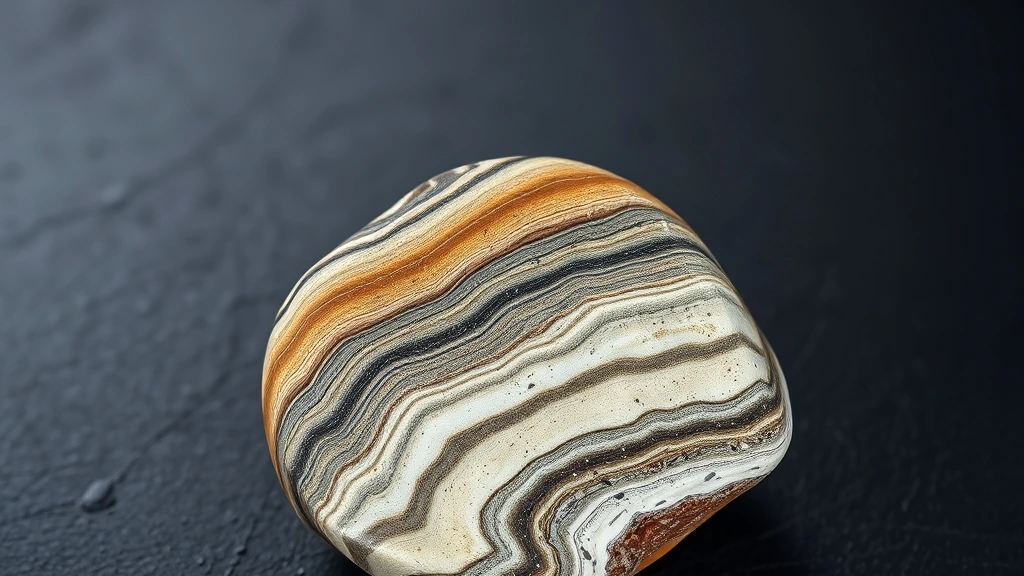
Zebra Jasper belongs to the quartz mineral group, specifically forming as a microcrystalline aggregate of chalcedony. This natural stone develops distinct banding patterns through the rhythmic deposition of silica-rich fluids in volcanic or sedimentary cavities. The interplay of iron oxides and pure quartz creates its signature zebra-like stripes. As a cryptocrystalline variety, it lacks visible individual crystals to the naked eye, distinguishing it from macrocrystalline quartz.
What is Zebra Stone (zebra Jasper)? Geological Overview & Definition
Zebra Jasper is defined as a polymictic jasper characterized by its striking, alternating bands of light and dark hues. These patterns form within volcanic rocks or sedimentary basins where silica gel precipitates over long geological periods. The stone’s unique appearance results from varying concentrations of iron impurities during the crystallization process. In comparative mineralogical collections, practitioners and geologists frequently study Blue Chalcedony alongside this crystal to appreciate their subtle energetic and structural differences.
Geologically, it is classified as a cryptocrystalline quartz aggregate rather than a single crystal. The term “Jasper” denotes an opaque variety of chalcedony, while “Zebra” refers to the specific banded morphology. This formation typically occurs in hydrothermal veins or amygdaloidal structures within basaltic lava flows. The resulting material is dense, non-porous, and highly resistant to weathering.
Zebra Stone (zebra Jasper) Chemical Composition & Crystallographic Properties
The fundamental chemical identity of Zebra Jasper is silicon dioxide (SiO₂), identical to pure quartz. However, it exists as a polycrystalline aggregate of microscopic chalcedony fibers. The crystal system of the constituent quartz units is Trigonal, reflecting the underlying atomic arrangement. This structure dictates the stone’s optical anisotropy and mechanical properties. In comparative mineralogical collections, practitioners and geologists frequently study Orca Agate alongside this crystal to appreciate their subtle energetic and structural differences.
Coloration arises from chromophore centers created by trace amounts of iron oxides (Fe₂O₃, Fe₃O₄). These impurities substitute for silicon or occupy interstitial sites within the silica lattice. The lattice structure remains fundamentally trigonal, but the aggregate nature causes light scattering that renders the stone opaque. This scattering effect is crucial for its characteristic matte to waxy luster.
The stone exhibits high chemical stability against weak acids, typical of silica-based minerals. It does not dissolve in standard laboratory acids, ensuring long-term preservation in collections. Thermal behavior is stable, with no significant phase changes occurring at standard ambient temperatures. The Mohs hardness of 6.5-7.0 confirms its resistance to abrasion and scratching.
| Property | Specification |
|---|---|
| Mineral Group | Natural Mineral / Crystal |
| Chemical Formula | SiO₂ (Chalcedony/Quartz with Fe-oxide inclusions) |
| Mohs Hardness | 6.5 – 7.0 |
| Crystal System | Trigonal |
| Specific Gravity (Density) | 2.60 – 2.65 |
| Refractive Index | 1.530 – 1.544 |
| Color & Optical Properties | Natural Zebra Stone (zebra Jasper) color spectrum and optical dispersion |
| Primary Mining Localities | Global primary localities |
| Water & Chemical Resistance | High (Safe for gentle water washing) |
| Chakra Alignment (Traditional) | Root Chakra, Sacral Chakra |
| Zodiac Affinity (Traditional) | Taurus, Virgo, Capricorn |
| Symbolic Meaning (Traditional) | Grounding, stability, protection, and emotional balance |
Zebra Stone (zebra Jasper) Varieties & Color Spectrum
Zebra Jasper exhibits distinct chromatic variations driven by specific iron oxide impurities within the chalcedony matrix. These natural morphs range from high-contrast banded patterns to subtle, earthy tonal shifts. The visual identity of each variety depends heavily on the concentration and distribution of hematite and goethite inclusions.
Classic South African Zebra Jasper
This primary commercial variety features bold, alternating bands of deep black and warm golden-brown. The striking contrast results from rapid cooling of silica-rich fluids in volcanic environments. Its high visibility makes it a staple for large carvings and architectural inlays.
Tanzanian Zebra Jasper
Originating from Tanzania, this variety often displays softer, more muted earth tones with intricate, fine-grained banding. The chalcedony structure here tends to be denser, yielding a smoother polish upon finishing. It is prized by lapidaries for its consistent texture and lack of prominent fractures.
Brazilian Zebra Jasper
Found in Brazil, this morph frequently incorporates hints of red and orange within the standard black-and-brown palette. The presence of iron oxide creates a fiery, sunset-like appearance in certain lighting conditions. This variety is less common in high-end jewelry markets compared to its African counterparts.
Madagascar Zebra Jasper
Madagascar produces a unique variant characterized by lighter, beige-toned bands against a dark background. The geological formation involves prolonged hydrothermal activity, resulting in exceptionally tight and uniform striping. Collectors value this type for its delicate, almost painterly aesthetic quality.
Where is Zebra Stone (zebra Jasper) Found? Geological Mining & Extraction
Zebra Jasper typically forms in volcanic basalt or rhyolite host rocks, where silica-rich fluids cool slowly to create banded chalcedony. These deposits are often located in ancient geological formations that have undergone significant tectonic stress and erosion. The banding pattern reflects the periodic deposition of different mineral impurities during the cooling process.
Primary extraction occurs in regions with rich volcanic history, including South Africa, Tanzania, and Brazil. Mining operations generally involve open-pit methods to access large, continuous slabs of the stone. Careful cutting is essential to preserve the integrity of the banded structure for commercial use.
Historical Significance & Cultural Lore of Zebra Stone (zebra Jasper)
Ancient civilizations valued Zebra Jasper for its perceived protective qualities and striking visual resemblance to animal stripes. In Greco-Roman contexts, similar banded stones were often associated with strength and stability in daily life. Archaeological findings suggest these materials were used in amulets and decorative objects across the Mediterranean.
In Vedic traditions, earthy, banded stones were linked to grounding energies and physical resilience. Historical texts reference the use of such minerals in meditative practices to foster emotional balance. The stone’s enduring appeal lies in its ability to symbolize the harmonious balance between opposing forces.
Modern Uses & Jewelry Applications of Zebra Stone (zebra Jasper)
Lapidaries primarily cut zebra jasper into cabochons to showcase its distinctive, flowing banding patterns without disrupting the natural aesthetic. The stone’s moderate hardness allows for detailed carving, making it a favorite for ornamental objects, inlays, and decorative tiles. Its durability ensures that polished surfaces retain their luster over extended periods of wear.
- Cabochon Jewelry: Ideal for rings, pendants, and earrings where the smooth, domed surface highlights the zebra-like stripes.
- Ornamental Carving: Frequently used for bookends, paperweights, and architectural accents due to its stability and visual contrast.
- Polished Slabs: Utilized in high-end interior design for countertops and wall panels to create striking visual focal points.
Metaphysical Properties & Traditional Meaning of Zebra Stone (zebra Jasper)
According to historical traditions and metaphysical lore, zebra jasper is revered for its capacity to promote grounding and emotional stability. Ancient Mediterranean and Vedic lapidary practices often associated striped stones with the cyclical nature of life and the balance between opposing forces. Practitioners believe the stone acts as a shield against negative energies, fostering a sense of protection and inner calm.
The alternating light and dark bands are symbolically interpreted as a representation of the duality of human experience. This visual balance encourages wearers to harmonize their emotional responses, leading to improved emotional balance and resilience. In spiritual contexts, the stone is thought to anchor the spirit to the physical realm, preventing mental drift and enhancing focus.
Which Chakra and Zodiac Signs Align with Zebra Stone (zebra Jasper)?
In chakra theory, zebra jasper is primarily aligned with the Root Chakra and the Sacral Chakra. The Root Chakra connection stems from the stone’s strong grounding properties, which help stabilize physical energy and foster a sense of security. Simultaneously, its influence on the Sacral Chakra supports creative flow and emotional regulation, bridging the gap between physical stability and intuitive expression.
Astrologically, this stone resonates most strongly with the earth signs of Taurus, Virgo, and Capricorn. These zodiac signs share the stone’s inherent traits of reliability, practicality, and disciplined structure. For these individuals, zebra jasper is believed to amplify their natural strengths, providing additional support during periods of stress or uncertainty.
How to Identify Real vs. Fake Zebra Stone (zebra Jasper)
Artificial imitations of zebra jasper often consist of synthetic glass, dyed chalcedony, or plastic composites designed to mimic the natural banding. These replicas may appear too uniform in color or lack the subtle variations found in genuine mineral specimens. Understanding the physical properties of natural quartz helps distinguish authentic stones from these manufactured alternatives.
Practical At-Home Authenticity Tests
- Temperature Test (Thermal Feel): Genuine zebra jasper feels cool to the touch initially and warms slowly, whereas plastic imitations warm up rapidly due to lower thermal conductivity.
- Specific Gravity & Weight Test: Natural stone has a specific gravity of 2.60–2.65, making it feel significantly heavier than its size suggests compared to lighter glass or plastic copies.
- Scratch & Hardness Test (Mohs Comparison): With a Mohs hardness of 6.5–7.0, real zebra jasper will not be scratched by a steel knife, while lower-quality imitations may show visible marks.
- Microscopic & Loupe Inspection (Internal Inclusions): Using a 10x loupe, look for natural internal inclusions or minor imperfections; synthetic glass often contains tiny air bubbles or perfectly uniform patterns.
Zebra Stone (zebra Jasper) Valuation Factors, Grading & Pricing
The market value of zebra stone is first and foremost driven by color saturation. Stones that exhibit a vivid, evenly distributed banding of white and gray or black provide the most visual vibrancy, and collectors often pay a premium for specimens that display a natural energetic luster reminiscent of a zebra’s distinctive stripes.
Next, crystal size and weight play a decisive role. Larger, heavier pieces—measured in grams—are more desirable, especially when they retain their raw, unpolished surface or possess a high-quality tumbled polish that enhances the stone’s natural matrix inclusions. The presence of these inclusions, which can create subtle optical effects, adds to the stone’s allure without the need for carat measurements or tumbled polish and natural crystal geometry.
Finally, ethical sourcing and locality premium influence pricing in both holistic and collector markets. Stones sourced from responsible mines with transparent supply chains command higher prices, while specimens from renowned localities such as the United States, Brazil, or the Caucasus region may carry a locality premium due to their historical significance and perceived authenticity.
How to Clean and Care for Zebra Stone (zebra Jasper)
Cleaning zebra stone should be performed with a warm soapy water solution and a soft cloth. Gently wipe the surface, ensuring that the cloth is damp but not soaking, and then dry the stone with a clean, dry microfiber cloth. Avoid ultrasonic cleaners, as the vibration can induce microfractures in the quartz matrix, compromising structural integrity.
Cleansing and Recharging Zebra Stone (zebra Jasper) (Energetic Care)
For energetic recharging, place the stone in a quiet, shaded area under gentle moonlight for several hours; the subtle lunar energy can cleanse without exposing the crystal to heat. Alternatively, resting the stone on a selenite charging slab allows the selenite’s subtle electromagnetic field to absorb and redistribute residual energies, maintaining the zebra stone’s grounding properties. Both methods preserve the mineral’s lattice structure while supporting its natural energetic balance.
Frequently Asked Questions About Zebra Stone (zebra Jasper)
Zebra Stone (zebra Jasper) displays distinct mineralogical characteristics across its geological varieties and structural habits. Gemologists evaluate these natural varieties based on crystal habit, trace chromophore concentrations, and visual luster.
Primary Natural Zebra Stone (zebra Jasper)
The benchmark natural variety exhibiting diagnostic color saturation and classic crystallographic symmetry.
Distinct Geological Morphs of Zebra Stone (zebra Jasper)
Secondary regional and structural varieties formed under localized geological temperature and pressure conditions.
Is zebra stone safe to wear in the shower?
Yes, zebra stone is safe for gentle water washing. Because it is a form of quartz, it resists water damage, but prolonged exposure to harsh detergents or high temperatures can dull its surface. Use a mild soap and a soft cloth to keep its striated patterns vibrant.
Can I clean zebra stone with an ultrasonic cleaner?
No, avoid ultrasonic cleaners for zebra stone. The vibration can cause microfractures in the quartz matrix. Instead, clean with warm soapy water and a soft cloth, then dry with a microfiber towel to preserve its crystalline integrity.
What is the best way to polish zebra stone?
Polishing with a fine-grit sandpaper followed by a polishing compound is recommended. This method restores luster without compromising the stone’s layered banding. Always test a small area first to ensure the finish remains true to the original pattern.
Which zodiac signs are associated with zebra stone?
Zebra stone aligns with Taurus, Virgo, and Capricorn. These signs value stability and grounding, qualities that the stone’s root chakra and sacral chakra energies support. Incorporating it into jewelry can enhance these traits.
How does zebra stone relate to the root and sacral chakras?
Zebra stone is linked to the Root and Sacral Chakras. It promotes grounding, emotional balance, and creative expression, helping wearers maintain physical stability while encouraging healthy emotional flow.
Does zebra stone contain any hazardous elements?
No, zebra stone is composed of SiO₂ with iron‑oxide inclusions, posing no health risks. The iron content is stable and does not leach or react with skin, making it safe for everyday wear and handling.
Can zebra stone be used in jewelry that is exposed to sunlight?
Yes, zebra stone tolerates sunlight well. Quartz is non‑photosensitive, so prolonged exposure will not fade its banded patterns. However, avoid extreme heat to prevent thermal shock that could crack the stone.
What is the ideal storage method for zebra stone?
Store zebra stone in a cool, dry place away from direct sunlight. Keep it in a soft pouch or lined jewelry box to protect its surface texture from scratches and to maintain its natural visual appeal.