
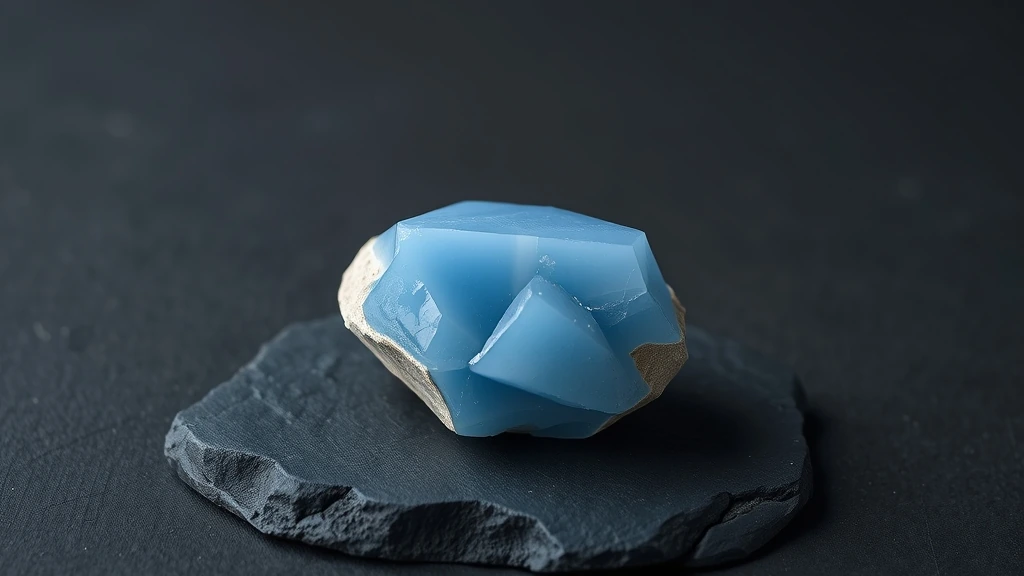
Chalcedony belongs to the extensive quartz mineral group, forming through the slow precipitation of silica-rich solutions in volcanic or sedimentary environments. As a natural mineral aggregate, it lacks the large, visible crystals of macrocrystalline quartz, instead featuring a fine-grained, interlocking texture. This microstructure grants the stone its characteristic waxy luster and translucency, distinguishing it from clear quartz varieties.
What is Blue Chalcedony? Geological Overview & Definition
Blue chalcedony is a cryptocrystalline form of quartz, characterized by its extremely fine-grained silica structure. Unlike macrocrystalline quartz, its individual crystals are too small to be distinguished without high magnification. This microstructure results in a smooth, waxy surface and a consistent, even color distribution throughout the stone. In comparative mineralogical collections, practitioners and geologists frequently study Zebra Stone Zebra Jasper alongside this crystal to appreciate their subtle energetic and structural differences.
The blue coloration typically arises from trace impurities or structural defects within the silica lattice. Geologically, it forms in cavities within basaltic lava flows or as nodules in sedimentary rocks. These formations often occur in regions with significant volcanic activity, such as parts of Brazil and Russia. In comparative mineralogical collections, practitioners and geologists frequently study Yemeni Agate Aqeeq alongside this crystal to appreciate their subtle energetic and structural differences.
Blue Chalcedony Chemical Composition & Crystallographic Properties
The fundamental chemical identity of blue chalcedony is silicon dioxide (SiO₂), identical to macrocrystalline quartz. Its crystallographic classification falls under the trigonal system, reflecting the underlying atomic arrangement of the silica tetrahedra. This lattice structure provides the stone with its characteristic hardness and resistance to chemical weathering. In comparative mineralogical collections, practitioners and geologists frequently study Purple Chalcedony alongside this crystal to appreciate their subtle energetic and structural differences.
Despite its trigonal classification, chalcedony appears amorphous to the naked eye due to its cryptocrystalline nature. The silica molecules are arranged in a disordered, fibrous pattern rather than a single large crystal. This microstructure allows for the uniform diffusion of colorants, creating the stone’s signature even blue tone.
Color centers in blue chalcedony often result from trace elements like iron or structural defects. These chromophores interact with light to produce the visible blue spectrum. The stone remains chemically inert to most acids, though prolonged exposure to strong alkalis can degrade the silica matrix.
Thermal stability is high, with the stone maintaining its structural integrity under standard heating conditions. However, rapid temperature changes may induce micro-fractures due to thermal shock. Proper handling ensures the preservation of its optical and physical properties for lapidary use.
| Property | Specification |
|---|---|
| Mineral Group | Natural Mineral / Crystal |
| Chemical Formula | SiO₂ |
| Mohs Hardness | 6.5 – 7.0 |
| Crystal System | Trigonal |
| Specific Gravity (Density) | 2.60 – 2.65 |
| Refractive Index | 1.530 – 1.543 |
| Color & Optical Properties | Natural Blue Chalcedony color spectrum and optical dispersion |
| Primary Mining Localities | Global primary localities |
| Water & Chemical Resistance | High (Safe for gentle water washing) |
| Chakra Alignment (Traditional) | Throat Chakra, Heart Chakra |
| Zodiac Affinity (Traditional) | Pisces, Libra |
| Symbolic Meaning (Traditional) | Emotional balance, clear communication, and inner peace |
Blue Chalcedony Varieties & Color Spectrum
Blue Chalcedony displays distinct mineralogical characteristics across its geological varieties and structural habits. Gemologists evaluate these natural varieties based on crystal habit, trace chromophore concentrations, and visual luster.
Primary Natural Blue Chalcedony
The benchmark natural variety exhibiting diagnostic color saturation and classic crystallographic symmetry.
Distinct Geological Morphs of Blue Chalcedony
Secondary regional and structural varieties formed under localized geological temperature and pressure conditions.
Sky Blue Chalcedony
This variety exhibits a pale, airy hue reminiscent of a clear daytime sky, resulting from trace impurities within the silica structure. The stone typically displays a translucent to semi-translucent body with a smooth, waxy luster that enhances its delicate aesthetic. Sky Blue Chalcedony is often found in massive nodules, making it ideal for carving intricate lapidary pieces.
Its formation occurs in geodes where secondary mineral deposits create a consistent, uniform coloration throughout the matrix. Collectors prize this morph for its clarity and lack of distracting inclusions, which allows light to penetrate deeply. The silica microcrystalline structure ensures durability while maintaining the soft, ethereal appearance characteristic of this specific color grade.
Azure Blue Chalcedony
Darker and more saturated than its sky-blue counterpart, this variety features a rich, deep azure tone that commands attention. The intense coloration often stems from higher concentrations of specific trace elements or iron oxides during the crystallization process. Azure Blue Chalcedony is rarer, as the geological conditions required to produce such depth are less common.
Visually, this stone presents a velvety appearance with a distinct vitreous luster when polished. The high Mohs hardness of the mineral ensures that the vibrant color remains protected during cutting and faceting. This variety is highly sought after for jewelry settings where a bold, oceanic aesthetic is desired.
Lavender-Blue Chalcedony
This unique morph blends cool blue tones with subtle purple undertones, creating a sophisticated and calming visual effect. The dual-hued appearance results from complex mineral interactions within the host rock during the slow deposition of silica. Lavender-Blue Chalcedony is considered a transitional variety, bridging the gap between pure blue and violet chalcedony.
The stone often exhibits a banded pattern where the blue and purple zones intermingle softly. This natural gradient adds depth and complexity to the gemstone, making each piece visually distinct. The trigonal crystal system influences the internal arrangement of these color bands, contributing to the stone’s overall structural integrity.
Ocean Blue Chalcedony
Characterized by a deep, saturated blue that mimics the depths of the sea, this variety is among the most prized in the market. The intense coloration is typically uniform, with minimal zoning, indicating stable geological conditions during formation. Ocean Blue Chalcedony is frequently associated with high-quality deposits that have undergone prolonged hydrothermal activity.
The stone’s density and refractive properties allow it to hold light beautifully, creating a glowing effect when viewed in natural light. This variety is often cut into cabochons to maximize the play of light across its surface. The chemical formula SiO₂ remains constant, but the specific trace element ratios define its unique chromatic identity.
Banded Blue Chalcedony
This variety features distinct, parallel bands of blue alternating with white, gray, or other neutral tones. The banding pattern is a result of periodic changes in the chemical environment during the mineral’s growth. Banded Blue Chalcedony is highly valued for its artistic potential, as the natural patterns create unique designs in each specimen.
The contrast between the blue bands and the lighter matrix enhances the stone’s visual appeal and depth. These patterns are formed by the rhythmic deposition of silica in cavities within the host rock. The microcrystalline texture ensures that the bands are sharp and well-defined, making them popular for decorative carvings and intaglio work.
Milky Blue Chalcedony
This morph displays a soft, opaque blue with a cloudy, milky appearance that diffuses light gently. The opacity is caused by minute fluid inclusions or microcrystals scattered throughout the silica matrix. Milky Blue Chalcedony offers a serene, pastel aesthetic that is distinct from the more transparent varieties.
The stone’s soft glow makes it particularly suitable for pendants and earrings, where the diffused light creates a soothing effect. This variety is often found in large, massive deposits, allowing for the extraction of substantial raw material. The waxy luster of the polished surface complements the milky interior, enhancing its overall tactile and visual appeal.
Where is Blue Chalcedony Found? Geological Mining & Extraction
Blue chalcedony is primarily extracted from hydrothermal veins and geodes within volcanic and sedimentary rock formations. These deposits form when silica-rich fluids cool and crystallize in cavities, creating the characteristic microcrystalline structure. Major mining regions include Brazil, Madagascar, and the United States, where large-scale extraction yields high-quality material.
The host rock often consists of basalt or rhyolite, which provides the necessary structural framework for
Modern Uses & Jewelry Applications of Blue Chalcedony
Blue Chalcedony is prized for its subtle translucency and gentle blue hues, making it a versatile choice for contemporary jewelry. Skilled lapidaries often employ cabochon polishing to accentuate its natural luster, while some artisans cut it into delicate facets that reveal a faint, shimmering play of light. The stone’s moderate hardness allows for intricate ornamental carving, producing filigree patterns and miniature figurines that echo ancient decorative motifs.
- Cabochon and faceted earrings, pendants, and rings
- Engraved brooches and cufflinks for formal wear
- Ornamental carvings in home décor, such as vases and figurines
- Custom-made jewelry pieces for wedding and anniversary celebrations
Metaphysical Properties & Traditional Meaning of Blue Chalcedony
According to historical traditions and metaphysical lore, Blue Chalcedony is believed to foster emotional balance and promote clear communication. Across ancient Mediterranean and Vedic lapidary practices, the stone is associated with calming the mind, easing anxiety, and encouraging honest expression. Its gentle blue tone is thought to resonate with the Throat Chakra, supporting truthful speech, while its soothing qualities align with the Heart Chakra, nurturing compassion and emotional healing.
Which Chakra and Zodiac Signs Align with Blue Chalcedony?
Blue Chalcedony is traditionally linked to the Throat Chakra, the energy center governing communication and self‑expression. Its calming influence is also said to support the Heart Chakra, enhancing empathy and emotional equilibrium.
The stone’s astrological affinity is firmly rooted in the signs of Pisces and Libra. Those born under Pisces are believed to find solace in its serene vibrations, while Libra natives are drawn to its harmonious balance and diplomatic qualities.
How to Identify Real vs. Fake Blue Chalcedony
Collectors must be vigilant against artificial imitations, such as synthetic glass or dyed quartz, which can mimic the stone’s appearance. Genuine Blue Chalcedony exhibits a characteristic silica composition (SiO₂) and a natural translucency that differs from the uniform opacity of many replicas.
Practical At-Home Authenticity Tests
- Temperature Test (Thermal Feel): Hold the stone in your hand; real chalcedony feels cool to the touch for a few seconds, whereas synthetic glass warms quickly.
- Specific Gravity & Weight Test: Compare the stone’s weight to a known quartz sample of similar size; real chalcedony will be slightly lighter due to its lower density.
- Scratch & Hardness Test (Mohs Comparison): Use a calibrated Mohs kit; real chalcedony should scratch glass (Mohs 6.5–7) but not be scratched by a steel nail (Mohs 5.5).
- Microscopic & Loupe Inspection (Internal Inclusions): Under magnification, genuine chalcedony often shows fine, fibrous inclusions or subtle banding, unlike the uniform texture of most synthetic copies.
Blue Chalcedony Valuation Factors, Grading & Pricing
Market value hinges primarily on Color Saturation, where deep, uniform azure tones command higher premiums than pale or mottled specimens. The stone’s natural energetic luster and visual vibrancy significantly influence buyer perception in both retail and collector circles. Consistent hue distribution without visible banding or color zoning ensures a premium aesthetic appeal for lapidary pieces.
Pricing is determined by Crystal Size & Weight (Grams), with larger, well-proportioned specimens fetching higher prices per unit mass. Raw material is evaluated differently from tumbled stones, where polish quality and surface smoothness are critical grading criteria. Natural matrix inclusions may add unique character, though excessive fractures or impurities typically reduce the overall market value.
Ethical Sourcing & Locality Premium plays an increasingly vital role in holistic and specialized collector markets. Buyers often pay more for stones with verified provenance from reputable, environmentally responsible mines. Documentation of origin enhances trust and aligns with modern consumer demands for transparency in the gemstone supply chain.
How to Clean and Care for Blue Chalcedony
To maintain the stone’s integrity, use warm soapy water and a soft cloth for gentle manual cleaning. This method effectively removes surface oils and dust without risking damage to the delicate silica structure. Always ensure the stone is thoroughly dried with a lint-free towel after washing to prevent water spots.
It is crucial to avoid ultrasonic cleaners entirely, as high-frequency vibrations can induce structural fractures in chalcedony. The stone’s microcrystalline nature makes it susceptible to internal stress from sonic agitation. Store the specimen in a soft pouch or jewelry box to protect it from scratches and physical impact.
Cleansing and Recharging Blue Chalcedony (Energetic Care)
Holistic practitioners often use herbal smudging with sage or palo santo to clear perceived energetic stagnation from the stone. This dry method avoids moisture exposure, preserving the mineral’s physical structure while addressing metaphysical intentions. The gentle smoke is believed to dissipate negative vibrations without requiring any liquid contact.
For recharging, place the stone on a selenite charging slab or expose it to gentle moonlight overnight. These methods are safe because they avoid direct intense sunlight or heat, which could potentially alter the stone’s color or cause thermal shock. Resting the crystal in a calm environment allows for a slow, natural restoration of its energetic properties.
Frequently Asked Questions About Blue Chalcedony
Blue Chalcedony displays distinct mineralogical characteristics across its geological varieties and structural habits. Gemologists evaluate these natural varieties based on crystal habit, trace chromophore concentrations, and visual luster.
Primary Natural Blue Chalcedony
The benchmark natural variety exhibiting diagnostic color saturation and classic crystallographic symmetry.
Distinct Geological Morphs of Blue Chalcedony
Secondary regional and structural varieties formed under localized geological temperature and pressure conditions.
What is the chemical composition of blue chalcedony?
Blue chalcedony is a form of quartz with the formula SiO₂. This silicon dioxide crystal forms in the trigonal system, giving it a characteristic smooth, translucent appearance. The blue hue often results from trace inclusions of iron or other metallic ions, which subtly alter its optical properties.
Is blue chalcedony safe to wear in the shower or during swimming?
Yes, blue chalcedony is water‑resistant and can be safely washed with gentle water. Its quartz structure resists moisture, so a quick rinse or mild soap solution will not damage the stone. However, avoid prolonged exposure to harsh chemicals that could dull its surface.
How should I clean my blue chalcedony jewelry to avoid damage?
Use warm soapy water and a soft cloth, avoiding ultrasonic cleaners. Gently wipe the surface with a microfiber cloth after washing. Ultrasonic cleaning can introduce micro‑fractures in the quartz, compromising its structural integrity over time.
Can I use a dishwasher to clean blue chalcedony?
No, a dishwasher is not recommended for blue chalcedony. The high temperatures and strong detergents can cause surface etching or discoloration. Stick to hand washing with mild soap and a soft cloth for best results.
What zodiac signs are associated with blue chalcedony?
Blue chalcedony is linked to Pisces and Libra. In astrological traditions, these signs are believed to resonate with the stone’s calming and balanced energies, enhancing emotional harmony and interpersonal communication.
Which chakras does blue chalcedony influence?
Blue chalcedony is said to activate the Throat Chakra and the Heart Chakra. These centers are associated with clear expression and compassion, respectively, and the stone’s soothing blue tones are thought to support emotional equilibrium.
Is blue chalcedony suitable for everyday wear in humid climates?
Yes, blue chalcedony can be worn daily even in humid environments. Its quartz composition is resistant to moisture, making it durable against sweat and humidity. Nonetheless, occasional gentle cleaning will keep its luster intact.
Does blue chalcedony have any special care instructions for long‑term storage?
Store blue chalcedony in a dry, padded compartment away from direct sunlight. Prolonged exposure to intense light can fade the blue tint, while moisture can promote mold growth on any surface imperfections. A soft cloth pouch protects it from scratches during storage.