
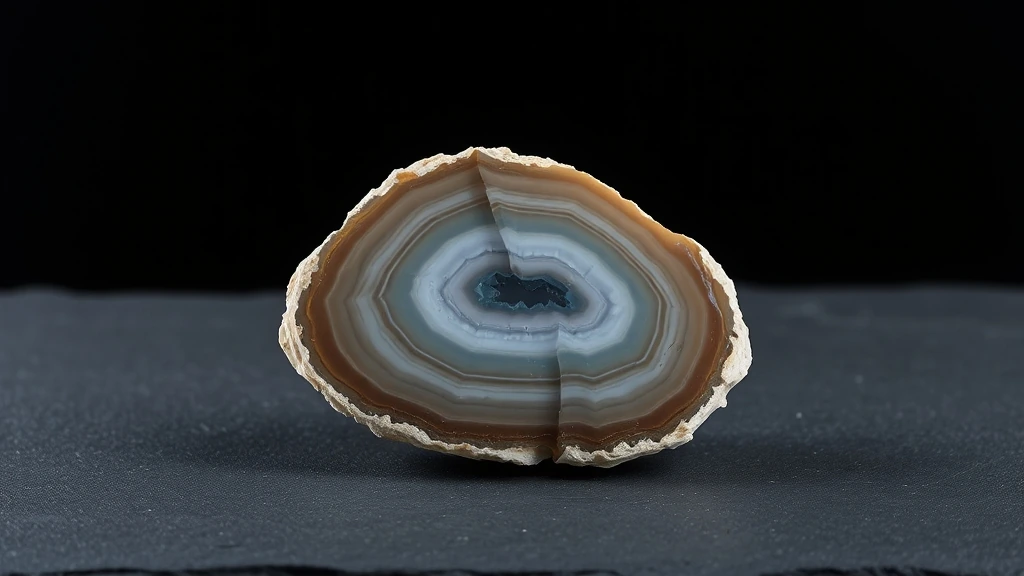
Yemeni Agate belongs to the silicate family, specifically the chalcedony subgroup of cryptocrystalline quartz. Formed through the slow precipitation of silica from hydrothermal fluids, this gemstone develops fibrous, microcrystalline aggregates that give it its characteristic banded appearance. The mineral’s fine-grained structure allows it to display a spectrum of hues, often influenced by trace metal inclusions and structural defects.
What is Yemeni Agate (aqeeq)? Geological Overview & Definition
Yemeni Agate is a cryptocrystalline form of quartz that crystallizes in the trigonal system. Its fibrous, microcrystalline aggregates create a fibrous texture that is often mistaken for a rock, yet it remains a distinct mineral species within the chalcedony group. The gemstone is typically found in volcanic or sedimentary host rocks, where silica-rich fluids deposit the fine quartz fibers.
The stone’s banded patterns arise from alternating layers of silica with varying trace element concentrations. These layers can include iron, manganese, or titanium, which impart the rich color variations seen in authentic Yemeni Agate. The mineral’s fibrous structure also contributes to its unique optical properties, such as subtle play of color and a slight pearlescent luster.
Yemeni Agate (aqeeq) Chemical Composition & Crystallographic Properties
Yemeni Agate’s chemical composition is that of silicon dioxide (SiO₂), with no significant cation substitution beyond trace impurities. The crystal lattice is trigonal, characterized by a hexagonal prism geometry that repeats in a fibrous, cryptocrystalline arrangement. This structure allows for the formation of tight, interlocking quartz fibers that give the gemstone its characteristic banding.
The gemstone’s acid sensitivity is typical of quartz; it resists most dilute acids but can be attacked by strong hydrofluoric acid. Its chromophore centers are primarily due to iron and manganese ions, which create color centers within the silica matrix. These centers absorb specific wavelengths, producing the deep reds, greens, and blues that are prized in lapidary work.
Thermal behavior of Yemeni Agate is stable up to about 573 °C, beyond which it begins to dehydrate and may alter to cristobalite. The fibrous microcrystalline structure can accommodate minor thermal expansion without fracturing, making the stone suitable for high-temperature jewelry settings. The gemstone’s trigonal symmetry ensures that its optical anisotropy is minimal, resulting in a relatively isotropic appearance under polarized light.
| Property | Specification |
|---|---|
| Mineral Group | Silicates (Chalcedony / Cryptocrystalline Quartz) |
| Chemical Formula | SiO₂ (Silicon Dioxide) |
| Mohs Hardness | 6.5 – 7.0 |
| Crystal System | Trigonal (Microcrystalline / Cryptocrystalline fibrous aggregates) |
| Specific Gravity (Density) | 2.60 – 2.65 |
| Refractive Index | 1.544 – 1.553 |
| Color & Optical Properties | Natural Yemeni Agate (aqeeq) color spectrum and optical dispersion |
| Primary Mining Localities | Brazil, Uruguay, Turkey, India, Madagascar |
| Water & Chemical Resistance | High (Safe for gentle warm water and mild soap; avoid harsh acids and chlorine) |
| Chakra Alignment (Traditional) | Root Chakra and Sacral Chakra |
| Zodiac Affinity (Traditional) | Gemini, Virgo, Taurus |
| Symbolic Meaning (Traditional) | Grounding, emotional balance, physical endurance, and protection |
Yemeni Agate (aqeeq) Varieties & Color Spectrum
Red‑Veined Aqeeq
Red‑Veined Aqeeq forms in siliceous pegmatites where iron‑rich fluids infiltrate quartz. The veins, often hematite‑laden, create a striking marbled pattern against a creamy background. Its limited distribution in the high‑altitude Tihama region makes it a prized, rare variety among collectors.
Green‑Streaked Aqeeq
Green‑Streaked Aqeeq derives its hue from trace chlorite inclusions within the quartz matrix. The subtle streaks give the stone a muted, forest‑green sheen that contrasts with the typical white or gray body. Though less common than its red counterpart, it is highly sought after for ornamental carvings.
Blue‑Tinted Aqeeq
Blue‑Tinted Aqeeq owes its coloration to barium‑silicate inclusions that form during late-stage crystallization. The stone exhibits a faint, sky‑blue wash that is both delicate and luminous. Its rarity is amplified by the scarcity of suitable barium‑rich deposits in Yemen.
Yellow‑Band Aqeeq
Yellow‑Band Aqeeq features bands of titanium‑oxide that create a warm, honey‑colored banding. The bands are usually concentric, giving the stone a distinctive “bullseye” appearance. This variety is moderately rare, prized for its bright, sunlit aesthetic.
Black‑Veined Aqeeq
Black‑Veined Aqeeq is characterized by dark graphite or pyrite veins that thread through the quartz. The contrast between the black veins and the light matrix creates a dramatic visual effect. Its scarcity is due to the limited occurrence of graphite‑rich fluids in Yemeni pegmatites.
White‑Marbled Aqeeq
White‑Marbled Aqeeq displays a subtle, marbled pattern formed by silica‑rich fluid inclusions. The result is a pristine, almost translucent stone with gentle, cloud‑like swirls. While more common than the colored varieties, it remains highly valued for its elegant simplicity.
Where is Yemeni Agate (aqeeq) Found? Geological Mining & Extraction
Yemeni Agate is predominantly hosted in siliceous pegmatites that intrude the Arabian Shield, particularly within the Tihama coastal plain and the highlands of the Hadhramaut region. These pegmatites are rich in quartz and contain trace amounts of iron, barium, and titanium, which give rise to the diverse color morphs of aqeeq.
Extraction occurs through small‑scale, artisanal mining operations that follow ancient quarrying routes. Artisans separate the agate from surrounding rock using hand tools, then polish the stones by hand or with simple mechanical devices, preserving the traditional craftsmanship that has been passed down through generations.
Historical Significance & Cultural Lore of Yemeni Agate (aqeeq)
Across ancient lapidary traditions, Yemeni Agate has been prized for its grounding properties and protective symbolism. In Greco‑Roman jewelry, it was fashioned into amulets believed to ward off misfortune, while Egyptian artisans incorporated it into ceremonial scarabs to symbolize rebirth. Chinese texts from the Han dynasty reference similar siliceous stones as talismans for physical endurance, and Vedic manuscripts describe them as enhancers of emotional balance. These diverse cultural references underscore the agate’s universal appeal and enduring mystique.
Modern Uses & Jewelry Applications of Yemeni Agate (aqeeq
Yemeni agate, prized for its subtle banding and warm hues, is commonly lapidary‑cut into smooth cabochons that accentuate its natural texture. Skilled artisans also carve intricate ornamental motifs into the stone, creating pendants, brooches, and decorative panels that showcase its fibrous character. In contemporary jewelry, the agate is frequently set in sterling silver or gold, allowing its subtle color variations to shine through.
- Cabochon polishing for earrings, rings, and pendants
- Faceted cuts for accent stones in rings and bracelets
- Carved ornamental panels for home décor and ceremonial objects
Metaphysical Properties & Traditional Meaning of Yemeni Agate (aqeeq
According to historical traditions and metaphysical lore, Yemeni agate is believed to ground the wearer, fostering a sense of stability and resilience. Across ancient Mediterranean and Vedic lapidary practices, the stone is associated with emotional balance, helping to soothe anxieties and promote harmonious relationships. In many cultures, it is also considered a protective talisman, believed to shield against negative energies and physical harm.
Which Chakra and Zodiac Signs Align with Yemeni Agate (aqeeq?
The Root Chakra, located at the base of the spine, is the primary energetic center linked to Yemeni agate, supporting feelings of safety and rootedness. The Sacral Chakra, situated in the lower abdomen, also resonates with this stone, encouraging emotional fluidity and creative expression.
The gemstone aligns with the zodiac signs Gemini, Virgo, and Taurus, reflecting its dual nature of adaptability, practicality, and steadfastness. These signs are traditionally associated with communication, analytical thinking, and sensual appreciation, all qualities that Yemeni agate is said to enhance.
How to Identify Real vs. Fake Yemeni Agate (aqeeq
Artificial imitations of Yemeni agate often appear as synthetic glass or dyed quartz, lacking the stone’s natural fibrous texture and subtle banding. Synthetic replicas may exhibit a smoother surface and a more uniform color than authentic agate, which typically shows slight variations and internal inclusions.
Practical At‑Home Authenticity Tests
- Temperature Test (Thermal Feel): Hold the stone in your hand; real agate feels cool to the touch initially and warms slowly, whereas glass warms quickly.
- Specific Gravity & Weight Test: Compare the stone’s weight to a known sample of quartz; genuine agate will be slightly heavier due to its density of 2.60–2.65 g/cm³.
- Scratch & Hardness Test (Mohs Comparison): Use a steel file or a quartz sample; agate should scratch quartz (Mohs 6.5–7.0) but not be scratched by it.
- Microscopic & Loupe Inspection (Internal Inclusions): Under magnification, real agate displays fibrous or cryptocrystalline inclusions and subtle banding, while synthetic glass shows uniform structure and lacks natural inclusions.
Yemeni Agate (aqeeq) Valuation Factors, Grading & Pricing
The most decisive factor in market value is Color Saturation. Stones exhibiting deep, uniform hues with minimal banding command higher prices, as their visual vibrancy reflects superior natural energetic luster. Buyers often seek specimens that display a consistent tone across the entire surface, indicating a well‑formed fibrous aggregate.
Crystal Size & Weight (Grams) play a pivotal role in pricing. Larger, heavier agates are prized for their heft and the visual impact they provide in jewelry or display settings. The distinction between raw and tumbled polish quality is critical; a smooth, hand‑polished surface enhances tactile appeal, while natural matrix inclusions can either add character or detract from perceived purity, depending on collector preference.
Ethical Sourcing & Locality Premium influences both holistic and collector markets. Provenance from reputable Yemeni mines, coupled with transparent mining practices, can add a premium to the stone’s value. Collectors often reward specimens that carry a documented ethical narrative, reflecting a commitment to responsible extraction and community support.
How to Clean and Care for Yemeni Agate (aqeeq)
When caring for solid Yemeni agate, warm soapy water is the preferred cleaning medium. Gently rinse the stone in a basin of lukewarm water mixed with a mild, fragrance‑free liquid soap, then dry with a soft microfiber cloth. Avoid ultrasonic cleaners, especially if the agate has been dyed, heavily fractured, or treated, as vibration can compromise surface integrity.
Cleansing and Recharging Yemeni Agate (aqeeq) (Energetic Care)
To recharge the stone’s energetic properties, place the agate under gentle moonlight for several hours, allowing the lunar energy to infuse its crystalline structure. Alternatively, resting the agate on a selenite charging slab can facilitate the transfer of positive vibrations, provided the slab remains clean and free of dust. Herbal smudging with sage or palo santo may be employed to clear residual energies, but the smudge should be kept at a safe distance to prevent heat damage. All energetic cleansing should be conducted in a calm, quiet environment, ensuring the stone remains undisturbed by direct heat or intense sunlight, which can alter its lattice stability.
Frequently Asked Questions About Yemeni Agate (aqeeq)
What is Yemeni agate and how does it differ from other agates?
Yemeni agate, also known as aqeeq, is a fibrous, microcrystalline form of quartz found primarily in Yemen. Its distinctive banding and subtle color variations arise from the unique geological conditions of the Arabian Peninsula, setting it apart from the more common banded agates of Brazil or the smoky varieties of the United States. The trigonal crystal system and silicon dioxide composition give it a characteristic hardness of 6.5–7.0 on the Mohs scale.
Is Yemeni agate safe to wear in the shower or while swimming?
Yes, Yemeni agate is water‑resistant and can be safely worn in gentle warm water with mild soap. Avoid exposure to harsh acids, chlorine, or prolonged soaking, as these can damage the surface. The high water resistance of this quartz variant makes it suitable for everyday wear, even in humid environments.
How should I clean my Yemeni agate jewelry?
Use warm soapy water and a soft cloth for cleaning solid Yemeni agate. Avoid ultrasonic cleaners, especially if the stone is dyed, heavily fractured, or treated, as the vibration can cause micro‑fractures. A gentle wipe with a microfiber cloth removes surface dust while preserving the stone’s natural luster.
Can I use an ultrasonic cleaner on Yemeni agate?
No, ultrasonic cleaning is not recommended for Yemeni agate, particularly if it has been dyed or treated. The ultrasonic waves can exacerbate existing fractures or compromise surface treatments. Stick to warm soapy water and a soft brush for routine maintenance.
Which zodiac signs are associated with Yemeni agate?
Yemeni agate is traditionally linked to the zodiac signs Gemini, Virgo, and Taurus. These signs are believed to resonate with the stone’s grounding and balancing properties, enhancing emotional stability and physical endurance in wearers.
Which chakras does Yemeni agate influence?
Yemeni agate is said to activate the Root Chakra and the Sacral Chakra. These energy centers are associated with grounding, emotional balance, and physical vitality, aligning with the stone’s reputed metaphysical benefits.
Is Yemeni agate suitable for use in jewelry that will be exposed to chemicals?
Yemeni agate is generally resistant to mild chemicals but should avoid strong acids and chlorine. Prolonged contact with harsh chemicals can etch or discolor the stone. For everyday wear, keep it away from cleaning agents, perfumes, and lotions containing acidic components.
How can I identify authentic Yemeni agate?
Authentic Yemeni agate typically exhibits fibrous, cryptocrystalline aggregates with subtle banding and a density of 2.60–2.65 g/cm³. Look for a refractive index of 1.544–1.553 and verify the trigonal crystal system through microscopic examination or reputable gemological testing.