
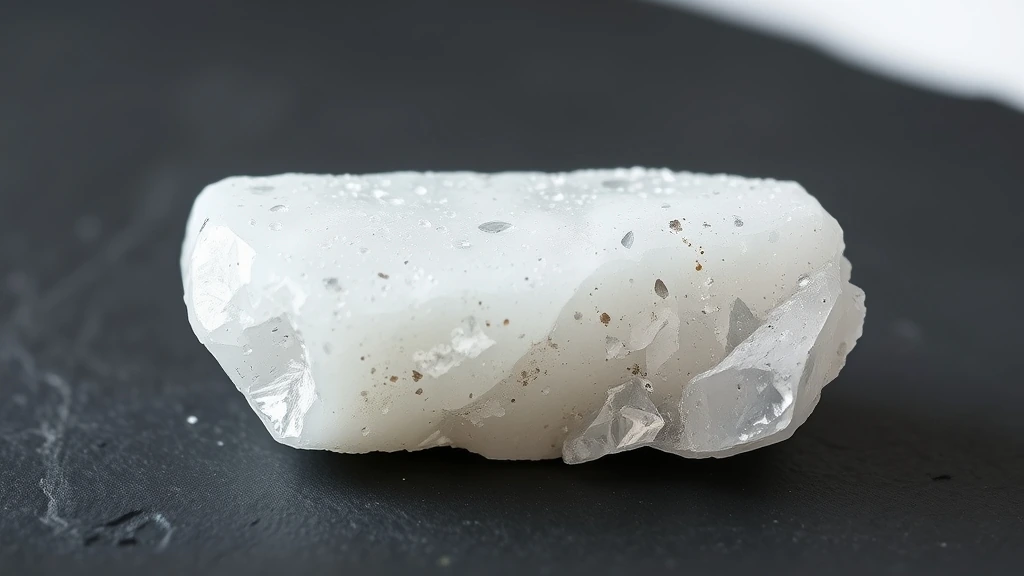
Topaz belongs to the vast silicate mineral family, specifically classified as a nesosilicate. Its structure is defined by isolated tetrahedra linked by aluminum and oxygen atoms. This aluminum fluorosilicate composition distinguishes it from other silicates, which often feature chain or sheet structures. The presence of fluoride ions within the lattice stabilizes the crystal framework, contributing to its exceptional durability and clarity in gem-quality specimens.
What is White Topaz Gemstone? Geological Overview & Definition
White topaz forms primarily in granitic pegmatites and volcanic rhyolites, where high-temperature fluids deposit the mineral. It often coexists with quartz, feldspar, and mica in these igneous environments. The orthorhombic crystal habit typically manifests as prismatic crystals, which are frequently found in geodes or cavities within the host rock.
Geologically, this gemstone is prized for its high refractive index and strong dispersion, often called “fire.” Unlike many other silicates, topaz exhibits perfect basal cleavage, a critical property for cutters. Understanding its igneous origin helps explain the inclusion patterns and color zoning observed in natural stones. Proper identification relies on distinguishing these features from synthetic alternatives or color-treated varieties.
White Topaz Gemstone Chemical Composition & Crystallographic Properties
The fundamental building block of topaz is the orthorhombic crystal system, characterized by three mutually perpendicular axes of unequal length. This symmetry results in prismatic crystals that are often elongated and terminated by complex faces. The unit cell parameters reflect the distinct arrangement of silicon, oxygen, aluminum, and fluorine atoms within the lattice.
Cation substitution plays a vital role in topaz’s properties, where magnesium or iron can replace aluminum in the structure. However, significant substitution can alter the crystal’s stability and optical characteristics. The fluorine content is critical; low fluoride levels can lead to instability, causing the crystal to cleave more easily or alter its refractive indices.
Topaz is generally resistant to most acids, but it can be affected by hydrofluoric acid due to its fluorine content. This sensitivity is a key diagnostic tool for gemologists to distinguish it from other silicates. The chromophore color centers in white topaz are minimal, resulting in its neutral, colorless appearance. Any slight tint usually stems from trace impurities or radiation-induced defects.
Thermal behavior is crucial for gem treatment, as heat treatment can permanently alter color centers. High temperatures can stabilize the crystal structure and remove unwanted brownish hues. However, excessive heat may cause fracturing or degrade the stone’s luster if not carefully controlled. Understanding these thermal limits ensures the preservation of the gemstone’s integrity and value.
| Property | Specification |
|---|---|
| Mineral Group | Silicates (Nesosilicates / Aluminum Fluorosilicate) |
| Chemical Formula | Al₂SiO₄(F,OH)₂ (Aluminum Fluorosilicate) |
| Mohs Hardness | 8.0 |
| Crystal System | Orthorhombic (Prismatic crystals) |
| Specific Gravity (Density) | 3.49 – 3.57 |
| Refractive Index | 1.606 – 1.638 |
| Color & Optical Properties | Natural White Topaz Gemstone color spectrum and optical dispersion |
| Primary Mining Localities | Brazil (Minas Gerais), Pakistan, Russia (Ural), Nigeria, Mexico |
| Water & Chemical Resistance | High (Safe in lukewarm water; avoid thermal shock and harsh chemicals) |
| Chakra Alignment (Traditional) | Throat Chakra and Solar Plexus Chakra |
| Zodiac Affinity (Traditional) | Sagittarius, Scorpio, Leo |
| Symbolic Meaning (Traditional) | Clarity, truth, self-realization, manifestation, and good fortune |
White Topaz Gemstone Varieties & Color Spectrum
Natural white topaz is the uncolored variety of the mineral species, often serving as a canvas for heat treatment. Its clarity and brilliance are paramount in gemological assessment.
Pure White Topaz
This variety exhibits a colorless to faintly bluish-white hue, prized for its diamond-like sparkle. It forms in alkaline pegmatites where trace impurities are minimal.
The stone often contains fluid inclusions that can affect its transparency. High-clarity specimens command premium prices in the market.
Swiss Blue Topaz
While technically a treated variety, it is the most commercially significant “white” topaz globally. It is created by irradiating colorless stones and heating them to stabilize the blue hue.
The process transforms the crystal lattice, creating a vibrant, uniform color. This treatment is standard and fully disclosed in trade documentation.
London Blue Topaz
This rare natural variety features a deep, oceanic blue that can appear nearly black in low light. It is found exclusively in the Ouro Preto region of Brazil.
Its color stems from natural irradiation and structural defects within the crystal. These stones are significantly rarer and more valuable than treated counterparts.
Champagne Topaz
Often mistaken for a white variety, champagne topaz displays a warm, golden-brown tone. It is frequently used as a diamond alternative due to its high refractive index.
The color is caused by iron impurities within the crystal structure. It is commonly found alongside white topaz in Brazilian deposits.
Smoky Topaz
This variety ranges from light tan to deep brown, resembling smoky quartz. It forms in the same geological environments as other topaz varieties.
The brownish tint results from natural irradiation over millions of years. It is less common than blue or champagne varieties in the trade.
Where is White Topaz Gemstone Found? Geological Mining & Extraction
Topaz primarily forms in granitic pegmatites and volcanic rocks, where specific chemical conditions allow its crystallization. The most significant deposits are located in Brazil, particularly in the Ouro Preto and Ouro Verde regions.
These areas yield high-quality stones with excellent clarity and color potential. Mining operations focus on extracting large, intact crystals for gem cutting.
Other notable sources include Pakistan, Myanmar, and the United States, specifically in Maine and California. These regions produce smaller quantities but contribute to global supply diversity.
Extraction methods vary from open-pit mining to underground shafts, depending on deposit depth. Careful handling is required to prevent fracturing the brittle crystals.
Historical Significance & Cultural Lore of White Topaz Gemstone
Ancient civilizations revered topaz as a stone of clarity and truth, often associating it with the sun god. In medieval Europe, it was believed to protect against evil spirits and enhance sight.
Archaeological findings reveal topaz use in jewelry dating back to the 12th century. Its association with the November birthstone tradition solidified its cultural importance over centuries.
The gemstone symbolizes loyalty and friendship, making it a popular choice for engagement rings. Its enduring appeal lies in its brilliance and historical mystique.
Modern Uses & Jewelry Applications of White Topaz Gemstone
White topaz is prized for its exceptional brilliance and durability, making it a versatile choice for contemporary jewelry design. Lapidaries typically cut these stones into faceted shapes to maximize light return, enhancing their icy white appearance. This gemstone also works well in cabochon cuts, where its smooth, polished surface highlights subtle color zoning or chatoyancy.
- Faceted Cuts: Ideal for rings and earrings, showcasing high refractive index and sparkle.
- Cabochon Cuts: Used for pendants and brooches, emphasizing a silky luster without facets.
- Ornamental Carving: Rarely used for intricate carvings due to brittleness, but suitable for simple, elegant motifs.
Carat, Quality Grades & Value Factors of White Topaz
According to historical traditions and metaphysical lore, white topaz is believed to promote clarity of thought and emotional balance. Practitioners often associate this stone with mental clarity, suggesting it helps remove mental fog and encourages honest communication. Its neutral white color is thought to amplify the wearer’s intent, acting as a universal amplifier for positive energy.
In traditional gemology, this stone is linked to emotional resilience, helping individuals navigate stress with grace. It is said to foster self-confidence and inner strength, particularly during periods of transition. By aligning with the wearer’s aura, white topaz is believed to protect against negative influences and promote a sense of calm.
Which Chakra and Zodiac Signs Align with White Topaz Gemstone?
White topaz is canonically aligned with the Throat Chakra, which governs communication and self-expression. This connection suggests the stone aids in speaking one’s truth and expressing ideas clearly. Additionally, it resonates with the Solar Plexus Chakra, the center of personal power and confidence. This dual alignment makes it a powerful stone for those seeking to assert their identity and voice.
In astrological practice, white topaz is specifically associated with Sagittarius, Scorpio, and Leo. These zodiac signs are believed to benefit from the stone’s ability to enhance their natural traits. Sagittarius gains focus, Scorpio finds emotional balance, and Leo amplifies their natural charisma. This alignment ensures the gemstone supports the unique energetic needs of these signs.
How to Identify Real vs. Fake White Topaz Gemstone
Distinguishing natural white topaz from imitations requires careful observation of physical properties. Common fakes include synthetic glass, which often lacks the natural inclusions found in mined stones. Dyed replicas of other minerals, such as quartz, may mimic the color but fail durability tests. Understanding these differences helps buyers avoid costly mistakes and ensures they invest in genuine gemstones.
Practical At-Home Authenticity Tests
- Temperature Test (Thermal Feel): Real topaz feels cool to the touch initially and warms up slowly. Glass imitations tend to warm up much faster due to lower thermal conductivity.
- Specific Gravity & Weight Test: Topaz has a specific gravity of approximately 3.5. It feels heavier than glass (SG ~2.5) of the same size. Use a precision scale to compare weight against known standards.
- Scratch & Hardness Test (Mohs Comparison): Topaz rates 8 on the Mohs scale. It will scratch quartz (7) and glass (5.5) but will not be scratched by a steel knife (5.5).
- Microscopic & Loupe Inspection (Internal Inclusions): Use a 10x loupe to look for natural inclusions like fluid-filled cavities or mineral crystals. Glass often contains tiny, spherical bubbles, which are a clear sign of imitation.
White Topaz Gemstone Valuation Factors, Grading & Pricing
Market value hinges primarily on Color Saturation and overall tone uniformity. High-grade stones exhibit a pure, icy white appearance without yellowish or brownish tints. Additionally, exceptional optical clarity and vitreous luster significantly enhance the gem’s visual appeal.
The Carat Weight of the stone directly influences its per-carat price, especially for larger specimens. Facet symmetry must be precise to maximize light return and brilliance. Furthermore, the absence of visible matrix or internal inclusions is critical for achieving top-tier grading standards.
Geographical Provenance Premium can elevate the value of exceptional Brazilian or Sri Lankan specimens. Wholesale prices fluctuate based on supply chains, while retail margins reflect brand prestige. Current trends favor large, eye-clean stones with certified origin documentation.
How to Clean and Care for White Topaz Gemstone
White topaz possesses perfect basal cleavage, making it susceptible to splitting under mechanical stress. Consequently, ultrasonic and steam cleaning must be STRICTLY AVOIDED to prevent catastrophic damage. These methods can exploit natural cleavage planes, causing irreversible fractures in the crystal structure.
For safe maintenance, immerse the gem in warm soapy water and gently agitate with a soft cloth. This method effectively removes oils and dust without risking structural integrity. Always dry the stone thoroughly with a lint-free cloth to prevent water spots.
Cleansing and Recharging White Topaz Gemstone (Energetic Care)
To energetically cleanse the stone, use smoke smudging with sage or palo santo for a few minutes. This dry method avoids any contact with water or heat, preserving the mineral’s physical stability. Ensure the smoke circulates around the gem without direct flame exposure.
For recharging, place the topaz on a selenite plate under moonlight overnight. This practice aligns with the stone’s natural energy without risking solubility or thermal shock. Keep the gem away from direct sunlight to prevent potential color fading.
Frequently Asked Questions About White Topaz Gemstone
Is white topaz safe to wear in the shower?
Yes, it is safe for brief exposure to lukewarm water. However, you should remove it before using hot showers or baths. Sudden temperature changes can cause thermal shock, potentially damaging the stone. Always avoid contact with harsh soaps or chlorine.
Can I clean white topaz in an ultrasonic cleaner?
No, you must strictly avoid ultrasonic and steam cleaning. This gemstone possesses perfect basal cleavage, making it susceptible to fracturing under high-frequency vibrations. Instead, gently clean it with warm soapy water and a soft cloth to preserve its integrity.
Which zodiac signs are aligned with white topaz?
Sagittarius, Scorpio, and Leo are the primary aligned signs. These astrological associations stem from the stone’s historical use in enhancing clarity and courage. Wearing this gemstone is believed to resonate with the energetic traits of these specific zodiac constellations.
What chakras does white topaz activate?
It primarily activates the Throat Chakra and Solar Plexus Chakra. These energy centers govern communication, self-expression, and personal power. The stone’s clarity is thought to help unblock these specific chakra points, promoting balanced energy flow and mental focus.
How hard is white topaz on the Mohs scale?
White topaz rates 8 on the Mohs scale of mineral hardness. This makes it significantly harder than quartz and suitable for daily wear in rings or bracelets. Its durability ensures it resists scratching from common household materials, though it remains softer than diamond.
What is the chemical composition of white topaz?
It is a silicate mineral composed of aluminum and silicon. The chemical formula is Al₂SiO₄(F,OH)₂, where fluorine or hydroxyl ions occupy specific lattice sites. Trace impurities determine the color, but pure white topaz lacks significant chromophores, resulting in its transparent appearance.
Does white topaz require special storage conditions?
Yes, store it separately from harder gems to prevent scratches. Although durable, its perfect basal cleavage means it can split if struck sharply. Keep it in a soft pouch or lined jewelry box to protect its facets from accidental impact or abrasion.
Is white topaz a birthstone for any month?
Yes, it is the traditional birthstone for November. This association dates back to medieval times when topaz was believed to grant wisdom and health. It serves as a meaningful gift for those born in this month, symbolizing clarity and protection throughout the year.