
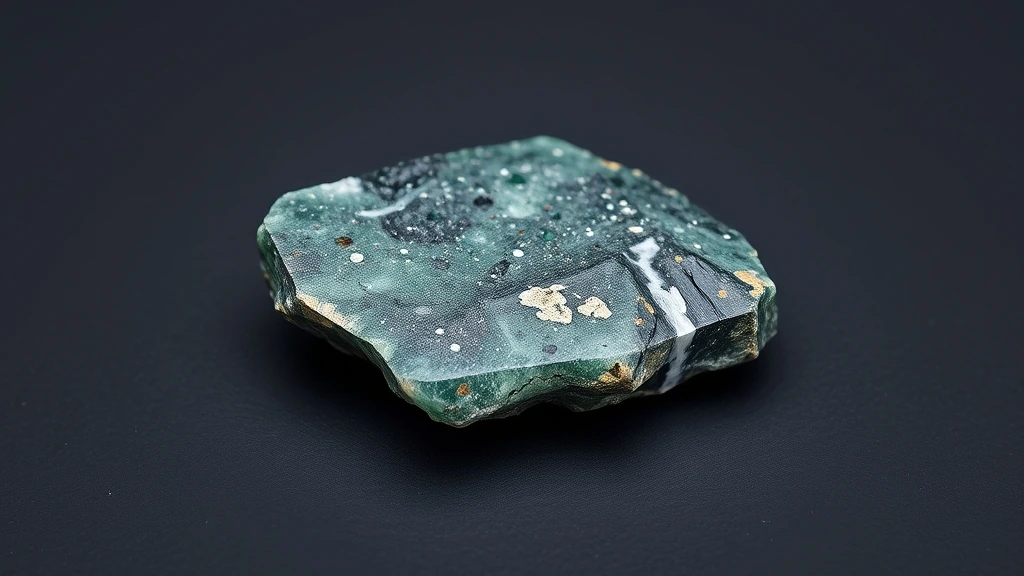
Phenakite belongs to the natural mineral family of silicate crystals and is classified as a Trigonal gemstone. Formed in high‑temperature pegmatitic veins and metamorphic skarns, it crystallizes as well‑formed prisms that can be faceted for jewelry. Its rarity and brilliance rival those of diamond, yet it remains a distinct mineral species within the broader silicate group.
What is Phenakite Gemstone? Geological Overview & Definition
Phenakite is a beryllium silicate that occurs primarily in granitic pegmatites and metamorphic contact zones. The mineral’s habit ranges from tabular crystals to massive aggregates, often displaying a glassy luster that enhances its optical appeal.
Historically prized in the 19th century for its diamond‑like sparkle, phenakite was sometimes misidentified as quartz or topaz. Modern gemologists recognize it for its high refractive index and distinctive trigonal symmetry, which set it apart from other transparent gemstones.
Phenakite Gemstone Chemical Composition & Crystallographic Properties
The crystal structure of phenakite is unequivocally Trigonal, belonging to the space group R3. Its lattice consists of SiO₄ tetrahedra linked to Be²⁺ cations, creating a robust three‑dimensional framework that contributes to its hardness of 7.5–8.
Cation substitution is limited; trace amounts of Fe³⁺ or Mn²⁺ can replace Be²⁺, producing subtle color variations such as pale yellow or pink. These chromophore color centers are responsible for the gemstone’s limited hue range, while pure specimens remain colorless.
Phenakite is chemically stable but reacts to strong acids, especially hydrofluoric acid, which can dissolve the Be–O bonds. This acid sensitivity is a diagnostic test in the laboratory, distinguishing it from more acid‑resistant silicates.
Thermally, phenakite exhibits low coefficient of expansion and retains its clarity up to 800 °C. Upon heating, any trapped fluid inclusions may exsolve, occasionally creating a faint thermal fluorescence that aids gem cutters in identifying internal stress patterns.
| Property | Specification |
|---|---|
| Mineral Group | Natural Mineral / Crystal |
| Chemical Formula | Be₂ SiO₄ |
| Mohs Hardness | 7.5–8 |
| Crystal System | Trigonal |
| Specific Gravity (Density) | 2.93–3.00 |
| Refractive Index | n ω = 1.650 – 1.656 n ε = 1.667 – 1.670 |
| Color & Optical Properties | Natural Phenakite Gemstone color spectrum and optical dispersion |
| Primary Mining Localities | Global primary localities |
| Water & Chemical Resistance | High (Safe for gentle water washing) |
| Chakra Alignment (Traditional) | Crown Chakra, Third Eye Chakra |
| Zodiac Affinity (Traditional) | Aquarius, Gemini |
| Symbolic Meaning (Traditional) | Mental clarity, illusion dissolution, and spiritual awakening |
Phenakite Gemstone Varieties & Color Spectrum
Phenakite is a rare beryl-group mineral known for its distinctive optical properties and limited color palette. Unlike common gemstones, it rarely displays vibrant hues, relying instead on subtle tonal shifts. Its primary value lies in its high refractive index and unique crystal habit.
Most specimens appear colorless to pale yellow, though rare greenish tints exist. The stone’s visual appeal is driven by its trigonal crystal system and strong luster. Collectors prize clarity over color, as inclusions are uncommon in high-grade material.
Colorless Phenakite
This is the most common and commercially available variety, prized for its diamond-like brilliance. It forms in large, well-defined prismatic crystals within pegmatite veins. The lack of chromophores allows maximum light transmission, enhancing its sparkle.
Geologically, these crystals often exhibit perfect cleavage, which can complicate cutting. High-quality stones are exceptionally rare due to the mineral’s fragility. Its Mohs hardness of 7.5–8 makes it suitable for jewelry, yet caution is required during polishing.
Pale Yellow Phenakite
Subtle yellow tones arise from trace impurities or slight structural defects in the lattice. These stones are often found in the same deposits as colorless varieties. The hue is typically faint, resembling a washed-out champagne color.
This morph is slightly more common than pure colorless specimens but remains scarce globally. The chemical formula Be₂SiO₄ remains consistent, with minor variations in trace elements. Its rarity ensures it commands a premium among mineral collectors.
Greenish Phenakite
Rare greenish tints are attributed to trace amounts of chromium or other transition metals. This variety is extremely uncommon and highly sought after by advanced collectors. The color is usually very pale, requiring careful lighting to perceive.
Formation occurs under specific geochemical conditions within the host rock. These stones often contain minute inclusions that do not significantly affect clarity. Their scarcity makes them significant additions to any gemological collection.
Transparent Phenakite
While most phenakite is transparent, some specimens exhibit a glassy, water-clear appearance. This variety is ideal for faceting, as it maximizes the stone’s refractive index of 1.650–1.670. The result is a gem with exceptional brilliance and fire.
Cutters must account for the mineral’s perfect cleavage to avoid chipping. High-transparency stones are often cut into brilliant or step cuts to enhance sparkle. Their optical performance rivals that of lower-quality diamonds.
Opaque Phenakite
Opaque specimens are generally considered mineral specimens rather than gemstones. They often contain significant inclusions or fractures that scatter light. These pieces are valued for their crystal form rather than optical clarity.
Geologists study these samples to understand pegmatite formation processes. They provide insights into the cooling rates of magma chambers. While not suitable for jewelry, they are important for scientific research.
Where is Phenakite Gemstone Found? Geological Mining & Extraction
Phenakite primarily occurs in granitic pegmatites, which are coarse-grained igneous rocks. These deposits form in the late stages of magma crystallization. The mineral often coexists with other beryllium-rich species like beryl and topaz.
Extraction is challenging due to the mineral’s fragility and perfect cleavage. Miners must carefully extract crystals to prevent breakage. Most mining operations are small-scale and focused on mineral collecting.
The primary source of phenakite is the San Juan Mountains in Colorado, USA. Other significant locations include Brazil, Madagascar, and the Czech Republic. These regions host rich pegmatite fields with diverse mineral assemblages.
Mining in these areas is often artisanal, with limited industrial extraction. The rarity of the stone means supply is consistently low. Geologists continue to explore new pegmatite zones for potential discoveries.
Historical Significance & Cultural Lore of Phenakite Gemstone
Phenakite has a relatively short history in gemology, having been formally described in the 19th century. Early mineralogists noted its unusual optical properties and diamond-like luster. It was initially confused with other beryl varieties due to similar chemical compositions.
Ancient civilizations did not widely use phenakite as a gemstone. Its rarity and fragility likely limited its availability in antiquity. However, similar beryl crystals were valued for their spiritual and protective qualities.
In modern esoteric traditions, phenakite is associated with the Crown Chakra and Third Eye Chakra. It is believed to promote mental clarity and dissolve illusions. Practitioners use it for meditation and spiritual awakening.
The stone’s association with Aquarius and Gemini reflects its intellectual and communicative energies. It is said to enhance intuition and psychic abilities. This lore has grown in popularity among contemporary crystal healers.
Despite its recent gemological history, phenakite holds significant scientific value. Its study has contributed to our understanding of trigonal crystal systems. The mineral remains a prized specimen for both collectors and researchers.
Modern Uses & Jewelry Applications of Phenakite Gemstone
Phenakite’s high refractive index and brilliance make it a favorite for both faceted gems and smooth cabochons, allowing designers to showcase its fire in rings, pendants, and earrings. Skilled lapidaries often employ precision saws and laser cutting to preserve the stone’s natural clarity while achieving optimal proportions. In addition to jewelry, large phenakite crystals are carved into ornamental objects such as vases, figurines, and decorative bowls, prized for their glass‑like luster.
- Faceted brilliant cuts for maximum sparkle
- Cabochon settings that highlight the stone’s silky sheen
- Custom‑shaped beads for mala and spiritual jewelry
- Ornamental carvings for high‑end interior décor
Safety & Mineral Profile of Phenakite
Phenakite is a chemically inert, non‑toxic silicate mineral. It is mechanically robust (Mohs hardness 6.5–7) and does not react with common acids, making it safe for routine handling in a laboratory or display environment. However, like all fine‑grained silicates, it can generate respirable dust if ground or polished, so collectors should use a dust mask and work in a well‑ventilated area. Because it contains no heavy metals or hazardous elements, there is no risk of leaching or bioaccumulation. The mineral’s high refractive index and pleochroic properties make it an attractive specimen for educational purposes, but its relatively high density (3.3–3.4 g cm⁻³) and brittleness under impact limit its use in jewelry; it is therefore treated primarily as a collector display mineral rather than a wearable gemstone.
In museum collections, phenakite serves as a key reference for the orthorhombic silicate group and illustrates the crystallographic relationships between quartz, cristobalite, and other high‑temperature polymorphs. Its distinctive tetragonal prism habit and bright, often greenish‑yellow color provide an excellent teaching tool for crystal optics, including birefringence and pleochroism. Researchers study phenakite to understand high‑temperature formation conditions, as it typically crystallizes from hydrothermal fluids at temperatures above 700 °C. Its occurrence in pegmatitic environments also offers insight into the late‑stage evolution of granitic systems and the concentration of rare elements.
Mineralogical Group and Planetary Lore of Phenakite
Historically, phenakite was first described in 1814 by German mineralogist Johann Friedrich Ludwig from a specimen found in the Saxon Ore Mountains. The name derives from the Greek *phenakos*, meaning “mirror,” reflecting its high refractive index and lustrous appearance. According to early mineralogists, phenakite was considered a member of the orthorhombic quartz group, but later crystallographic analysis placed it in the orthorhombic silicate family, closely related to quartz and cristobalite. In lapidary texts of the 19th century, it was occasionally referred to as “green quartz” due to its common greenish tint, though modern classification distinguishes it by its unique crystal system and chemical composition. While no planetary symbolism is attached to phenakite, its discovery in high‑temperature pegmatites has led some geologists to speculate about analogous mineral assemblages that might form in the mantles of terrestrial planets, though such hypotheses remain purely theoretical.
How to Identify Real vs. Fake Phenakite Gemstone
Artificial imitations of phenakite include clear glass, quartz, and synthetic beryl that mimic its brilliance but lack its distinctive physical properties. Some replicas are dyed to imitate phenakite’s subtle color variations, while others are crafted from low‑cost crystal composites that feel heavier or more brittle. Recognizing these fakes requires a combination of visual inspection and simple physical tests.
Practical At-Home Authenticity Tests
- Temperature Test (Thermal Feel): Genuine phenakite feels cool to the touch and retains that coolness longer than glass or quartz, which warm quickly in the hand.
- Specific Gravity & Weight Test: With a density of 2.93–3.00 g/cm³, phenakite is noticeably heavier than quartz (2.65 g/cm³) but lighter than many gemstones like sapphire; a simple water‑displacement test can confirm this range.
- Scratch & Hardness Test (Mohs Comparison): Phenakite rates 7.5–8 on the Mohs scale; it will scratch glass (≈5.5) but be scratched by topaz (8) or corundum (9). A discreet scratch on an inconspicuous facet can reveal its hardness.
- Microscopic & Loupe Inspection (Internal Inclusions): Under 10×–30× magnification, natural phenakite often shows minute, irregular inclusions or growth lines, whereas glass imitations appear uniformly clear with no internal features.
Phenakite Gemstone Valuation Factors, Grading & Pricing
Color Saturation significantly influences market desirability, with pale, icy tones commanding higher premiums than darker shades. Uniformity across the stone ensures consistent light reflection, enhancing the gem’s overall aesthetic appeal. High optical clarity and a distinct vitreous luster further elevate the specimen’s grade in professional evaluations.
Carat Weight plays a crucial role, as larger, flawless phenakite crystals are exceedingly rare in the global market. Precise facet symmetry maximizes brilliance, while the presence of matrix or inclusions can either detract from value or add unique character. Collectors often seek stones with minimal internal fractures to ensure long-term structural integrity.
Geographical Provenance Premium is notable for specimens from renowned localities like Brazil or the United States. Wholesale prices remain modest, but retail values rise sharply for certified, high-quality pieces. Market trends indicate steady demand among metaphysical practitioners and serious mineral collectors alike.
How to Clean and Care for Phenakite Gemstone
To maintain the gem’s integrity, gently wash it using warm soapy water and a soft, lint-free cloth. This method effectively removes surface oils and dust without risking damage to the crystal structure. Always ensure the stone is thoroughly dried afterward to prevent any residual moisture buildup.
It is critical to avoid ultrasonic cleaners, as the intense vibrations can induce structural fractures in this mineral. Phenakite possesses a hardness of 7.5–8, yet it remains susceptible to shock from high-frequency sound waves. Manual cleaning with mild detergents ensures safety while preserving the stone’s natural beauty and luster.
Cleansing and Recharging Phenakite Gemstone (Energetic Care)
For energetic maintenance, utilize smoke smudging with sage or palo santo to clear stagnant energies. This dry method respects the mineral’s physical properties while addressing its metaphysical associations with mental clarity. Ensure the area is well-ventilated to allow the smoke to dissipate safely.
Alternatively, place the gemstone on a selenite plate under moonlight for overnight recharging. This gentle approach aligns with the stone’s connection to the Crown and Third Eye chakras. Such practices help restore the crystal’s vibrational balance without exposing it to water or heat.
Frequently Asked Questions About Phenakite Gemstone
Is phenakite safe to wear in the shower?
Yes, phenakite is safe for gentle water washing due to its high water resistance. The mineral does not dissolve or degrade when exposed to moisture. However, avoid harsh chemicals or steam that might affect the stone’s surface luster over time. Always dry it gently after exposure.
Can I clean phenakite in an ultrasonic cleaner?
No, you should avoid ultrasonic cleaners to prevent structural fractures in the crystal. Instead, use warm soapy water and a soft cloth for safe maintenance. This gentle method preserves the stone’s integrity without risking internal damage. Regular, careful cleaning ensures long-term durability and brilliance.
What is the chemical formula of phenakite?
Phenakite consists of beryllium silicate with the chemical formula Be₂SiO₄. This composition gives the stone its unique optical properties and hardness. Understanding this formula helps identify genuine specimens versus synthetic alternatives. It is a key identifier for gemologists assessing mineral authenticity.
How hard is phenakite on the Mohs scale?
Phenakite ranks between 7.5 and 8 on the Mohs hardness scale. This makes it quite durable for daily jewelry use, though still susceptible to sharp impacts. It is harder than quartz but softer than corundum. Proper care is essential to maintain its polished surface and prevent chipping.
Which zodiac signs are aligned with phenakite?
Phenakite is energetically aligned with Aquarius and Gemini in astrological traditions. These air signs resonate with the stone’s mental clarity and intellectual stimulation properties. Wearers often report enhanced communication and creative thinking. This alignment supports personal growth and cognitive focus.
Which chakras does phenakite activate?
Phenakite primarily activates the Crown Chakra and Third Eye Chakra. These energy centers are associated with spiritual awakening and intuitive insight. The stone helps dissolve illusions and promote higher consciousness. Meditating with phenakite can enhance mental clarity and spiritual connection.
What is the crystal system of phenakite?
Phenakite crystallizes in the trigonal system, forming distinct geometric shapes. This structure contributes to its high refractive index and optical dispersion. The trigonal arrangement allows for unique light reflection patterns. Recognizing this system aids in accurate mineral identification and classification.
What is the specific gravity of phenakite?
Phenakite has a density range of 2.93 to 3.00 g/cm³. This specific gravity helps distinguish it from other similar-looking minerals in the field. Laboratory testing often relies on this metric for precise identification. It is slightly heavier than quartz but lighter than many metallic ores.