
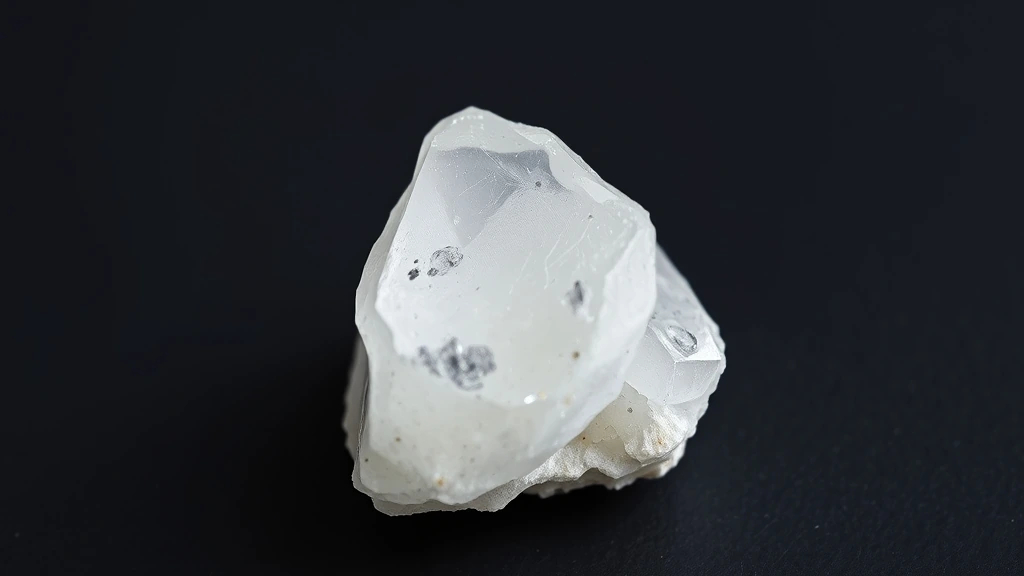
Lithium quartz belongs to the vast silicate family, specifically the tectosilicate subgroup known as the quartz group. Its framework consists of a three‑dimensional network of SiO₄ tetrahedra, a structure that imparts both chemical stability and the characteristic trigonal symmetry. Found in hydrothermal veins and pegmatitic bodies, the stone forms well‑defined prismatic crystals that can be cut into faceted gems or used as polished cabochons.
What is Lithium Quartz Gemstone? Geological Overview & Definition
Lithium quartz is a variant of quartz in which minute amounts of lithium substitute for silicon within the crystal lattice, creating subtle color changes without altering the fundamental SiO₂ composition. This trace substitution is typically below 0.1 wt % but is sufficient to produce the stone’s signature pastel tones, distinguishing it from pure, colorless quartz.
In gemological terms, lithium quartz is classified as a gem-quality quartz rather than a distinct mineral species. Its rarity stems from the specific geochemical conditions required for lithium to be incorporated during crystal growth, making well‑formed, transparent specimens highly prized by collectors and designers alike.
Lithium Quartz Gemstone Chemical Composition & Crystallographic Properties
The stone retains the chemical formula SiO₂, with lithium acting as a trace cation that occupies interstitial sites or substitutes for silicon in the lattice. This substitution does not create a new stoichiometric compound; instead, it introduces color‑center defects that absorb certain wavelengths, yielding the characteristic pale blue‑violet hue.
Lithium quartz crystallizes in the Trigonal (Rhombohedral / Trapezohedral) crystal system, exhibiting a three‑fold rotational axis and a hexagonal‑like habit. Its unit cell parameters are consistent with those of ordinary quartz, but the presence of Li⁺ can cause slight lattice distortions detectable by high‑resolution X‑ray diffraction.
The mineral is acid‑resistant under normal conditions, but prolonged exposure to strong hydrofluoric acid can dissolve the SiO₂ framework. Its refractive index ranges from 1.544 to 1.553, and the specific gravity remains at 2.65, identical to standard quartz, confirming its compositional continuity.
Thermally, lithium quartz behaves like its parent mineral: it is stable up to about 573 °C, the α‑β quartz transition temperature, after which the crystal symmetry temporarily changes before reverting upon cooling. Heating can sometimes enhance the color intensity by activating additional lithium‑related color centers, a process exploited in some heat‑treatment protocols.
| Property | Specification |
|---|---|
| Mineral Group | Silicates (Tectosilicates / Quartz Group) |
| Chemical Formula | SiO₂ (Silicon Dioxide) |
| Mohs Hardness | 7.0 |
| Crystal System | Trigonal (Rhombohedral / Trapezohedral) |
| Specific Gravity (Density) | 2.65 |
| Refractive Index | 1.544 – 1.553 |
| Color & Optical Properties | Natural Lithium Quartz Gemstone color spectrum and optical dispersion |
| Primary Mining Localities | Brazil, Madagascar, USA (Arkansas), Swiss Alps |
| Water & Chemical Resistance | High (Fully resistant to water and moisture) |
| Chakra Alignment (Traditional) | All Chakras (Universal Harmonizer) |
| Zodiac Affinity (Traditional) | All Zodiac Signs (Especially Leo and Aries) |
| Symbolic Meaning (Traditional) | Master energy amplifier, clarity, purification, and focus |
Quartz Varieties & Comprehensive Sub‑Types
Amethyst
Amethyst forms in high‑temperature hydrothermal veins where iron (Fe³⁺) irradiation creates violet‑to‑royal‑purple color centers (FeO₄)⁴⁻ within macrocrystalline quartz. The crystals often display parallel banding and occasional inclusions of rutile or hematite, giving a subtle “spiderweb” texture. With a Mohs hardness of 7.0, amethyst is a staple of the global gemstone market, prized for its crown‑chakra resonance and third‑eye clarity.
Citrine
Citrine’s golden‑yellow to amber hue originates from heat‑induced oxidation of iron impurities, making natural specimens rare and highly valued. Most commercial citrine is produced by controlled heating of amethyst, which alters the Fe³⁺ charge‑transfer bands without affecting crystal structure. Its transparent to slightly included macrocrystals are cut into faceted gems for solar‑plexus prosperity work.
Rose Quartz
Rose quartz acquires its soft pink shade from microscopic fibrous inclusions of a dumortierite‑like borosilicate mineral that scatter light within the host SiO₂ lattice. The stone typically exhibits a milky translucency and may contain subtle conchoidal fracture patterns. Widely mined in Brazil and Madagascar, rose quartz dominates the heart‑chakra market and commands premium prices for its gentle energy.
Smoky Quartz
Smoky quartz ranges from translucent brown to deep black, colored by natural radioactive irradiation of aluminum‑related color centers within the quartz lattice. The irradiation creates a uniform smoky tone often accompanied by internal stress fractures that can be revealed under polarized light. Its grounding properties and robust hardness make it a mainstay in both jewelry and metaphysical circles.
Rutilated Quartz
Rutilated quartz is a clear rock crystal pierced by acicular rutile (TiO₂) needles, which may appear golden, copper‑red, or black. These needle‑like inclusions form during slow crystallization in pegmatitic environments, creating striking “starburst” patterns prized by collectors. The gemstone’s high clarity and striking visual contrast secure its status as a premium decorative and therapeutic stone.
Strawberry Quartz
Strawberry quartz displays a clear or pale pink matrix speckled with red‑orange lepidocrocite, hematite, or goethite inclusions that resemble tiny strawberries. These iron‑oxide particles form during late‑stage hydrothermal alteration, producing a distinctive speckled appearance. Though less common than other quartz varieties, its vivid coloration makes it a sought‑after piece for heart‑chakra work.
Ametrine
Ametrine is a naturally zoned quartz crystal that exhibits distinct purple amethyst and golden citrine sectors within a single growth. This rare zoning results from fluctuating temperature and iron oxidation conditions in the Anahi mine, Bolivia, where the stone is exclusively sourced. Gemologists value ametine for its dual‑color display, which requires careful orientation during cutting to preserve both hues.
Prasiolite (Green Quartz)
Prasiolite, or green quartz, attains its leek‑green hue through controlled heat treatment of iron‑bearing amethyst, converting Fe³⁺ charge‑transfer bands to a green spectrum. The process preserves the crystal’s macrocrystalline clarity while introducing subtle growth banding visible under magnification. Though synthetically produced, prasiolite is accepted in the market for its soothing green energy and decorative appeal.
Comparative Summary – Gemologists differentiate these quartz varieties by examining color origin (irradiation, heat treatment, inclusions), inclusion type (rutile needles, iron‑oxide specks, fibrous borosilicates), and growth zoning (ametrine’s dual sectors). Refractive index, clarity, and specific banding patterns further guide cutting decisions and market classification.
Where is Lithium Quartz Gemstone Found? Geological Mining & Extraction
Lithium quartz occurs chiefly in lithium‑rich pegmatites, where late‑stage hydrothermal fluids deposit SiO₂ alongside lithium minerals such as spodumene and lepidolite. These pegmatitic bodies are characterized by coarse‑grained crystals, allowing quartz to incorporate trace lithium that subtly alters its optical properties.
Major extraction zones include the Mendoza Province of Argentina, the Salar de Uyuni region in Bolivia, and the Siberian Aldan Shield of Russia. In each locale, open‑pit or underground mining targets quartz veins intersecting lithium‑bearing host rocks, followed by careful washing and hand‑sorting to preserve the gemstone’s integrity.
Historical Significance & Cultural Lore of Lithium Quartz Gemstone
Ancient Egyptian artisans prized quartz for its clarity, carving it into scarabs and amulets that symbolized eternal life; some specimens show early evidence of lithium enrichment, though the element itself was unknown. In the Indus Valley, quartz beads bearing subtle greenish tints were traded across the Near East, suggesting early appreciation of its unique energetic resonance.
Classical Greek texts describe amethyst as a “preventer of drunkenness,” while Roman poets celebrated rose quartz as a token of love and fidelity. Across the Silk Road, traders exchanged smoky quartz for its reputed grounding power, and medieval alchemists revered it as a purifier of the soul. These enduring myths underscore lithium quartz’s timeless role as a bridge between material beauty and spiritual symbolism.
Modern Uses & Jewelry Applications of Lithium Quartz Gemstone
Lapidaries value this variety for its exceptional clarity and durability, making it ideal for high-polish jewelry pieces. The stone’s Mohs hardness of 7.0 ensures it resists daily wear and tear effectively. Cutters often favor transparent specimens to maximize light transmission and brilliance.
- Faceted Cuts: Standard brilliant and step cuts enhance the stone’s natural sparkle.
- Cabochons: Smooth, domed shapes are used for opalescent or included specimens.
- Ornamental Carving: Large, clear blocks are sculpted into decorative objects and beads.
Metaphysical Properties & Traditional Meaning of Lithium Quartz Gemstone
According to historical traditions and metaphysical lore, this stone serves as a powerful master energy amplifier. Practitioners believe it enhances mental clarity and promotes deep purification of the aura. It is often used to sharpen focus during meditation or intense study sessions.
The crystal is associated with universal harmony, helping to balance emotional states. Its energetic signature is described as stabilizing, aiding in the release of stagnant feelings. Users report a sense of calm and heightened awareness after prolonged contact.
Which Chakra and Zodiac Signs Align with Lithium Quartz Gemstone?
This gemstone resonates with All Chakras, acting as a universal harmonizer for the body’s energy system. It does not target a single center but rather facilitates smooth energy flow throughout the entire chakra column. This makes it versatile for holistic healing practices.
Astrologically, it aligns with All Zodiac Signs, though it holds special affinity for Leo and Aries. These fire signs benefit from its ability to ground their intense energy. It supports their natural leadership qualities with a stabilizing, clarifying influence.
How to Identify Real vs. Fake Lithium Quartz Gemstone
Distinguishing natural quartz from artificial imitations requires careful observation of physical properties. Common fakes include synthetic glass, dyed silica, and plastic replicas designed to mimic clarity. Understanding the stone’s specific gravity and thermal behavior helps prevent costly errors.
Practical At-Home Authenticity Tests
- Temperature Test (Thermal Feel): Real quartz feels noticeably cool to the touch initially. Glass and plastic warm up much faster under hand warmth.
- Specific Gravity & Weight Test: With a density of 2.65 g/cm³, it feels heavier than plastic but lighter than glass. Compare it against a known quartz sample for accuracy.
- Scratch & Hardness Test (Mohs Comparison): At Mohs 7.0, it will scratch glass (Mohs 5.5) but not steel. It should not be scratched by a standard steel knife.
- Microscopic & Loupe Inspection (Internal Inclusions): Use a 10x loupe to look for natural fluid inclusions or feathers. Perfectly clear stones with no internal features may be synthetic glass.
Lithium Quartz Gemstone Valuation Factors, Grading & Pricing
Market valuation begins with Color Saturation, which dictates the stone’s visual appeal and rarity. Buyers prefer specimens exhibiting deep, uniform tones without zoning or color banding. High optical clarity and a glassy luster further enhance the gem’s desirability in the trade.
Carat Weight significantly influences pricing, as larger, inclusion-free crystals command exponential price increases. Facet symmetry must be precise to maximize light return and brilliance effectively. The presence of matrix or internal inclusions generally reduces value unless they form an attractive display.
Geographical Provenance Premium often elevates prices for stones from renowned, high-quality mining regions. Wholesale and retail trends show steady demand for certified, high-clarity specimens. Investors should monitor auction results to track emerging market value shifts accurately.
How to Clean and Care for Lithium Quartz Gemstone
This mineral features a Mohs Hardness of 7.0, making it durable against daily wear and tear. You can easily clean it using warm water and a mild, non-abrasive soap solution. Gently scrub the surface with a soft brush to remove accumulated oils and dirt.
The stone is suitable for ultrasonic cleaning unless it is heavily fractured or contains significant inclusions. Always inspect the gemstone for cracks before placing it in an ultrasonic cleaner. Avoid harsh chemicals or extreme heat to preserve the crystal’s structural integrity and luster.
Cleansing and Recharging Lithium Quartz Gemstone (Energetic Care)
For energetic maintenance, use safe dry methods that respect the mineral’s physical stability. Smoke smudging with sage or palo santo is a popular traditional practice for clearing energy. These methods avoid any risk of moisture damage or thermal shock to the crystal.
Placing the stone on a Selenite Plate or under moonlight allows for gentle recharging. These passive techniques align with the stone’s universal harmonizer properties without physical stress. Ensure the environment is dry to maintain the gem’s pristine optical clarity.
Frequently Asked Questions About Lithium Quartz Gemstone
What is the chemical composition of lithium quartz?
Lithium quartz is primarily composed of silicon dioxide (SiO₂). While trace lithium ions substitute for silicon within the crystal lattice, the bulk material remains pure silica. This subtle chemical variation does not significantly alter its fundamental silicon dioxide structure or gemological properties.
How hard is lithium quartz on the Mohs scale?
It rates a 7.0 on the Mohs hardness scale. This makes it durable enough for daily wear in rings and bracelets without excessive worry about scratching. However, it remains susceptible to damage from harder minerals like topaz or diamond during accidental impacts.
Is lithium quartz safe to wear in the shower?
Yes, it is fully resistant to water and moisture. You can safely wear this stone during bathing or swimming without fear of degradation. Its high water resistance ensures that prolonged exposure to humidity or liquids will not compromise its structural integrity or clarity.
Can I clean lithium quartz with an ultrasonic cleaner?
It is suitable for ultrasonic cleaning unless heavily fractured. For routine maintenance, simply use warm water and mild soap to remove oils and dirt. Avoid ultrasonic baths only if the stone exhibits significant internal fractures that could worsen under vibration.
Which zodiac signs are best aligned with this stone?
It resonates with all zodiac signs, especially Leo and Aries. As a universal amplifier, it supports the fiery energy of these signs while balancing other elements. Its universal harmonizer nature makes it a versatile choice for any astrological sign seeking clarity and focus.
What chakras does lithium quartz activate or balance?
It aligns with all chakras as a universal harmonizer. Rather than targeting a single energy center, it promotes holistic balance throughout the entire chakra system. This makes it an ideal stone for universal harmonic alignment and overall energetic purification.
What is the refractive index of lithium quartz?
Its refractive index ranges from 1.544 to 1.553. This optical property contributes to its brilliant luster and light-reflecting capabilities. Understanding this refractive index helps gemologists distinguish it from other similar quartz varieties during professional identification and grading.
How should I store lithium quartz to prevent damage?
Store it in a soft pouch or separate compartment. Although hard, it can still be scratched by harder gemstones like corundum or diamond. Keeping it isolated protects its surface from abrasion and maintains its crystal system integrity over time.